Animatronic Dinosaur Buying Guide for Museums & Theme Parks
Choosing the right animatronic dinosaur for your museum, theme park, or zoo is one of the most important investment decisions you will make. A well-designed exhibit can increase visitor dwell time by 40%, drive repeat attendance, and become the signature photo opportunity that defines your venue.
But the market is flooded with options ranging from cheap inflatable models to museum-grade mechanical sculptures costing six figures. How do you know which one is right for your space, audience, and budget?
This animatronic dinosaur buying guide is written for decision-makers at museums, theme parks, zoos, science centers, and shopping malls. We draw on 14 years of manufacturing experience and 5,000+ delivered exhibits to show you exactly what to look for, what to avoid, and how to evaluate suppliers.
Why Museums and Theme Parks Invest in Animatronic Dinosaurs
Before diving into specifications, it is worth understanding why animatronic dinosaurs deliver such strong ROI:
- Extended dwell time: Visitors spend 3-5 minutes at a moving, roaring T-Rex versus 30 seconds at a static skeleton.
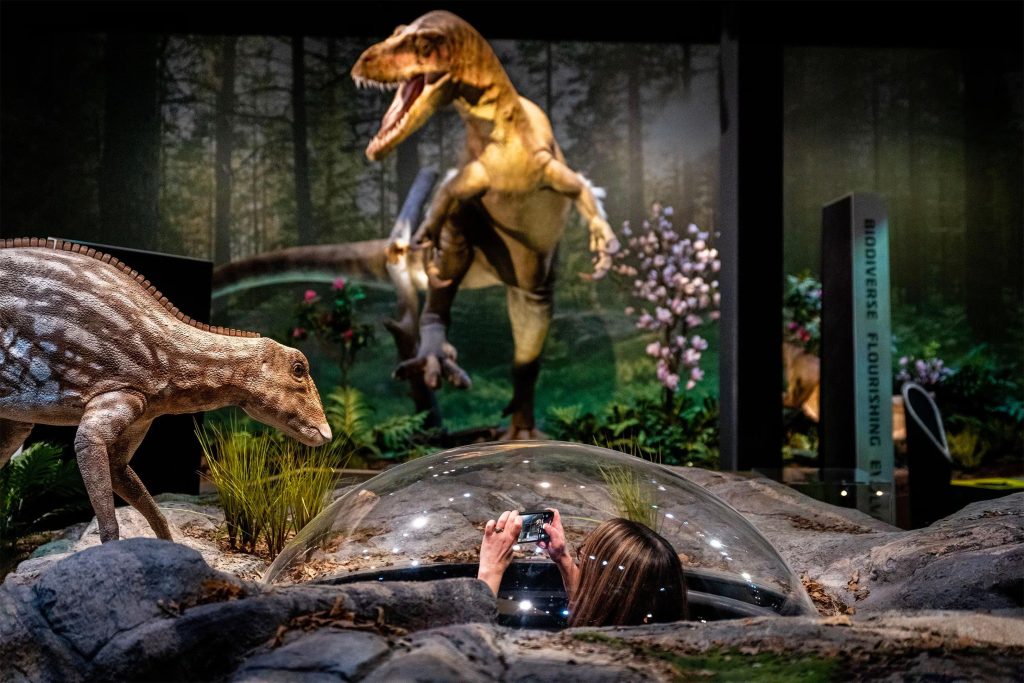
- Social media amplification: Interactive dinosaur exhibits generate 5x more Instagram and TikTok posts than traditional displays.
- Educational value: Sensor-triggered movements let children learn about dinosaur behavior through observation and interaction.
- All-weather revenue: Outdoor animatronic dinosaurs operate year-round, unlike seasonal exhibits.
- Multi-generational appeal: Grandparents, parents, and children all engage with dinosaur content.
Whether you are designing a new museum dinosaur exhibit or upgrading a theme park dinosaur attraction, the right animatronic model becomes the anchor of your visitor experience.
5 Questions to Answer Before You Start Shopping
Skipping this step is the #1 reason buyers end up with the wrong product. Answer these five questions in writing before contacting any supplier.
1. Where will the exhibit live?
Indoor exhibits allow for finer detail, quieter mechanisms, and controlled lighting. You can use lighter materials because wind and rain are not factors.
Outdoor exhibits must withstand UV exposure, temperature swings (-20°C to +60°C), humidity, and dust. This demands weatherproof enclosures, sealed servo motors, and durable skin materials like our patented surface finish system.
2. Who is your primary audience?
- Museums / Science centers: Accuracy matters. Paleontologists will critique incorrect posture or anachronistic features. Prioritize scientific fidelity and educational signage.
- Theme parks: Entertainment value dominates. Bigger movements, louder roars, and dramatic narratives drive satisfaction.
- Zoos: Bridge the gap between education and entertainment. Smaller children are a large segment, so safety certifications (CE, EN 60335) are critical.
- Shopping malls / Retail: Photo opportunities drive foot traffic. Compact footprints and selfie-friendly poses maximize ROI.
3. What is your target footprint?
Measure your available space precisely. A life-size Argentinosaurus can exceed 30 meters in length. Even a “small” Velociraptor model may need 4m × 2m of floor space when accounting for movement arcs and visitor clearance.
Do not forget vertical space. A rearing Sauroposeidon may reach 8 meters tall. Ceiling height, sprinkler systems, and lighting rigs all matter.
4. How interactive should it be?
| Interaction Level | Description | Best For |
|---|---|---|
| Passive | Continuous loop of movements and sounds | Lobbies, queues, background ambiance |
| Sensor-triggered | Reacts when visitors approach | Museums, zoos, science centers |
| Operator-controlled | Staff member controls actions via remote | Live shows, educational demonstrations |
| Rideable / Photo | Visitors sit on or stand beside for photos | Theme parks, malls, family attractions |
Higher interactivity increases cost but also engagement. For a detailed cost breakdown by interaction level, see our companion article on animatronic dinosaur pricing.
5. What is your realistic budget range?
We covered detailed pricing in our 2026 pricing guide, but here is the quick reference for planning:
| Exhibit Size | Typical Price Range | Best For |
|---|---|---|
| Small (2-4m) | $3,000 – $12,000 | Schools, retail, small museums |
| Medium (5-8m) | $12,000 – $45,000 | Regional museums, mid-size zoos |
| Large (9-15m) | $45,000 – $150,000 | National museums, major theme parks |
| Giant (16m+) | $150,000+ | Flagship attractions, iconic installs |
Remember: these figures are for the exhibit itself. Shipping, customs, installation, and ongoing maintenance add 15-30% on top.
Choosing the Right Dinosaur Species
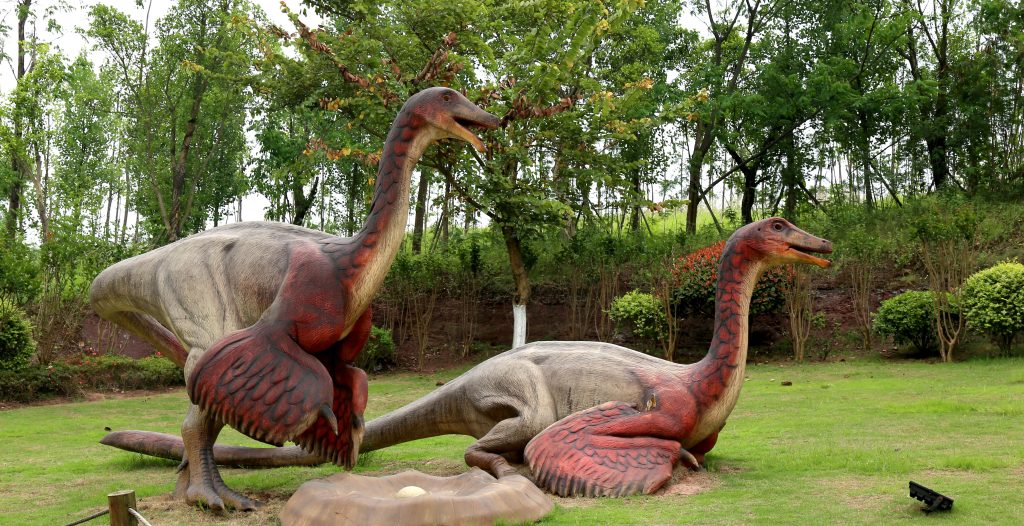
Not every dinosaur works for every venue. Here is how to match species to setting:
For Museums and Science Centers
Choose species with strong educational narratives:
- Tyrannosaurus Rex: The ultimate crowd-puller. Every visitor expects to see one.
- Triceratops: Herbivore counterpoint to T-Rex. Teaches Cretaceous ecosystems.
- Stegosaurus: Iconic silhouette, easy to explain plate and tail-spike functions.
- Velociraptor: Smaller footprint, high drama. Ideal for predator-prey exhibits.
- Brachiosaurus / Argentinosaurus: Teaches scale and sauropod biology. Requires large halls.
For Theme Parks
Prioritize spectacle and recognizable species:
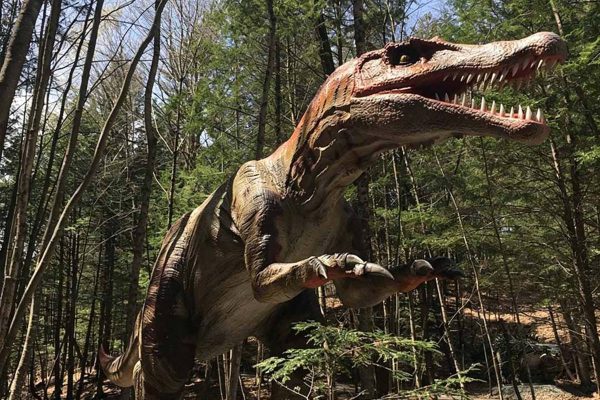
- Spinosaurus: Distinctive sail, aquatic hunting narrative, cinematic appeal.
- Carnotaurus: Demon horns, aggressive posture, perfect for horror-themed zones.
- Utahraptor: Pack-hunting scenarios, multiple units create dynamic scenes.
For Zoos
Bridge prehistoric and modern ecosystems:
- Parasaurolophus: Herd behavior, crest acoustics link to modern bird vocalization.
- Pteranodon: Flying reptile adds vertical dimension to mixed exhibits.
- Ankylosaurus: Defensive armor parallels modern armored mammals (armadillos, pangolins).
Critical Technical Specifications
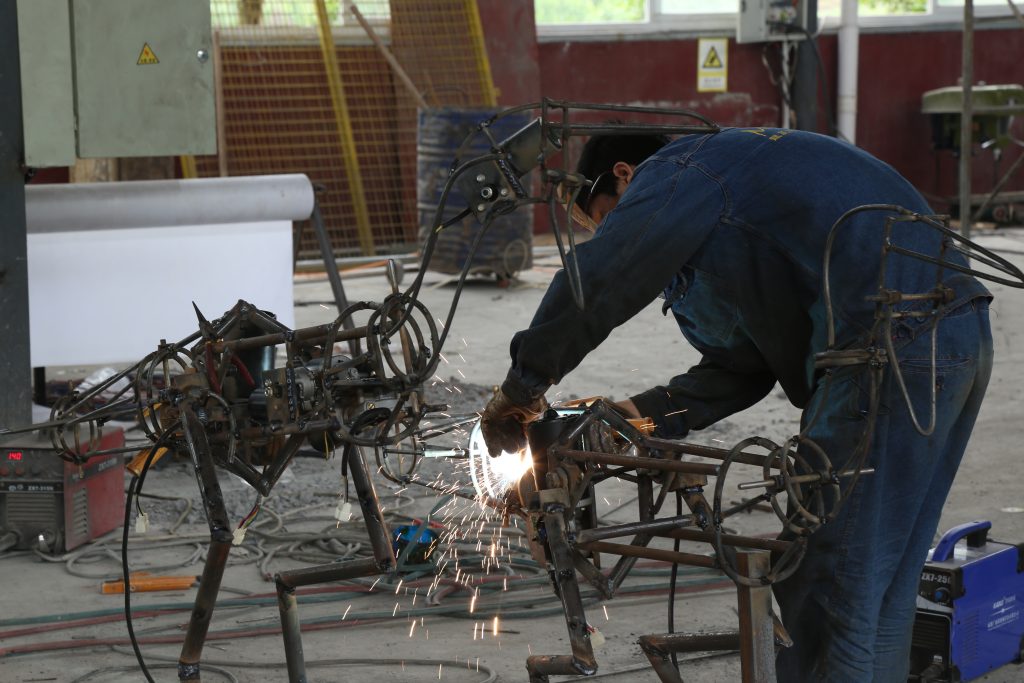
When evaluating quotes from suppliers, insist on detailed specifications across these eight categories:
1. Size and Scale
- Length, height, width at rest and at maximum extension
- Weight (affects shipping cost and floor load requirements)
- Scale ratio (1:1 life-size versus scaled models)
2. Skin Material
This is where most exhibitors cut corners — and where the biggest quality differences hide.
| Material | Pros | Cons | LED System |
|---|---|---|---|
| Traditional foam + resin | Low cost, lightweight | Cracks in cold, fades in sun, low detail | 1-2 years |
| Fiberglass | Durable, rigid | Heavy, no flexibility, unnatural texture | 3-5 years |
| Standard surface finish | Flexible, realistic | Yellows over time, tears under stress | 2-3 years |
| Patented hand-finished surface (ours) | Hyper-realistic, 5+ year service characteristics, UV-stable, CE-certified for child contact | Higher material cost | 5-8 years |
Our proprietary surface finish technology (Chinese invention patent ZL 2022 1 0224489.5) solves the industry dilemma of balancing realism with durability. The resulting skin retains fine texture detail, resists cracking from -20°C to +60°C, and passes EU CE safety standards for child-contact applications.
3. Movement System
Ask for a detailed movement list, not vague claims like “multiple actions.” A quality large theropod should include:
- Head left/right (±30°)
- Jaw open/close with synchronized roar audio
- Eyes blink (natural frequency, not mechanical ticking)
- Neck up/down (±20°)
- Tail sway (left/right, 15° amplitude)
- Forelimb grasping motion
- Breathing simulation (subtle chest expansion)
For theme parks, consider adding:
- Water spray (T-Rex “spit” effect)
- Smoke emission
- LED eye color changes
4. Audio System
- Speaker wattage and placement: Hidden internal speakers produce more immersive sound than external boxes.
- Audio library: How many distinct roars/calls? Can you upload custom audio?
- Synchronization: Movements and sounds must be precisely timed. A jaw that opens 200ms after the roar breaks immersion.
5. Control System
| Control Type | Description | Best For |
|---|---|---|
| Pre-programmed loop | Fixed sequence, no input needed | Passive displays, budget projects |
| Infrared sensor trigger | Activates when visitors approach | Museums, zoos, most common |
| Operator remote | Staff controls all movements live | Shows, educational demos |
| App / WiFi control | Tablet or phone control | Venues with roaming educators |
Our patented single-operator control system (utility model ZL 2015 2 0831081.X) allows one staff member to independently manage all movements, sounds, and interactive triggers — reducing labor costs for live performances.
6. Power Requirements
- Voltage: 110V (North America) or 220-240V (Europe, Asia)
- Amperage: Large exhibits may need dedicated 20A circuits
- Backup power: Does the control system remember its state after a power outage?
7. Installation Requirements
- Foundation: Does it need concrete anchoring or is it freestanding?
- Access: Can the exhibit be disassembled for maintenance? Door width limits?
- Weatherproofing: IP rating for outdoor installations (outdoor-rated minimum recommended)
8. Certifications
Insist on documentation for:
- CE marking (EU market entry)
- ISO 9001 (quality management)
- EN 60335 (electrical safety for animatronic devices)
- Flame retardancy (indoor fire codes)
How to Evaluate a Supplier
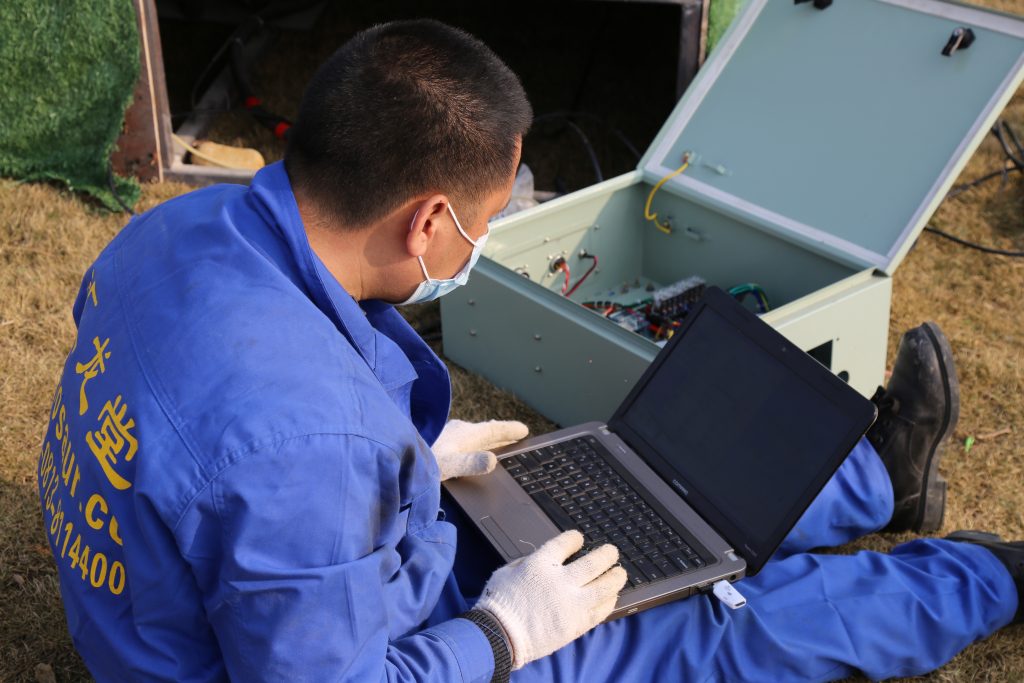
The animatronic dinosaur industry has two types of manufacturers: design-build shops that handle everything in-house, and trading companies that outsource to third-party workshops. Here is how to tell the difference.
Red Flags (Avoid These Suppliers)
- No factory photos or video tours: If they cannot show you their workshop, they are likely a middleman.
- Refusal to provide reference installations: Legitimate manufacturers have client lists.
- No patent or IP documentation: Proprietary technology should be verifiable.
- Quotes that are 50%+ below competitors: This usually means inferior materials, outsourced production, or hidden fees.
- No after-sales support contact: What happens when a servo fails 8 months after delivery?
Green Flags (Look For These)
- In-house design team: Can they produce 3D renderings from your concept sketches?
- Owned factory with CNC and molding equipment: Visit via video call if you cannot travel.
- Export experience: Have they shipped to your country before? Do they understand your customs documentation?
- Installation support: Will they send technicians or provide detailed installation manuals?
- Support terms: 12 months minimum on mechanical parts, 24 months on control systems.
Questions to Ask Every Supplier
- “Can you provide video of your factory floor and current production?”
- “What is the exact movement list for this model?”
- “What skin material do you use, and what is its expected outdoor service characteristics?”
- “Do you have a client in [your country] we can contact for a reference?”
- “What does your support cover, and how do we request replacement parts?”
- “Can you handle shipping, customs clearance, and on-site installation?”
Installation and Maintenance
A museum-grade animatronic dinosaur is a mechanical device, not a piece of furniture. Plan for:
Pre-Installation
- Site survey: Measure doorways, elevators, and final placement area.
- Electrical prep: Confirm circuit capacity and outlet placement.
- Foundation: Some large exhibits need concrete pads or floor reinforcement.
Installation Timeline
| Exhibit Size | Manufacturing | Shipping | Installation | Total |
|---|---|---|---|---|
| Small | 3-4 weeks | 2-4 weeks | 1-2 days | 6-10 weeks |
| Medium | 5-7 weeks | 3-5 weeks | 2-3 days | 8-12 weeks |
| Large | 8-12 weeks | 4-6 weeks | 3-5 days | 12-18 weeks |
| Giant | 12-20 weeks | 5-8 weeks | 5-10 days | 18-30 weeks |
Ongoing Maintenance
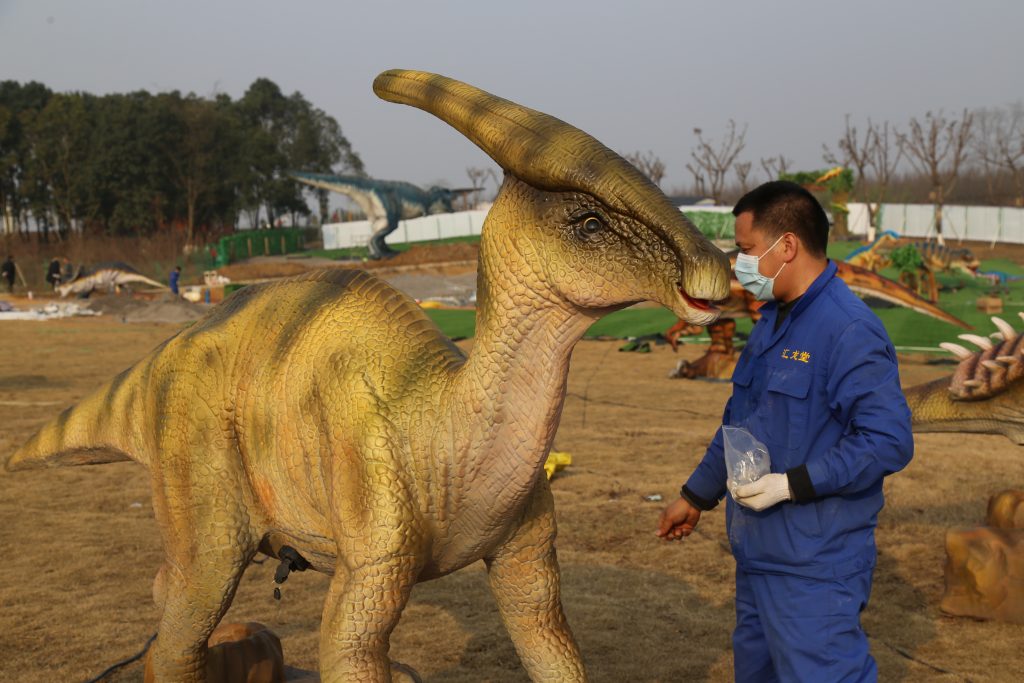
- Daily: Visual inspection for skin tears, loose fasteners, or debris accumulation.
- Weekly: Test all movements and audio. Check for abnormal motor sounds.
- Monthly: Lubricate joints per manufacturer guidelines. Inspect electrical connections.
- Annually: Professional service visit for deep mechanical inspection and component replacement.
With our surface finish technology, annual skin replacement is typically unnecessary for the first 5 years — a major cost saving over traditional foam-and-resin models that need resurfacing every 12-18 months.
Where to Go Next in the Buying Process
This guide covers what a museum or theme park should specify. The pages below go deeper on the technical comparisons, the cost structure and the material choices that come up once the brief is written:
- The six systems inside an animatronic dinosaur — frame, motion, skin, sensing, sound and weatherproofing explained together.
- Hydraulic vs pneumatic actuation — which system makes movement look right, and when it does not matter.
- Brushless, servo and stepper motors — the electric option, joint by joint.
- Sound and light detection — what an interactive specification actually requires.
- Gesture-sensing exhibits — the deepest interaction layer, and what it costs in dwell time and complexity.
- Interactive exhibit guide — planning the interaction before the mechanical build.
- What affects the cost — the variables that turn one silhouette into three price levels.
- The most requested species and poses — a useful check before the species list is finalised.
- Skeletons and fossil replicas — the static pieces that anchor a gallery without a maintenance budget.
- Dinosaur rides — where duty cycle, throughput and safety stopping decide the build.
- The full dinosaur range — species, sizes and movement options.
Frequently Asked Questions
Q1: How long does it take to manufacture a custom animatronic dinosaur?
A: Small models (2-4m) take 3-4 weeks. Large exhibits (10m+) require 8-12 weeks. Complex custom designs with unique species or behaviors may extend to 16 weeks. Rush production is sometimes available at a premium.
Q2: Can I buy a pre-made model, or is everything custom?
A: Both options exist. Pre-made models of popular species (T-Rex, Triceratops, Velociraptor) are often in stock or in production with shorter lead times. Custom species, sizes, or behaviors require full design and manufacturing cycles. Pre-made models are typically 20-30% less expensive.
Q3: What is the difference between animatronic dinosaurs and static dinosaur skeleton replicas?
A: Static skeletons are molded resin or fiberglass casts of fossil structures. They do not move and require minimal maintenance. Animatronic dinosaurs are fully robotic with motors, sensors, audio systems, and synthetic skin. They cost 3-5x more but generate 10x more visitor engagement. Many venues combine both: static skeletons for scientific accuracy, animatronics for “wow factor.”
Q4: Do animatronic dinosaurs work outdoors in winter?
A: Yes, if built with weatherproof materials and sealed electronics. Our hand-finished surface models operate from -20°C to +60°C. However, extreme cold can reduce battery efficiency (if battery-powered) and make some plastics brittle. We recommend winterized control enclosures for venues in climates below -10°C.
Q5: Can children touch or ride the dinosaur?
A: It depends on the model and your insurance requirements. Most museum-grade animatronics are “look but don’t touch” due to servo mechanisms and skin sensitivity. However, we produce specialized rideable dinosaurs and dinosaur costumes designed for physical interaction. These have separate safety certifications and reinforced structures.
Q6: How do I know if a supplier actually manufactures in-house or just resells?
A: Ask for a live video factory tour. Request to see CNC machines, welding stations, and surface finish molding areas. Ask technical questions about servo torque ratings or surface finish Shore hardness — trading companies will struggle to answer. Verify their business license registration capital (ours is CNY ¥10,000,000) and check for patent ownership (we hold 10+ patents including our hand-finished surface invention).
Last updated: June 2026. Pricing and specifications are subject to change. All products are custom-built to order. Contact us for a detailed quote tailored to your project.
For the full step-by-step procurement process, from shortlisting to installation, see our complete how to buy guide.