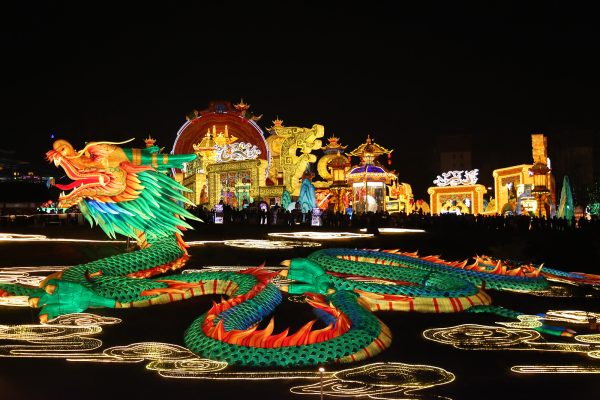
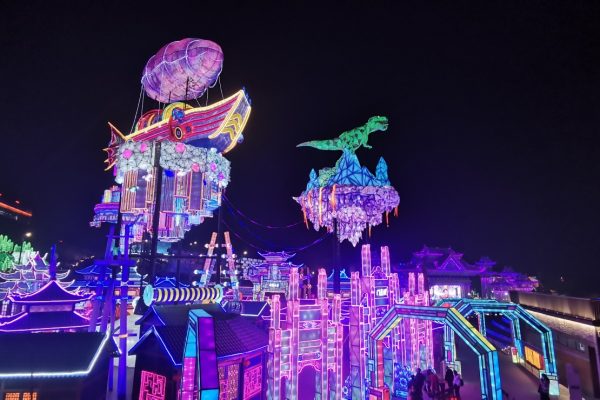
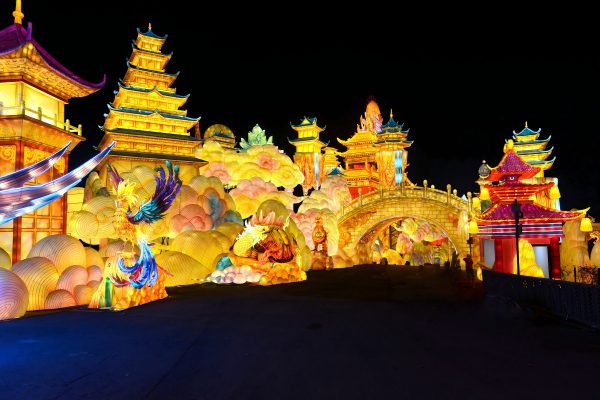
A Chinese lantern festival is more than a display of lights—it is a centuries-old tradition that transforms public spaces into immersive wonderlands of color, storytelling, and cultural celebration. Today, these festivals have evolved into large-scale events that draw millions of visitors worldwide, from city parks in North America to botanical gardens in Europe and shopping districts across Asia.
If you are planning a Chinese lantern festival, sourcing the right displays, or simply trying to understand what makes these events so captivating, this guide covers everything you need to know. From the historical roots of lantern art to the modern logistics of sourcing, building, and executing a world-class festival, we walk you through the full picture.
What Is a Chinese Lantern Festival?
A Chinese lantern festival is a large-scale outdoor exhibition featuring handcrafted lantern sculptures, LED light installations, themed environments, and often interactive elements such as animatronic dinosaurs, walk-through tunnels, and cultural performance stages. These events typically run from late autumn through early spring, coinciding with holiday seasons and providing a unique nighttime attraction for families, couples, and tourists.
Traditional festivals focused on red silk lanterns and zodiac symbols. Modern festivals have expanded into cinematic storytelling, featuring everything from mythical dragons and ancient palaces to underwater worlds and space exploration themes. The scale can range from a few hundred lanterns in a community park to massive installations spanning 50+ acres with thousands of individual pieces.
For event planners, venue operators, and tourism boards, a Chinese lantern festival represents one of the most reliable high-traffic attractions available today. Many established events report attendance figures in the hundreds of thousands per season, with strong merchandise and food revenue streams.
Types of Lantern Festivals
The format has diversified significantly over the past decade. Common variations include:
- Cultural exhibitions — Focused on Chinese mythology, zodiac cycles, and historical narratives, ideal for botanical gardens and museums seeking educational programming.
- Zoo lights events — Animal-themed sculptures integrated into zoo grounds after hours, combining wildlife conservation messaging with visual spectacle.
- Holiday light festivals — Christmas, New Year, and winter-themed displays that blend Western holiday iconography with Chinese lantern craft techniques.
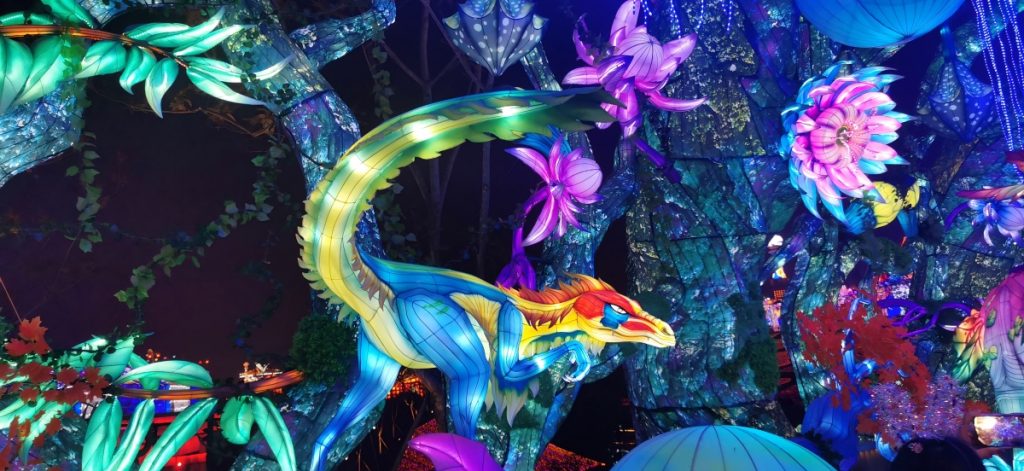
- Dinosaur lantern festivals — Prehistoric-themed environments where animatronic dinosaurs share space with illuminated jungle and volcanic landscapes.
- Custom brand activations — Corporate or municipal events built around a specific theme, logo, or local cultural identity.
Each format attracts a different audience demographic and requires a tailored approach to design, layout, and marketing.
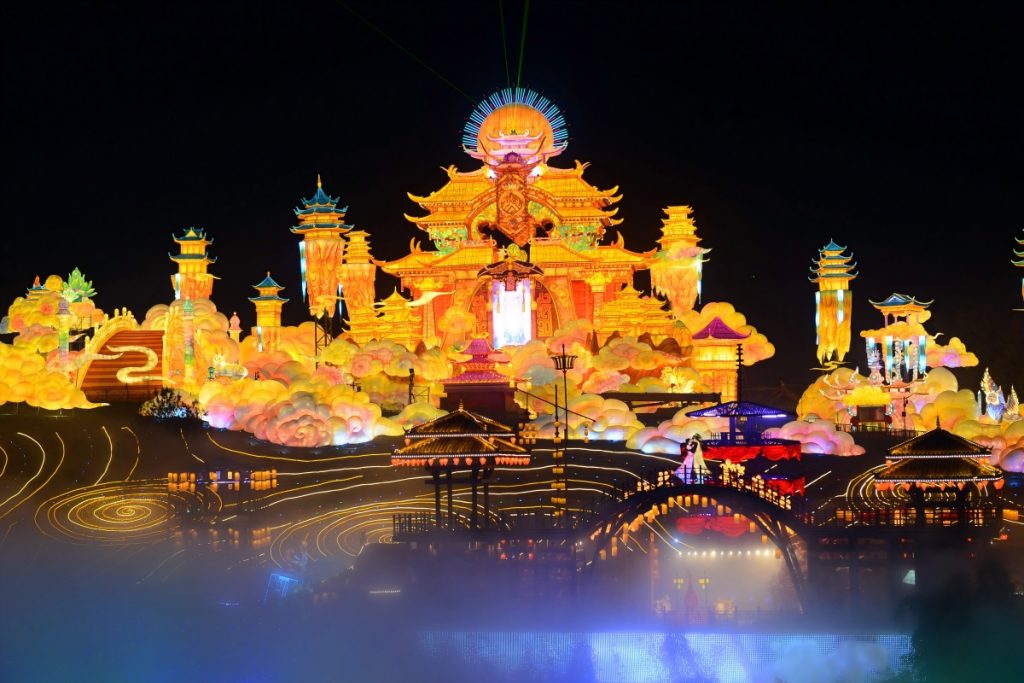
History and Cultural Significance
The tradition of lantern festivals dates back over 2,000 years to the Han Dynasty (206 BCE–220 CE). Emperor Ming, an advocate of Buddhism, ordered the lighting of lanterns to honor the Buddha on the fifteenth day of the first lunar month. Over time, this practice merged with existing folk customs and evolved into the Lantern Festival (Yuanxiao Jie), marking the end of Chinese New Year celebrations.
The Evolution of Lantern Craft
Early lanterns were simple—bamboo frames wrapped in silk or paper, illuminated by candles. As craft techniques advanced, artisans developed increasingly complex structures: rotating lanterns powered by heat convection, multi-layered silk paintings, and elaborate mechanical figures.
By the Tang and Song dynasties, lantern festivals had become grand public events. Cities competed to create the most impressive displays. The craft became a respected profession passed down through generations of families, particularly in regions with strong artisan traditions.
Symbolism and Meaning
Lanterns in Chinese culture carry deep symbolic weight. The round shape represents unity and wholeness. Red lanterns symbolize good fortune and prosperity. The act of releasing sky lanterns traditionally carries wishes and prayers upward. During the Lantern Festival, solving riddles written on lanterns (caidengmi) remains a beloved tradition that tests wit and knowledge.
The zodiac animals featured in many festivals connect to the 12-year lunar cycle, with each year’s display highlighting the corresponding animal. Mythical creatures like dragons and phoenixes represent power, renewal, and harmony. These layers of meaning add depth to the visual experience, giving visitors both aesthetic pleasure and cultural education.
Modern Global Expansion
The international spread of Chinese lantern festivals began in earnest in the early 2000s, when Chinese lantern manufacturers started partnering with overseas venues to bring large-scale exhibitions abroad. Today, major cities across the United States, Canada, United Kingdom, Germany, France, and beyond host annual lantern festivals that have become staples of their winter entertainment calendars.
This global demand has created a robust international supply chain, with Zigong lantern manufacturers at its center.
Zigong: The Birthplace of Chinese Lantern Art
No discussion of Chinese lantern festivals is complete without understanding the role of Zigong, a city in Sichuan Province widely recognized as the birthplace and global capital of Chinese lantern art.
Why Zigong?
Zigong’s dominance in lantern craftsmanship stems from a unique convergence of factors:
- Historical Heritage: The city has produced lanterns for over 1,000 years, with documented craft traditions dating back to the Tang Dynasty.
- Artisan Density: Zigong is home to the highest concentration of professional lantern artisans in the world. Generations of families have specialized in specific techniques—silk stretching, wire framing, electrical integration, mechanical animation.
- Industrial Infrastructure: The city has developed a complete production ecosystem, from raw material suppliers and metal fabrication workshops to dedicated shipping logistics for oversized sculptures.
- Innovation Culture: Zigong artisans pioneered the integration of LED technology into traditional lantern design, the development of large-scale floating displays, and the fusion of animatronic elements with lantern exhibitions.
The Zigong Ecosystem
Beyond the festival itself, Zigong functions as a year-round production hub. The city hosts dozens of dedicated lantern manufacturing companies, each specializing in different aspects of production—some focus on metal framing and welding, others on silk painting and fabric work, others on electrical systems and LED programming. This specialization allows for efficient production at scale while maintaining artisanal quality in key areas.
The local government actively supports the industry through training programs, trade shows, and infrastructure investment. Zigong’s vocational schools offer dedicated courses in lantern craftsmanship, ensuring a continuous pipeline of skilled artisans entering the workforce. This institutional support is a key reason why Zigong has maintained its competitive edge against emerging production centers in other regions.
The Zigong Lantern Festival
The annual Zigong Lantern Festival, held each winter, is the largest and most prestigious lantern exhibition in the world. It attracts millions of visitors and serves as the industry’s showcase, where manufacturers debut their latest designs and techniques. For international buyers, a visit to the Zigong festival is the equivalent of attending Fashion Week—this is where trends are set and standards are established.
When sourcing a Chinese lantern festival, working with a Zigong lantern manufacturer is not merely a preference; it is the most direct path to authentic craftsmanship, proven production capacity, and technical reliability.
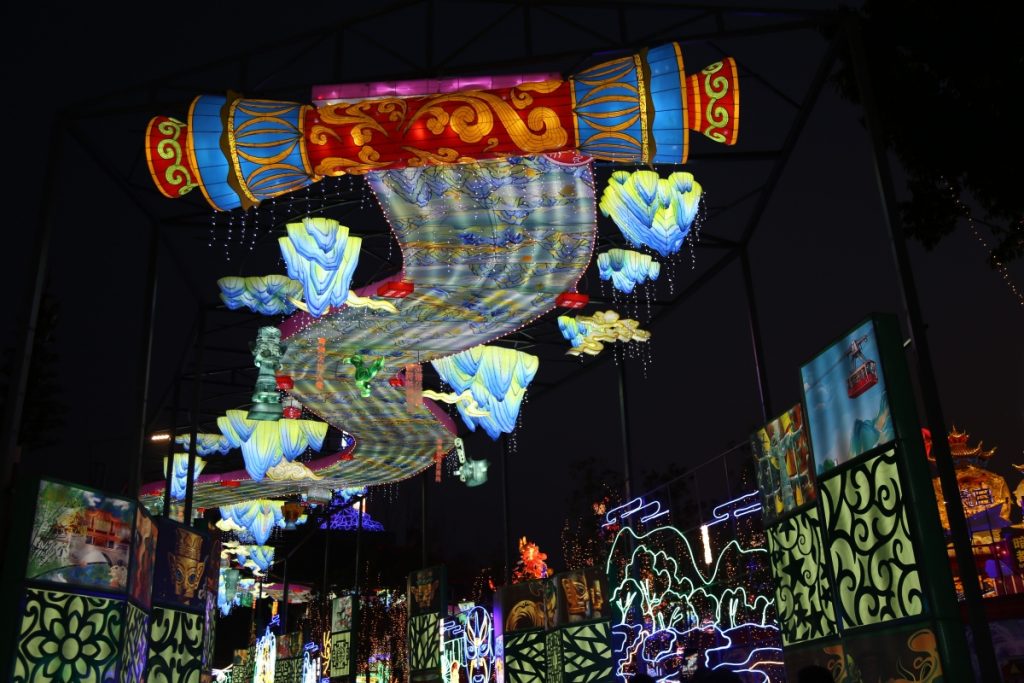
Key Elements of a Modern Chinese Lantern Festival
A successful modern Chinese lantern festival combines multiple elements to create a cohesive, memorable visitor experience. Understanding these components is essential whether you are planning an event or evaluating a supplier’s capabilities.
1. Thematic Lantern Sculptures
The core of any festival is its collection of lantern sculptures. These range from traditional designs—Chinese dragons, lotus flowers, pagodas, zodiac animals—to contemporary and custom themes tailored to a venue’s brand or local culture.
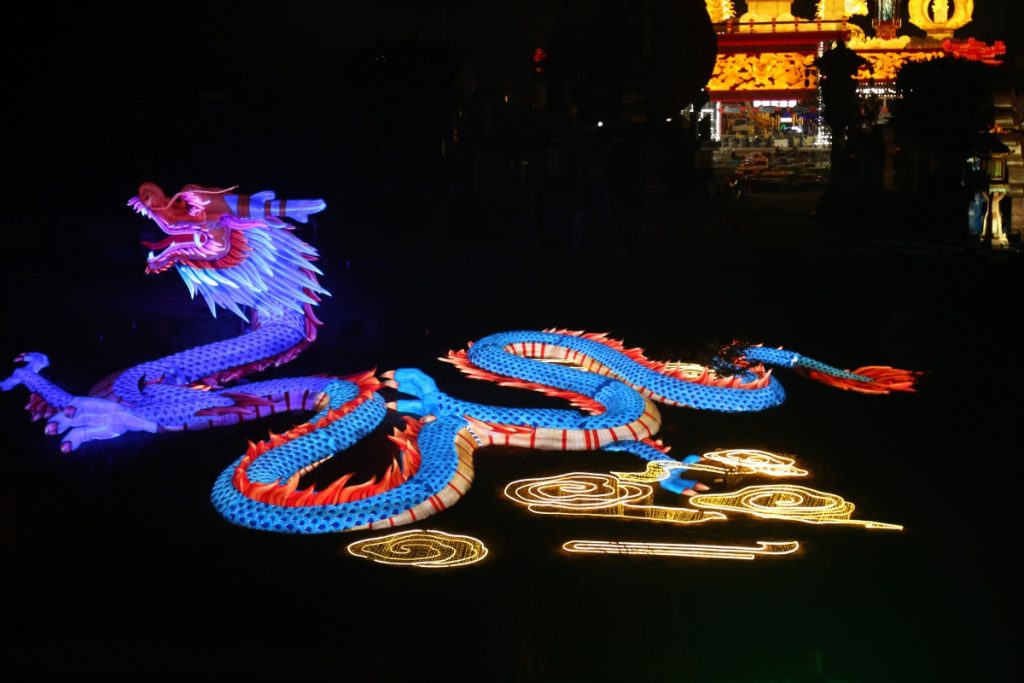
Modern sculptures use metal-frame construction with silk or weather-resistant fabric covering, illuminated internally by energy-efficient LED systems. The largest pieces can reach 30+ meters in height and span entire plazas. A single dragon sculpture, for example, may require 200+ hours of hand-painting, 500+ meters of LED strip lighting, and a structural internal skeleton capable of withstanding 100 km/h winds.
The most effective sculptures tell a story. Rather than standalone objects, they are arranged in narrative sequences—a dragon emerging from clouds, a phoenix rising from flames, a lotus pond with animated koi fish. This narrative approach keeps visitors moving through the festival and creates multiple Instagram-worthy moments along the path.
2. LED Light Tunnels and Walkways
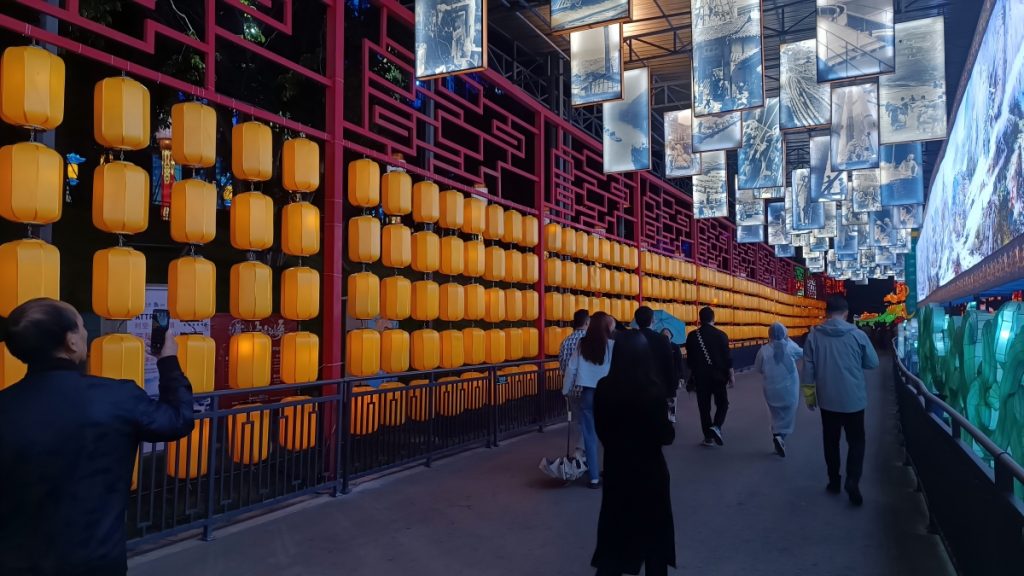
Immersive walkways lined with thousands of hanging LED lanterns create iconic photo opportunities. These high-traffic areas drive social media sharing and repeat visits. The most successful light tunnels use programmable controllers that shift color temperatures and patterns throughout the evening, giving returning visitors a slightly different experience each time.
Pathway design is critical for crowd flow. A well-designed festival routes visitors through a logical sequence—entry plaza, light tunnel, sculpture garden, interactive zone, food court, exit gift shop—without creating bottlenecks or dead ends. Widths should accommodate peak-hour density while maintaining an intimate, immersive atmosphere.
3. Interactive and Animatronic Displays
The most successful festivals today include interactive elements that engage visitors beyond passive viewing. Animatronic dinosaurs, marine creatures, and mythical beasts bring prehistoric and fantasy worlds to life. These displays combine lantern craftsmanship with animatronic engineering—precisely the intersection where our company specializes.
If you are considering adding animatronic elements to your festival, our Animatronic Dinosaur Buying Guide for Museums & Theme Parks provides a detailed framework for selecting the right species, specifications, and features for your audience.
4. Floating and Water Features
For venues with ponds, lakes, or fountains, floating lantern displays add a magical dimension. These installations require specialized weather sealing and anchoring systems but create some of the most photographed scenes in any festival.
5. Performance and Cultural Stages
Many festivals incorporate live performance areas for acrobatics, traditional dance, music, and cultural demonstrations. These stages are often designed as lantern structures themselves, integrating performance space with visual art.
6. Food and Merchandise Areas
Revenue-generating zones—food courts, hot chocolate stands, gift shops—should be designed as themed lantern environments rather than afterthoughts. A cohesive visual experience extends to every corner of the event.
Sourcing Lantern Displays: A Complete Guide
Sourcing the right Chinese lantern displays for your festival is a multi-stage process that requires careful evaluation of manufacturers, design capabilities, logistics, and ongoing support. Here is what you need to know.
Step 1: Define Your Scope and Theme
Before contacting any supplier, establish clear parameters:
- Venue size and layout: How many acres? Are there water features, hills, or structures to work around? Obtain a detailed site map with accurate measurements.
- Visitor capacity: Expected daily attendance affects pathway width, queue management, and safety requirements. A festival expecting 5,000 visitors per night needs wider pathways and more emergency exits than one expecting 1,000.
- Theme and narrative: Do you want traditional Chinese culture, a custom story (local history, nature conservation, space exploration), or a licensed IP collaboration? Your theme drives every design decision.
- Duration: A 6-week festival requires more durable materials and weatherproofing than a 2-week event. Rain, snow, and UV exposure all degrade materials over time.
- Budget framework: Define your total investment range, including shipping, installation, and dismantling. Be realistic about the relationship between scale and cost—a 50-sculpture festival cannot be executed on a 10-sculpture budget.
- Local regulations: Does your venue require fire department approval, electrical inspections, or structural engineering sign-offs? Factor permit timelines into your schedule.
Step 2: Evaluate Manufacturer Capabilities
Not all Chinese lantern manufacturers are equal. Use this checklist when vetting potential partners:
- Portfolio depth: Can they show you 50+ past projects, or only a handful of stock photos? Ask for references from past clients in your region.
- Customization ability: Do they offer fully custom design, or only pre-made catalog items? A truly capable manufacturer should be able to create anything you can describe.
- Animatronic integration: If you want moving elements, do they have in-house animatronic engineering, or do they subcontract? In-house integration is almost always more reliable.
- Material quality: What grade of metal, fabric, and LED components do they use? Can they provide weather-resistance specifications? Weatherproof structural materials, marine-grade wiring, and UV-stabilized fabrics are non-negotiable for outdoor events.
- Safety certifications: Do their electrical systems meet UL/CE standards? Do they provide structural engineering reports? Liability insurance requires documented compliance.
- Logistics experience: Have they shipped to your country before? Do they handle customs, port logistics, and ground transport? First-time international shippers often underestimate customs complexity.
- Installation support: Do they send technicians to supervise or execute on-site assembly? Professional installation crews can reduce setup time by 30–50% compared to local contractors learning on the job.
Step 3: Design and Prototyping
A professional Zigong lantern manufacturer should provide:
- Concept sketches and 3D renderings
- Scale models or digital walkthroughs
- Material samples and LED color temperature options
- Detailed structural and electrical schematics
This phase is critical. Poor design planning at this stage cannot be fixed during installation. Request at least two rounds of revisions to refine the concept. Review the design not only for aesthetics but for practical considerations: visitor sight lines, maintenance access, wind loading, and electrical routing.
Step 4: Production and Quality Control
Production timelines for a full festival typically range from 8 to 16 weeks depending on complexity. During production:
- Request progress photos and video updates at weekly intervals
- Confirm that internal frames are corrosion-protected
- Verify LED systems carry a suitable outdoor rating
- Inspect fabric attachments and seam sealing
- Review paint color accuracy against approved samples
- Test animatronic movements before shipment
Many reputable manufacturers invite clients to visit the production facility for mid-production inspections. If travel is not feasible, request live video walkthroughs of the workshop.
Step 5: Shipping and Installation
Shipping Chinese lantern displays internationally requires expertise in oversized cargo, customs documentation, and fragile-goods handling. Sculptures are typically packed in custom wooden crates with internal bracing to prevent damage during ocean transit. LED components and electrical systems ship separately in moisture-controlled packaging.
The installation phase typically takes 2 to 4 weeks on-site, including:
- Foundation preparation and anchoring with concrete footings or weighted bases
- Frame assembly and fabric mounting in sequence from largest to smallest pieces
- Electrical wiring and LED programming with full evening testing
- Safety inspections and load testing for all climbable or touchable structures
- Nighttime testing and color calibration under actual viewing conditions
Weather delays are the most common cause of installation timeline overruns. Build buffer days into your schedule.
Step 6: Operation and Dismantling
Your supplier should provide:
- Operation manuals for daily maintenance, including cleaning protocols and LED troubleshooting
- Spare parts kits for common repairs—extra fabric panels, LED drivers, fasteners
- On-call technical support during the event run, with guaranteed response times
- Professional dismantling and packing for storage or return shipping, with inventory documentation
Why Work with a One-Stop Event Solution Provider
The most common mistake in lantern festival sourcing is piecing together multiple vendors—one for lanterns, another for animatronics, a third for lighting, a fourth for logistics. This fragmentation creates coordination failures, budget overruns, and quality inconsistencies.
A one-stop event solution provider handles the entire chain under one roof:
Integrated Design
When the same team designs your lantern sculptures, animatronic elements, lighting systems, and layout, the result is visual cohesion. Your dinosaurs match your dragon lanterns in style, scale, and color palette. Your light tunnels lead naturally into your sculpture gardens.
Streamlined Logistics
One vendor means one shipping schedule, one customs entry, one installation crew, one point of contact for troubleshooting. This simplifies project management and reduces the risk of delays caused by vendor miscommunication.
Consistent Quality Standards
A unified production facility ensures that your internal frames, fabric, LEDs, and animatronic mechanisms all meet the same specifications. You do not have to worry about one vendor’s “weatherproof” being another vendor’s “weather-resistant.”
Cost Efficiency
Bundled production reduces overhead. Shared shipping containers lower transport costs. Coordinated installation crews work faster than separate teams tripping over each other.
Our Capabilities
As a Zigong-based lantern festival manufacturer with integrated animatronic production, we provide:
- Custom lantern sculpture design and fabrication in any theme or scale
- Animatronic dinosaur and animal exhibits with patented surface finish technology (Patent ZL 2022 1 0224489.5) for lifelike texture and durability
- Interactive ride systems and walk-through experiences
- Complete electrical and LED integration with programmable lighting sequences
- End-to-end logistics including international shipping, customs clearance, and on-site installation
- Event operation support from opening night through closing day
If you are evaluating costs for your project, our Animatronic Dinosaur Cost Factors Guide explains the key variables that determine investment levels—without relying on generic price ranges that do not reflect your specific requirements.
Frequently Asked Questions
What is the best time of year to host a Chinese lantern festival?
The optimal season runs from November through March in the Northern Hemisphere. Shorter daylight hours maximize the visual impact of illuminated displays, and cooler temperatures reduce the risk of heat-related LED failures. Many venues align their festivals with holiday seasons—Christmas, New Year, Lunar New Year, and Valentine’s Day—to capitalize on peak family outing demand.
How long does it take to plan and build a Chinese lantern festival?
A full-scale festival typically requires 6 to 12 months from initial planning to opening night. Design and production take 3 to 5 months. Shipping and installation add 4 to 8 weeks. Smaller community events can be executed in 3 to 4 months with simplified designs and local materials.
For a detailed breakdown of the planning timeline, see our Lantern Festival Planning Checklist, which maps out every phase from concept to opening night.
What is the difference between traditional silk lanterns and modern LED displays?
Traditional silk lanterns use hand-stretched fabric over bamboo or wire frames, illuminated from within by warm-toned bulbs. They offer an authentic, artisanal aesthetic ideal for cultural and historical themes. Modern LED displays use programmable digital lighting systems that can change colors, create animation sequences, and produce effects impossible with static illumination. Most successful festivals today blend both approaches—traditional craftsmanship for key sculptures, LED technology for immersive environments and dynamic effects.
Can animatronic dinosaurs be included in a Chinese lantern festival?
Yes, and this combination has become one of the most successful formats in the industry. Dinosaur lantern festivals merge the visual beauty of lantern art with the excitement of life-size animatronic creatures. Visitors walk through prehistoric jungles where T-Rex and raptors move and roar among illuminated ferns and volcanic landscapes. This format appeals to both families with young children and dinosaur enthusiasts of all ages.
Why is Zigong considered the capital of Chinese lantern art?
Zigong’s status as the global center of lantern craftsmanship is based on centuries of continuous tradition, the highest concentration of master artisans in the world, a complete industrial supply chain, and a culture of innovation that has driven the evolution from candle-lit silk lanterns to massive LED-integrated sculptures. The annual Zigong Lantern Festival, the world’s largest, serves as the industry’s benchmark for quality and creativity.
What should I look for in a lantern festival manufacturer?
Key criteria include: a deep portfolio of completed projects, demonstrated custom design capability, in-house animatronic engineering (if needed), use of weather-resistant materials and certified electrical components, proven international shipping and logistics experience, on-site installation support, and clear operational support during the event run. The ideal partner is a one-stop event solution provider who can manage the entire project from design through dismantling.
Related Resources
- how-to-plan-a-lantern-festival-step-by-step-checklist-2026 — A 12-step planning framework with timelines, budgets, and vendor evaluation criteria.
- Animatronic Dinosaur Buying Guide for Museums & Theme Parks (2026) — Expert guidance on selecting species, evaluating technical specifications, and assessing suppliers.
- How Much Does an Animatronic Dinosaur Cost? (2026 Cost Factors Guide) — Understanding the seven key variables that determine investment levels for animatronic exhibits.
- Our Lantern Festival Products — Explore our catalog of custom lantern sculptures, from traditional designs to contemporary themed environments.
- Our Animatronic Dinosaur Collection — Life-size animatronic dinosaurs with patented surface finish technology for lifelike detail and durability.
Conclusion
A Chinese lantern festival is one of the most powerful attractions an event planner or venue operator can offer. It combines cultural depth, visual spectacle, broad demographic appeal, and strong revenue potential into a single package. But the difference between a good festival and a great one lies in the quality of the displays, the coherence of the design, and the reliability of the execution.
By understanding the history and craft behind Chinese lantern festivals, working with experienced Zigong lantern manufacturers, and choosing a one-stop event solution provider who can deliver integrated design, production, and installation, you set your event up for success from day one.
If you are planning a lantern festival and want to discuss your vision, contact our team for a custom consultation. We will walk you through the design options, production timeline, and logistics framework tailored to your venue and audience.