H1: How Much Does an Animatronic Dinosaur Cost? Understanding the Key Cost Factors
If you are planning a museum exhibition, theme park attraction, or promotional event featuring life-size dinosaurs, one of the first questions you will ask is: How much does an animatronic dinosaur cost?
The honest answer is: it depends. At FestiveLanterns, every animatronic dinosaur is a fully custom-built mechanical sculpture. We do not sell off-the-shelf products with fixed price tags. Instead, each project is designed and manufactured to your exact specifications — which means pricing is determined by a combination of size, species, movement complexity, materials, and installation requirements.
In this guide, we explain the key factors that drive animatronic dinosaur cost, help you understand what to budget for, and show you how to get an accurate custom quotation for your specific project.
What Is an Animatronic Dinosaur?
Before discussing cost, it is important to understand what you are actually buying.
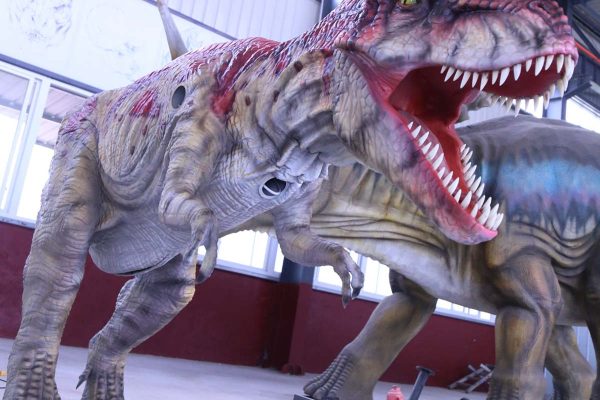
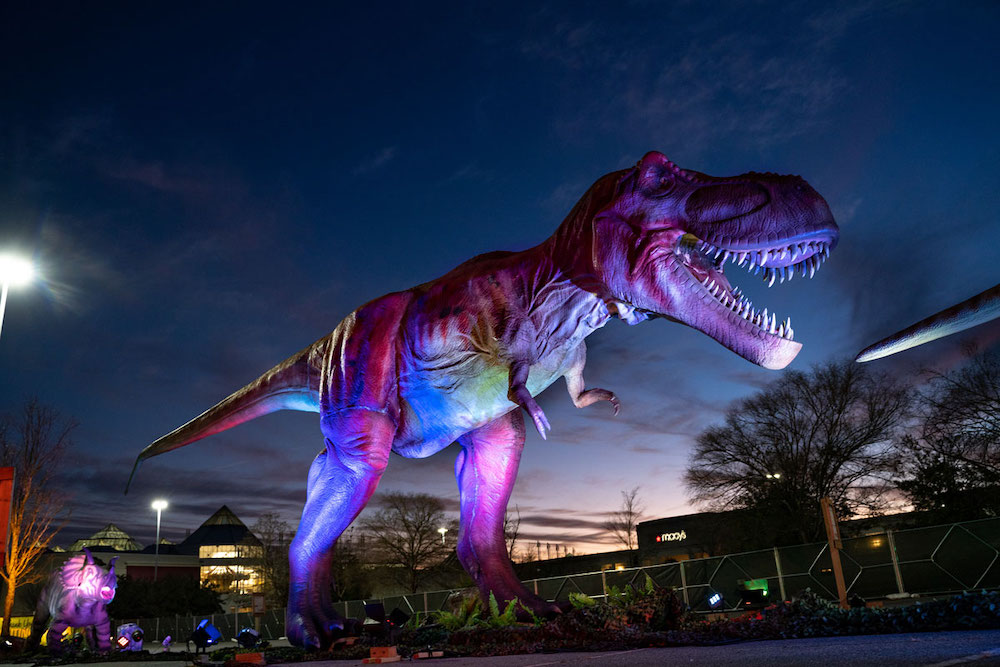
An animatronic dinosaur is a life-size (or scaled) robotic model of a prehistoric creature. It combines:
- Metal armature — the internal skeleton that defines posture and proportions
- Mechanical actuators — motors, pneumatics, or hydraulics that create movement
- Control systems — programmable logic controllers (PLCs) or sensor-based triggers
- Outer skin — traditionally fiberglass or foam, or advanced surface finish for hyper-realism
- Sound module — pre-recorded or real-time synchronized roaring and breathing effects
The level of realism and interactivity determines how complex — and how expensive — the build will be.
Key Cost Factors for Animatronic Dinosaurs
Since every animatronic dinosaur is custom-built, understanding what drives cost helps you plan a realistic budget and communicate your requirements clearly to manufacturers. Below are the primary factors that determine the investment level for your project.
Factor 1: Size and Scale
Size is the single biggest cost driver. A life-size T-Rex at 12 meters requires exponentially more material, stronger motors, and more complex engineering than a 3-meter velociraptor. Height also affects shipping logistics — oversized crates require special freight handling and customs procedures.
General principle: As length doubles, material and engineering costs typically increase by a factor of 3–4, not 2. This is because larger structures need reinforced metal armatures, distributed actuator systems, and structural engineering analysis.
Factor 2: Species and Anatomy Complexity
Not all dinosaurs are equally complex to build. A long-necked sauropod like Brachiosaurus requires extensive internal support and distributed actuation along the entire body. A compact predator like T-Rex is mechanically simpler in structure but demands more aggressive movement profiles and sophisticated jaw mechanics.
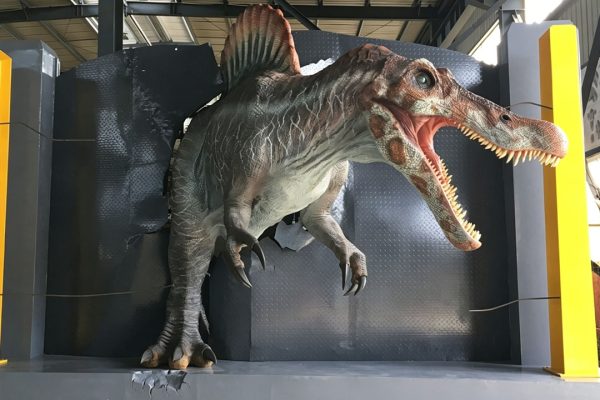
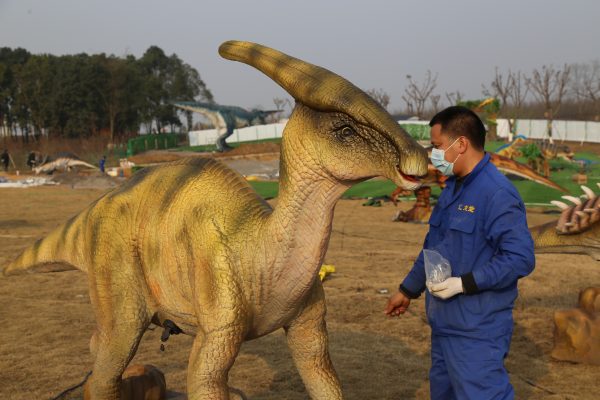
Species with unusual features — such as Spinosaurus’s sail, Stegosaurus’s plates, or Parasaurolophus’s crest — require additional custom sculpting and structural consideration, adding to design and manufacturing time.
Factor 3: Movement Complexity
Basic movements require fewer actuators and simpler programming. Advanced movements demand more sophisticated mechanical engineering and control systems.
| Movement Level | Typical Features | Cost Impact |
|---|---|---|
| Basic | Head turn, tail sway, jaw open | Baseline |
| Standard | Neck bend, claw gesture, eye movement | Moderate increase |
| Advanced | Full body shift, breathing simulation, synchronized roar | Significant increase |
| Interactive | Motion sensor trigger, riding function, touch response | Highest increase |
Each additional actuator adds not just hardware cost, but also programming time, calibration, and ongoing maintenance complexity.
Factor 4: Skin Material Selection
The choice of outer skin has a dramatic impact on both cost and service characteristics. At FestiveLanterns, we offer multiple material options based on your project’s needs:
Fiberglass / Resin Skin
- Lower material cost
- LED System: 2–3 years outdoors before fading or cracking
- Best for: Indoor installations, temporary exhibitions, budget-conscious projects
Standard Surface Finish
- Moderate cost increase over fiberglass
- Better flexibility and detail than fiberglass
- LED System: 2–3 years outdoors with proper maintenance
Premium Hand-Finished Surface (Our Patented Technology)
- Higher material investment
- LED System: 5+ years outdoors, superior detail retention
- Best for: Premium museums, outdoor parks, high-traffic interactive exhibits
- Features: Multi-layer molding replicates muscle tension, skin pores, and vascular patterns
- Certified: EU CE safety standard for child-contact applications
Our proprietary surface finish technology (Chinese invention patent ZL 2022 1 0224489.5) represents a significant engineering investment but delivers unmatched realism and durability.
Factor 5: Sound and Audio Systems
Basic models include a single-channel sound loop. Premium installations feature multi-speaker directional audio, real-time motion-synced triggers, programmable behavioral sound sets, and wireless remote control. Audio upgrades can range from a modest addition to a substantial investment depending on channel count and synchronization complexity.
Factor 6: Control Systems
| Control Type | Description | Cost Impact |
|---|---|---|
| Pre-programmed loop | Fixed sequence repeating continuously | Baseline |
| Sensor-triggered | Activates when visitors approach | Moderate increase |
| Remote-controlled | Operator controls movements in real time | Significant increase |
| AI-integrated | Adaptive behavior based on crowd density | Highest increase |
For museums and theme parks, sensor-triggered or remote-controlled systems are increasingly standard because they extend exhibit service characteristics and reduce mechanical wear from continuous operation.
Factor 7: Shipping, Installation, and Logistics
These are often underestimated but can represent a significant portion of total project investment:
- Ocean freight: Costs vary dramatically based on exhibit size, weight, and destination
- Customs clearance and duties: Varies by country and import classification
- On-site installation: Travel, labor, and equipment rental for assembly and testing
- Operator training: Included for standard models; custom protocols may require additional sessions
- Support and maintenance: Annual service plans typically represent a percentage of total project value
Important: Always confirm whether your quotation is FOB (factory) or DDP (delivered to your door). The difference in scope can be substantial and affects both cost and your coordination responsibilities.
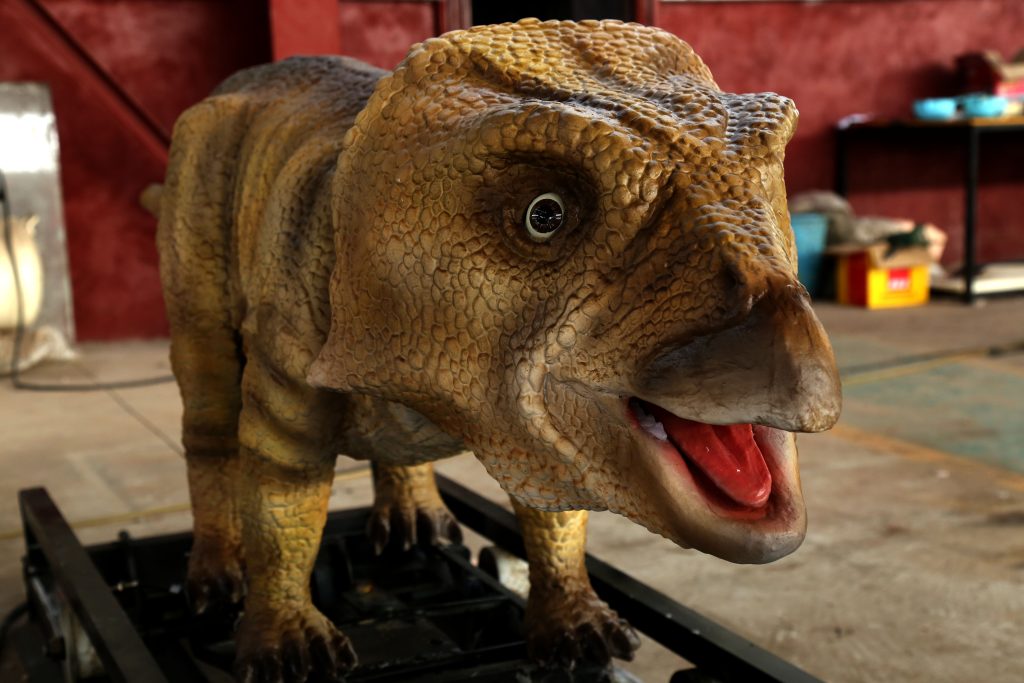
7 Factors That Drive Animatronic Dinosaur Cost
Understanding these variables will help you control your budget and communicate clearly with manufacturers.
1. Size and Scale
This is the single biggest price driver. A life-size T-Rex at 12 meters requires exponentially more material, stronger motors, and more complex engineering than a 3-meter velociraptor. Height also affects shipping — oversized crates require special freight and customs handling.
2. Species and Anatomy
Not all dinosaurs are equally expensive to build. A long-necked sauropod like Brachiosaurus requires extensive internal support and distributed actuation. A compact predator like T-Rex is mechanically simpler in structure but demands more aggressive movement profiles and jaw mechanics.
3. Movement Complexity
Basic movements cost less. Advanced movements cost more.
| Movement Level | Typical Features | Cost Impact |
|---|---|---|
| Basic | Head turn, tail sway, jaw open | Baseline |
| Standard | + Neck bend, claw gesture, eye movement | +15–25% |
| Advanced | + Full body shift, breathing simulation, synchronized roar | +30–50% |
| Interactive | + Motion sensor trigger, riding function, touch response | +50–100% |
4. Skin Material: Fiberglass vs. Surface Finish
The choice of outer skin has a dramatic impact on both cost and service characteristics.
Fiberglass / Resin Skin
- Price impact: Lower upfront cost
- LED System: 2–3 years outdoors before fading or cracking
- Best for: Indoor installations, temporary exhibitions, budget-conscious projects
Hand-Finished Surface
- Price impact: +30–60% over fiberglass
- LED System: 5+ years outdoors, superior detail retention
- Best for: Premium museums, outdoor parks, high-traffic interactive exhibits
surface finish technology is a patented process that involves multi-layer molding to replicate muscle tension, skin pores, and even vascular patterns. The result is a level of realism that fiberglass simply cannot achieve.
5. Sound and Audio Systems
Basic models include a single-channel sound loop. Premium installations feature:
- Multi-speaker directional audio
- Real-time motion-synced sound triggers
- Programmable behavioral sound sets (calm, alert, aggressive)
- Wireless remote control for live operators
Audio system complexity directly affects cost — multi-channel synchronized systems with custom sound design require significantly more engineering than basic single-speaker loops.
6. Control Systems
| Control Type | Description | Cost Impact |
|---|---|---|
| Pre-programmed loop | Fixed sequence repeating continuously | Baseline |
| Sensor-triggered | Activates when visitors approach | +10–20% |
| Remote-controlled | Operator controls movements in real time | +20–40% |
| AI-integrated | Adaptive behavior based on crowd density | +50–100% |
For museums and theme parks, remote-controlled or sensor-triggered systems are increasingly standard because they extend exhibit service characteristics and reduce mechanical wear.
7. Shipping, Installation, and Training
These are often underestimated but can represent a significant portion of total project investment:
- Ocean freight: Costs vary dramatically based on exhibit size, weight, and destination
- Customs clearance and duties: Varies by country and import classification
- On-site installation: Travel, labor, and equipment rental for assembly and testing
- Operator training: Included for standard models; custom protocols may require additional sessions
- Support and maintenance: Annual service plans typically represent a percentage of total project value
Important: Always confirm whether your quotation is FOB (factory) or DDP (delivered to your door). The difference in scope can be substantial and affects both cost and your coordination responsibilities.
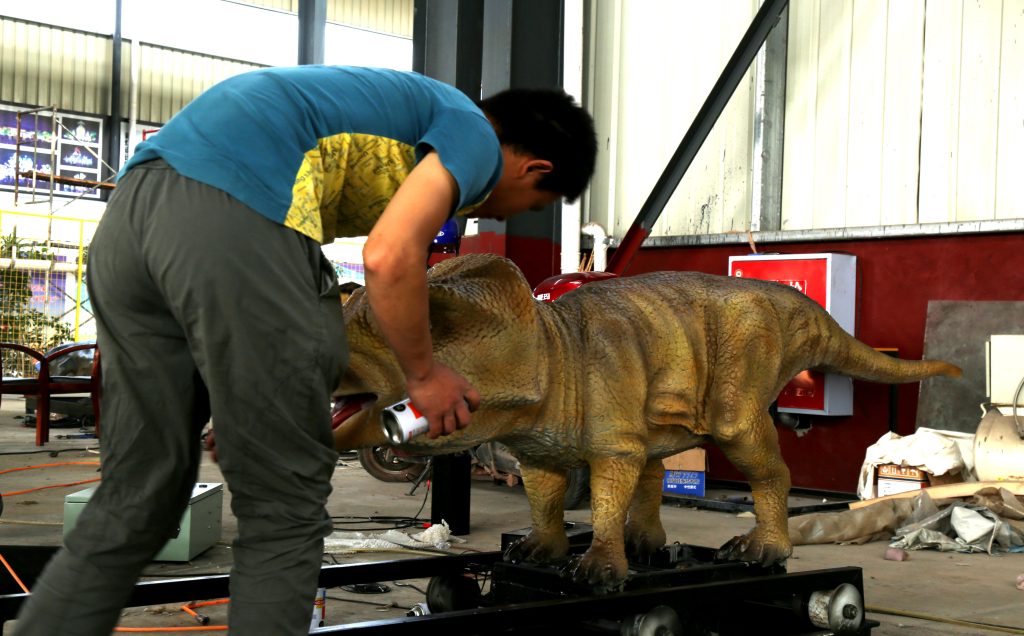
Budget Planning by Project Type
Because every project is custom, providing a specific budget number without knowing your requirements would be misleading. However, we can share general guidance on what drives investment levels for different venue types.
Museum Exhibition
Museum projects typically represent a significant investment because they require:
- High realism (hand-finished surface strongly recommended for long-term display)
- Interactive elements to engage children and families
- Durable construction for 5–10 year display cycles
- Educational signage integration
- Scientific accuracy in species representation
Typical configurations often include 1–3 medium-to-large models with sensor-triggered activation and multi-channel audio. The total investment depends on the number of exhibits, size, and interaction complexity.
Theme Park Attraction
Theme park installations typically involve larger investments due to:
- High reliability requirements for continuous daily operation
- Weather-rated outdoor components and enclosures
- Multiple models for immersive scene building
- Queue-line interaction elements and photo opportunities
- Higher movement complexity for entertainment value
Typical configurations may include 3–6 models across multiple species, with remote-controlled riding dinosaurs as premium upcharge experiences. Scale and spectacle drive the investment level.
Zoo or Botanical Garden
Zoo and botanical garden projects balance impact with practicality:
- Moderate realism with strong visual appeal
- Outdoor weather resistance for seasonal displays
- Easy setup and teardown for rotating exhibits
- Integration with existing landscape and lighting
Typical configurations often include 2–4 medium models with festive lighting accents, installed for 3–6 month display periods. The modular nature of these installations allows for flexible budgeting.
Shopping Mall or Retail
Retail environments typically require more compact solutions:
- Smaller footprint to fit within existing spaces
- High visual impact for social media sharing
- Safe interaction design for public areas
- Easy installation without structural modifications
Typical configurations often include 1–2 models with motion-sensor activation and photo-friendly posing. The limited scale makes these accessible entry points for first-time animatronic exhibitors.
Why Do Prices Vary So Much Between Manufacturers?
If you have requested quotes from multiple animatronic dinosaur suppliers, you have probably noticed wide price gaps. Here is why:
Factory Location and Labor Costs
Chinese manufacturers (particularly in Zigong, Sichuan — the world capital of lantern and animatronic craftsmanship) benefit from:
- Deep artisan talent pools with multi-generational craft traditions
- Integrated supply chains for metal, electronics, and materials
- Lower labor costs without sacrificing technical capability
Western manufacturers typically charge 2–4x more for comparable quality due to higher overhead.
In-House vs. Outsourced Production
Some suppliers are brokers who outsource fabrication to third-party workshops. This adds markup and reduces quality control. Direct manufacturers with in-house metal cutting, sculpting, and programming teams deliver better value and accountability.
Material Quality Standards
The same “hand-finished surface” label can mean very different things:
- Entry-level surface finish: basic molding, limited detail, shorter service characteristics
- Premium surface finish: multi-layer molding, muscle simulation, UV resistance, child-safe certification
Always request material specifications and, if possible, physical samples before committing.
After-Sales Support
The lowest quote is not the best quote if the supplier disappears after delivery. Reliable manufacturers offer:
- Installation supervision or on-site support
- Spare parts inventory
- Remote troubleshooting
- Annual maintenance contracts
These services are built into higher quotes but save enormous costs over the exhibit lifecycle.
Red Flags: When a Quote Seems Too Good to Be True
| Warning Sign | Risk |
|---|---|
| Price 50%+ below competitors | Likely broker markup, inferior materials, or hidden fees |
| No material specifications | You do not know what you are actually buying |
| No installation support | You are on your own for a complex mechanical installation |
| No support terms | Mechanical failures become your full financial responsibility |
| Requires 100% upfront payment | High risk of non-delivery or quality disputes |
| No portfolio or references | Unproven supplier with no track record |
A legitimate manufacturer will welcome your questions about materials, engineering, and after-sales support.
How to Get an Accurate Quote
To receive a precise quotation rather than a wide estimate, provide your manufacturer with:
- Species and approximate size — “Life-size T-Rex, 12 meters”
- Intended environment — Indoor museum / outdoor theme park / covered zoo exhibit
- Movement requirements — Which body parts should move? Should it be interactive?
- Skin preference — Fiberglass or surface finish? Realism level?
- Installation location — Country and city (affects shipping and labor)
- Timeline — When do you need delivery?
- Budget range — Sharing your budget helps manufacturers propose realistic configurations
With this information, a professional manufacturer can provide a detailed quotation within 24–48 hours, often including 3D renderings or concept sketches.
Frequently Asked Questions
How long does it take to build an animatronic dinosaur?
Standard models require 4–8 weeks. Large or custom projects require 8–16 weeks. Shipping adds 3–6 weeks depending on destination. Plan 3–6 months total for major installations.
Can I buy a used or rental animatronic dinosaur to save money?
Used models are rare because most buyers keep them for full lifecycles. Rental options exist for short-term events (1–6 months) and can be a cost-effective alternative to purchase for temporary installations. However, rental stock is limited to common species and sizes, and availability varies by season. Contact us to discuss rental options for your specific timeline.
What is the service characteristics of an animatronic dinosaur?
With proper maintenance:
- Fiberglass models: 2–4 years outdoors, 5–8 years indoors
- hand-finished surface models: 5–8 years outdoors, 10+ years indoors
Climate, usage intensity, and maintenance quality significantly affect longevity.
Do animatronic dinosaurs require ongoing maintenance?
Yes. Mechanical actuators, sensors, and audio systems require periodic inspection and lubrication. Annual maintenance service plans are available and typically include remote diagnostics, spare parts, and technician visits. The specific scope and investment depend on the number of units and their complexity.
Is it cheaper to buy from a Chinese manufacturer?
Generally yes — Chinese manufacturers in Zigong and Guangzhou offer comparable quality at 40–60% lower prices than Western or Japanese suppliers. The key is choosing a direct manufacturer with in-house production, export experience, and verifiable certifications (ISO 9001, CE marking).
Can one person operate multiple animatronic dinosaurs?
Modern control systems allow a single operator to manage multiple units simultaneously. Some manufacturers offer patented single-operator control systems that dramatically reduce labor costs for live performances or interactive exhibits.
Conclusion: Every Project Is Unique — Request a Custom Quotation
An animatronic dinosaur is a long-term investment in audience engagement, not a commodity purchase. Because every exhibit is custom-built to your specifications, providing a generic price list would not serve your planning needs accurately.
To receive a precise quotation tailored to your project, we recommend:
- Define your vision clearly — species, size, environment, and interaction goals
- Understand the cost drivers — use the factors in this guide to prioritize your requirements
- Focus on total value — consider service characteristics, maintenance, and audience impact alongside initial investment
- Choose a partner, not just a supplier — a manufacturer who understands your goals will deliver better outcomes
At FestiveLanterns, every project begins with a conversation. Share your concept, timeline, and venue requirements with our team, and we will provide a detailed quotation within 24–48 hours — including 3D renderings, material specifications, and a complete scope of work.
Our team has designed, manufactured, and installed over 5,000 animatronic exhibits for clients in 40+ countries. Whether you need a single museum piece or a full festival ecosystem, we are ready to bring your vision to life.
Last updated: June 2026. All animatronic dinosaurs are custom-built to order. Every project is quoted individually based on your specific requirements, specifications, and installation needs. Contact us for a detailed quotation.
Beyond cost, our complete animatronic dinosaur buying guide covers the full sourcing process step by step.
Related Reading
- Animatronic Dinosaur Buying Guide for Museums & Theme Parks
- Browse Our Customizable Animatronic Dinosaur Collection
Related Products
- Coin-Operated Dinosaur Ride Machine — Interactive kids ride-on attraction for shopping malls
- Ride-On Animatronic Baby Elephant — Interactive kids ride for family attractions
- Life-Size Animatronic Woolly Mammoth — Ice age megafauna with articulated trunk for museums
Need a centerpiece predator? Explore our life-size animatronic T-Rex dinosaur statue for museums and dinosaur parks.
Explore more: When budgeting an animatronic dinosaur, buyers also research these models and guides: giant panda animatronic wallpaper · baby animatronic Triceratops demo video