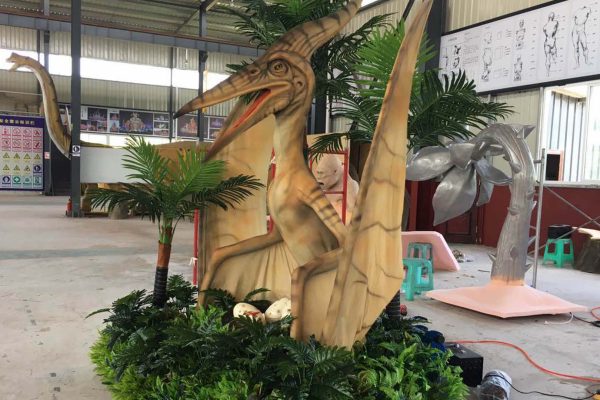
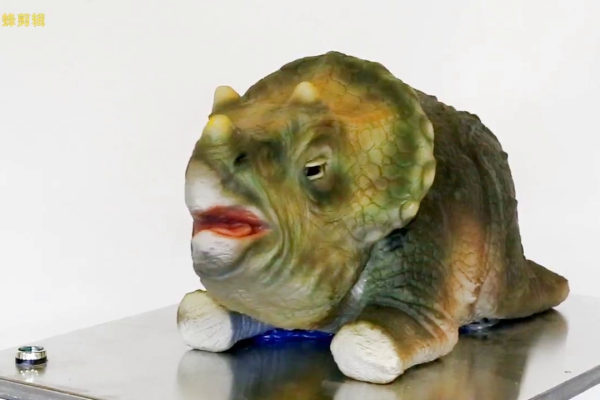
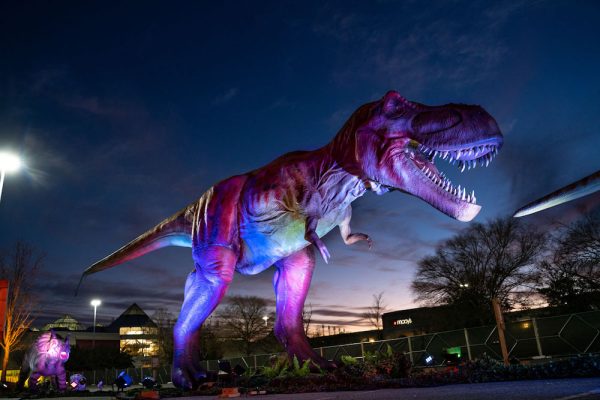
The most memorable animatronic dinosaur exhibits aren’t just realistic to look at — they interact with visitors. A dinosaur that turns its head to follow a passerby, opens its mouth in response to a child’s wave, or even carries on a conversation creates a powerful emotional connection that static displays, no matter how detailed, simply cannot achieve.
Behind these interactive experiences lies an increasingly sophisticated stack of detection and control technologies: infrared sensors, programmable motion controllers, gesture recognition, and AI-powered voice interaction. This article explores how each technology works and how they combine to create truly interactive animatronic displays.
The Four Layers of Interactive Control
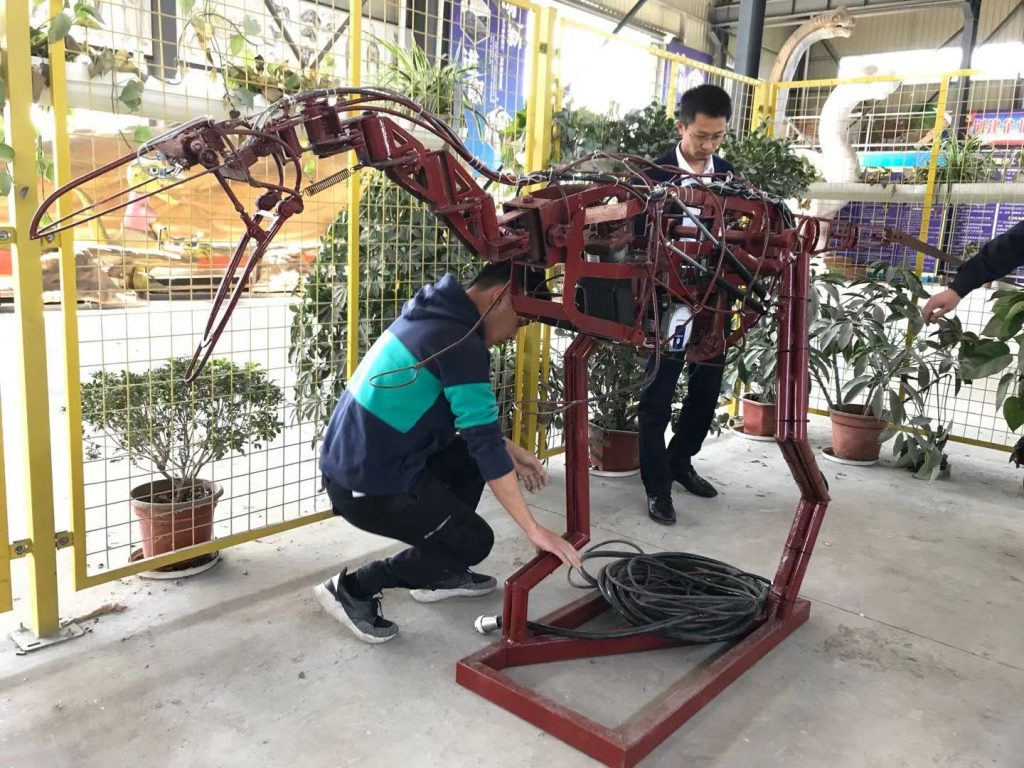
Modern interactive animatronics operate on four overlapping layers:
Layer 4: AI & Voice Interaction ──── Conversational responses, LLM-powered dialogue
Layer 3: Gesture Recognition ──────── Hand gestures, visitor movement patterns
Layer 2: Sensor Detection ─────────── Infrared, ultrasonic, pressure triggers
Layer 1: Core Programming ────────── Motion sequences, behavior scripts
Each layer builds on the one below, adding progressively more sophisticated interaction capabilities.
Layer 1: Core Motion Programming
At the foundation of every interactive animatronic is its motion control program. This software layer defines:
Basic Motion Sequences
Each joint movement is programmed as a set of parameters:
Joint: Jaw
Action: Open
Start: 0°
End: 45°
Duration: 1.5 seconds
Easing: Ease-out (slows toward end)
Sound: Roar_01.wav (3 seconds, loop)
Multiple joints are combined into sequences:
Sequence: "Roar_Display"
├── Step 1: Head tilt right (0.5s)
├── Step 2: Jaw open to 45° (1.5s) + Start roar sound
├── Step 3: Chest expand (1.0s)
├── Step 4: Head shake left-right (0.8s)
├── Step 5: Jaw close to 0° (1.0s) + Stop roar
└── Step 6: Return to idle (0.5s)

Total duration: 5.3 seconds
Behavior Modes
Modern animatronic controllers support multiple behavior modes:
| Mode | Description | Typical Use Case |
|---|---|---|
| Idle | Subtle breathing, occasional eye blink | Default state when no visitors nearby |
| Passive | Slow head tracking, soft sounds | Low-traffic periods |
| Interactive | Full animation triggered by sensors | Active visitor engagement |
| Performance | Pre-programmed show sequence | Scheduled shows, timed events |
| Sleep | All motion stopped, minimal power | Overnight, maintenance periods |
The controller automatically transitions between modes based on sensor input and time of day.
Layer 2: Sensor Detection Technology
Before an animatronic can respond to visitors, it needs to detect them. This is the role of the sensing layer.
Infrared (IR) Sensors — The Workhorse of Interactive Detection
How IR Sensors Work:
Passive infrared (PIR) sensors detect changes in infrared radiation — essentially, they sense body heat. When a visitor walks into the sensor’s field of view, the temperature change triggers a signal.
Advantages:
- Low cost: $3-10 per sensor
- Simple integration: Digital on/off output
- Low power: Microamp-level consumption
- Day/night operation: Works in complete darkness
Limitations:
- Detection only, not identification
- Limited range (5-8 meters typical)
- Affected by rapid temperature changes
Sensor Configuration for Animatronic Dinosaurs
                  ┌─────────────────────────┐
                  │   Animatronic Dinosaur   │
                  │                          │
    Front Zone    │  ┌──────────────────┐    │    Rear Zone
  IR Sensor ──────│──┤   Main Controller │────│── IR Sensor
  (5m range)      │  │  (PLC / MCU)      │    │  (3m range)
                  │  └──────────────────┘    │
                  │         │                │
                  │    ┌────┴────┐           │
                  │    │ Motion  │           │
                  │    │ Drivers │           │
                  │    └─────────┘           │
                  └─────────────────────────┘
Typical sensor layout for a mid-size animatronic dinosaur (8-12 meters):
| Sensor Position | Type | Purpose | Range |
|---|---|---|---|
| Chest/front | PIR | Detect approaching visitors | 5 meters |
| Head | PIR + Ultrasonic | Visitor proximity for close interaction | 2 meters |
| Tail base | PIR+ | Detect visitors approaching from rear | 3 meters |
| Jaw area | Contact sensor | Detect physical touch/obstruction | Contact |
Automatic Standby Mode
One of the most practical benefits of sensor-based control is power management:
IR Sensor: No visitor detected for 10 minutes
    ↓
Controller: Transition to "Sleep" mode
    ↓
Motion: Stop (90% power reduction)
Sound: Off
Sensor: Still active (low-power polling)
    ↓
IR Sensor: Visitor detected entering zone
    ↓
Controller: Wake → Transition to "Idle" → Start interactive sequence
    ↓
Full animation resumes within 0.5 seconds
This saves approximately 70-80% of energy during off-peak hours and significantly extends the lifespan of mechanical components.
Layer 3: Gesture Recognition
Moving beyond simple presence detection, gesture recognition allows visitors to actively control the animatronic’s behavior through hand and body movements.
How Gesture Control Works in Animatronics:
- Sensor array detects movement: Multiple IR or depth sensors positioned around the interaction zone
- Pattern recognition software: Analyzes the movement pattern against pre-programmed gestures
- Action mapping: Each recognized gesture triggers a specific animation response
Common Gesture Commands for Animatronic Dinosaurs:
| Visitor Gesture | Sensor Reads | Dinosaur Response |
|---|---|---|
| Wave hand left-right | IR beam interrupted, left→right | Head follows hand direction |
| Wave hand up-down | IR beam interrupted, top→bottom | Head tilts up/down |
| Clap | Audio sensor detects clap pattern | Roar response + head shake |
| Point (finger extended) | Proximity in specific zone | Approach toward pointed area |
| Raise both arms | Two zones triggered simultaneously | Stand up, full roar sequence |
| Step forward (into red zone) | Close-proximity sensor | Back away, defensive posture |
Gesture Recognition Technical Specs:
| Parameter | Typical Value |
|---|---|
| Response time | 200-500ms (gesture to animation) |
| Recognition accuracy | 85-95% (with proper sensor calibration) |
| Number of gestures | 5-12 (varies by complexity) |
| Detection range | 1-5 meters |
| Simultaneous users | 1-3 (in defined interaction zone) |
Layer 4: AI-Powered Voice Interaction
The newest and most sophisticated layer of interactive technology brings conversational AI to animatronic exhibits — allowing visitors to actually talk with the dinosaur.
How Voice-Interactive Animatronics Work
The system uses four core components:
Visitor Speech
    ↓
🎤 Microphone → Noise cancellation → Speech-to-Text (STT)
    ↓
🧠 Large Language Model (LLM) — generates contextual response
    ↓
🔊 Text-to-Speech (TTS) → Speaker → Dinosaur "speaks"
    ↓
🦕 Synchronized lip/jaw movement + gesture animation
Technology Stack
| Component | Technology | Function |
|---|---|---|
| Microphone array | 2-4 MEMS microphones | Capture visitor speech, noise cancellation |
| Speech-to-Text | Whisper / DeepSpeech | Convert audio to text |
| AI Dialogue Engine | Local LLM / API-based | Generate natural language responses |
| Text-to-Speech | Edge TTS / ElevenLabs | Convert text to natural-sounding speech |
| Lip Sync | Wav2Lip / custom algorithm | Match jaw movement to audio |
| Animation Controller | PLC / motion control | Coordinate body movement with speech |
What Makes a Good Voice-Interactive Experience
Drawing inspiration from successful interactive characters in theme parks (such as the popular “talkative” Transformer and pirate characters), the key design principles are:
- Character consistency: The dinosaur should have a defined personality — friendly educator, fierce predator, or curious creature
- Context awareness: The system should reference the venue (“Welcome to Jurassic Hall!”) and remember previous interactions
- Responsiveness: Response time under 2 seconds maintains conversational flow
- Fail gracefully: If AI understanding fails, fall back to pre-recorded responses
- Safety moderation: Profanity and sensitive topics filtered via content moderation layer
Response Generation Pipeline
Visitor: "Are you a real dinosaur?"
    ↓
STT: "are you a real dinosaur"
    ↓
Classifier: Intent = "identity_question" | Confidence: 0.97
    ↓
LLM Prompt: "You are a friendly T-Rex animatronic at a museum exhibit.
Answer questions in character. Be enthusiastic and educational."
    ↓
LLM Response: "Well, I'm the next best thing! I'm a life-size animatronic
T-Rex — built using real fossil skeletons as a reference. I've got over
50 moving parts and my roar can reach 120 decibels! Want to see me
roar?"
    ↓
TTS → Speaker output
    ↓
Animation Controller: Jaw open to "roar" position, head tilt up (synchronized)
Practical Implementation: A Complete Interactive Cycle
Here’s how all four layers work together in a real animatronic exhibit:
1. IDLE STATE
   └── IR sensor polling, subtle chest breathing

2. DETECTION
   └── IR sensor detects visitor at 4 meters
   └── Controller transitions to Interactive mode
   └── Head slowly turns toward visitor (servo motors)
   └── Pre-programmed greeting: "Welcome, explorer!"

3. INTERACTION
   └── Visitor waves hand → Gesture recognition triggers head follow
   └── Visitor says "What do you eat?" → STT → LLM → TTS → Audio response
   └── Synchronized jaw + head movement during speech
   └── Occasional blink, tail sway, chest breathing

4. DEPARTURE
   └── IR sensor: visitor leaves zone
   └── 30-second timer starts
   └── If no new visitor → Transition to Idle
   └── If new visitor → Repeat from Step 2

5. SLEEP (no visitors for 10 minutes)
   └── All motion stops
   └── Sensors remain active (low-power mode)
   └── Wake on next detection
The Future: Autonomous Learning Animatronics
The next frontier for interactive animatronics is autonomous learning — dinosaurs that adapt their behavior based on visitor interaction patterns.
Emerging Technologies
- On-device AI inference: Processing voice and gesture recognition locally (no cloud dependency)
- Adaptive behavior: The dinosaur “learns” which responses get the best visitor reactions and adjusts accordingly
- Multi-character coordination: Multiple animatronic dinosaurs communicating with each other through a shared AI system
- Visitor identification: Facial recognition (with privacy controls) to recognize returning visitors and remember past conversations
Conclusion
Interactive animatronic technology has evolved far beyond simple looped motion sequences. Modern exhibits combine infrared detection, gesture recognition, programmable motion control, and AI-powered voice interaction to create experiences that genuinely engage visitors.
For venues investing in animatronic displays, the level of interactivity directly correlates with:
- Visitor dwell time — Interactive exhibits keep visitors engaged 3-5x longer
- Social media value — Unique interactive moments generate organic content
- Return visits — Repeat visitors want to experience different interactions
- Educational impact — Interactive engagement improves information retention
At FestiveLanterns, our engineering team in Zigong designs and programs interactive animatronic systems tailored to each venue’s specific requirements — from simple IR-triggered motion sequences to full conversational AI exhibits.
Internal Links: