Chinese Lantern Festival Symbolism: How Every Lantern Element Tells a Story of Blessings
Chinese lantern festivals are far more than stunning visual spectacles. Behind every glowing dragon, every blooming lotus, and every smiling deity lies a carefully crafted language of symbolism — a visual vocabulary of blessings, hopes, and cultural values that has evolved over thousands of years.
For international event planners, venue operators, and cultural enthusiasts, understanding this Chinese lantern festival symbolism transforms a beautiful light display into a meaningful storytelling experience. When you know what each element represents, you can create festivals that resonate more deeply with audiences and deliver authentic cultural immersion.
What Makes Chinese Lantern Festival Symbolism So Powerful?
Chinese culture has a long tradition of using visual symbols to convey abstract concepts. Lantern festivals, as one of China’s most celebrated art forms, are rich with this symbolic language. Every color, creature, character, and composition is intentional — designed to communicate blessings for prosperity, happiness, longevity, and harmony.
For venue operators planning a Chinese lantern festival or zoo lights event, incorporating these symbolic elements adds educational value and cultural authenticity that visitors increasingly seek. According to recent search data, Chinese culture and traditions consistently rank among the most searched cultural topics globally, with “chineseculture” alone attracting over 50,000 monthly searches.
The God of Wealth (Caishen): The Ultimate Symbol of Prosperity
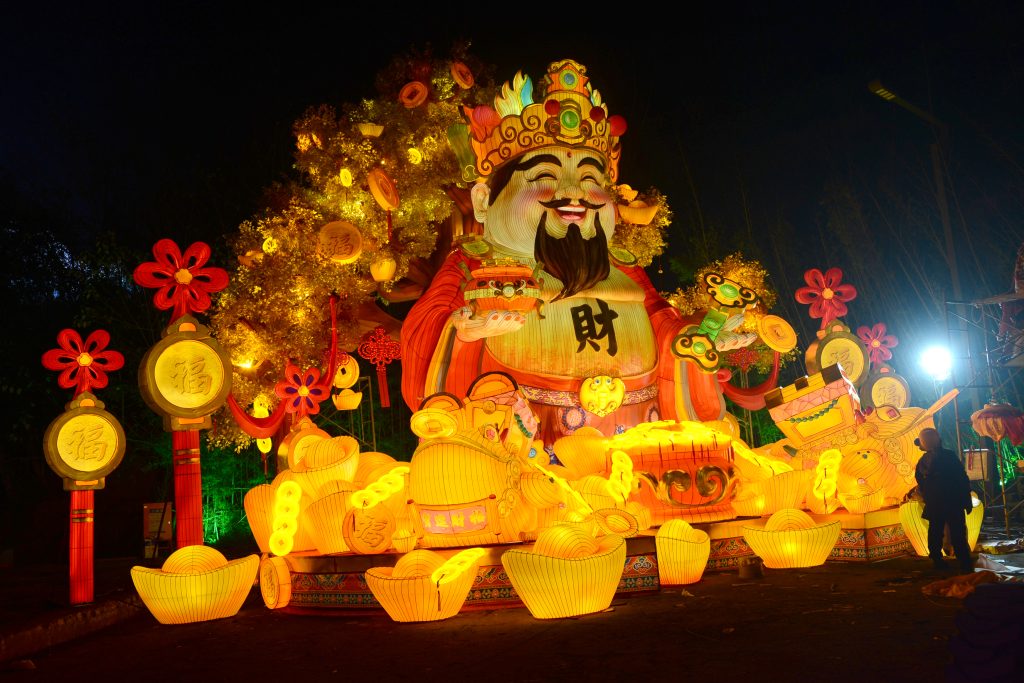
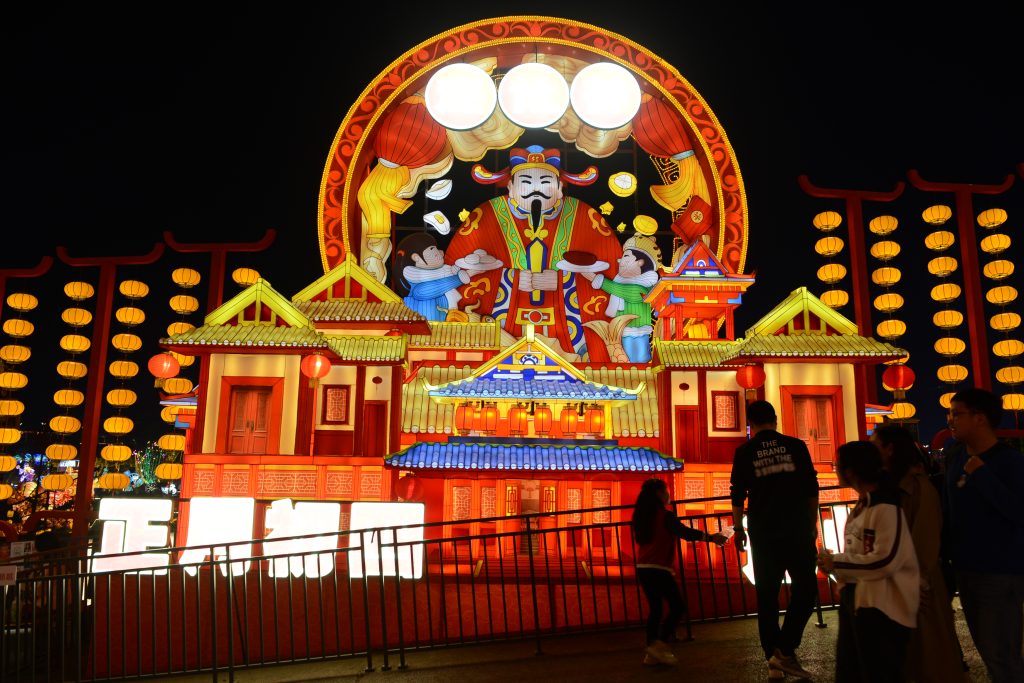
One of the most beloved figures in Chinese lantern festivals is Caishen (财神), the God of Wealth. In Chinese mythology, Caishen is a deified figure who dispenses wealth and good fortune to those who honor him. During Chinese New Year and lantern festivals, Caishen lanterns are among the most requested designs.
What Caishen Represents:
- Material prosperity — financial abundance and business success
- Generosity — the virtue of sharing wealth with others
- New beginnings — starting the new year with financial blessings
Where to Place Caishen Lanterns:
- Entrance areas to “invite” wealth into the venue
- Shopping mall centerpieces during Lunar New Year campaigns
- Festival gateways and arches
Pairing Suggestions: Caishen is often paired with gold ingots (yuanbao), lucky coins, and red banners bearing the character 福 (fú, “blessing”) — all reinforcing the prosperity theme.
The Blessing of Fu (福): China’s Most Important Character
The character 福 (fú) — meaning “blessing,” “good fortune,” or “happiness” — is the single most important auspicious symbol in Chinese culture. During lantern festivals, you’ll see it displayed in three primary ways:
1. The Standing Fu (正福)
When displayed upright, 福 represents blessings arriving in their proper, balanced form. This is the standard placement for most lantern displays.
2. The Inverted Fu (倒福)
Perhaps the most famous visual pun in Chinese culture: hanging the 福 character upside down. The Chinese word for “inverted” (倒, dào) sounds identical to the word for “arrive” (到, dào). So an upside-down 福 literally means “blessings have arrived.” This clever wordplay is a beloved tradition during Chinese New Year and lantern festivals.
3. The Hundred Blessings (百福)
Some lantern displays feature 100 variations of the 福 character in different calligraphic styles — a powerful visual statement representing the wish for “complete and total blessings.”
SEO Tip: Content about “blessings in chinese culture” and “chinese culture and traditions” consistently attracts high search volumes, making this an excellent topic for blog content and social media posts.
Mandarin Ducks (Yuanyang): Love, Fidelity, and Togetherness
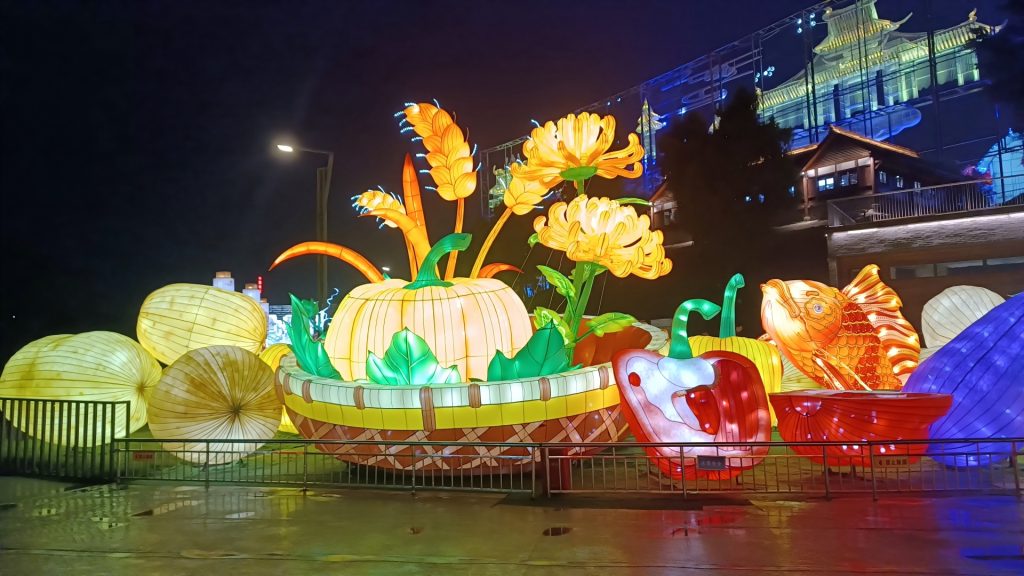
The mandarin duck (鸳鸯, yuānyāng) is perhaps the most romantic symbol in Chinese culture. Known in Chinese as yuanyang (a compound of the male and female names for the species), these birds are believed to mate for life, making them the ultimate symbol of marital fidelity and lasting love.
What Mandarin Duck Lanterns Represent:
- Conjugal bliss — a happy and harmonious marriage
- Fidelity — lifelong commitment between partners
- Togetherness — the wish for couples to never be separated
- “Flying wing to wing” (比翼双飞, bǐyì shuāngfēi) — the poetic ideal of two lovers flying side by side as equals
Where to Place Mandarin Duck Lanterns:
- Romantic zones within lantern festivals
- Wedding celebration venues
- Valentine’s Day or Qixi (Chinese Valentine’s) events
- Lakes and water features (mandarin ducks are water birds)
Pairing Suggestions: Mandarin ducks are often displayed alongside lotus flowers (purity and rebirth) and paired heart-shaped lanterns for maximum romantic impact.
The Dragon: Power, Authority, and Good Fortune
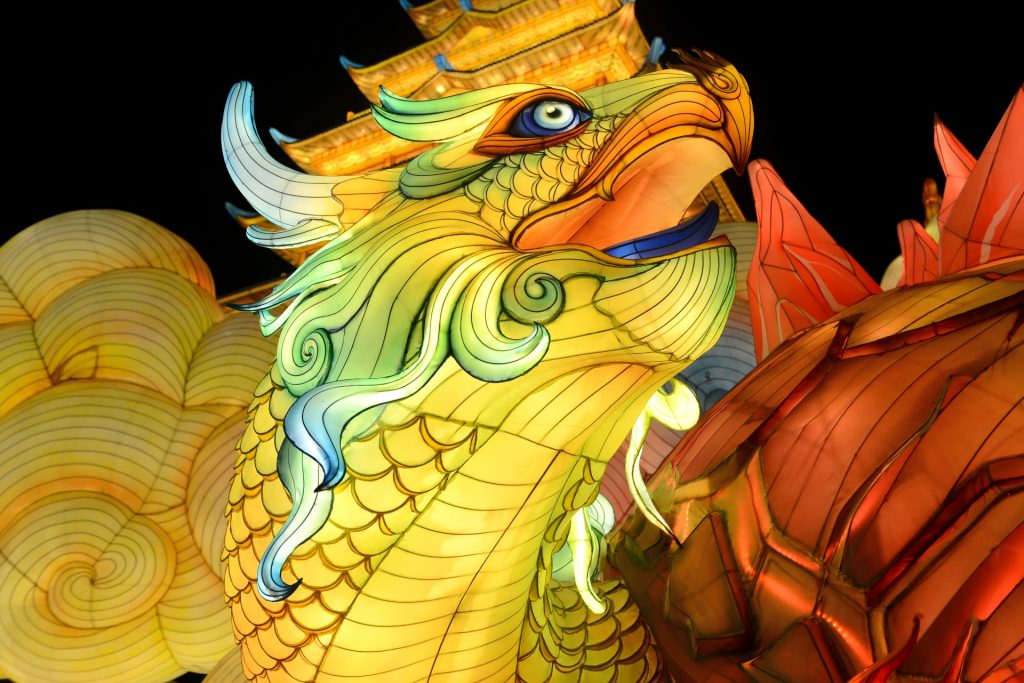
No discussion of Chinese lantern festival symbolism is complete without the dragon. Unlike Western dragons (often associated with destruction), the Chinese dragon (龙, lóng) is a benevolent, powerful creature that represents:
- Imperial authority — the dragon was the symbol of the Emperor
- Power and strength — the ability to overcome obstacles
- Good fortune — the dragon brings rain for crops and prosperity
- Yang energy — active, masculine creative force
- The East — one of the Four Celestial Guardians
Dragon Color Meanings in Lantern Displays:
| Color | Meaning | Best For |
|---|---|---|
| Gold/Yellow | Imperial power, wealth | Main entrance, centerpiece |
| Red | Joy, celebration, luck | Chinese New Year events |
| Green | Growth, harmony, nature | Zoo lights, botanical gardens |
| Blue/Teal | Tranquility, wisdom | Water features, cultural exhibitions |
| Rainbow | Modern, inclusive celebration | Family-friendly events, night parades |
SEO Opportunity: “chinese dragon lantern” and “illuminated dragon lanterns” are among the highest-volume search terms in our keyword analysis, with consistent year-round demand.
The Phoenix: Beauty, Grace, and Rebirth
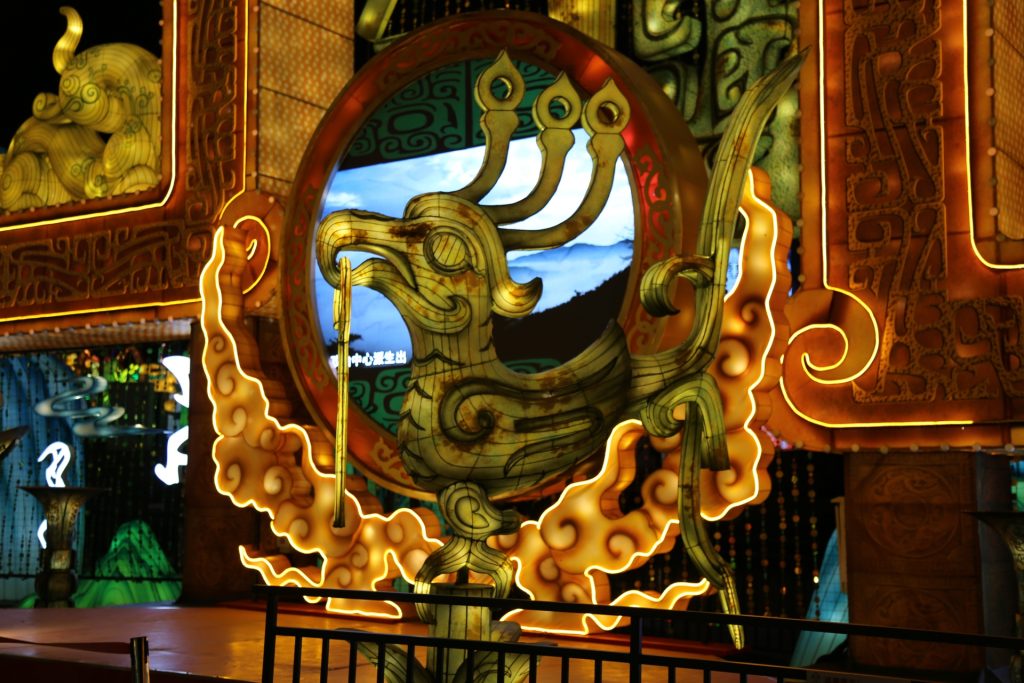
The Chinese phoenix (凤凰, fènghuáng) is the queen of birds in Chinese mythology. Unlike the single phoenix of Western myth, the Chinese fènghuáng is a composite creature combining the features of multiple birds — the head of a golden pheasant, the body of a mandarin duck, the tail of a peacock, and the legs of a crane.
What the Phoenix Represents:
- Female grace and beauty — the yin to the dragon’s yang
- Rebirth and renewal — rising from adversity
- High virtue — moral excellence and integrity
- Marital harmony — when paired with the dragon
The Dragon-Phoenix Combination: When a dragon and phoenix appear together in a lantern display, it represents the ideal marriage — the dragon (male/yang) and phoenix (female/yin) in perfect balance. This is one of the most popular themes for wedding-related lantern installations.
The Lotus Flower: Purity, Enlightenment, and Harmony
The lotus (荷花, héhuā) holds profound significance in Chinese culture, influenced by both Buddhism and Taoism. Growing from muddy water to produce a pristine white or pink flower, the lotus symbolizes:
- Purity arising from defilement — remaining unstained by the world’s troubles
- Spiritual enlightenment — the journey from ignorance to wisdom
- Harmony — the balance between material and spiritual life
- Summer — one of the four seasonal flowers
Lotus Lantern Applications:
- Floating water lantern displays (paired with water lantern festivals)
- Meditation and wellness zones
- Buddhist cultural exhibitions
- Summer festival decorations
The Koi Fish: Perseverance and Success
The koi fish (鲤鱼, lǐyú) is a beloved symbol in Chinese culture, inspired by the legend of the koi that swam upstream against the Yellow River’s currents to reach the Dragon Gate, where it transformed into a dragon.
What Koi Represent:
- Perseverance — overcoming obstacles through determination
- Success — achieving one’s highest potential
- Abundance — koi are associated with wealth and prosperity
- Academic achievement — the “Dragon Gate” story is often used to inspire students
Koi Lantern Design Tips:
- Display koi swimming upstream (toward the gate/entrance)
- Use orange, gold, and red colors for maximum auspicious impact
- Combine with water features for dramatic reflected lighting effects
- Add lotus flowers for a complete “harmonious garden” theme
The Carp and Dragon Gate: A Story of Transformation
The legend of “The Carp Leaping Over the Dragon Gate” (鲤鱼跳龙门) is one of the most inspiring stories in Chinese folklore. According to the tale, a carp that successfully swims upstream and leaps over the Dragon Gate waterfall transforms into a majestic dragon.
This powerful symbol represents:
- Academic and career success — passing examinations or achieving promotions
- Personal transformation — realizing one’s full potential
- Overcoming adversity — persistence in the face of challenges
Lantern Festival Application: Create a sequential display showing the carp’s journey — from struggling against the current to the triumphant leap over the Dragon Gate — telling a complete story across your venue.
The Laughing Buddha (Maitreya): Contentment and Abundance
The Laughing Buddha (弥勒佛, Mílèfó), also known as the “Happy Buddha” or Budai, is a beloved figure in Chinese Buddhist tradition. With his rotund belly, cheerful smile, and sack of treasures, he represents:
- Contentment — happiness comes from within
- Generosity — his sack contains gifts for all
- Abundance — material and spiritual prosperity
- Good luck — rubbing his belly is said to bring fortune
Placement Tips: The Laughing Buddha is best placed near festival exits, as a final “blessing” to departing visitors, or near food and marketplace areas where his association with abundance feels most relevant.
The Peach: Longevity and Immortality
In Chinese mythology, the peach (桃子, táozi) is the fruit of the gods. The Queen Mother of the West (Xiwangmu) grows peaches of immortality in her celestial garden that ripen once every 3,000 years.
Peach Symbolism:
- Longevity — a long and healthy life
- Immortality — transcending mortal limitations
- Marriage — peach blossoms are associated with romance
- Spring — the peach tree blooms in early spring
Lantern Applications: Peach-shaped lanterns are popular for senior-focused events, birthday celebrations, and spring festivals. They pair beautifully with crane lanterns (another longevity symbol).
The Crane: Longevity and Wisdom
The red-crowned crane (鹤, hè) is one of the most revered birds in Chinese culture, often called the “immortal crane” (仙鹤). With a service characteristics of 50-60 years in the wild (and even longer in captivity), the crane is the quintessential symbol of longevity.
Crane Symbolism:
- Longevity — living to a ripe old age
- Wisdom — accumulated knowledge over a long life
- Nobility — elegant bearing and dignified presence
- Immortality — often depicted alongside pine trees and deities
Color Symbolism in Chinese Lantern Displays
Beyond individual elements, color itself carries deep meaning in Chinese culture. Understanding color symbolism is essential for creating authentic and harmonious lantern festival displays.
| Color | Chinese Name | Meaning | Festival Applications |
|---|---|---|---|
| Red | 红色 (hóngsè) | Joy, luck, prosperity, celebration | Chinese New Year, weddings, grand openings |
| Gold/Yellow | 金色 (jīnsè) | Imperial power, wealth, nobility | Main centerpieces, dragon displays |
| Green | 绿色 (lǜsè) | Growth, harmony, nature | Zoo lights, botanical themes, spring events |
| Blue | 蓝色 (lánsè) | Tranquility, wisdom, immortality | Water features, night sky themes |
| White | 白色 (báisè) | Purity, mourning (context-dependent) | Winter festivals, lotus displays |
| Purple | 紫色 (zǐsè) | Nobility, spirituality | Cultural exhibitions, evening ambiance |
| Orange | 橙色 (chéngsè) | Warmth, harvest, abundance | Autumn festivals, harvest themes |
How to Combine Symbols for Maximum Impact
Creating a meaningful lantern festival display is like composing a visual poem. Here are some classic combinations used by master designers:
The “Complete Blessings” Display
Dragon + Phoenix + Fu Character + Peach
- Represents: Power + Beauty + Blessings + Longevity
- Best for: Grand festival entrances and main stages
The “Romantic Union” Display
Mandarin Ducks + Lotus + Paired Heart Lanterns + Phoenix
- Represents: Love + Purity + Union + Grace
- Best for: Couples’ zones, Valentine’s events, wedding venues
The “Prosperity” Display
God of Wealth + Gold Ingots + Koi Fish + Red Lanterns
- Represents: Wealth + Abundance + Perseverance + Joy
- Best for: Shopping malls, business districts, New Year celebrations
The “Longevity & Wisdom” Display
Crane + Pine Tree + Peach + Laughing Buddha
- Represents: Long life + Resilience + Health + Contentment
- Best for: Community events, senior venues, garden settings
Bringing Chinese Culture to Life Through Lantern Festivals
For international venues looking to create authentic Chinese lantern festivals, understanding this symbolic language is the difference between a generic light show and a genuinely immersive cultural experience. Visitors today are increasingly sophisticated — they’re not just looking for pretty lights; they want to learn about Chinese culture and traditions, understand the meaning behind the art, and share those discoveries on social media.
At FestiveLanterns, our master artisans in Zigong — the world capital of lantern art for over 800 years — have been crafting these symbolic displays for generations. Every lantern we create carries the authentic cultural knowledge that makes Chinese lantern festivals so captivating.
Plan Your Symbolic Lantern Festival Display
Ready to create a lantern festival that tells a story of blessings, prosperity, and cultural heritage? Our team specializes in designing custom illuminated dragon lanterns, symbolic animal displays, and complete festival experiences that resonate with audiences worldwide.
Tell us your venue size, preferred themes, and target audience — we’ll create a 3D visualization and detailed proposal within 5 business days.