Introduction: Where Ancient Craft Meets Ancient Creatures
In the heart of Zigong, Sichuan — a city celebrated as both the “Lantern Capital of China” and the “Dinosaur Capital of the World” — something magical happens when two ancient traditions converge. At HuiLongTang Culture & Arts, we’ve perfected the art of bringing prehistoric giants to life through illuminated silk sculptures that captivate visitors of all ages.
Dinosaur lanterns represent one of our most popular exhibition categories, combining scientific accuracy with artistic imagination to create immersive prehistoric worlds that transport visitors back millions of years.
The Zigong Connection: A Perfect Match
Zigong’s unique dual heritage makes it the ideal birthplace for dinosaur lantern art. The region has yielded some of China’s most significant dinosaur fossil discoveries, including the famous Dashanpu Dinosaur Quarry. Simultaneously, Zigong’s 800-year lantern-making tradition represents the pinnacle of Chinese festival lighting craftsmanship.
This convergence means our artisans understand both the anatomical details that make dinosaurs scientifically compelling and the lighting techniques that make them visually spectacular.
Featured Dinosaur Lantern Species
Stegosaurus: The Plated Wonder
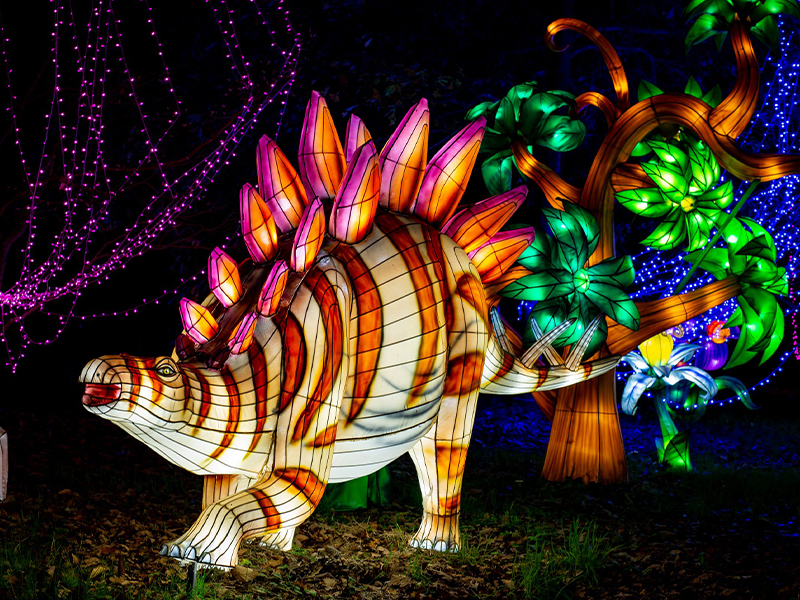
Our Stegosaurus lanterns showcase the distinctive kite-shaped plates that make this Jurassic herbivore instantly recognizable. Using gradient coloring techniques, we illuminate each plate in warm oranges, pinks, and purples, creating a stunning silhouette against the night sky. The alternating pattern of the 17 plates demonstrates both scientific accuracy and artistic flair.
[Stegosaurus lantern with colorful illuminated plates in garden setting]
Triceratops: Family Groups in Light
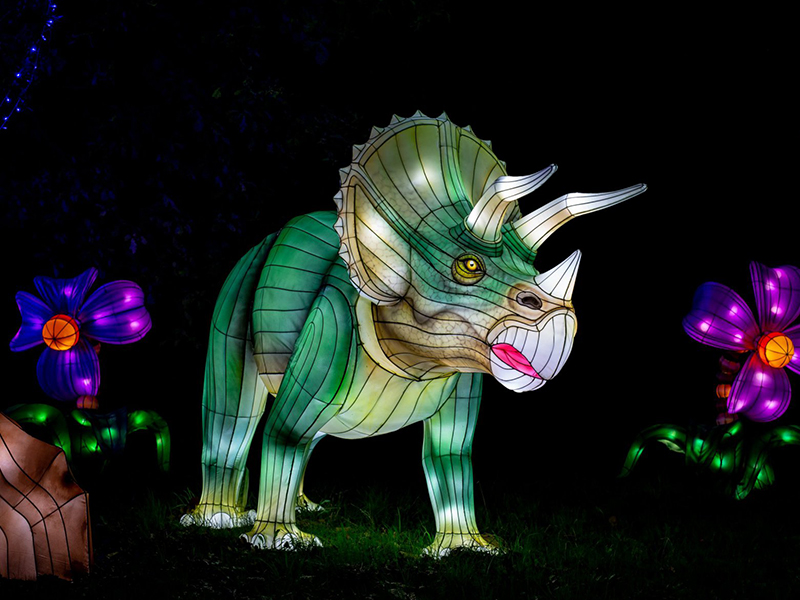
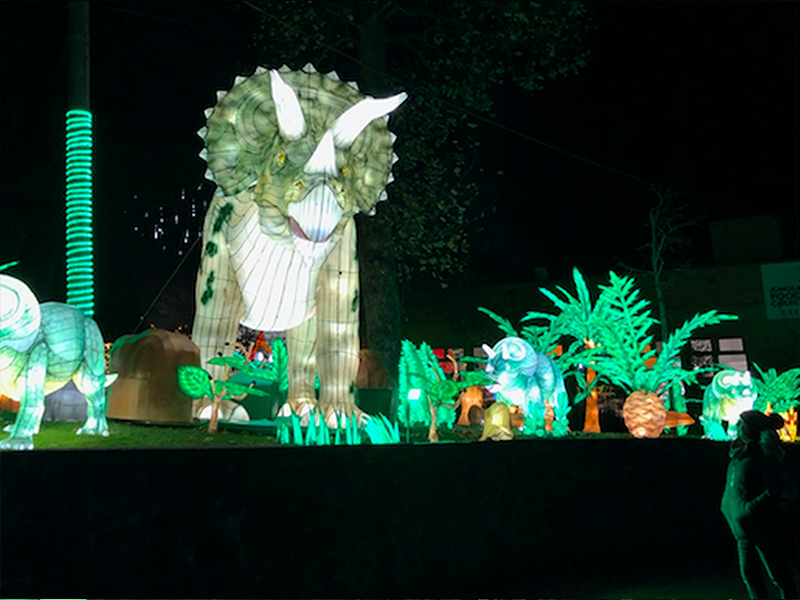
Nothing captures visitors’ hearts quite like our Triceratops family installations. Featuring protective parents with their curious calves, these groupings demonstrate the social nature that paleontologists believe these horned dinosaurs exhibited. The detailed frill patterns and expressive eyes give each Triceratops personality, while strategic lighting emphasizes their impressive three-horned profiles.
[Triceratops family lantern group with parent and baby dinosaurs]
Brachiosaurus: Gentle Giants of the Canopy
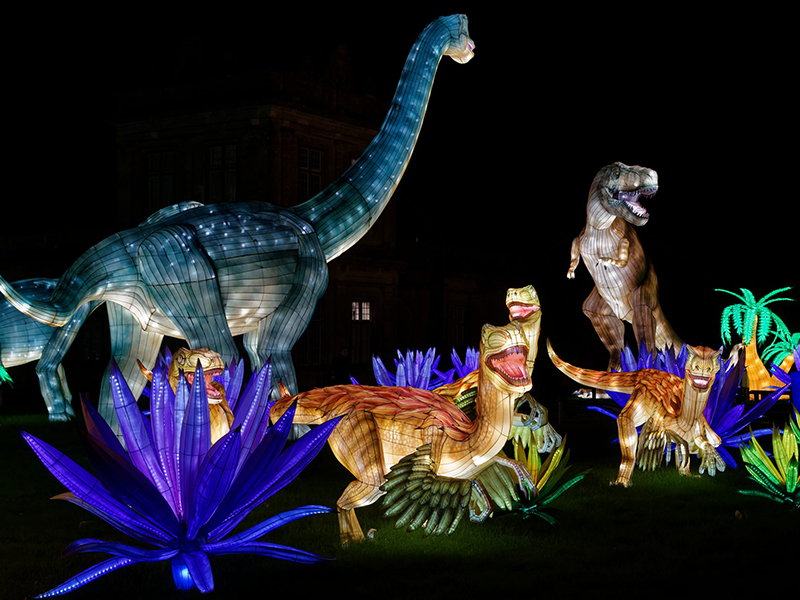
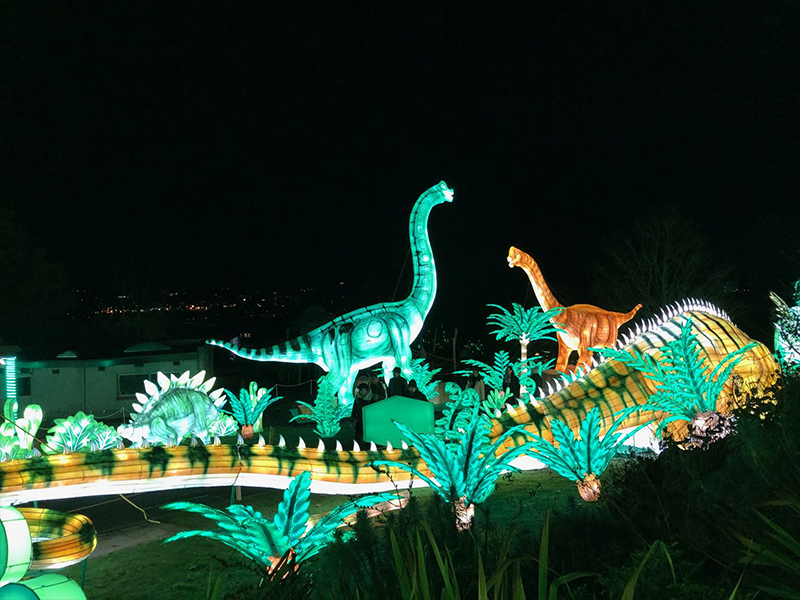
Our towering Brachiosaurus lanterns reach heights of 8+ meters, their long necks craning upward as if browsing on prehistoric treetops. The countershading coloration — darker on top, lighter below — follows scientific theories about these massive sauropods. When illuminated in soft greens and warm ambers, they create an ethereal presence that dominates any exhibition space.
[Brachiosaurus long-neck dinosaur lanterns with palm trees]
Tyrannosaurus Rex: King of the Lanterns
No prehistoric display is complete without the T-Rex. Our T-Rex lanterns capture the fearsome predator in dynamic poses — head lowered, powerful jaws agape, tiny arms poised for action. Strategic lighting from below creates dramatic shadows that emphasize the muscular structure and predatory nature of history’s most famous dinosaur.
![T-Rex and dinosaur group scene with multiple species]
The Technical Challenge: Engineering Prehistoric Accuracy
Creating scientifically accurate dinosaur lanterns requires extensive research and specialized techniques:
Anatomical Research
Our design team studies the latest paleontological findings to ensure proportions, posture, and features reflect current scientific understanding. We collaborate with paleontologists from the Chinese Academy of Sciences and local universities to verify accuracy.
Structural Engineering
Large dinosaurs like Brachiosaurus present unique engineering challenges. Our internal framework must support significant weight while maintaining the graceful curves that characterize these creatures. Internal LED placement ensures even illumination without visible wiring.
Color Theory
While we can’t know dinosaurs’ exact colors, we apply scientific principles — countershading for camouflage, display colors for species recognition, and environmental adaptation — to create plausible and visually striking color schemes.
Dynamic Posing
Unlike static museum displays, our lanterns capture movement and behavior: a Triceratops protective stance, a Velociraptor’s hunting posture, or a Stegosaurus turning to display its defensive plates.
Creating Immersive Prehistoric Environments
The most successful dinosaur lantern exhibitions don’t just display individual creatures — they recreate entire ecosystems:
Jurassic Forests
Towering tree ferns, cycads, and prehistoric conifers surround our dinosaur lanterns, creating the lush environment these creatures would have inhabited. Fiber-optic “fireflies” add magical atmosphere.
Cretaceous Plains
Open grassland scenes featuring herds of duck-billed dinosaurs grazing, with T-Rex figures positioned as distant threats on the horizon. The sense of scale and ecosystem interaction educates while entertaining.
Interactive Elements
Sound design brings the prehistoric world to life — rumbling sauropod calls, trumpeting hadrosaurs, and the terrifying roar of predators. Motion sensors trigger responsive lighting that makes the dinosaurs appear to notice visitors.
Global Success Stories
Our dinosaur lanterns have delighted audiences worldwide:
- Boston Franklin Park Zoo**: A summer exhibition featuring 60+ dinosaur and marine life installations, drawing 80,000+ visitors
- European Light Festivals**: Stegosaurus and Triceratops lanterns as centerpieces of winter light trails
- Asian Theme Parks**: Permanent dinosaur valley installations with 20+ species represented
Educational Impact
Beyond entertainment, dinosaur lanterns serve important educational functions:
Science Communication**
Each installation includes interpretive signage explaining the dinosaur’s era, diet, size, and unique characteristics. Visitors learn while experiencing the “wow factor” of giant illuminated creatures.
Paleontology Inspiration**
Young visitors, captivated by the spectacle, often develop lasting interest in paleontology and natural history. Many future scientists first fell in love with dinosaurs through experiences like these.
Cultural Exchange**
For international venues, dinosaur lanterns represent a unique cultural offering — Chinese artistic tradition applied to universally fascinating subject matter.
Planning Your Dinosaur Lantern Exhibition
Whether you’re a zoo, museum, theme park, or festival organizer considering a dinosaur lantern exhibition, we recommend:
Species Selection
Mix iconic favorites (T-Rex, Triceratops, Stegosaurus) with lesser-known species to provide educational variety. Consider your audience — younger children love gentle herbivores, while older visitors appreciate scientific accuracy.
Scale Variation
Include specimens of various sizes — towering sauropods create spectacle, while smaller raptors allow detailed observation. The contrast emphasizes the true diversity of prehistoric life.
Thematic Grouping
Organize by era (Triassic, Jurassic, Cretaceous) or ecosystem (forest, plains, coastal) to create educational coherence. This helps visitors understand that “the age of dinosaurs” spanned 160 million years of changing environments.
Interactive Components
Photo opportunities, fossil dig stations, and educational trails extend the experience beyond passive viewing. Consider augmented reality features that show dinosaurs “coming to life” through visitors’ phones.
The Future of Dinosaur Lantern Art
As LED technology advances and paleontological discoveries continue, dinosaur lantern art evolves. We’re currently developing:
- Animated Elements: Subtle movements — head turning, tail swaying, breathing effects — powered by quiet electric motors
- Responsive Lighting: Dinosaurs that react to visitor presence with sound and light changes
- AR Integration: Phone apps that overlay skin, feathers, and behaviors based on latest scientific theories
- Modular Systems: Reconfigurable installations that can represent different prehistoric eras or ecosystems
Conclusion: Timeless Appeal, Modern Magic
Dinosaur lanterns represent the perfect fusion of ancient Chinese artistry and timeless human fascination with prehistoric life. From Zigong’s workshops to exhibitions around the world, these illuminated giants continue to inspire wonder, educate visitors, and create unforgettable memories.
At HuiLongTang, we’re proud to carry forward both traditions — the 800-year lantern-making heritage and the scientific legacy of Zigong’s dinosaur discoveries — to create experiences that educate, entertain, and inspire audiences around the world.
About the Author: HuiLongTang Culture & Arts Co., Ltd. is a leading Chinese lantern and animatronic manufacturer based in Zigong, Sichuan. With 80+ professionals and a 60,000m² production base, we’ve delivered projects to 30+ countries. Contact us to discuss your dinosaur lantern exhibition needs.
Category: Lantern Guides | Tags: #DinosaurLanterns #PrehistoricArt #ZigongLanterns #DinosaurExhibition #ChineseLanternCraft
Related Products & Resources
- Chinese Lantern Products — Browse our full range of custom lantern displays
- Animatronic Dinosaurs & Animals — Life-size custom exhibits for parks and museums
- More Guides & Articles — Festival planning, buying guides, and industry insights
- Get a Free Custom Proposal & Quote