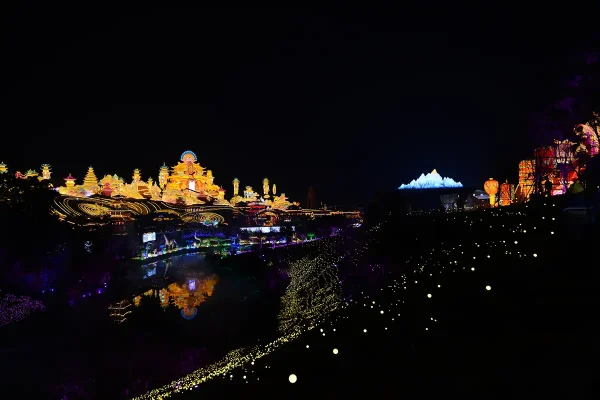
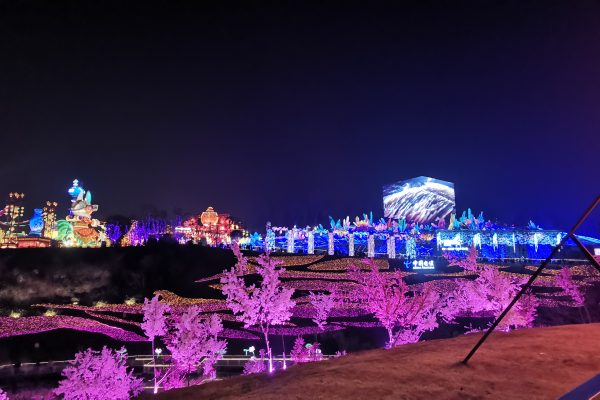
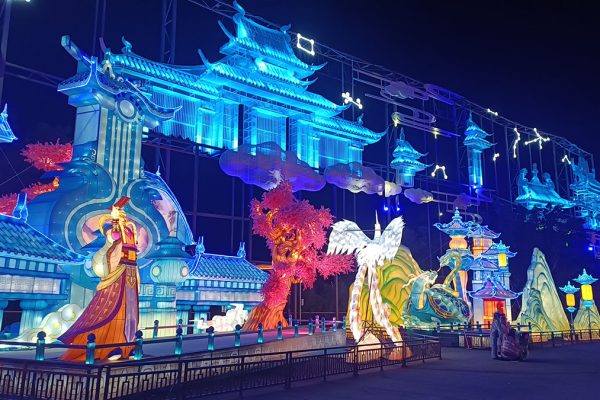
If you are organising a lantern festival — whether for a zoo, botanical garden, theme park, or city celebration — one of the first decisions you will make is the event’s cultural framing. Should it be branded as an “Asian Lantern Festival” or a “Chinese Lantern Festival“?
The two terms are often used interchangeably, but they carry different expectations for visitors, different programming implications, and different marketing angles. This article clarifies the distinction, traces the historical origins, and helps event planners choose the right positioning for their event.
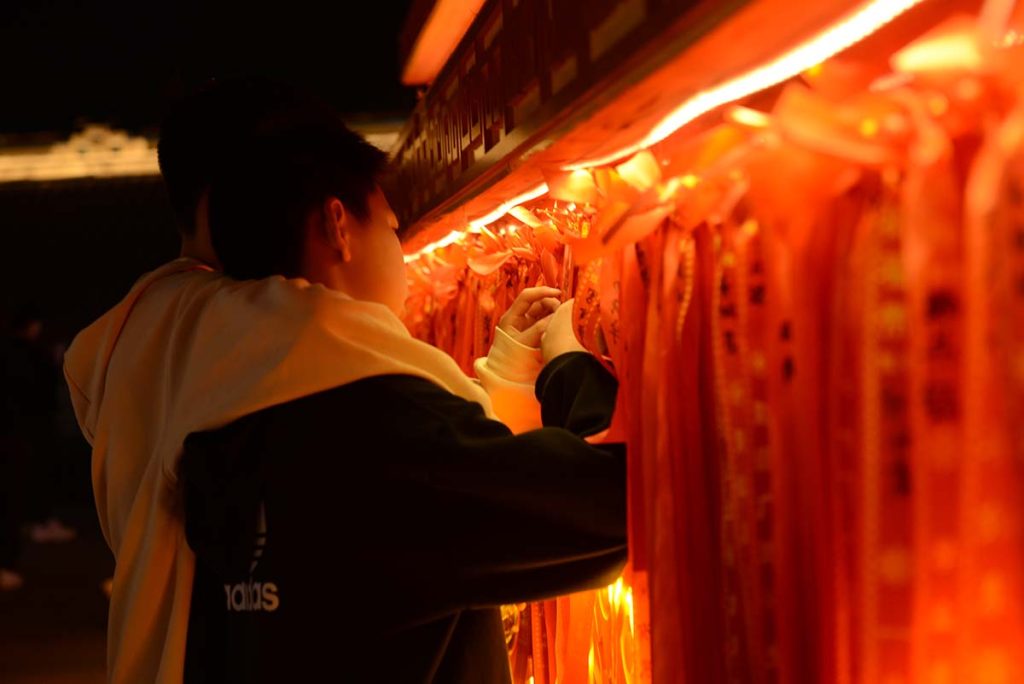
Featured Product: Lantern Riddle Activity Display — An interactive illuminated riddle wall based on the 2,000-year-old tradition of 猜灯谜. Visitor dwell time averages 2–5 minutes. Custom bilingual riddles available.
The Short Answer
| Aspect | Chinese Lantern Festival | Asian Lantern Festival |
|---|---|---|
| Cultural origin | Rooted specifically in Chinese tradition (元宵节, the Lantern Festival on the 15th day of the Lunar New Year) | A broader umbrella covering lantern traditions from China, Japan, Korea, Thailand, Vietnam, and other Asian cultures |
| Visual style | Dominated by Zigong-style lantern-craft lanterns — dragons, phoenixes, pagodas, zodiac animals, mythological figures | May include Chinese lanterns plus Japanese chochin paper lanterns, Korean yeondeung lotus lanterns, Thai khom loi sky lanterns, and modern fusion designs |
| Visitor expectation | Expects a culturally specific, authentic Chinese festival experience | Expects a pan-Asian cultural showcase with diversity and variety |
| Best for | Chinese New Year events, Chinatown celebrations, cultural authenticity-focused venues, Mid-Autumn festivals | Destination zoos and botanical gardens (especially in North America), multicultural city festivals, venues that want to rotate themes annually |
Historical Origins
Chinese Lantern Festival (元宵节)
The Chinese Lantern Festival dates back over 2,000 years to the Han Dynasty (206 BCE – 220 CE). It marks the final day of the Lunar New Year celebrations — the 15th day of the first lunar month. Traditionally, families hang red lanterns outside their homes, solve lantern riddles (猜灯谜), eat sweet glutinous rice balls (元宵 / 汤圆), and watch lion and dragon dances.
The festival is deeply tied to Buddhist and Taoist traditions. Emperor Ming of Han, a Buddhist, ordered lanterns to be lit in palaces and temples on the 15th day as a gesture of respect to Buddha. Over centuries, this court ritual spread to common people and evolved into a nationwide celebration.
Today, the Chinese Lantern Festival has a global footprint. Zigong, in Sichuan Province, is the world capital of lantern manufacturing — producing over 80% of the large-scale festival lanterns exported internationally.
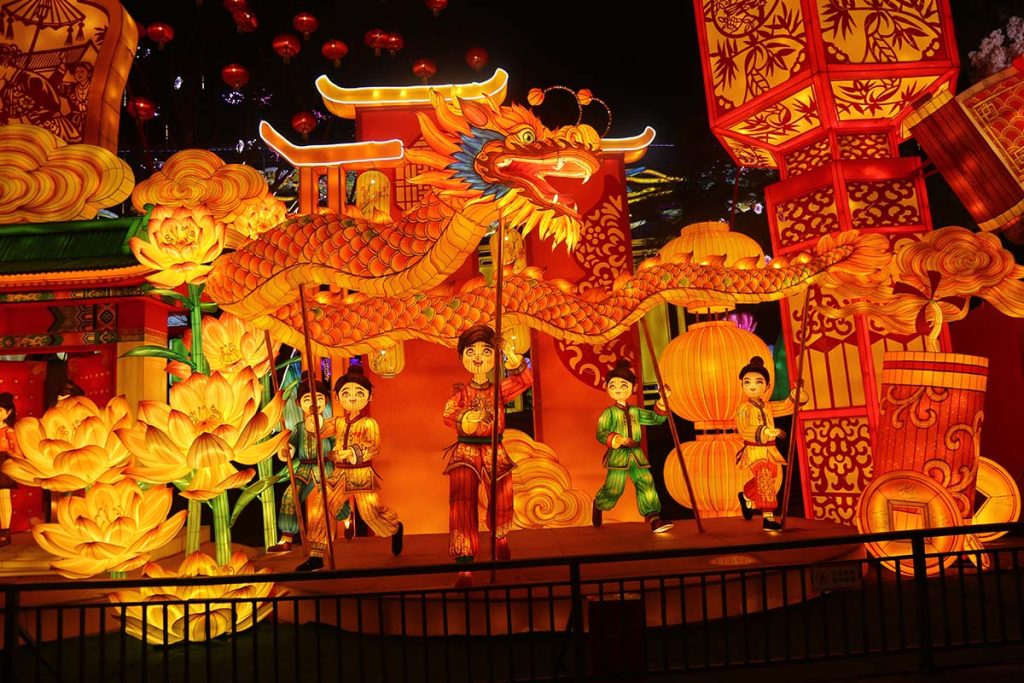
Featured Product: Chinese Dragon Lantern & Dragon Dance Display — Monumental golden dragon + dragon dance performers + palace backdrop. Captures both 龙灯 and 舞龙 in one centrepiece. 10m–25m wide, 5,000+ LEDs.
Asian Lantern Festival (Modern Branding)
The term “Asian Lantern Festival” is a relatively recent branding phenomenon, particularly popular in North America. Zoos, botanical gardens, and event companies use the term to:
- Signal a broader cultural scope that feels inclusive to diverse audiences
- Allow annual theme rotation (e.g., “Year of the Dragon” one year, “Wonders of Japan” the next)
- Avoid being seen as promoting a single country’s culture
The Cleveland Metroparks Zoo, for example, has run an annual “Asian Lantern Festival” since 2018, featuring Chinese, Japanese, Korean, and Southeast Asian lantern designs. The Philadelphia Zoo, Zoo Atlanta, and Roger Williams Park Zoo have all run similarly branded events.
The visual content of these festivals is still predominantly Chinese — Zigong-style silk lanterns make up 70–90% of the installations — but the broader branding creates flexibility.
Regional Lantern Traditions Worth Including
For event planners leaning toward an “Asian Lantern Festival” brand, here are the lantern traditions that can be woven into the experience:
| Culture | Lantern Tradition | Festival / Occasion | Visual Identity |
|---|---|---|---|
| Chinese | Silk-over-metal monumental lanterns (Zigong style) | Chinese New Year, Mid-Autumn | Large, intricate, LED-lit, narrative scenes |
| Japanese | Chochin — collapsible paper lanterns; Toro nagashi — floating lanterns | Obon Festival (August) | Red-and-white paper, bamboo frames, waterborne |
| Korean | Yeondeung — lotus-shaped lanterns | Buddha’s Birthday (April/May) | Pink and gold, temple displays, parade processions |
| Thai | Khom loi — sky lanterns; Khom fai — hanging lanterns | Yi Peng / Loy Krathong (November) | White paper cylinders, released en masse into night sky |
| Vietnamese | Đèn lồng — silk lanterns, often cylindrical or hexagonal | Mid-Autumn (Tết Trung Thu) | Bright fabrics, star-shaped, children’s parades |
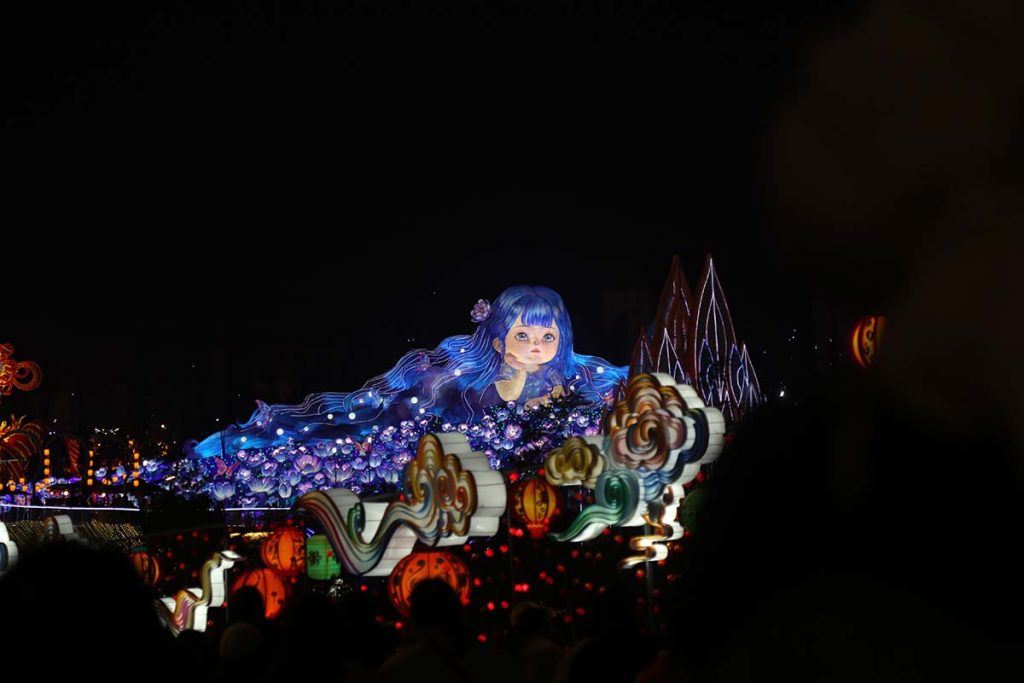
Featured Product: Illuminated Girl in Flowers Festival Centrepiece — 12-meter hero centrepiece with flowing hair and a sea of glowing lotus flowers. Generates 3–5× more social media tags than smaller displays.
Which Branding Should You Choose?
| Your Venue / Event Type | Recommended Branding | Why |
|---|---|---|
| Chinatown / Chinese cultural centre | Chinese Lantern Festival | Authenticity is expected; guests come specifically for Chinese culture |
| Major zoo or botanical garden (North America) | Asian Lantern Festival | Broader appeal, easier marketing, allows future theme rotation |
| Mid-Autumn Festival event | Chinese Lantern Festival (or Mid-Autumn Lantern Festival) | Specific holiday context; “Asian” feels too broad |
| City multicultural festival | Asian Lantern Festival | Aligned with the inclusive, multi-culture framing of the event |
| Museum or cultural heritage venue | Chinese Lantern Festival | Museums benefit from specificity and depth over breadth |
| Theme park rotating seasonal event | Asian Lantern Festival | Flexibility to refresh themes annually keeps repeat visitors engaged |
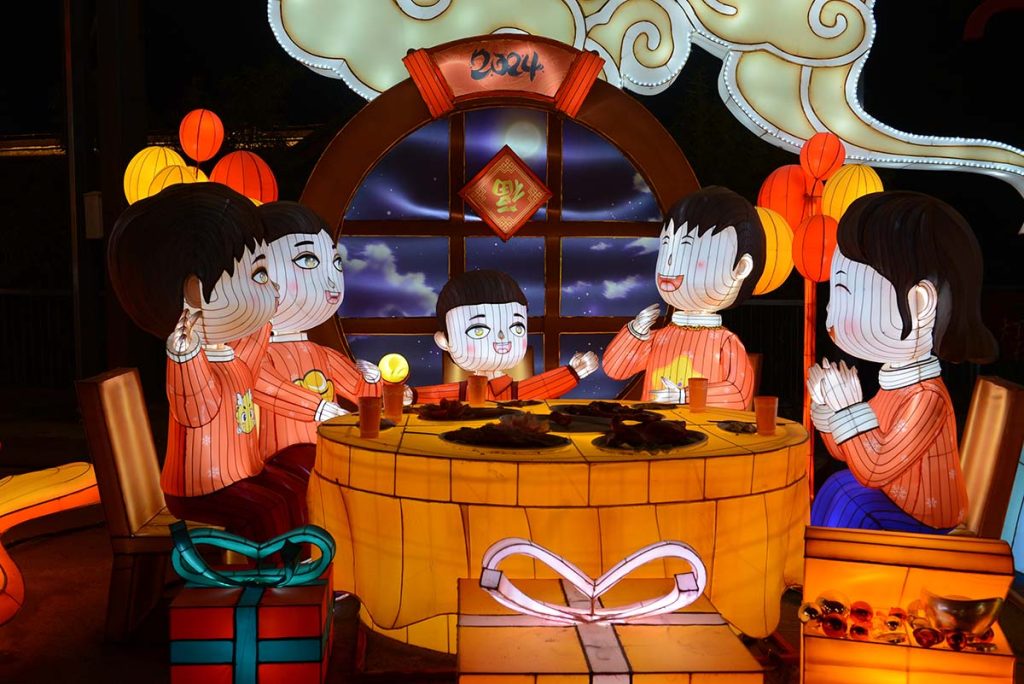
Featured Product: Chinese New Year Family Reunion Dinner Lantern — A 团圆饭 scene with four family members at a round table beneath a 福 archway. The emotional centrepiece that makes visitors feel, not just photograph.
How We Support Both
As a Zigong-based manufacturer with 14+ years of international delivery experience, we produce for both brandings:
For Chinese Lantern Festivals: We provide culturally authentic, historically referenced designs — dragons, phoenixes, zodiac animals, mythological figures, and classical Chinese architectural lanterns. Every piece is built using traditional Zigong lantern-craft techniques.
For Asian Lantern Festivals: We can produce Chinese-themed lanterns as the core experience and collaborate with specialist craftspeople for Japanese, Korean, and Southeast Asian elements. We have also produced hybrid festival lanterns — for example, Japanese koi fish lanterns, Korean lotus lanterns, and Thai-inspired elephant lanterns — all built to the same structural and lighting quality as our Chinese pieces.
Our design team works with you to define the cultural scope, visual balance, and narrative journey of your event — whether you brand it as Chinese, Asian, or something entirely unique.
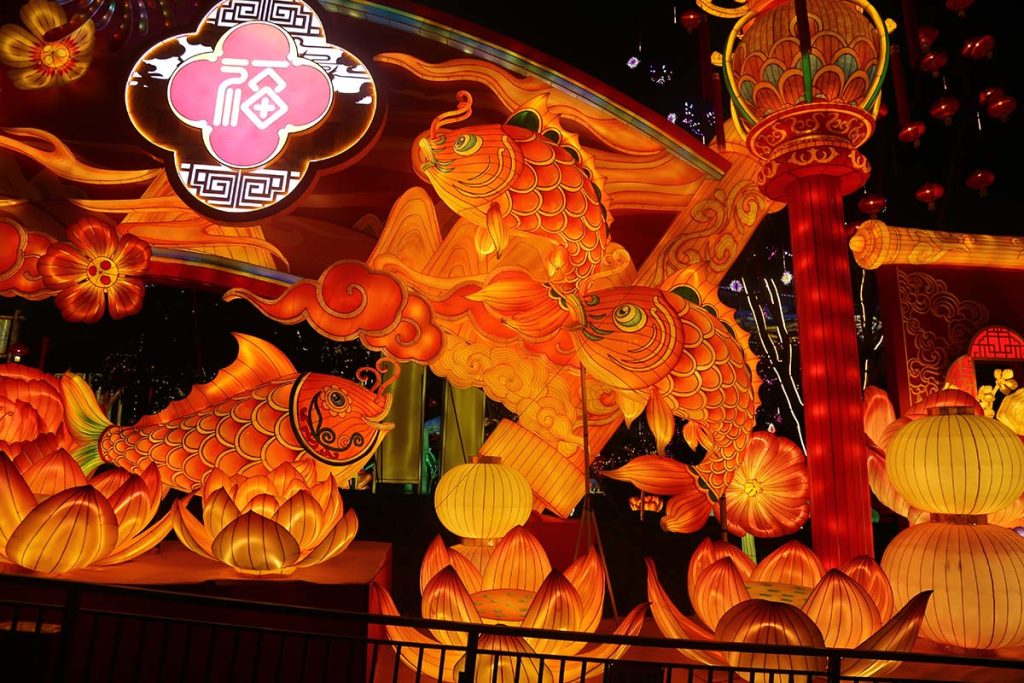
Featured Product: Nian Nian You Yu Koi Fish Abundance Lantern — The classic 年年有鱼 pun at festival scale: koi + 福 + lotus + plum blossom frame. One glance delivers Chinese New Year symbolism.
FAQ
Q: Is there a quality difference between Chinese and Asian festival lanterns?
A: No. The manufacturing quality is identical — all lanterns are built to the same Zigong lantern-craft standard, regardless of the cultural theme or branding. The difference is in the visual designs and cultural references.
Q: Can one event mix Chinese, Japanese, and other Asian lantern styles?
A: Absolutely. Most “Asian Lantern Festivals” are 70–90% Chinese-style lanterns with select Japanese, Korean, or Thai elements added for cultural variety and educational value.
Q: Do Chinese audiences feel the “Asian” branding dilutes the culture?
A: Generally, no. In North America and Europe, the “Asian Lantern Festival” branding is well understood as a practical, inclusive framing. For events in Chinatown districts or specifically for Chinese New Year, the “Chinese Lantern Festival” branding is more appropriate and expected.
Q: What lantern types work best for a cross-cultural festival?
A: A dragon centrepiece (Chinese) paired with floating lotus lanterns (Korean), a cherry blossom tunnel (Japanese), and a star-lit sky-lantern corridor (Thai) creates a balanced, educational walk-through that introduces visitors to multiple traditions in a single experience.
Q: How do you handle culturally sensitive designs?
A: We consult with cultural advisors and provide reference documentation for every design that references specific cultural or religious iconography. Clients also receive vector previews for pre-approval before production begins.
Q: What is the lead time for a multi-themed festival?
A: 8–12 weeks from design approval, depending on the number of pieces and cultural diversity. Contact us with your theme list for a precise timeline.
Related Products & Resources
- Festival Lanterns Collection — Custom lantern displays for Chinese New Year, Mid-Autumn, Christmas, and multicultural events.
- Animal Lanterns — From Chinese zodiac animals to Japanese koi and Thai elephants, explore our full animal lantern range.
- Chinese Lantern Festival — Complete Guide — History, production process, and planning resources for event organisers.
- Chinese Lantern Festival Symbolism Guide — The cultural meanings behind common lantern motifs and designs.
Complement your Chinese New Year display with a steampunk Chinese New Year zodiac rooster lantern for festivals and cultural events.