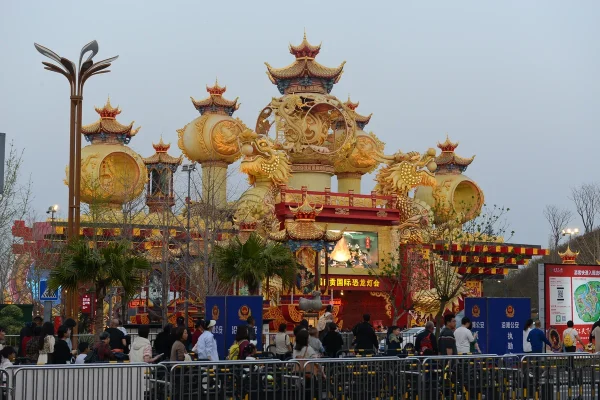
Two quotes come back looking almost the same. Both answer within a day, both send a catalogue, both promise the same lead time. The difference between them does not show up in the quotation. It shows up eight weeks later, when a bracket will not fit the base that arrived with it, and it takes three emails to establish who is going to resolve it.
The gap between a lantern manufacturer and a trading company is almost invisible from the outside until something goes wrong. The good news is that it is entirely possible to find out beforehand. There are seven signals, and every one of them is something you can ask for or look at before you commit. None of them requires flying to China. Together they tell you which of the three arrangements you are actually dealing with.
Why This Question Usually Gets Asked Too Late
Most buyers start looking at suppliers the same way they look at any other purchase: they send the brief to several companies, compare the responses, and pick the one that feels most competent. The early stages reward responsiveness. A well-organised trading company can be faster and more polished than a workshop that is busy building, because answering emails is what they do all day.
So the first round of comparison tends to reward whoever communicates best. The signals that would tell you the truth sit further along: in technical answers, in how changes are handled, in who carries responsibility when a drawing meets a real site. By the time those come into play, you have usually signed.
There is a second reason the question gets postponed. Nobody wants to imply that the company they are talking to might not be what it says. It feels rude. But this is a normal question in manufacturing and a professional supplier expects it. Asking it early, plainly, and without apology is the single most useful thing you can do in the first conversation. Our own buyers ask it, and so do the ones who come to us after a difficult first season elsewhere.
What “Buying Direct” Actually Covers
The market is not split neatly into two. There are three arrangements, and they behave differently when a project gets complicated.
One: workshop with its own production
The company designs, builds and finishes the pieces itself. Frame work, surface work, wiring, testing and packing all happen in space they control and with people they employ. This is the arrangement the term implies, and it is the one that keeps a single line of responsibility from drawing to installation.
Two: workshop with outside partners
The company has its own production and also commissions some stages from neighbours in the same industrial area. Electrical assemblies and transport are the two most common. In the producing region this is normal and often sensible: a specialist does control panels better than a general workshop does. This arrangement is not a problem in itself, but you should know which parts of your project are made outside and who is answerable for them.
Three: order-taking and subcontracting
The company takes the order and commissions the production from a workshop. Many businesses in this group are strong project managers: they hold established supplier relationships, know the region, and can handle documentation, shipping and payment terms in the client’s own market. Others are essentially a sales desk working from a catalogue. From the outside, in the first two weeks, the two look identical.
The point of the seven signals below is not to eliminate the second and third arrangements, which have their place, but to make sure you know which one you are in. Buyers who compare the three on the headline figure, while assuming they are dealing with the first, usually find out which one they chose during installation.
Signal 1: They Answer Engineering Questions Without Escalating
Ask something specific about the structure early, before any commercial discussion. How far the frame can span unsupported. What wind load the design is calculated for. How the piece is anchored where the ground cannot be excavated. What the control enclosure is rated for outdoors. None of these needs a commercial discussion to answer.
A workshop answers at the level of the people doing the work, because the question reaches them directly. If the answer comes back vague, or returns the next day phrased much better than the previous emails, it has probably been passed along. That is the clearest early sign there is somebody between you and the bench.
Pay attention to the follow-up question too. A workshop that hears “installation on a paved plaza with mature trees around it” will usually ask what equipment can get on site and where the power is. That is somebody picturing the job. A company that is relaying rather than answering will usually want the brief settled in full detail before it responds.
Signal 2: They Show You a Workshop, Not a Showroom
Every manufacturer can send photographs. The useful question is what the photographs show. A showroom tells you nothing about who makes the product. Display space can be rented in a week by anyone, and a lot of businesses do exactly that. What you want to see is production, and production has a particular look.
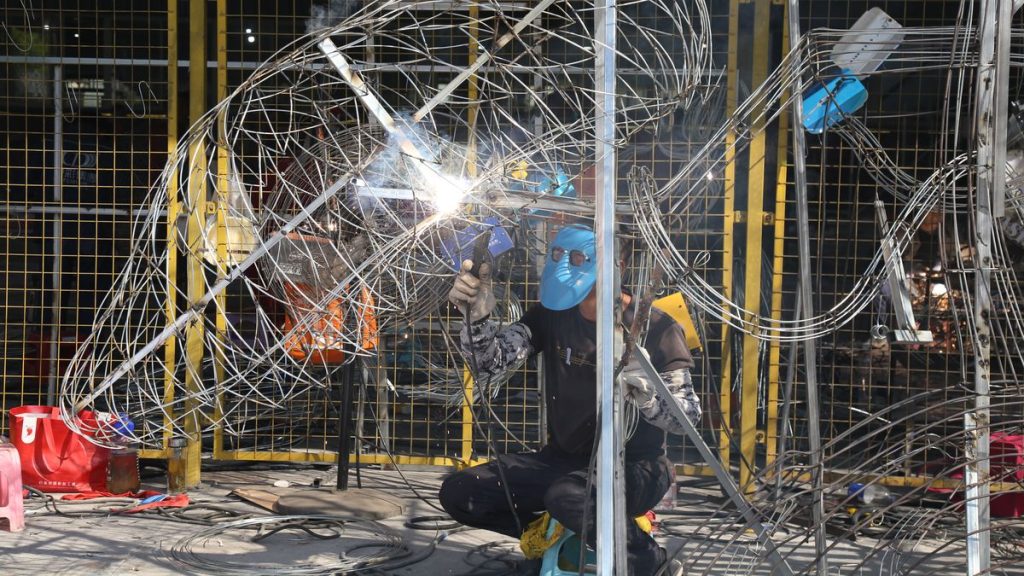
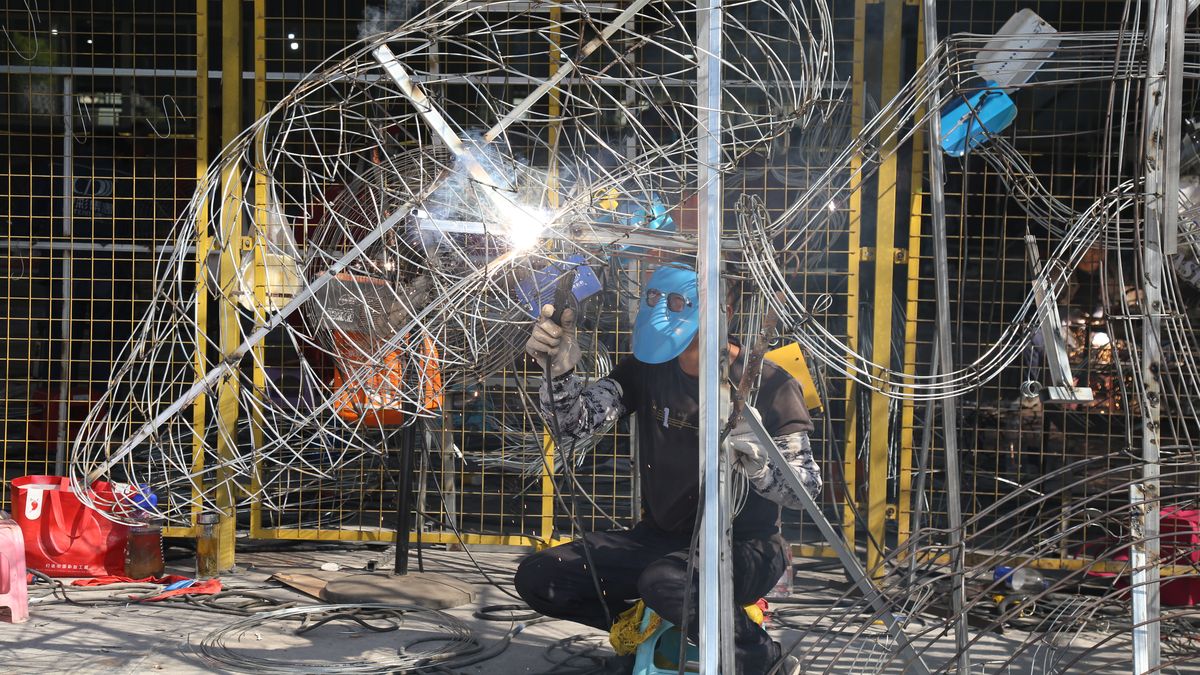
Frames stacked and waiting. Cutting and bending equipment with material beside it. Worktables with an unfinished piece on them and the tools still out. Floor space that is clearly being used rather than arranged. Ordinary workshop lighting. If every image is a clean hero shot of a finished display, ask for production photographs as well.
Ask for something live: a short walk-through video on a phone, showing the work area on the day you ask, without preparation. It is a small request and an easy one to satisfy. A workshop will send it the same afternoon. If the request quietly disappears from the thread, treat that as your answer.
Signal 3: You Can Find Out Who Does the Structural Calculation
Large displays are engineering, not decoration. A piece several metres tall in an open position carries its own weight plus whatever the wind puts on it, and it has to stay put through a full season of weather. Somebody has to work out what the frame needs to be, and that work sits with a specific party.
Ask directly who produces the structural calculation for a piece of this size: an in-house engineer, an outside consultant, or nobody in any formal sense. All three answers exist in the market. The first is the strongest, the second is perfectly workable if the relationship is established, and the third is worth knowing about because it means the structural decisions are being made by feel.
This matters most in the moment something needs changing on site. If the calculation belongs to someone inside the same company, a fix can be worked out and approved in a day. If it belongs to a third party who was never in the conversation, you have added a step and a delay at the point where delay does the most damage.
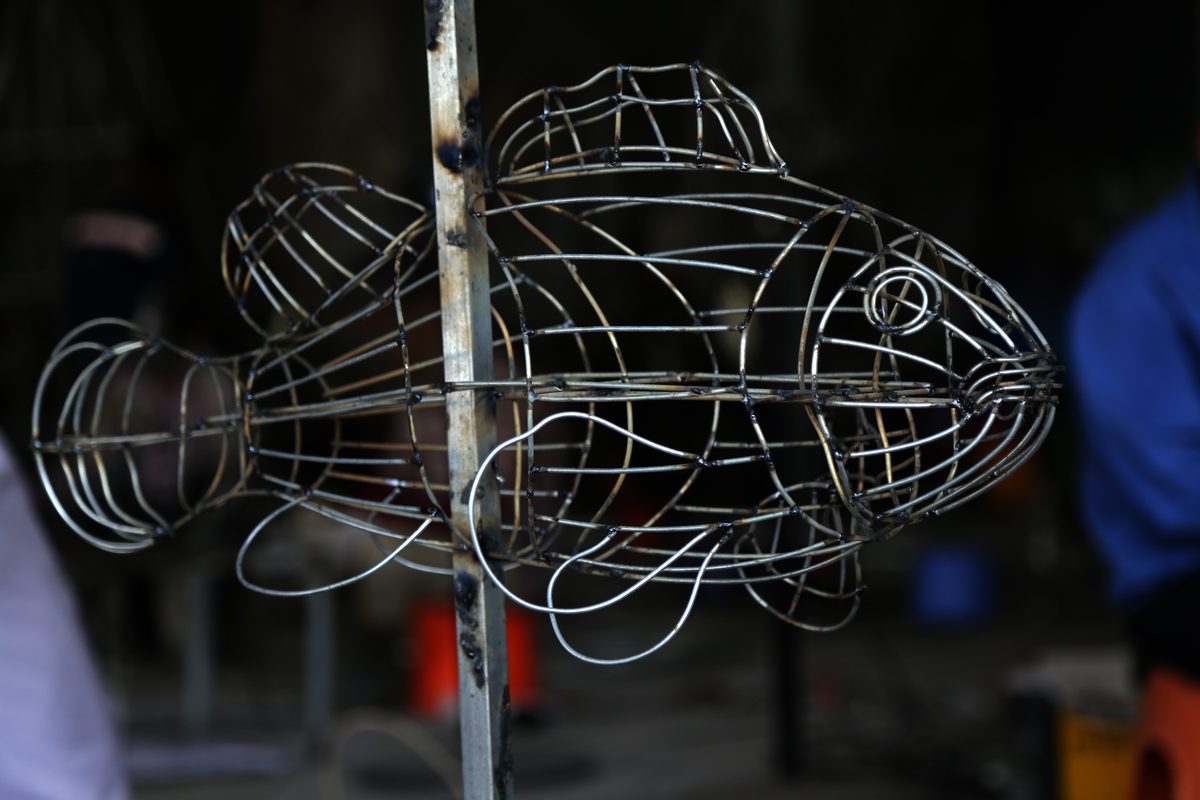
Signal 4: Where the Surface Work Happens
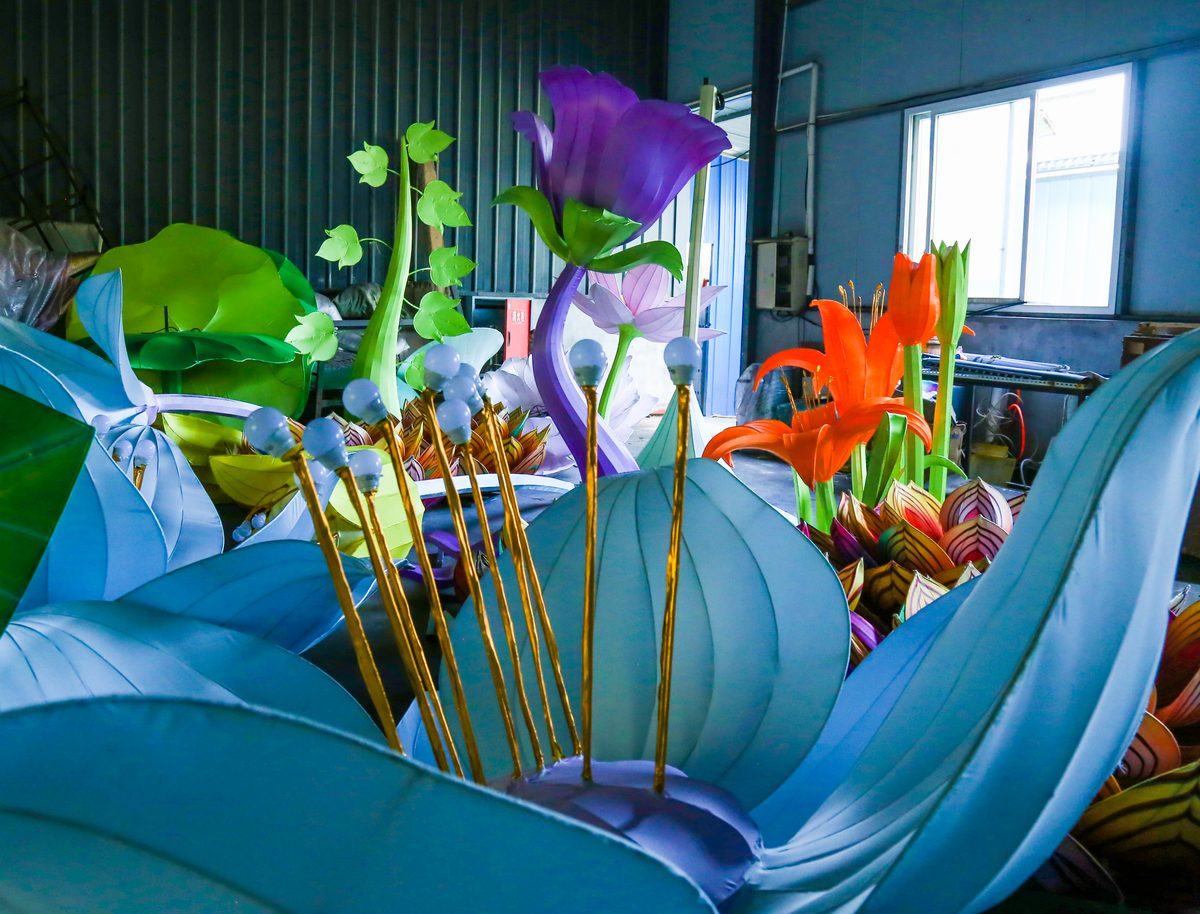
The frame is engineering. The surface is craft, and it is the part of a display that determines whether visitors stop and take a photograph or keep walking. Applying the outer skin and colouring it is the most skill-dependent stage in the whole build, and it is where a display starts to look like something built to a photograph rather than something built by people who do it daily.
Ask who does this stage and how long those people have been doing it. A workshop keeps this in-house because it is the hardest thing to outsource without losing quality. The answer also tells you how the project will handle changes: a shade that needs adjusting, a proportion that reads wrong on site, a section that needs reshaping after a trial assembly. Those are routine where the production sits in the same building. Where it does not, each change has to travel, and it is worth asking how many days that adds.
If you visit at any stage, this is the area worth walking through. Finished surface work has a particular consistency that rushed work does not, and the difference is visible without close inspection.
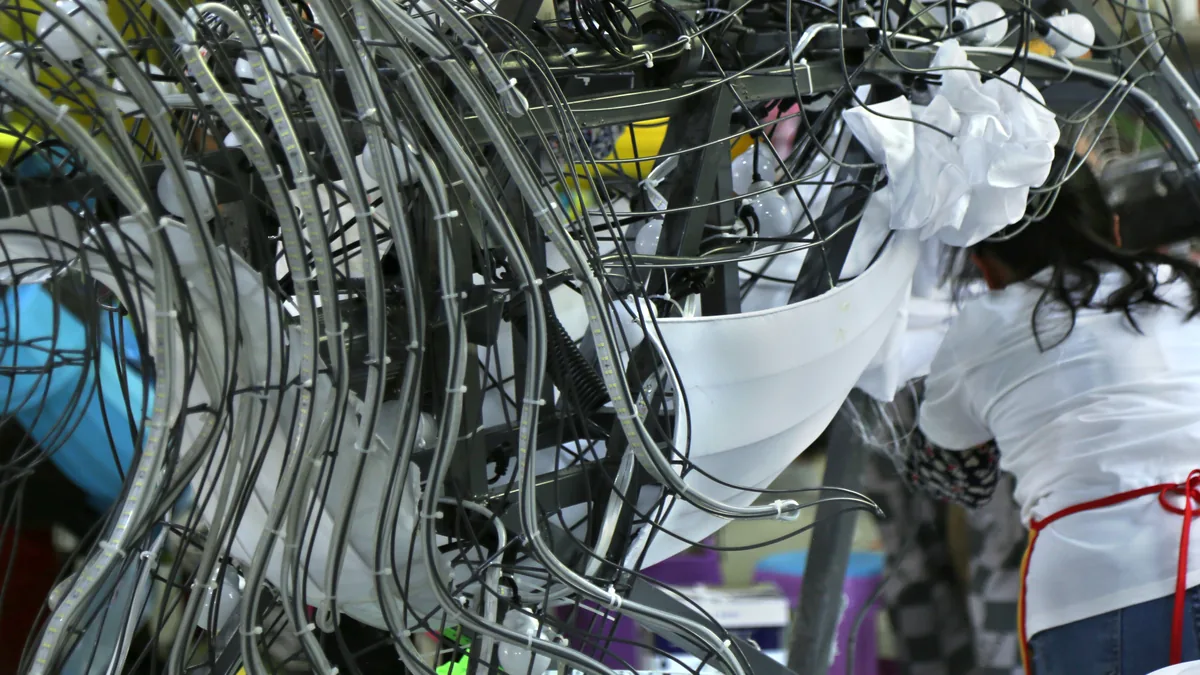
Signal 5: Who Runs Installation and the Customs Side
A festival display is not finished when it leaves the warehouse. The parts have to arrive, clear customs, get to site, be assembled by people who understand the design, be tested, and then be available for the first weeks of operation when small faults surface.
Ask who does the installation: an in-house team that travels, a partner team, or the client’s own contractors receiving drawings. Ask the same about export documentation and shipping: handled in-house or through a forwarder. Again, all arrangements work. What matters is that one party can answer for the sequence, because the failure mode on international projects is almost never a single broken part. It is a missing instruction at the point where the parts meet the site.
The most revealing question here is about contingency. Ask what happens when a section arrives damaged, and how quickly a replacement can be produced and sent. A workshop answers with a process and a rough outline of how it works. A company that commissions its production from elsewhere may need to check with its partner before answering, which is useful to know in advance rather than during a problem.
Signal 6: Ask for the Last Three Projects, Then Ask for a Reference
Project lists are easy to assemble and occasionally include work that was not theirs. Ask for the last three projects with enough detail to be checkable: venue name, city, scale, the season they ran, and photographs from the installation period rather than from opening night. Installation-period images are difficult to obtain second-hand, which is exactly why they are useful.
Then ask for a reference, and ask for it in a form you can act on. One or two past clients in a comparable market, with a person you can email. A supplier who has delivered real projects will almost always have a client willing to say so, because the relationship continued past delivery. If every reference has to be cleared through three people, or the request is met with talk about confidentiality, it is worth asking why.
Signal 7: The Questions They Ask You
This one requires no preparation and is often the most accurate of the seven. Watch what the other side asks in the first meeting. Note which details they ask for in the first meeting, and which they never mention.
A workshop asks about the site: the area and its surfaces, what can be driven onto it, where power is available, what the visitor route has to pass, how long the piece will stand, and what the ground is made of. These questions come from having to build the thing and having seen plans fail on contact with a real location.
A sales-led company tends to ask about the order first: quantity, delivery date, and how soon you are deciding. Set those against the site questions above and you can see which side of the project each party spends its time thinking about.
The strongest first conversation contains both sets of questions. A company with its own production and a commercial team answers both ways, and it is the arrangement most buyers are looking for.
A Short Due-Diligence List for the First Call
Seven signals condensed into five questions you can send with the first enquiry. None of these questions touch commercial terms, and none of them should be sensitive for a company that makes its own product.
- Which stages of the build do you carry out in your own workshop, and which are commissioned from other companies?
- Send a walk-through video of the production area, filmed today, as it is.
- Who produces the structural calculation for a display of the size we are discussing?
- Who carries out installation on an overseas project, and who handles export documentation?
- Which three projects did you complete most recently, and can you give us a contact from one of them?
Send this to every company you are considering, at the same time, before any of them has quoted. Comparing the answers as a set is far more informative than comparing any of them individually. The differences in speed, completeness and specificity will do most of the sorting for you.
What to Put in Writing Before You Sign
Whatever you conclude from the signals, get the practical commitments into the contract in plain terms. Three of them matter more than the rest on a festival display.
First, the scope of what is delivered: which pieces, which supporting structures, which electrical components, and whether installation is included or the drawings alone. Second, the change process: how a design adjustment is raised, who approves it, and what happens to the schedule when one is needed. Third, the responsibility line for the operating period: who is answerable if a piece fails during the season, and what the response involves.
These three clauses are where the difference between the arrangements in the first section becomes visible in writing. A company that builds will commit to them without difficulty, because they describe its own work. If any of the three can only be answered in general terms, that is information worth having before signature rather than after.
Frequently Asked Questions
Is buying through a trading company a reasonable option?
Often it is, and for many buyers it is the practical choice. A good one brings established factory relationships, local logistics, documentation handled in your own language, and a single point of contact across the whole project, which matters when you have no presence in the producing region. The thing to avoid is buying through one while assuming you are buying from a workshop, because then you assess the wrong qualities. A project manager is judged on coordination, communication and follow-through. A workshop is judged on production. Both are legitimate ways to buy, and each fails in its own way.
How can we check a factory without travelling to China?
Three things do most of the work: a live walk-through video filmed on request, a set of installation-period photographs from real projects, and one reference you can email directly. Add a third-party inspection before shipment if the project is large. None of these is difficult for a company with its own production, and all three are difficult to fake consistently.
What does it mean if they will not arrange a factory visit?
It is worth treating as a serious signal, particularly if the reply is evasive rather than logistical. Some companies cannot host visitors on a given week, and a workshop will say so plainly and offer an alternative date or a video instead. A workshop that cannot host you will say so, and offer another week or a video walk-through instead.
Do they answer engineering questions themselves, or does that come from the workshop?
This is the signal easiest to test and hardest to disguise. Send one specific structural or electrical question and read the reply. An answer that arrives quickly, in the register of somebody who builds, is what you want. An answer that arrives polished but general, or that returns only after a delay, tells you where the question had to travel.
Does buying through a trading company change the project itself?
Every arrangement in the market carries its own structure, and a project that passes through more hands has more parties to support along the way. Comparing total delivered value across arrangements, rather than headline figures, is the only meaningful comparison, and it depends on what is actually included in each offer. This is why the written scope in the section above matters more than the number at the top of the page.
Can a company with its own production still fail on a project?
Yes, and it happens. What changes is where the failure is caught and how quickly it is corrected. Problems in a workshop’s own process surface during trial assembly, before the pieces are packed, when there is still time to fix them at the bench. Problems that surface for the first time on site are a different order of difficulty, and they are far more common when the drawings and the manufacturing sit with different companies.
Where the Work Happens
We build in Zigong, in Sichuan, where large illuminated displays have been made for centuries and where the skills for this work are concentrated in one place. Frames, surfaces, wiring and testing happen in our own workshop, and the design and production teams sit in the same building. When a client asks a question about a display being built for their site, the answer comes from the people building it.
If you are in the middle of comparing suppliers, the list above is a reasonable way to start, and it is the same set of questions we answer for new clients every week. Our framework for choosing a lantern festival supplier covers the wider decision, from defining the site brief through to installation; if you already know what you need and want to compare specific approaches, you can send us the project details and we will answer in writing.
It is also worth reading how the pieces themselves are made, because the finishing stage described in signal four is the one that decides how a display reads at night. Our guide to how large lanterns are built walks through the process from frame to illumination. For the manufacturing side at product level, see animal lantern manufacturing and our main lantern workshop; for festival-scale projects, festival production covers how the larger builds are structured.