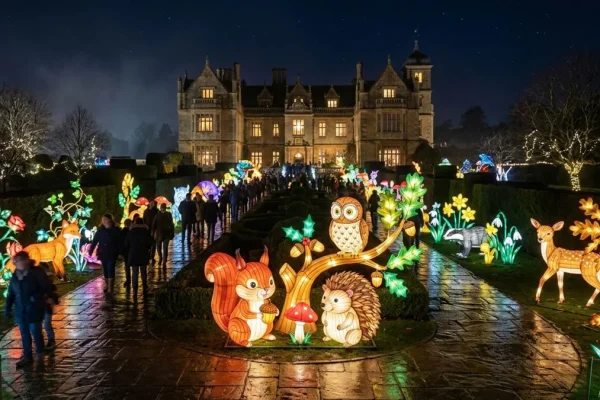
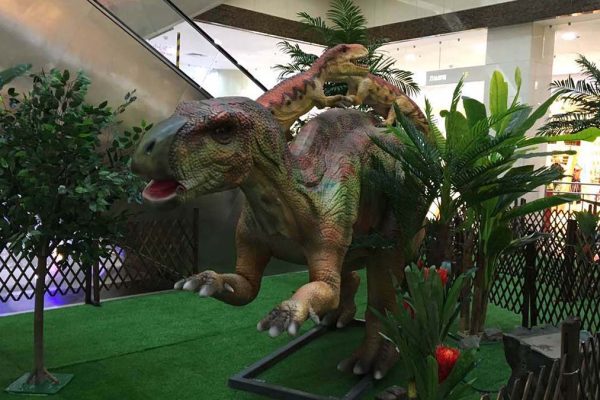
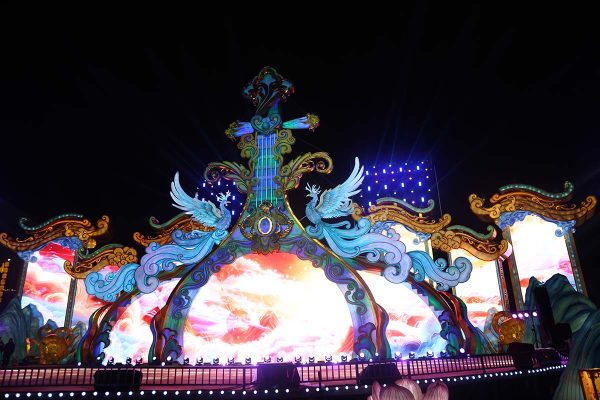
Animal lanterns are among the most popular attractions at zoos, theme parks, festivals, and holiday events worldwide. From glowing giraffes at zoo lights to roaring dragon lanterns at Chinese New Year celebrations, illuminated animal sculptures draw crowds, create photo opportunities, and generate social media buzz.
But for event planners and venue operators, choosing the right animal lantern can be overwhelming. With dozens of species, sizes, materials, lighting options, and animatronic features available — and a specification range that widens with every choice — understanding what to look for is essential before you brief a maker.
This buying guide covers everything you need to know: the different types of animal lanterns, how to match them to your venue and audience, cost drivers, quality indicators, and a step-by-step selection checklist.
Animal Lanterns vs. Static Animal Decorations — What’s the Difference?
Before we dive into selection criteria, it’s important to understand what makes an animal lantern fundamentally different from other illuminated decorations:
| Feature | Animal Lantern (FestiveLanterns) | Standard Decoration |
|---|---|---|
| Construction | Internal frame + high-density fabric/ hand-finished surface | Plastic shell or thin fabric |
| Illumination | Integrated LED lighting (RGB, programmable) | Basic bulb or no lighting |
| Weatherproofing | Outdoor-rated, fire retardant, UV resistant | Indoor use only |
| LED System | Engineered for continuous outdoor display | 1 season or less |
| Animatronics | Optional — servo motor, pneumatic, hydraulic | Not available |
| Customization | Any species, any size, any color scheme | Fixed designs |
| Impact | 2m to 30m+ life-size sculptures | Typically small (<1m) |
If you need a piece that will last multiple seasons, withstand rain and snow, and truly wow visitors — animal lanterns from a professional manufacturer like FestiveLanterns are the right choice.
Step 1: Define Your Event Type and Audience
Different venues and events have very different requirements for animal lanterns. Here’s what to consider for each scenario:
Zoo Lights Events
Goal: Create a magical nighttime experience that brings families to the zoo during off-peak seasons (winter, evenings).
Best animal lantern choices: Safari animals (giraffes, elephants, zebras, rhinos), jungle creatures (monkeys, tigers, parrots), and prehistoric animals (dinosaurs). These reinforce the zoo’s natural theme while adding spectacle.
Size considerations: Life-size or slightly larger-than-life (2m–6m). These should be recognizable next to real animals but dramatic enough for nighttime viewing.
Quantity: 15–50+ pieces for a full zoo lights trail. 3–8 pieces for a featured zone.
Budget scope: driven by species complexity, scale and how many pieces the trail needs.
Durability: outdoor-rated minimum — these run for 60–90 consecutive nights through rain, frost, and wind.
→ See our Zoo Lights page for full event packages.
Theme Parks & Amusement Parks
Goal: Create themed zones, seasonal overlays, or permanent attractions.
Best animal lantern choices: Mythical creatures (dragons, phoenixes), dinosaurs, ocean animals, or fantasy-themed animals. Animatronic options add significant value here.
Size considerations: Giant scale (6m–20m+) for centerpiece attractions. Medium (2m–5m) for supporting zones.
Animatronics: Highly recommended — servo motor movements (head turn, tail sway, mouth open) create interactivity and repeat visits.
Budget scope: set by scale, movement system and piece count.
Timeline: Custom designs require 45–90 days for fabrication. Standard designs 15–30 days.
Festivals & Cultural Events (Chinese New Year, Christmas, Diwali, etc.)
Goal: Seasonal spectacle that attracts visitors and creates media coverage.
Best animal lantern choices: Zodiac animals (especially the current year’s animal), mythological creatures (Chinese dragons, phoenixes), and seasonal animals (reindeer for Christmas, camels for Middle Eastern events).
Size considerations: Giant centerpiece (10m–30m) for maximum impact, supported by medium-sized pieces.
Rental vs. Purchase: Many festival organizers prefer rental (3–6 month displays). FestiveLanterns offers both options.
Special features: Day/night auto-switching, music synchronization, and interactive elements increase engagement.
Budget scope: set by centrepiece scale and the number of supporting pieces.
Shopping Malls & Commercial Spaces
Goal: Attract foot traffic, create Instagram-worthy photo spots, extend dwell time.
Best animal lantern choices: Cute, photogenic animals (pandas, polar bears, penguins, sea turtles), whimsical designs, and colorful fantasy creatures.
Size considerations: Medium (2m–4m) for atriums. Smaller (1m–2m) for corridors and storefronts.
Key differentiator: Indoor-rated and outdoor-rated construction are specified differently. If the plaza is open to the weather, specify the outdoor-rated build.
Budget scope: set by piece count and whether the site is indoor or open-air.
Museums & Educational Venues
Goal: Educational exhibits that combine accuracy with visual appeal.
Best animal lantern choices: Prehistoric animals (dinosaurs, ice age mammals), marine life, and scientifically accurate animal replicas.
Important features: hand-finished surface (patented ZL 2022 1 0224489.5) for realistic texture. Educational signage integration. Interactive QR codes linking to species information.
Animatronics: Highly recommended for engagement — a moving dinosaur or breathing ice age mammoth creates lasting memories.
Budget scope: set by species accuracy, scale and interactive features.

Step 2: Choose the Right Size and Scale
Animal lanterns are commonly available in these size categories:
| Size Class | Height/Length | Best For |
|---|---|---|
| Tabletop | 0.3m–0.8m | Indoor displays, countertop, small events |
| Small | 1m–2m | Mall corridors, indoor exhibits, gardens |
| Medium | 2m–4m | Zoo paths, theme park zones, shopping atriums |
| Large | 4m–8m | Zoo centerpieces, festival gateways, park entrances |
| Giant | 8m–20m+ | Festival main attractions, city landmarks, major park features |
Rule of thumb: For outdoor night events, a larger scale (1.5x–2x real size) creates better visual impact under low light conditions. Photos and selfies look especially dramatic with oversized animals.
Step 3: Choose Animal Species and Themes
Our most requested animal lantern species include:
| Category | Popular Species | Best For |
|---|---|---|
| 🦕 Prehistoric | T-Rex, Triceratops, Stegosaurus, Brachiosaurus, Velociraptor, Spinosaurus | Dinosaur exhibits, theme parks, museums |
| 🐘 African Safari | Elephant, Giraffe, Rhino, Lion, Zebra, Hippo | Zoo lights, safari parks, wildlife events |
| 🐅 Asian Wildlife | Tiger, Panda, Red Panda, Monkey, Elephant | Cultural festivals, Chinese New Year |
| 🐻 Polar & Arctic | Polar Bear, Penguin, Seal, Walrus | Winter festivals, Christmas displays |
| 🐢 Marine Life | Sea Turtle, Dolphin, Whale, Shark, Octopus, Crocodile | Aquariums, underwater themed events |
| 🦌 Mythical | Chinese Dragon, Phoenix, Qilin, Unicorn | Cultural events, fantasy parks |
| 🐰 Seasonal | Reindeer, Rabbit (zodiac), Rooster, Ox | Christmas, Chinese New Year, zodiac year events |
Custom species: If you need a specific animal not listed (endangered regional species, mascots, or fantasy creatures), professional manufacturers can create custom designs from your reference photos or sketches — typically as a bespoke build rather than a catalogue standard.

Step 4: Decide Between Static and Animatronic
This is one of the most important decisions for your animal lantern purchase:
Static Animal Lanterns
- Movement: None — illuminated sculpture only
- Best for: High-density displays (many pieces), purely decorative installations where the glow carries the scene
- Engineering: a simpler build than an animatronic equivalent
- Maintenance: Minimal — clean and store between seasons
- Illumination: outdoor-rated LED modules
Animatronic Animal Lanterns
- Movement: Servo motors (smooth, quiet), or pneumatic (powerful, for large animals)
- Best for: Interactive exhibits, featured centerpieces, museums, high-traffic zones
- Engineering: servo and control systems add a second build stage
- Maintenance: Regular checks on motors, sensors, and control systems
- Drive system: sealed servo motors with dedicated control units
Common animatronic movements:
- Head turn (left–right)
- Mouth open/close (with optional sound)
- Tail sway
- Eye blink
- Full body breathing
- Leg/foot gesture
→ See our motor comparison guide for detailed technical information on movement systems.
Step 5: Understand Materials and Quality
Frame
All professional animal lanterns use a weatherproof internal frame (not mild metal or plastic). This provides:
- Structural strength for outdoor wind loads
- Rust resistance (weatherproof coating prevents corrosion)
- Support for heavy LED wiring and fabric
Covering Materials
| Material | Best For | Light Transmission |
|---|---|---|
| High-density fabric | Standard outdoor displays | Good — warm glow |
| Premium hand-finished surface (Patent ZL 2022 1 0224489.5) | Museum-grade, realistic exhibits | Excellent — skin-like translucency |
| Weatherproof coated fabric | Budget outdoor displays | Moderate — diffused light |
Lighting Systems
| Type | Features | Best For |
|---|---|---|
| Static warm white LED | Simple on/off, warm amber glow | Traditional displays, low budget |
| RGB color-changing LED | 16 million colors, programmable sequences | Festival atmosphere, themed events |
| DMX512 addressable LED | Individual zone control, synchronized shows | Large-scale installations, music synchronization |
| RGBW LED (with white chip) | True white + color, highest color accuracy | Museum exhibits, educational displays |
Weatherproof Rating
- Splashproof — indoor or covered outdoor siting
- Outdoor-rated — water jet resistant for open-air siting
- Submersible-rated — water features and heavy-rain zones
Recommendation: For outdoor zoo lights and festival events that run 60–90+ days, always choose outdoor-rated minimum.
Step 6: Budget Planning
Cost is driven by a handful of decisions. Here is what moves the number, and what to settle before you brief a maker:
| Cost Driver | What Changes It | Planning Implication |
|---|---|---|
| Species and form | How complex the animal’s anatomy is — a fish reads in a few planes, while a lion’s mane or a bird’s layered plumage takes far longer | Ask for a pose study before you commit, so the form is settled early |
| Scale | Height and length, and how much of the structure has to carry wind loading | Entrance-scale pieces are engineered differently from trail pieces |
| Piece count | Whether you order a single centrepiece or fill an entire trail | A programme order spreads design and freight work across more pieces |
| Movement and interactivity | Whether the piece is static, servo-driven, or triggered by visitor sensors | Movement adds a second build stage and more on-site commissioning |
| Site conditions | Indoor, open-air or water-adjacent siting, and the local weather the piece has to live in | Water-adjacent and coastal sites change the specification entirely |
| Freight and installation | Container volume, shipping lane, and how much on-site supervision you need | Combining pieces into one shipment is the single biggest lever on programme cost |
| Operating window | How many seasons the programme runs, and whether pieces are redeployed each year | Multi-season programmes are engineered for repeat assembly |
Ways to keep a programme efficient:
- Order 10+ pieces in a single container to split shipping costs
- Combine animal lanterns with other display items (tunnels, arches, gates) in the same shipment
- Standard designs built from existing moulds move through the workshop faster than fully bespoke pieces
- Book during off-peak months (Feb–May) for faster production

Step 7: Rental vs. Purchase
Many first-time buyers don’t realize that animal lanterns can be rented as well as purchased:
| Factor | Purchase | Rental |
|---|---|---|
| Upfront commitment | Full programme cost | Lower initial outlay |
| Duration | Permanent ownership | Typically 3–6 months |
| Best for | Permanent/seasonal annual events | One-time festivals, testing a concept |
| Maintenance | Owner responsible | Manufacturer handles |
| Storage | Required between seasons | Not needed |
| Long-term use | Reusable season after season | Suited to one-off programmes |
When to rent: First-time zoo lights events, pilot programs, events where the scope is still fluid.
When to buy: Established annual events, permanent park attractions, museum permanent exhibits.

Quick Selection Checklist
Print this checklist and use it when evaluating animal lantern suppliers:
- [ ] Venue type determined? (Zoo / Theme park / Festival / Mall / Museum)
- [ ] Audience profile? (Families / Adults / Children / Mixed)
- [ ] Animal species selected? (Specific or general theme)
- [ ] Size & scale determined? (Match to venue space and viewing distance)
- [ ] Static or animatronic? (Engagement vs. simplicity decision)
- [ ] Surface finish and light diffusion confirmed?
- [ ] LED type chosen? (Static / RGB / DMX512)
- [ ] Weatherproof specification confirmed for outdoor siting?
- [ ] Quantity & density planned? (Pieces per square meter)
- [ ] Budget scope agreed? (Include shipping, customs and installation)
- [ ] Rental or purchase? (Event type and frequency)
- [ ] Timeline confirmed? (Manufacturing 15–90 days + shipping 20–40 days)
- [ ] Installation plan? (DIY on-site team vs. manufacturer technician)
- [ ] Have you seen the manufacturing process? — Read how animal lanterns are made
- [ ] Contacted a manufacturer for a quote? — Get free design proposal
Common Mistakes to Avoid
❌ Mistake 1: Choosing indoor-grade lanterns for outdoor events
An indoor animal lantern exposed to a single rainy night can be permanently damaged. Always confirm outdoor-rated+ weather sealing and request the test certificate.
❌ Mistake 2: Underestimating assembly and installation time
A 6-meter giraffe lantern may require 2–4 experienced workers and 4–8 hours to assemble on-site. Factor this into your event timeline.
❌ Mistake 3: Ordering too few pieces for the space
A zoo lights trail needs at least 1 piece per 50–100 square meters to create a continuous “wow” experience. Sparse spacing kills the magic.
❌ Mistake 4: Ignoring daytime appearance
Your animal lanterns will be seen in daylight as well as at night. Choose fabric with hand-painted details (not thin polyester) for realistic daytime appearance.
❌ Mistake 5: Not accounting for wind loading
Large vertical animal lanterns (giraffes, dinosaurs) act like sails in high winds. Ensure the manufacturer includes anchoring points and wind-rated structural calculations.
Why Choose a Zigong Manufacturer
Over 80% of the world’s festival lanterns are made in Zigong, Sichuan, China — the birthplace of Chinese lantern culture with a tradition spanning over 800 years. Choosing a Zigong-based manufacturer gives you:
- Access to skilled artisans — Generations of lantern-making expertise
- Direct from the workshop — no trading-company layer between you and the makers
- Volume capacity — Large factories with dedicated production lines
- Export experience — Established shipping and customs networks
FestiveLanterns is a Zigong-based manufacturer with 14+ years of export experience, serving 50+ countries. Our factory employs 80–120 skilled workers with dedicated design, fabrication, and quality control teams.
→ Browse our animal lantern collection
Frequently Asked Questions
Q: How long does it take to manufacture custom animal lanterns?
A: Standard designs take 15–30 days from order confirmation. Full custom designs (new species, specific size) typically require 45–90 days. We recommend placing orders 3–4 months before your event date to allow for production and shipping.
Q: Can animal lanterns stay outdoors permanently?
A: Yes. Our outdoor-grade lanterns use weatherproof internal frames, outdoor-rated LED components, and UV-resistant fabric. With proper storage during extreme weather, they can be redeployed season after season. For year-round outdoor display, we recommend annual maintenance (tightening, re-weather sealing).
Q: What is the MOQ (Minimum Order Quantity) for custom animal lanterns?
A: MOQ depends on complexity. For existing designs: 1–3 pieces. For fully custom new designs: 3–5 pieces. For zoo lights full events: 15–50+ pieces.
Q: Do you offer on-site installation support?
A: Yes. Our technicians can travel to your venue for installation supervision and training. We provide detailed assembly manuals and video guides for all our products.
Q: Can animal lanterns be combined with music or sound effects?
A: Yes. We offer audio synchronization systems that link LED animations and animatronic movements to background music or narration. This is especially popular for zoo lights and festival shows.
Q: What payment terms do you accept?
A: Standard terms are 30% deposit with order, 70% balance before shipment. Letters of Credit (L/C) are accepted for large orders. We support T/T bank transfer.
Ready to Choose Your Animal Lanterns?
We hope this guide helps you make an informed decision. Whether you’re planning a zoo lights trail, a dinosaur exhibition, or a Chinese New Year festival, the right animal lanterns can transform your event.
Three ways to get started:
- Browse our collection — See animal lantern categories
- See them in action — Watch animal lantern videos
- Request a quote — Contact our team for a free design proposal and programme scope
Related Products & Resources
Related Products & Resources
- Animal Lantern Collection — Browse our full portfolio of illuminated animal light sculptures for zoos, theme parks, and festivals
- Zoo Lights Festival Provider — Complete zoo light displays including animal lantern packages, light tunnels, and themed installations
- How Animal Lanterns Are Made — Behind-the-scenes look at the 5-step manufacturing process from sketch to quality testing
- Custom Panda Lantern Archway — See an example of a custom-designed animal lantern gateway for festival entrances
Related Products
- Safari Elephant Geometric LED Lantern — Modern geometric elephant for botanical gardens
- Giraffe Family Lanterns — Safari family scene for zoo light trails
- Life-Size Lion Lantern Sculpture — Majestic lion display for zoo & park entrances
- Panda Bamboo Classic Lantern — Traditional panda lantern display for zoo light festivals
- Penguin Colony Igloo Lantern — Antarctic-themed lantern scene for winter events
- Mandarin Duck Love Birds Lantern — Romantic duck pair for garden displays
Explore more: When choosing animal lanterns, these displays are good references: whale lantern sculpture