Marine Reptiles & Sea Creatures Collections
Animatronic Marine Reptiles and Sea Creatures
An animatronic marine creature brings the ocean's deep past — or its present — into a space where visitors can walk right up to it. A Mosasaurus breaking the surface, a life-size shark cruising a gallery wall, a plesiosaur suspended above an aquarium viewing hall: marine exhibits carry a scale and a strangeness that land animals cannot, and they give aquariums, waterfront venues and natural-history museums a display that works from every angle, including from below.
Related guides: Dinosaur & Animatronic Park Exhibits · Most Popular Animatronic Dinosaurs · Animatronic Dinosaur Technology and Key Systems · What Affects the Cost of an Animatronic Dinosaur · Patented Animatronic Dinosaur Surface Technology
All Marine Reptiles & Sea Creatures
Dinosaurs & Animatronics
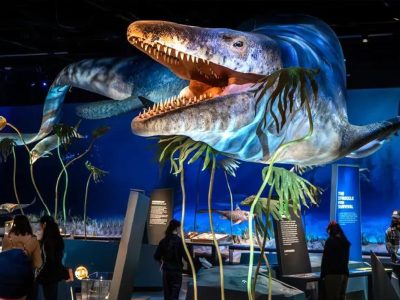
Life-Size Animatronic Mosasaurus — Giant Marine Reptile Exhibit for Aquariums & Natural History Museums
Command the depths of the Cretaceous with this life-size animatronic mosasaurus —…
Dinosaurs & Animatronics
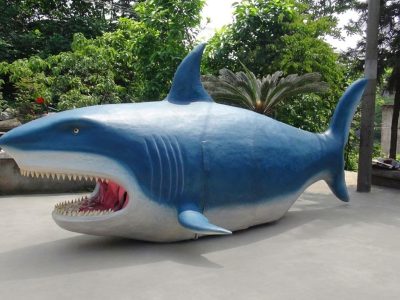
Life-Size Animatronic Great White Shark — Realistic Marine Predator for Aquariums & Ocean Exhibits
Bring the ocean's most iconic predator to your exhibition with this life-size…
We build animatronic marine creatures to order for aquariums, museums, theme parks, waterfront attractions and shopping destinations. Species, scale, pose, movement and finish are set by your brief, and the build is engineered for the specific environment it will live in — dry gallery, splash zone or genuine water contact. The models on this page are a starting catalogue; tell us the space and the story, and we build to it.
What Are Animatronic Marine Creatures?
An animatronic marine creature is a life-size mechanical recreation of a sea animal — prehistoric or modern — that moves, sounds and reacts. The movement vocabulary is what makes them convincing: a shark's tail sweeps side to side on a horizontal plane rather than up and down, a mosasaurus undulates through its whole body, a large marine reptile rolls slightly as it turns. Venues that get this wrong end up with a fish-shaped object that reads as a machine, because visitors carry a very precise sense of how sea animals move even if they have only ever seen them on screen.
Marine exhibits also solve a spatial problem that land exhibits do not. Hanging models can occupy the air above a visitor route, and wall-mounted or suspended displays fill a gallery's vertical volume — which means a marine creature often adds a second layer of exhibit to a space that is already in use, rather than competing for floor area. That is why aquariums and museums reach for them when their floor plan is full but their ceiling is not.
Species We Build
Mosasaurus and prehistoric marine reptiles
The flagship of any ancient-ocean exhibit. A Mosasaurus works at full scale and at a distance, and the long, powerful body allows a continuous travelling wave through the whole animal rather than a single hinged tail. Paired with a water-line installation — breach, surface glide or partially submerged pose — it delivers the moment visitors photograph. See our animatronic Mosasaurus for aquarium displays.
Sharks, life-size
A life-size shark is the most immediately readable marine exhibit there is, and it suits both a prehistoric theme and a modern ocean-conservation gallery. Mounted overhead, angled across a walkway or set into a wall, a shark fills space with a silhouette that every visitor recognises before they read a single label. Our life-size animatronic shark display is built for aquarium and museum installation.
Plesiosaurs and long-necked marine reptiles
The long neck gives an exhibit its strangeness. Plesiosaurs read as something between a reptile and a swan, and their silhouette is unmistakable even in a blacked-out hall. Because the neck is the defining feature, movement is concentrated there — slow, deliberate sweeps rather than fast action — which suits dark, atmospheric scenes.
Ichthyosaurs and dolphin-form reptiles
Streamlined and fast-looking, ichthyosaurs carry a shape visitors associate with dolphins, which makes them an effective teaching species: the exhibit can explain convergent evolution using an animal the audience already thinks they understand.
Giant prehistoric fish and armoured species
Dunkleosteus and similar armoured giants give an exhibit a genuinely alien entry. Their plated heads and blunt power read as dangerous without being a familiar predator, and they work well as the unexpected species in a gallery dominated by reptiles.
Ammonites, nautiloids and invertebrates
Shelled cephalopods fill the spaces between the large animals, and they are often the species that carries the interpretation — extinction, fossilisation, geological time — because their shells are what visitors actually find on a beach. Suspended spirals of ammonites make effective ceiling installations for education zones.
Our Marine Range
- Animatronic Mosasaurus — life-size marine reptile with body undulation, head and jaw action, built for aquarium and museum display with optional water-adjacent staging.
- Life-size animatronic shark — full-scale shark with tail sweep and head movement, engineered for overhead, wall-mounted or free-standing installation.
Marine creatures sit inside our wider dinosaur and prehistoric exhibit collection, and pair naturally with the land species of the same periods.
Where Marine Exhibits Work Best
- Aquariums and oceanariums — the most natural home. A prehistoric marine hall extending an existing collection's timeline backwards gives an aquarium a second act without needing new tanks.
- Natural-history museums — marine galleries often sit between the dinosaur halls and the geology displays; a suspended marine reptile bridges the two.
- Waterfront and harbour venues — a marine exhibit is thematically free here, and can be positioned outdoors facing a real body of water so the model and the environment support each other.
- Theme parks and family attractions — marine zones offer a change of atmosphere from a dinosaur trail: dimmer, cooler-toned, and usually the part of the park visitors walk through slowly.
- Malls and commercial display — suspended marine models use overhead space in a building that is already fully occupied at floor level, which is why retail centres buy them as atrium features.
Why Water Changes the Build
Marine exhibits are the one category where the environment is part of the engineering brief, and this is where a purpose-built model diverges sharply from a land animal repainted to look aquatic. Four things change:
- Water contact and splash. A model in a splash zone or partially submerged needs sealed actuators, protected control enclosures and drainage designed in. Salt water is significantly more aggressive than fresh, and a coastal or marine-tank installation is specified differently from an indoor gallery.
- Humidity and condensation. Even a dry marine gallery beside large tanks runs humid. Electronics, connectors and control boards are protected against condensation, and enclosures are positioned and vented so moisture cannot collect.
- Load paths and suspension. Overhead and suspended marine models put the entire weight of the animal into the ceiling structure. We confirm the rigging points, the load per point and the access needed for installation, and the frame is built around how it will be hung rather than adapted afterwards.
- Viewing from below. A marine exhibit is seen from underneath as often as from the side, so the underside is finished to the same standard as the flanks — seams, skin joins and support brackets are all designed to be presentable from a visitor's eye level looking up.
Finishes are specified for the environment: skin and paint systems chosen for UV exposure outdoors, for humidity indoors, and for the cleaning regime the venue will actually operate.
Building a Prehistoric Ocean Scene
Marine exhibits are strongest when they are staged rather than simply mounted. A worked example: a Mosasaurus at the water line in a breaching pose, positioned so visitors approach it bow-on and walk past the length of the body; suspended ammonite spirals above the route, carrying the geological-time interpretation; a plesiosaur framed in a dark side bay, lit to appear to be emerging from depth; and an ichthyosaur display set at child eye level, close enough to study the flippers. The visitor walks a depth profile from surface to sea floor without the venue building an actual tank.
Because we also build animatronic dinosaurs, the same hall can continue from sea to land with consistent finishing, which is difficult to achieve when the two are bought separately. For planning logic across a whole prehistoric route, see dinosaur park exhibits.
What to Specify Before You Order
- Species, scale and pose — and whether the model is free-standing, wall-mounted, suspended or staged at a water line.
- Water relationship — dry display, splash zone, partial submersion or full submersion; freshwater or salt. This is the single largest factor in how the model is built.
- Installation point and structure — ceiling or wall type, available rigging points, load capacity and safe access for installers.
- Viewing distance and angles — including whether visitors will see the underside, which decides how much finishing work the belly needs.
- Movement list — tail sweep, body undulation, head turn, jaw action, and whether any response is sensor-triggered.
- Environment and climate — indoor climate-controlled, covered outdoor or fully exposed coastal; wind loading matters for any suspended outdoor marine model.
- Maintenance access — how staff will reach the model for inspection; this is decided at design stage, not after installation.
There is no fixed price list for marine exhibits for the same reason as elsewhere in our range: the same species, at two scales, with a different movement set, specified for a dry gallery versus a saltwater splash zone, is a fundamentally different build. Once these points are settled we quote precisely. For the cost structure, see what affects the cost of an animatronic dinosaur — the drivers are the same for marine species, with the environment as an additional factor.
Frequently Asked Questions
Can an animatronic marine creature be installed in real water?
Yes, with the build specified for it. The model is designed for the level of water contact involved — splash, partial or full submersion — along with fresh or salt water, and the actuators, enclosures and skin system are selected accordingly. Tell us the water relationship before design begins.
How are large marine models suspended safely?
By designing around the structure that already exists. We take the ceiling or wall type, available rigging points and load capacity, and distribute the model's weight across multiple points with access considered for installation and later inspection.
Will an outdoor coastal installation corrode?
Salt air is aggressive, so exposed coastal siting uses stainless fixings, marine-rated protective systems and a specified cleaning routine. We build for the exposure of the actual site rather than a general outdoor standard.
Do you build both prehistoric and modern marine species?
Yes. Mosasaurus, plesiosaurs and ichthyosaurs sit alongside sharks and modern ocean species, and a gallery can mix archaeological and contemporary themes with a consistent finish standard.
What is the support on animatronic products?
Our standard position for animatronic products is a 12-month support, with spare parts available as part of the order and remote support for adjustments after commissioning.
Continue Planning Your Prehistoric Exhibit
- All dinosaur and prehistoric exhibits — the full collection by category.
- Animatronic dinosaurs — the land species of the same periods, in a matching finish.
- Ice Age animals — Pleistocene mammals for the era after the marine reptiles.
- Dinosaur skeletons and fossils — replica skeletons and fossil plates for the interpretation layer.
- Interactive exhibits — sensor-triggered models that respond to visitors.
- Dinosaur park exhibits — planning a complete prehistoric route across eras.
Talk to Us About Your Marine Exhibit
Tell us the species, the space and how the model will be mounted — plus where it sits in relation to water — and we will come back with a concrete proposal: species and scale recommendations, pose and staging, mounting and rigging requirements, movement list, environmental protection, delivery schedule and a precise quotation. Send us your brief to start.