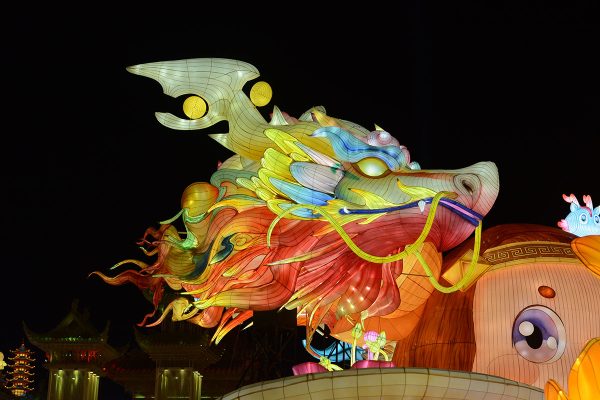
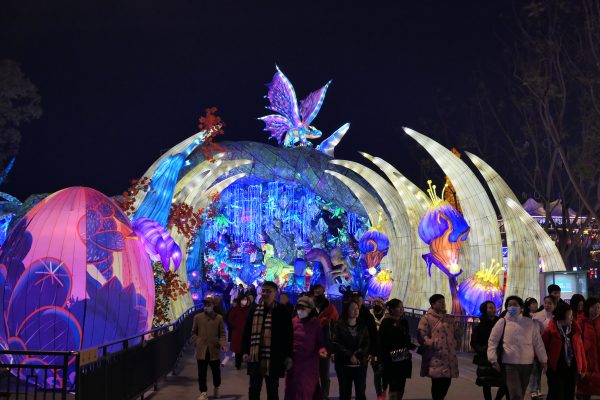
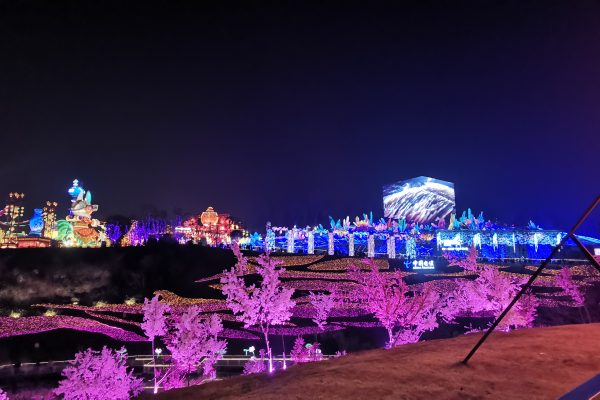
The evolution of Chinese lantern festivals from local cultural celebrations to global spectacles has been driven by many factors — but none as transformative as the rise of programmable LED lighting. Where traditional lanterns once relied on candles and incandescent bulbs, today’s large-scale installations harness the power of digital light control to create immersive, animated, and energy-efficient displays that captivate millions of visitors worldwide.
From Candle to Pixel: The Evolution of Lantern Lighting
Traditional Zigong lanterns used candlelight, later replaced by incandescent bulbs when electricity became available. These provided warm illumination but offered limited control — either on or off, with no ability to change color, intensity, or create dynamic effects.
The introduction of LEDs in the early 2000s marked the first revolution. LEDs offered:
- Lower power consumption (80-90% less than incandescent)
- Longer service characteristics (50,000+ hours vs 1,000 hours)
- Vibrant colors without color filters
- outdoor-rated+ weatherproofing for outdoor use
But the real breakthrough came with programmable LED controllers and DMX512 protocols.
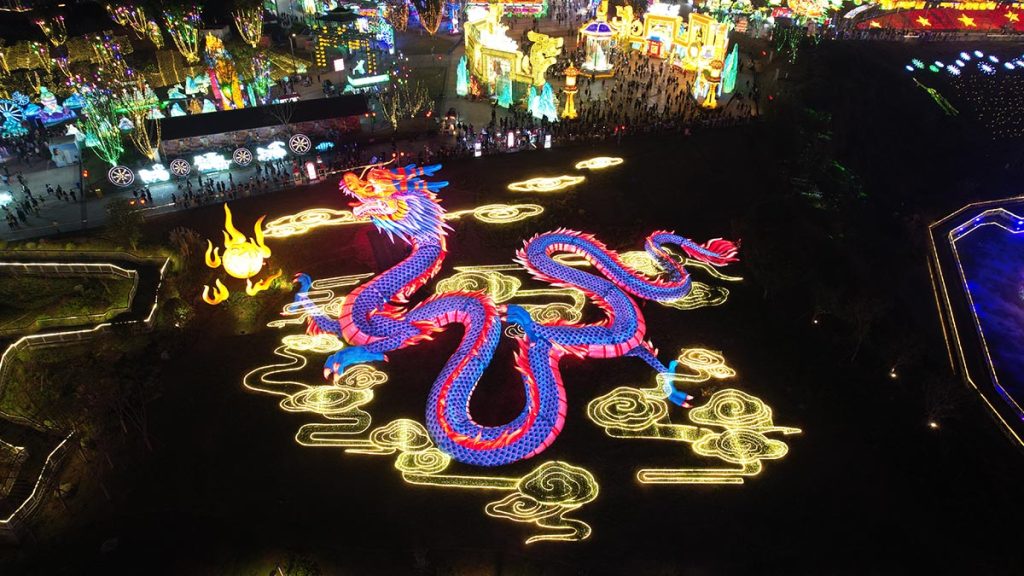
DMX512: The Standard for Festival Lighting Control
DMX512 (Digital Multiplex with 512 channels) is the industry-standard communication protocol for controlling lighting equipment. In modern festival lanterns, DMX512 enables:
Controller → DMX Signal → LED Driver → RGBW LED Strips/Modules
    │
    └── Each lantern or zone = unique DMX address
How It Works in Practice
A single DMX controller can manage up to 512 channels. Each RGB LED fixture uses 3 channels (Red, Green, Blue), meaning a 512-channel controller can independently control approximately 170 RGB fixtures. For large lantern displays with hundreds of individual elements, multiple DMX universes are daisy-chained.
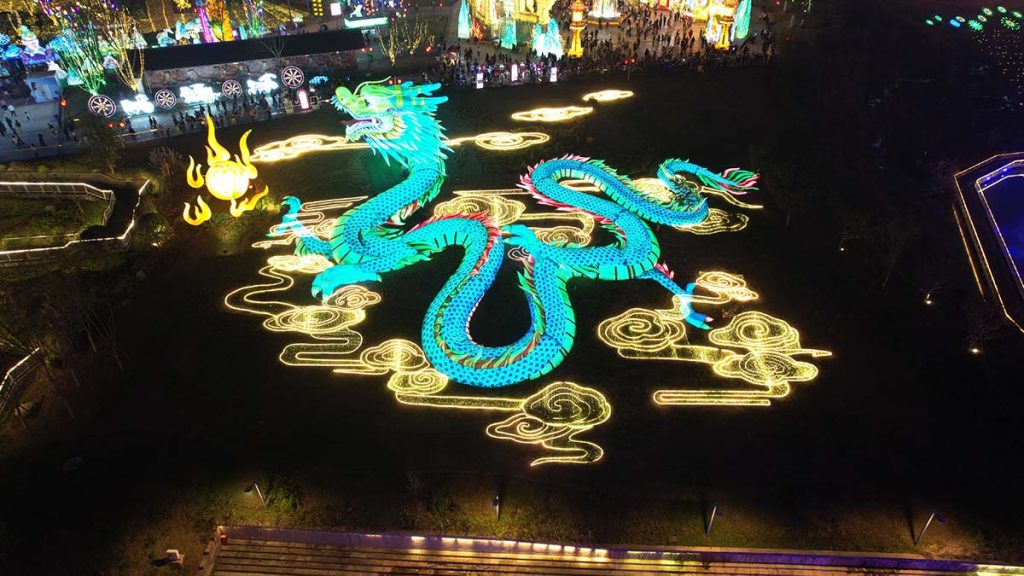
Real-world example: A 30-meter dragon lantern at a typical festival uses:
- 8 DMX zones (head, body segments x6, tail)
- 24 DMX channels (3 per zone for RGB)
- 4 scene presets (idle glow, breathing, wave chase, full animation)
RGB and RGBW LED Technology
RGB LEDs
Each RGB LED contains three color chips (Red, Green, Blue) that blend to create millions of colors through pulse-width modulation (PWM). By varying the duty cycle of each color channel (0-255 levels), controllers can produce any color in the visible spectrum.
RGBW LEDs
A more advanced variant adds a dedicated White chip, providing:
- Truer white tones (RGB white often appears grayish)
- Higher brightness for white scenes
- Better color rendering index (CRI)
LED Density and Pixel Mapping
For detailed animated effects like flowing water, rippling dragon scales, or butterfly wing patterns, the density of LEDs matters significantly:
| Application | Recommended LED Density | Typical Product |
|---|---|---|
| Large silhouette outlines | 30-60 LEDs/meter | 5050 RGB strip |
| Detailed animated surfaces | 60-144 LEDs/meter | 5050 RGBW high-density |
| Fine pixel mapping (faces) | 144+ LEDs/meter | Dot pixel LEDs |
| Monochrome flood lighting | 30 LEDs/meter | High-power floodlight |
Pixel Mapping and Animation Sequences
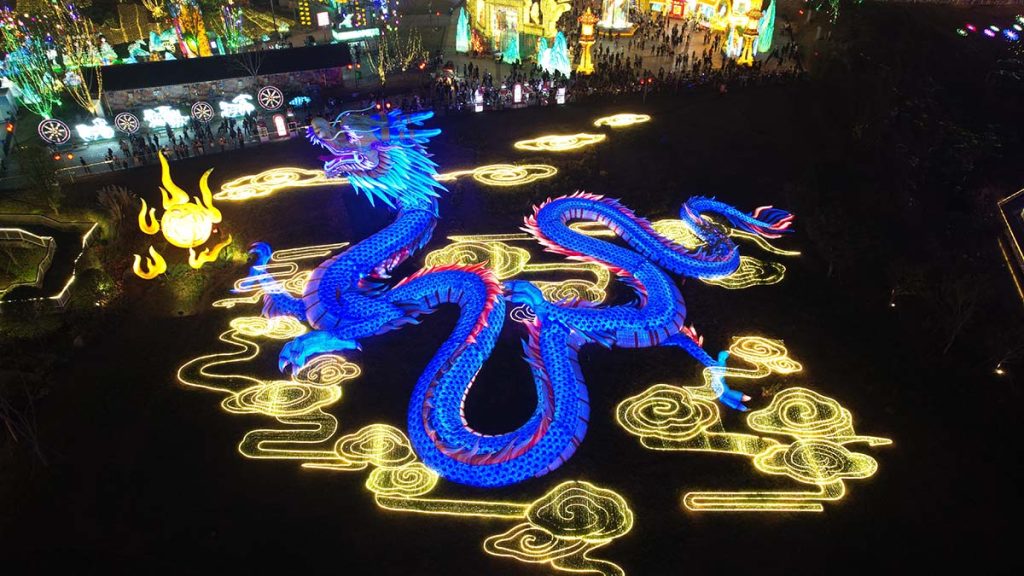
Pixel mapping assigns individual LED addresses across a physical surface, allowing the controller to treat the entire lantern as a digital canvas.
Common animation effects for festival lanterns:
| Effect | Description | Best Used For |
|---|---|---|
| Static glow | Constant color, no motion | Background elements, moons, stars |
| Breathing | Slow fade in/out (2-6 sec cycle) | Animal eyes, magical elements |
| Wave chase | Color traveling across surface | Dragon scales, flowing water, phoenix feathers |
| Twinkle | Random individual LEDs flashing | Star fields, fairy dust, sparkle effects |
| Color cycling | Smooth transition through spectrum | Abstract shapes, gradient surfaces |
| Strobe/flash | Rapid on/off (1-20 Hz) | Action scenes, dinosaur roars, dramatic moments |
Case example: A 12-meter phoenix lantern at a Canadian zoo lights event uses 8,000 individually addressable LEDs. The animation sequence includes:
- A slow breathing breathing effect from warm orange to deep crimson (idle state)
- A feather wave ripple triggered by visitor motion sensors (interactive mode)
- A full bright golden flash synchronized with an audio narrator (showtime mode)
Weatherproofing and Outdoor Durability
Festival lanterns operate in extreme conditions — winter snow, summer heat, coastal humidity. LED systems must be engineered accordingly.
IP Rating Requirements
| Environment | Minimum IP Rating | Additional Protection |
|---|---|---|
| Indoor exhibition | IP20-IP44 | None |
| Outdoor covered (canopy) | outdoor-rated | Conformal coating on PCBs |
| Exposed outdoor | outdoor-rated | Surface Finish potting, sealed connectors |
| Water contact (fountains) | outdoor-rated-IP68 | Fully encapsulated, weatherproof cables |
| Snow/freezing | outdoor-rated + heated | Low-temp rated power supplies (-20°C) |
Power Supply Considerations
- Voltage drop compensation: Long LED runs (>10m) require thicker gauge wire or 24V systems instead of 12V
- Repeaters/boosters: Used every 15-20 meters to maintain signal integrity
- Redundant power: Critical installations use dual power supplies with automatic failover
- Surge protection: Essential for outdoor installations in lightning-prone areas
Why Customers Choose Programmable LEDs for Their Lantern Festivals
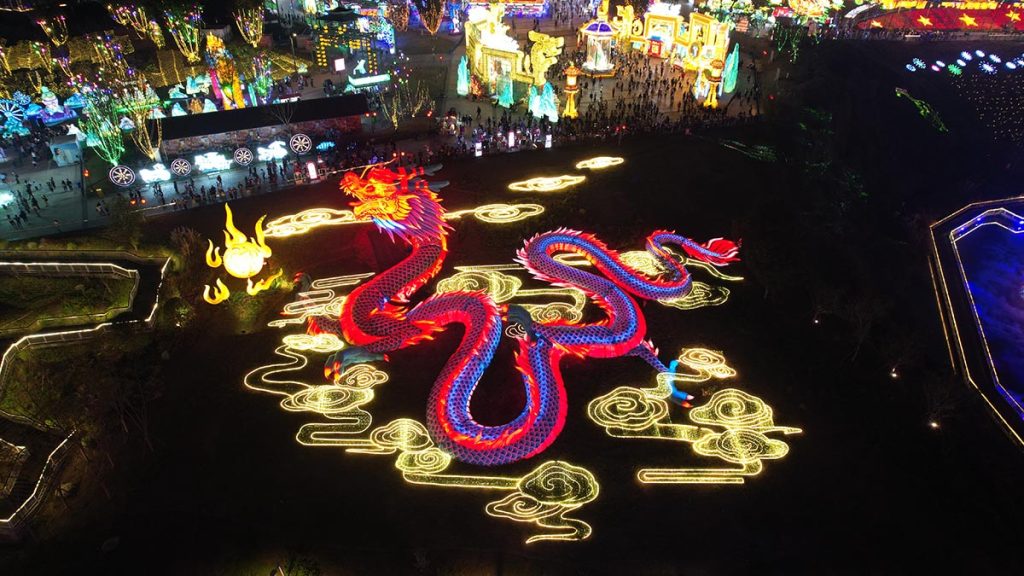
Event planners and zoo operators who invest in programmable LED lanterns gain several competitive advantages:
- Reusable content: Change the light show seasonally without replacing physical lanterns
- Low energy costs: A typical mid-size festival (80 lanterns) draws 15-25 kW total — comparable to a few household air conditioners
- Minimal maintenance: LEDs rated for 50,000+ hours mean 5+ seasons without replacement
- Viral social moments: Animated, interactive light displays generate Instagram-worthy content automatically
The Future: What’s Next for Festival LED Technology
Addressable Pixel Dots
Smart pixel LEDs (like WS2811/WS2815) allow each individual LED to be a unique pixel with its own IC driver, enabling ultra-high-resolution animations on large surfaces.
Wireless DMX Control
Eliminating DMX cables reduces installation complexity for temporary events. Zigbee and WiFi-based lighting control systems are gaining traction.
Solar-Hybrid Systems
Combining programmable LED controllers with photovoltaic panels and battery storage, enabling off-grid lantern displays in remote locations.
LiFi Integration
Emerging Light-Fidelity technology could eventually enable data transmission through lantern LEDs — broadcasting event information, tickets, or historical content directly through the light display.
Conclusion
Programmable LED lighting has transformed Chinese lantern festivals from static candlelit displays into dynamic, interactive light experiences. With DMX512 control, RGB pixel mapping, and robust weatherproof engineering, modern festival lanterns can deliver unforgettable visual performances while operating reliably across multiple seasons.
As a Zigong-based manufacturer with 14+ years in the industry, FestiveLanterns integrates programmable LED systems into every custom lantern we design — from 3-meter garden installations to 30-meter landmark centerpieces. Our engineering team programs custom animation sequences tailored to each venue’s layout, theme, and visitor flow.
Internal Links:
- Custom Chinese Lanterns — Complete Product Collection
- Zoo Lights Festival Provider
- City Lantern Festival Displays
- Why Choose a Zigong Lantern Manufacturer
Related Products & Resources
- Chinese Lantern Products — Browse our full range of custom lantern displays
- Animatronic Dinosaurs & Animals — Life-size custom exhibits for parks and museums
- More Guides & Articles — Festival planning, buying guides, and industry insights
- Get a Free Custom Proposal & Quote
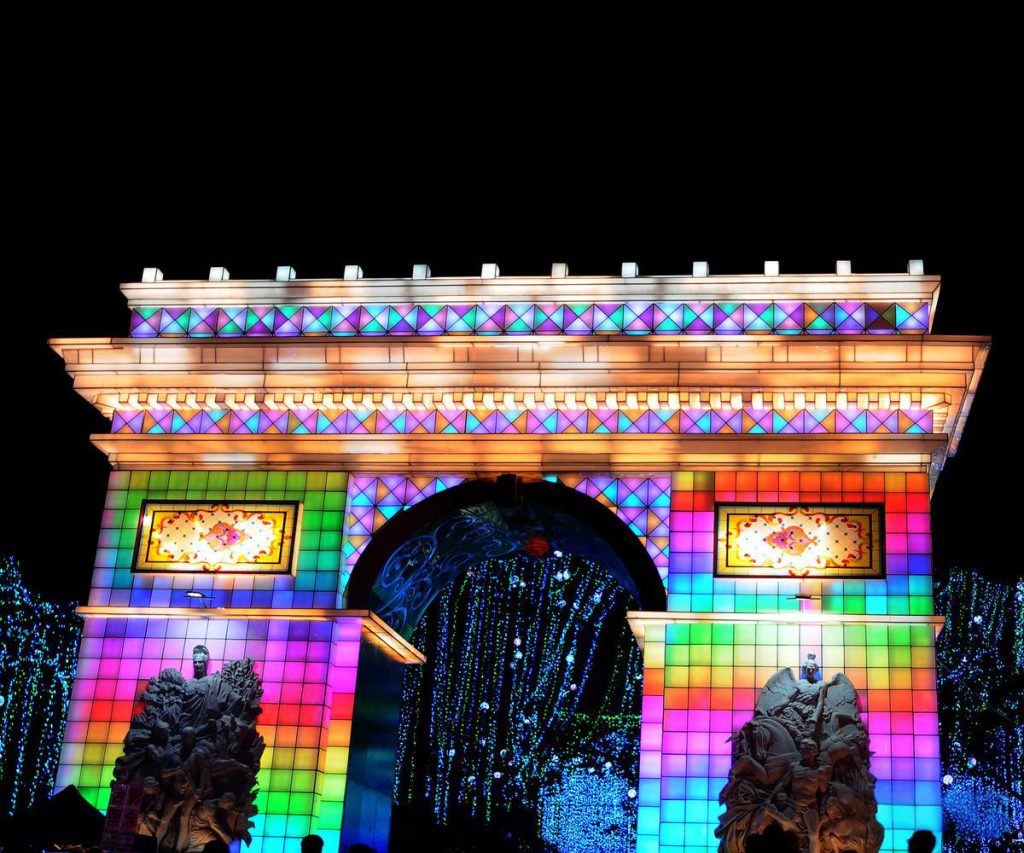
Explore our Arc de Triomphe Lantern for your next custom festival or themed event.