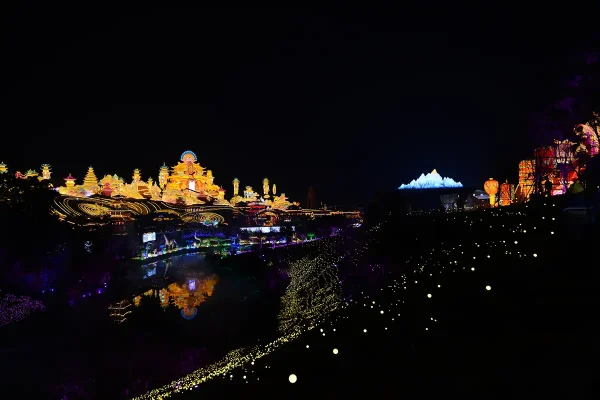
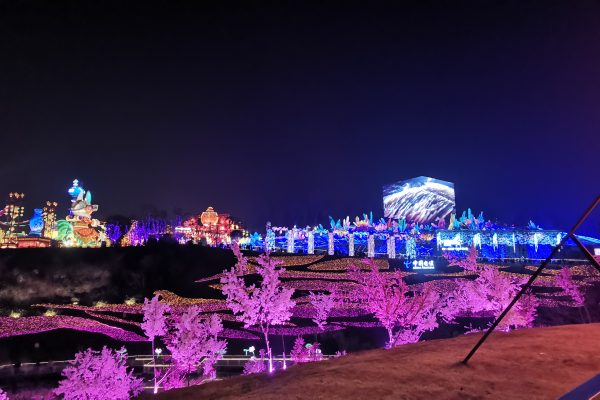
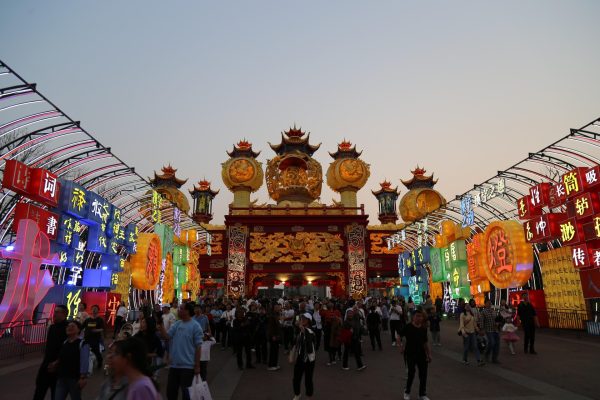
As festival lanterns grow larger and more complex — with towering centerpieces reaching 30 meters and spanning entire city blocks — ensuring their structural safety and operational reliability has become a critical engineering challenge. Modern smart monitoring systems are the answer. These integrated sensor networks continuously track structural integrity, weather impacts, and electrical health, enabling festival operators to prevent failures before they happen.
Why Large Lanterns Need Active Monitoring
A typical large-scale festival lantern display presents several risk factors:
| Risk Factor | Cause | Potential Consequence |
|---|---|---|
| Foundation settlement | Soil compaction, water erosion | Structural tilting, collapse risk |
| Snow/ice accumulation | Prolonged snowfall on large surfaces | Overload, frame deformation |
| Rain pooling | Blocked drainage on flat surfaces | Weight increase, fabric damage |
| LED circuit failure | Moisture ingress, component aging | Partial blackout, fire risk |
| Wind stress | High winds on large flat surfaces | Frame oscillation, anchor stress |
Traditional inspection relied on periodic visual checks — which meant problems were only discovered after they became visible. Smart monitoring systems offer real-time, continuous detection with automated alerts.
Three Core Monitoring Systems
1. Laser Settlement Monitoring
For tall or heavy lantern structures — such as 20-meter dragon lanterns or multi-ton archways — even millimeter-level foundation settlement can stress the internal frame and compromise the overall display.
How It Works:
Two laser measurement modules are installed on the lantern’s foundation:
- Horizontal axis laser: Monitors lateral tilt (left-right shift)
- Vertical axis laser: Monitors forward-backward tilt
Each laser continuously measures distance to a fixed reference point. When settlement exceeds a programmed threshold (typically 5mm for small structures, 10mm for large ones), the system sends an alert.
Installation Example:
  ┌─────────────────────┐
  │     Lantern Base    │
  │  ┌─────────────┐   │
  │  │ Laser X Ref │←──│──> Horizontal measurement
  │  └─────────────┘   │
  │  ┌─────────────┐   │
  │  │ Laser Y Ref │←──│──> Vertical measurement
  │  └─────────────┘   │
  └─────────────────────┘
          │
    (Reference pillar anchored in stable soil)
Technical Specifications:
- Measurement range: 0.1-50 meters
- Accuracy: ±1mm
- Temperature range: -20°C to +60°C
- outdoor-rated for outdoor installation
- Wireless data transmission to central controller
Alert thresholds:
| Lantern Type | Warning | Critical |
|---|---|---|
| Small (3-8m) | 5mm deviation | 10mm deviation |
| Medium (8-15m) | 8mm deviation | 15mm deviation |
| Large (15-30m+) | 10mm deviation | 20mm deviation |
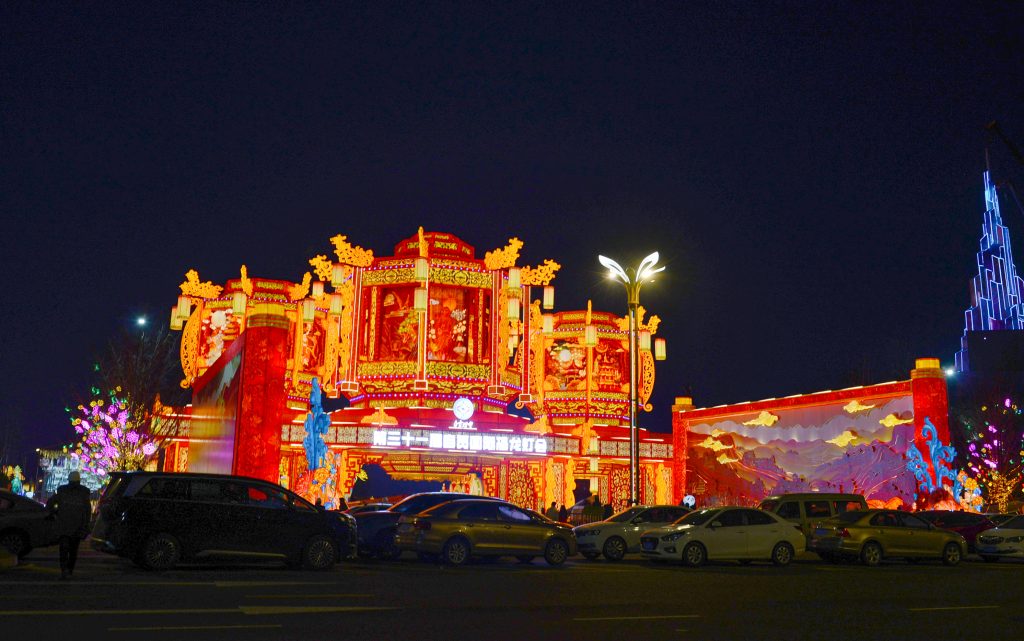
2. Rain, Snow and Pressure Sensors
Large-surface lanterns — such as archway displays, roof-style decorations, and wide animals — are vulnerable to rain pooling and snow accumulation. Even weatherproof fabric lanterns can accumulate significant weight.
Pressure Sensor Configuration:
- Location: Installed at the lowest stress points of large horizontal or sloped surfaces
- Type: Strain gauge pressure transducers
- Sensitivity: 0.1 kg/cm² resolution
- Data transmission: Wired (preferred for reliability) or wireless
Automated Response:
Sensor reading > Warning threshold
    ↓
Controller activates heater (if installed) → melt snow
    ↓
If accumulation continues → Red alert → Maintenance dispatch
    ↓
If critical threshold reached → Zone shutdown / evacuation signal
Weather Scenarios:
| Condition | Sensor Reading | Response |
|---|---|---|
| Light rain | < 5kg/m² | Monitor only |
| Heavy rain | 5-15 kg/m² | Alert, check drainage |
| Moderate snow | 15-30 kg/m² | Activate heaters (if available) |
| Heavy snow | 30-50 kg/m² | Red alert, dispatch crew |
| Extreme snow | > 50 kg/m² | Evacuate zone, emergency response |
3. Control Box Circuit Monitoring
The electrical heart of every modern lantern display is its control box — housing LED drivers, DMX controllers, power supplies, and communication modules. Smart circuit monitoring tracks the health of these systems.
Monitored Parameters:
| Parameter | Sensor/Method | What It Detects |
|---|---|---|
| Line voltage | Voltage transducer | Power supply fluctuations, brownout |
| Current draw per circuit | Hall effect sensors | LED strip failure, short circuit |
| Driver temperature | Thermocouple | Overheating, ventilation failure |
| DMX signal integrity | Signal analyzer | Data corruption, cable faults |
| Individual LED groups | Current monitoring | Specific section failures |
| Humidity inside control box | Hygrometer | Seal failure, condensation |
| Vibration | Accelerometer | Wind stress, structural movement |
LED Fault Detection:
When an individual LED or LED strip fails, the current draw of that circuit decreases measurably. The monitoring system can identify:
- Which zone (e.g., “Dragon Body Section 3”)
- Which circuit (e.g., “Green channel, Circuit B”)
- Failure type (e.g., “Open circuit — strip disconnected”)
This level of precision means maintenance teams can bring exactly the right replacement parts to the correct location, reducing repair time from hours to minutes.
Alert System Architecture:
Sensor Data
    ↓
Local Controller (control box MCU)
    ├── Auto-restart attempt (3x max)
    ├── Audible alarm (on-site buzzer)
    └── Remote alert
        ├── SMS to site manager
        ├── Email to operations team
        └── Dashboard update (central monitoring)
Case Study: Smart Monitoring in Action
A 25-meter dragon lantern displayed at a major North American zoo lights event includes:
| System Component | Quantity | Application |
|---|---|---|
| Laser settlement sensors | 2 | Monitor dragon body alignment |
| Pressure sensors | 4 | Under largest horizontal surfaces |
| Circuit monitors | 3 | Head, body (2 zones), tail |
| Temperature/humidity | 2 | Control boxes (front and rear) |
Result: During the 2025-2026 winter season, the system detected:
- Snow accumulation warning on the dragon’s head (8cm of wet snow)
- LED strip failure in the left eye (replaced within 20 minutes)
- Seasonal foundation shift of 3mm (monitored, no action needed)
The entire display operated for 4 months with zero visitor downtime.
The Path to Smart Lanterns
Smart monitoring systems are the foundation of the next evolution: truly smart festival lanterns. Future developments include:
Self-Diagnosing LED Networks
Individual addressable LEDs that report their own health status back to the controller, enabling real-time pixel-level fault mapping.
Predictive Maintenance
Machine learning models trained on sensor data can predict component failures before they occur — alerting operators to replace a failing LED driver or power supply during off-hours.
Autonomous Snow Removal
Timer or pressure-triggered heating elements integrated into large fabric surfaces that automatically clear snow without manual intervention.
Centralized Multi-Site Monitoring
A single operations dashboard tracking the health of lantern displays across multiple cities or venues simultaneously.
Conclusion
Smart monitoring systems represent a significant leap forward in festival lantern safety and reliability. By combining laser settlement detection, rain/snow pressure sensors, and comprehensive circuit monitoring, modern installations can operate safely through challenging weather conditions while minimizing maintenance downtime.
For event organizers and venue operators, these systems provide:
- Peace of mind — Real-time alerts means problems are caught early
- Lower insurance costs — Demonstrated safety monitoring reduces risk premiums
- Extended display life — Early detection prevents minor issues from becoming major repairs
- Visitor safety — Automated warnings protect the public from structural hazards
At FestiveLanterns, every large-scale lantern display we manufacture includes integrated smart monitoring from our factories in Zigong. Our engineering team works with each client to configure the right sensor suite for their specific installation.
Internal Links:
- Custom Giant Lanterns — Large-Scale Installations
- Zoo Lights Festival Provider
- City Lantern Festival Displays
- Chinese Lantern Festival Planning Guide
Related Products & Resources
- Chinese Lantern Products — Browse our full range of custom lantern displays
- Animatronic Dinosaurs & Animals — Life-size custom exhibits for parks and museums
- More Guides & Articles — Festival planning, buying guides, and industry insights
- Get a Free Custom Proposal & Quote