Most seasonal themes sell one audience. A Chinese New Year lantern programme sells two, on the same installation, for fifteen nights instead of one — and the reason it works has less to do with culture than with what else sits on the venue calendar in February.
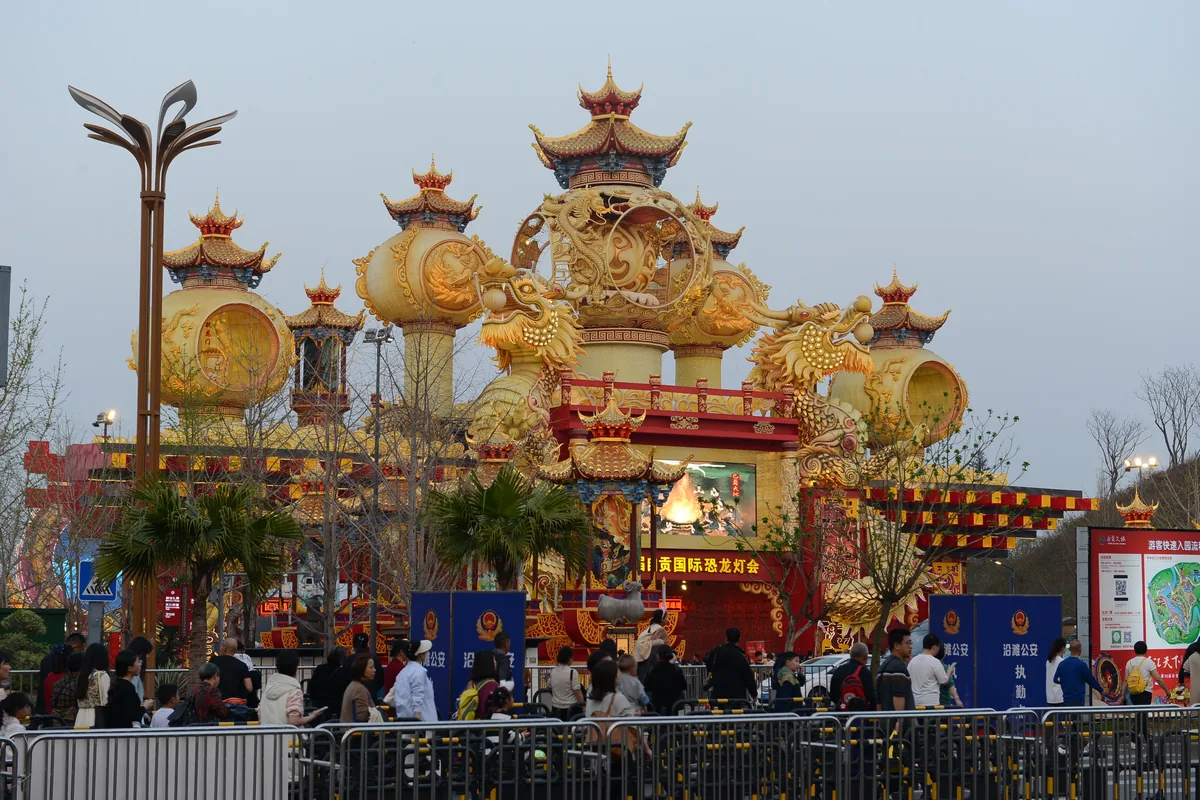
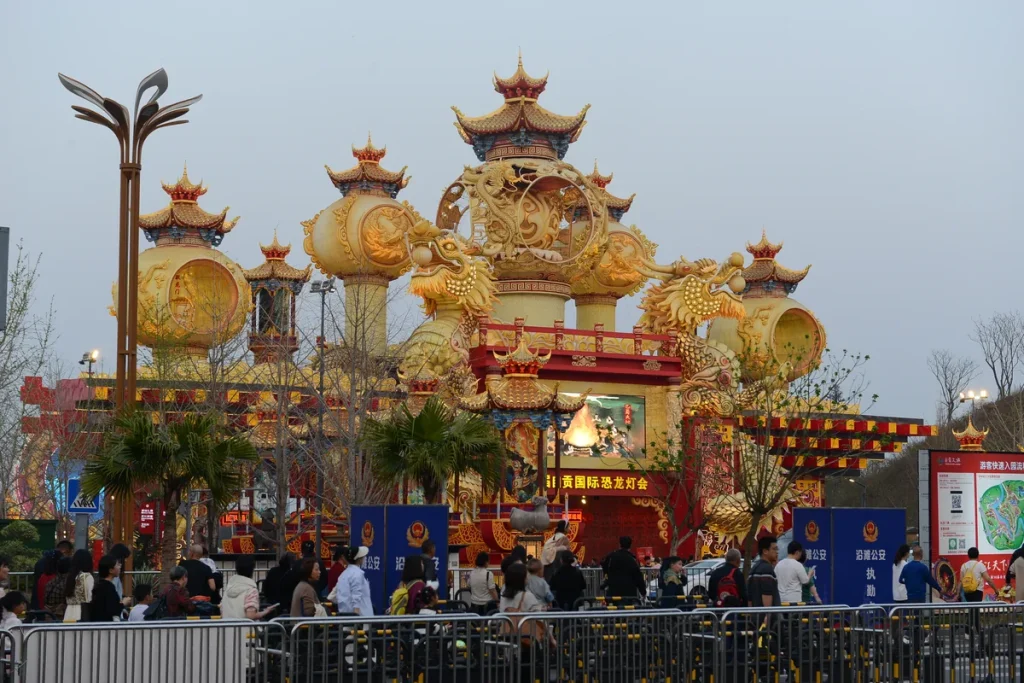
A New Year programme at the gate: lantern towers, dragon forms, and the crowd they were specified for.
Two audiences, one installation
Stand at the gate of a Chinese New Year lantern show in a European or North American city and you can watch the crowd split within the first fifty metres.
One group moves slowly and looks closely. They are checking whether the zodiac animal is the right one for the year, whether the calligraphy on the archway is correct, whether the lotus reads as a lotus and not a generic flower. Many of them grew up with the holiday. They will notice if the goat’s horns sit at the wrong angle, and they will photograph the detail that took the painter three days.
The other group moves fast and looks up. They came for scale and light and a photograph their friends have not taken yet. They could not tell you which animal the year belongs to, and they do not care. They want the nine-metre dragon, the tunnel of lanterns, the reflection in the water.
Both groups buy the same ticket. Drop the first and the event reads as a light show with a theme borrowed from somewhere else — attendance holds for a week and the local community never comes back. Drop the second and you have a community gathering with a modest gate. The venues that run this theme well serve both on one route, and neither group walks away feeling they came on the wrong night.
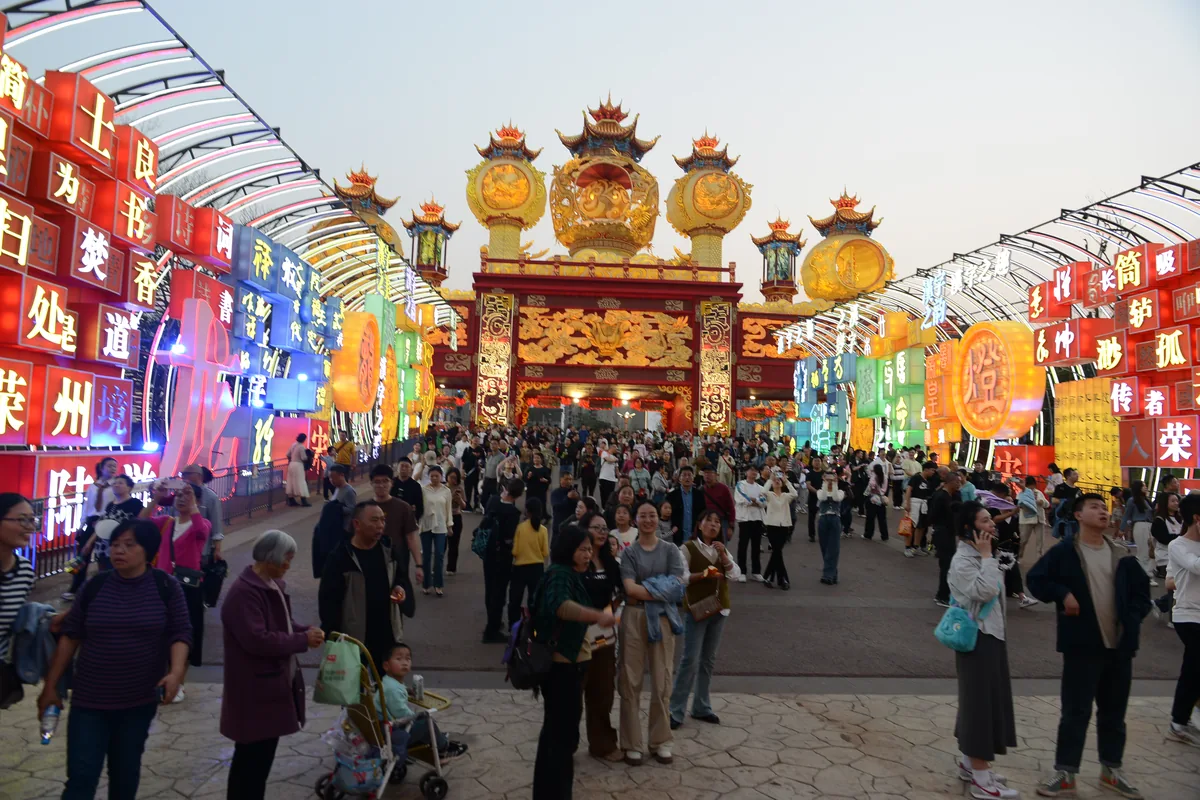
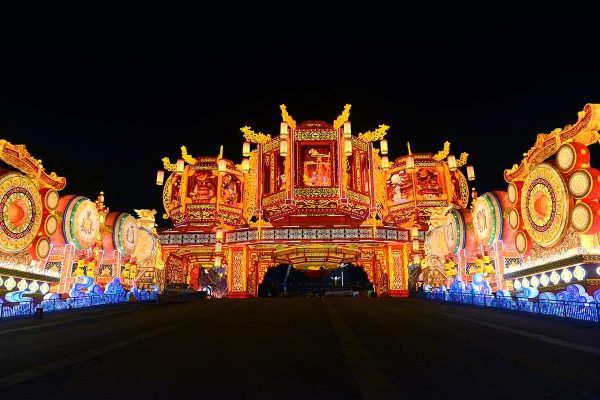
Night nine of a fifteen-night run. The route still has to give people a reason to be walking it.
Designing for both is a matter of layering. Long sightlines carry the big pieces and give the second group what they came for. The first group needs something to slow them down, which means close-viewing pieces at 1 to 1.5 metres with real surface work: individual scale patterns, layered colour, painted faces that hold up at arm’s length. The two layers sit on the same route, but they answer different questions, and a programme that skips the near layer reads as thin to exactly the audience most likely to post about it.
Why animals and zodiac signs travel further than written characters
There is one pattern that decides whether a Chinese theme works overseas, and it has nothing to do with how good the craftsmanship is.
A panda, a tiger, a koi, a dragon — these read instantly to a visitor who has never studied Chinese culture. No caption needed, no translation, no explanatory panel. A zodiac animal does the same job once it is explained in one line, which a small sign handles.
Written characters are the opposite. A couplet is beautiful and means nothing to a reader who cannot read it. The character 福 turned upside down is a deliberate pun that lands only if you know the language. Building a display around text means building a display that half the audience walks past, and no amount of craftsmanship fixes that.
That is why the strongest overseas programmes are built around animal forms and zodiac figures, with text used as accent rather than structure — a banner over a gate, a single character on a lantern face, not the organising idea. The Chinese audience still reads it correctly. The rest of the audience gets a form they understand without a guide.
The same logic explains why animals travel better than almost any other lantern category across markets. A zoo in Ohio, a waterfront in the Netherlands and a mall atrium in Singapore can all use the same animal forms without translation, and each venue finds its own local meaning in them. Text does not have that range.
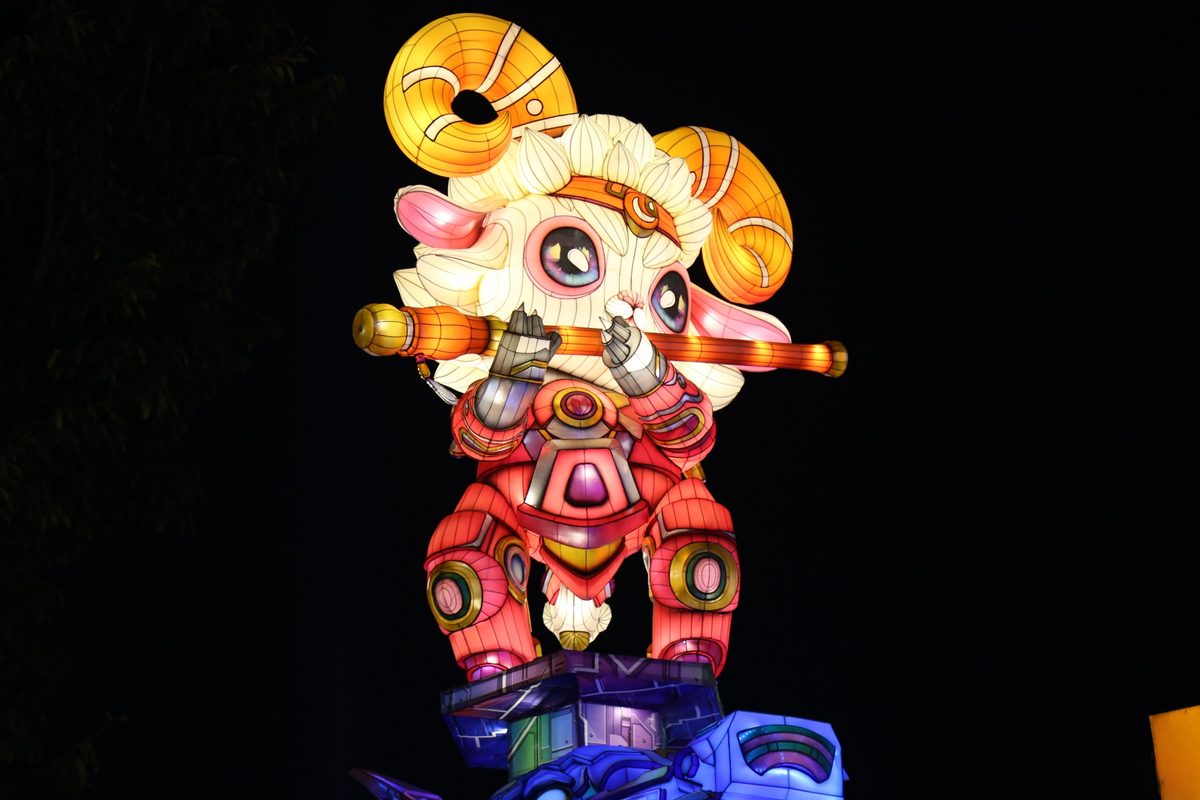
One figure from a twelve-animal series — the piece a Chinese audience reads closely, and the one everyone else photographs.
The calendar problem no other theme has
Compare the seasonal themes a venue can program:
Halloween is one night, with a build-up week and a hard stop. Christmas is effectively two days, with a longer commercial run either side. Valentine’s is one evening. These themes are intense and short, which is why they work as spikes.
Chinese New Year runs fifteen days — from New Year’s Eve through the Lantern Festival on the fifteenth night. In practice, venues run it for three to four weeks because the weekends either side carry attendance.
That length changes the economics completely. The same installation budget spread across fifteen nights is a fifteenth of the per-night cost it would be across one. It also changes what the programme has to be, because an installation that is impressive on opening night and unchanged on night twelve is a programme that has already been seen.
The venues that handle this well plan the run in stages rather than opening everything at once. Night one carries the hero pieces and the ceremony. Mid-run brings a rotation — small pieces swapped, a different zodiac cluster brought forward, a workshop added on weekends. The final weekend is the Lantern Festival, which gets its own event: riddles, floating lanterns if there is water, a closing ceremony. Three peaks instead of one, on one set of structures.
Operators tend to expect the engineering to be the hard part. It is not. A modular frame, numbered sections and a crate list cost very little to design in. What costs is an unchanged fifteen nights: attendance decays from the second week and night twelve looks nothing like opening night.
What fills the gap between Christmas and spring
Look at a European or North American venue calendar and there is a hole in it.
Christmas programming comes down in the first week of January. Spring events do not start until March, and in many climates the ground is not ready before then anyway. That leaves six to eight weeks where the site is open, the staff are on payroll, the electrical infrastructure from the Christmas build is still in place, and there is nothing to sell in the evening.
Chinese New Year falls directly into that hole. In 2027 the holiday begins on 6 February, which puts the operating window in late January through February — precisely the stretch that most venues leave empty.
The operational advantage is not cultural, it is logistical. The distribution boards are already there. The route has already been walked and approved once. The crew that built the Christmas trail knows the site. Reusing that infrastructure for a second programme in the same winter is dramatically cheaper than building two programmes from scratch, and it is the argument that actually gets budget approved.
For venues that already run a winter light trail, the second programme is an extension of an asset rather than a new capital project. For venues that do not, Chinese New Year is often the easier first step, because the run is fixed at fifteen nights and the theme carries its own audience.
What overseas venues get wrong first
Three mistakes come up often enough that we now raise them before a client asks.
Treating it as a Chinese Christmas. The instinct is red and gold everywhere, lanterns on every surface, as much as possible. The result reads as decoration rather than as a place, and it photographs badly because there is no hierarchy — everything is equally bright, so nothing stands out. The fix is the same as any other lighting design: decide what the one thing is that people will remember, build the route toward it, and let the rest support it.
Building lights without building an event. A lantern trail on its own is a walk. What makes the fifteen days work is programming around it: a lion dance on opening weekend, a market with food and craft, a lantern-making workshop for families, riddles on the Lantern Festival night. These are low-cost additions that change dwell time and repeat visits, and they are usually the first thing cut when budget tightens — which is exactly backwards.
Underestimating the fifteen-day content burn. Opening night is full. Night five is quieter. By night ten, if nothing has changed, the local audience has been once and has no reason to return. The venues that hold attendance plan the rotation before the season starts, not when the numbers come in.
There is a fourth mistake specific to procurement: briefing a supplier with a theme but no site information. A New Year programme specified without the route length, the tree positions, the available power and the prevailing wind direction is a programme that will be redesigned on site, at the venue’s cost, in the week before opening.
How a programme is scoped for a fifteen-day run
A working configuration for a 300-metre route, based on what tends to hold attendance across a full run rather than just opening night:
Eight to twelve major pieces at 6 to 8 metres, including one or two landmark pieces at 10 metres or above. These carry the long sightlines and the photographs. One of them should be visible from outside the gate — a piece that can be seen before entry does more for ticket sales than any piece inside.
A zodiac series of twelve figures at 1.5 to 2 metres, arranged as a corridor or a ring. This is the piece the Chinese audience reads closely and the piece that gives the second audience a reason to walk slowly. It is also the easiest element to rotate if the year’s animal needs to be brought forward mid-run.
Thirty to fifty close-viewing pieces at 1 to 1.5 metres, distributed along the route rather than clustered. Fish, lotus, butterflies, small animals. These are what make the near layer work, and they are the cheapest element to swap between stages of the run.
Three to five interactive points — sound-reactive pieces, motion-triggered elements, a wish-wall where visitors write and hang a card. Interaction is what converts a walk into a stay, and it is what families remember.
Five to seven programmed nights, concentrated on weekends and the two ends of the run. Opening ceremony, a market weekend, the Lantern Festival closing night.
The staging that keeps the fifteen days alive: hero pieces and ceremony on night one, a small-piece rotation and a different zodiac cluster around night seven, and a distinct closing event on night fifteen. Same structures, three different reasons to come back.
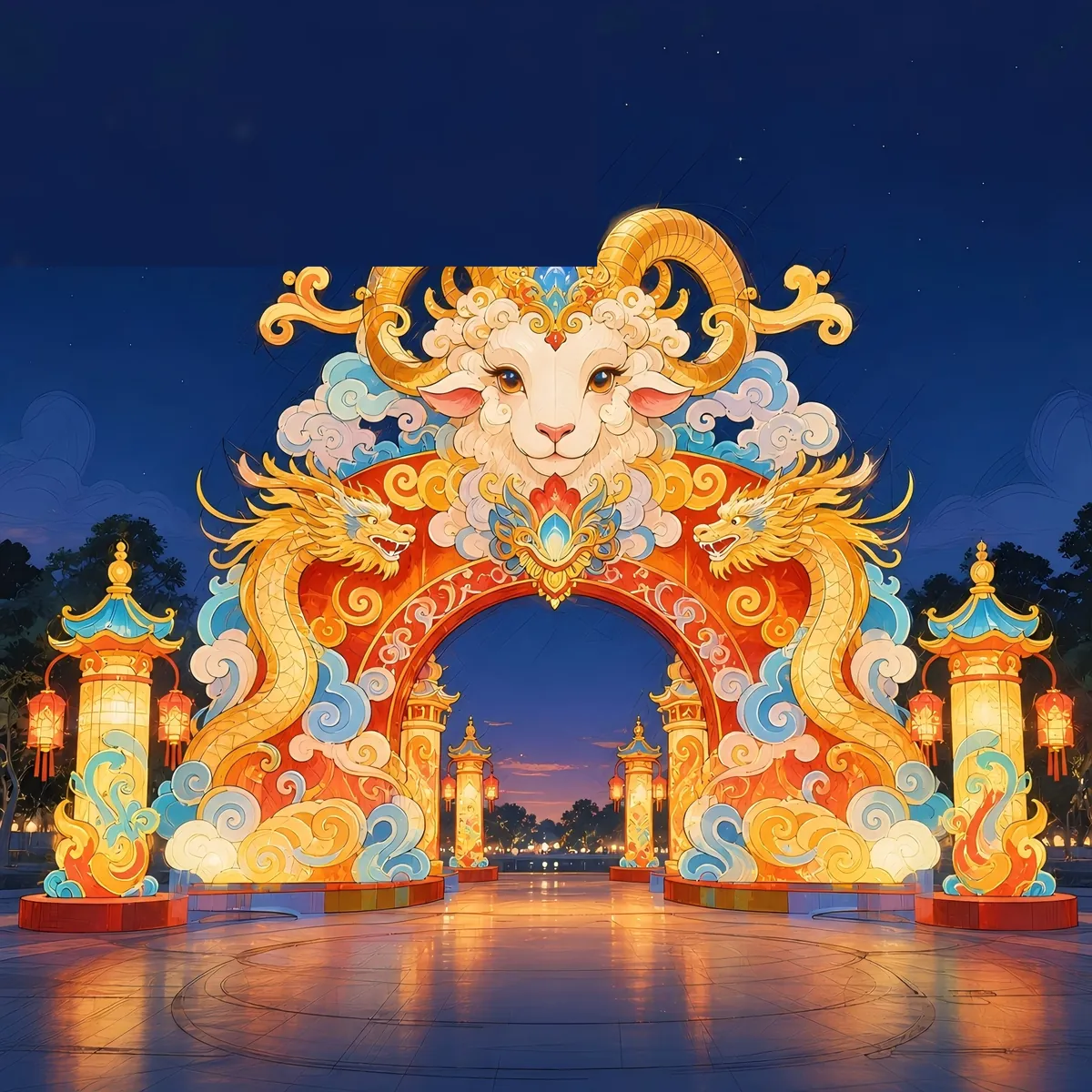
A Year of the Goat gateway. In 2027 the zodiac animal changes, and the hero piece changes with it.
For a closer look at how individual pieces are laid out along a route, the display ideas for a fifteen-day run cover layout patterns by site type. The 2027 Year of the Goat guide covers what changes when the zodiac animal changes.
What to send us for a scoping call
None of these require a finished design, and all four together are enough to scope a programme:
The site plan, marked with the intended route, the tree positions, the available power points and the wind direction the site normally gets in winter. If there is a plan with egress routes already drawn, send that version.
The run dates and opening hours, including which nights are expected to be the peaks. A programme scoped around a fifteen-night run with three peaks is specified differently from one scoped around continuous daily operation.
The budget band, even a rough one. It determines the split between major pieces and close-viewing pieces, and getting that split wrong is the most common reason a programme ends up looking thin at a distance or empty up close.
Whether there is a local community partner — a Chinese association, a cultural centre, a school. Programmes with a community partner fill their event nights more easily and get local press without buying it.
Send those four and the first response is a route layout with piece counts and a staging plan, not a catalogue. The catalogue is the easy part.
FestiveLanterns designs and builds Chinese New Year lantern programmes in Zigong, China, and installs them on sites across Europe and North America.