Chinese New Year 2027 falls on 6 February, with the Lantern Festival closing the season on 20 February. For venues planning a lantern programme — city plazas, shopping centres, parks, cultural centres and temple fairs — the work that decides whether that season succeeds does not happen in February. It happens in the last quarter of 2026.
This guide walks through how a Chinese New Year lantern programme is planned and delivered, what the 2027 zodiac year means for design, and the procurement calendar that keeps a February opening date realistic.
Why 2027 Planning Starts in October 2026
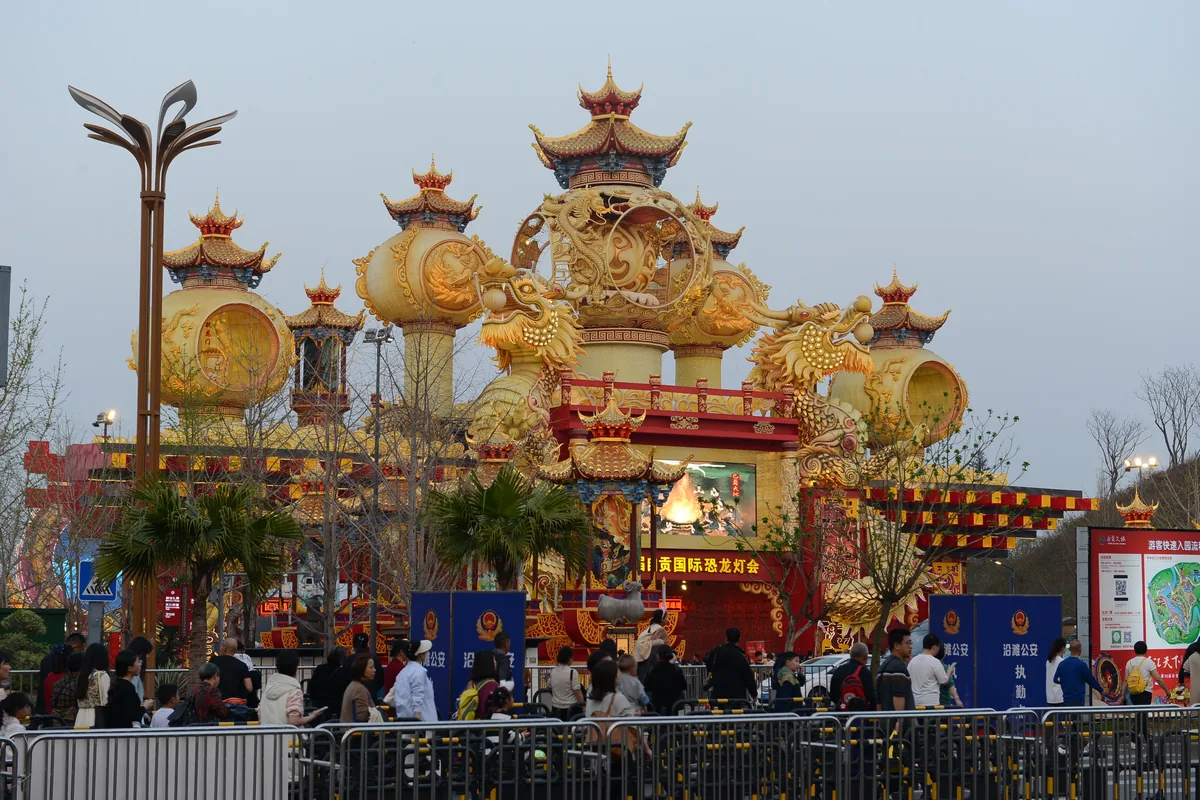
A Chinese New Year lantern display is a build-to-order installation, not a stock item. Each programme moves through concept design, engineering drawings, fabrication, finishing, testing, packing, ocean freight, customs clearance and on-site installation. A single hero piece can take weeks of workshop time before it is ready to leave the factory.
That sequence is why experienced event teams treat October to December as the ordering window. Programmes that begin design in December have very little slack: every delay in approvals is absorbed by the production and shipping schedule, and the opening date stops being negotiable.
Working backwards from a 6 February 2027 switch-on, a comfortable schedule looks like this:
| Stage | Timing | What Happens |
|---|---|---|
| Concept & design approval | Oct – Nov 2026 | Site survey, theme direction, 3D renderings, revision rounds |
| Order confirmation | Nov – Dec 2026 | Final scope locked, production slot reserved |
| Fabrication | Dec 2026 – Jan 2027 | Build, wiring, illumination testing, packing |
| Ocean freight | Jan 2027 | Container loading, shipping, customs clearance |
| On-site installation | Late Jan – early Feb 2027 | Assembly, power-up, commissioning, trial nights |
| Opening | 6 Feb 2027 | Chinese New Year switch-on |
| Lantern Festival close | 20 Feb 2027 | Final night of the season |
Two variables compress or extend this: how many custom pieces are in the scope, and how many rounds of design revision the programme needs. Both are easier to manage when the conversation starts early.
What a Chinese New Year Lantern Programme Usually Includes
Every venue is different, but most programmes are assembled from the same building blocks:
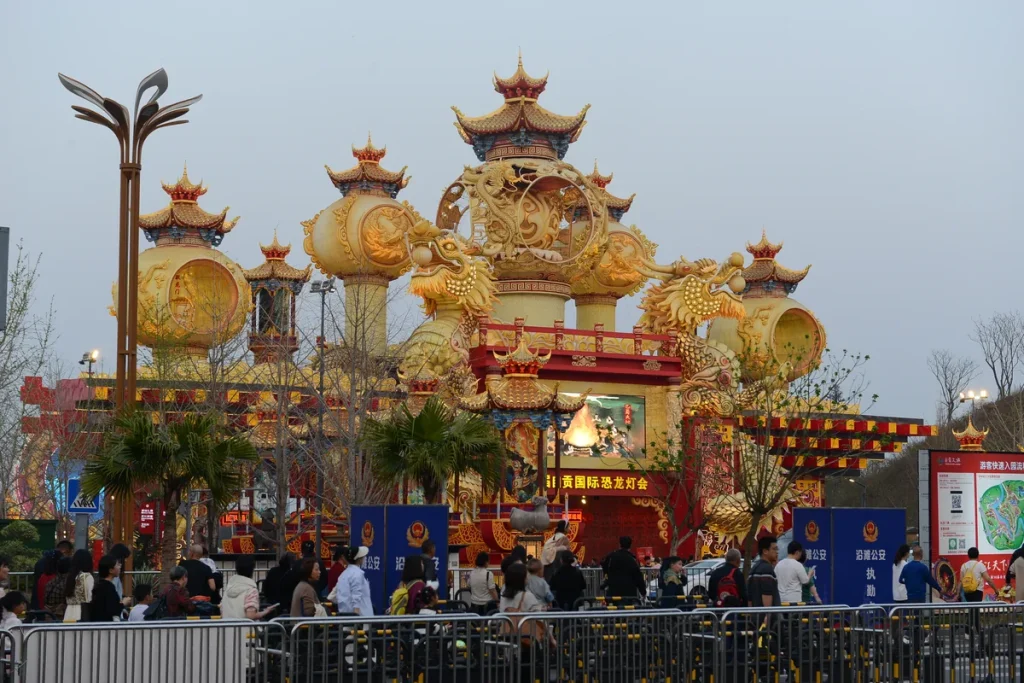
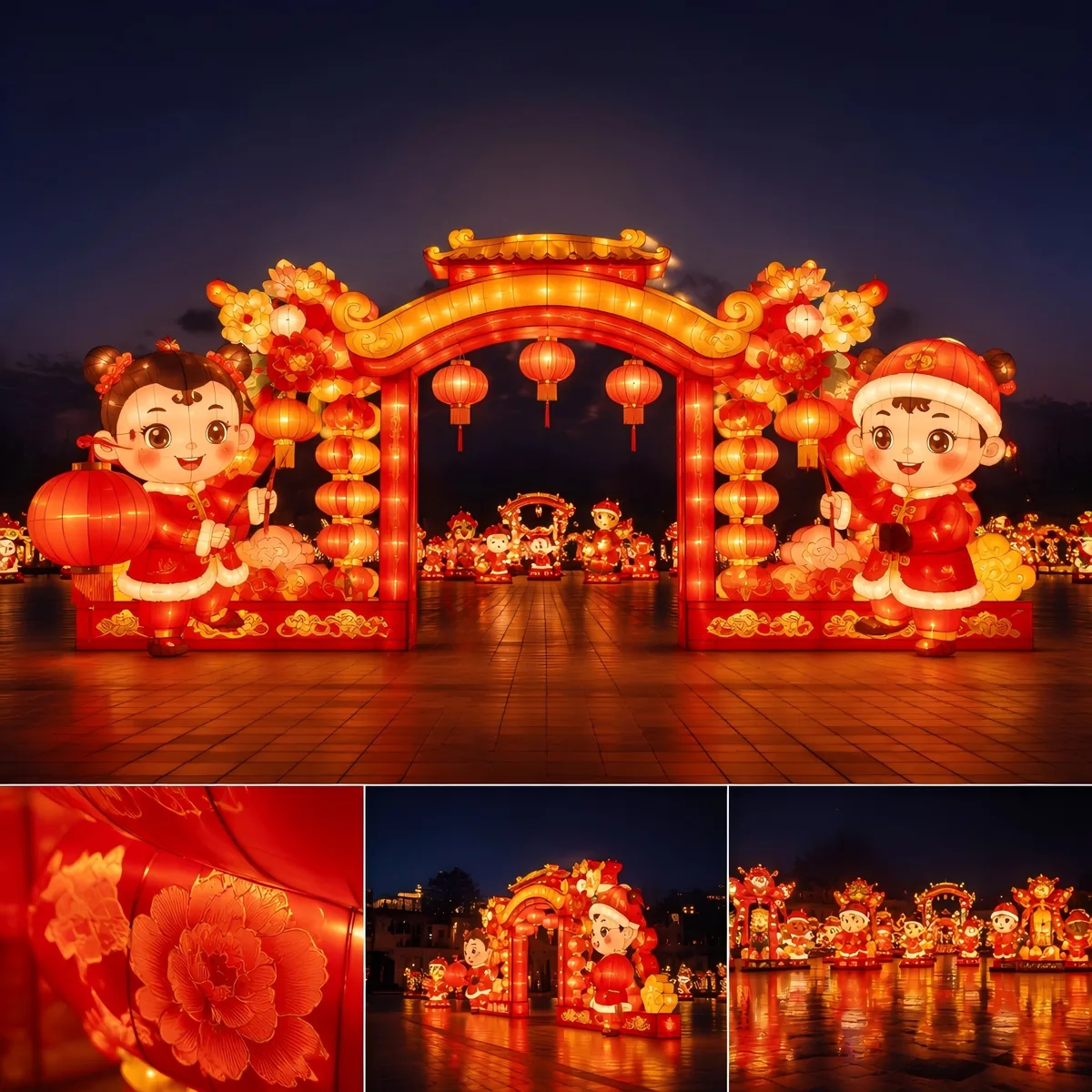
- Entrance arches and gateway structures — the first thing visitors photograph, and the piece that sets the scale of the whole route.
- Zodiac-themed centrepieces — the animal of the incoming year, in large-scale illuminated form, usually placed at the heart of the route.
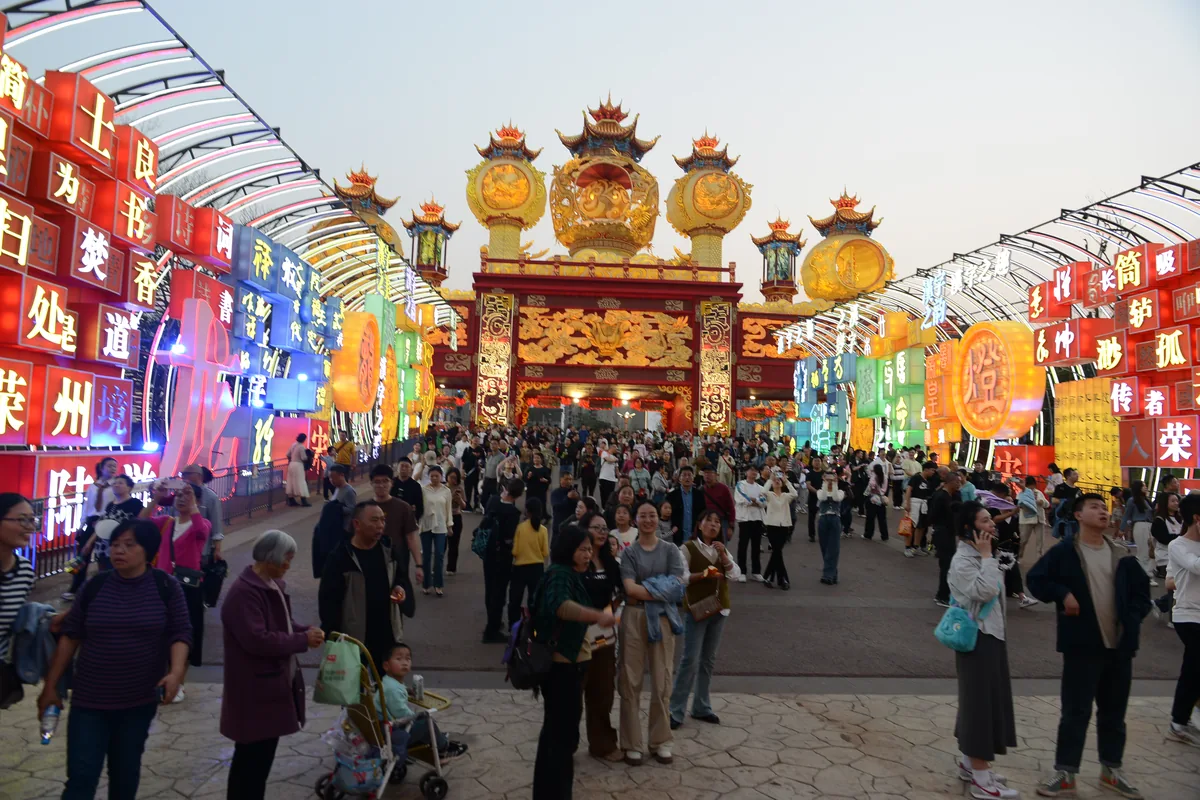
- Lantern corridors and tunnels — walk-through passages that extend dwell time and create the photographs visitors share.
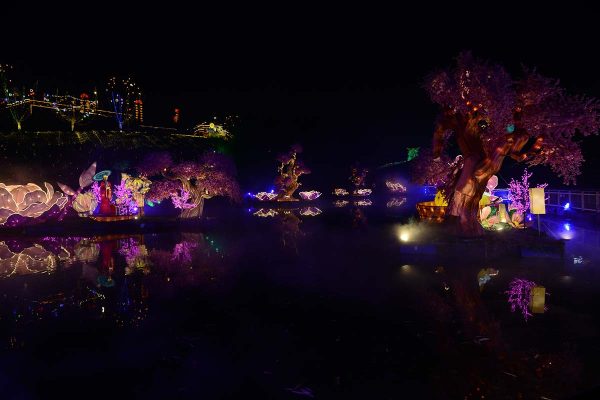
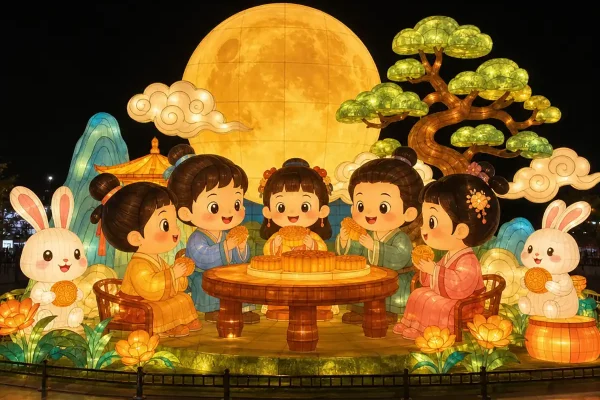
- Theme zones — myth, folklore, floral, palace or regional culture, arranged as a sequence along a walking route.
- Interactive installations — sensor-activated pieces and gesture-reactive displays that give younger visitors something to do.
- Supporting elements — lotus, blossom, koi and fortune-motif lighting that fills the space between hero pieces.
A well-planned route alternates scale: a large gateway, then a corridor, then an open zone with seated viewing, then a hero piece. That rhythm keeps visitors moving and keeps the photography varied.
Year of the Goat: What the 2027 Zodiac Means for Design
2027 is the Year of the Goat (the Fire Goat). Zodiac themes work best when they move past a literal animal statue and into a visual language:
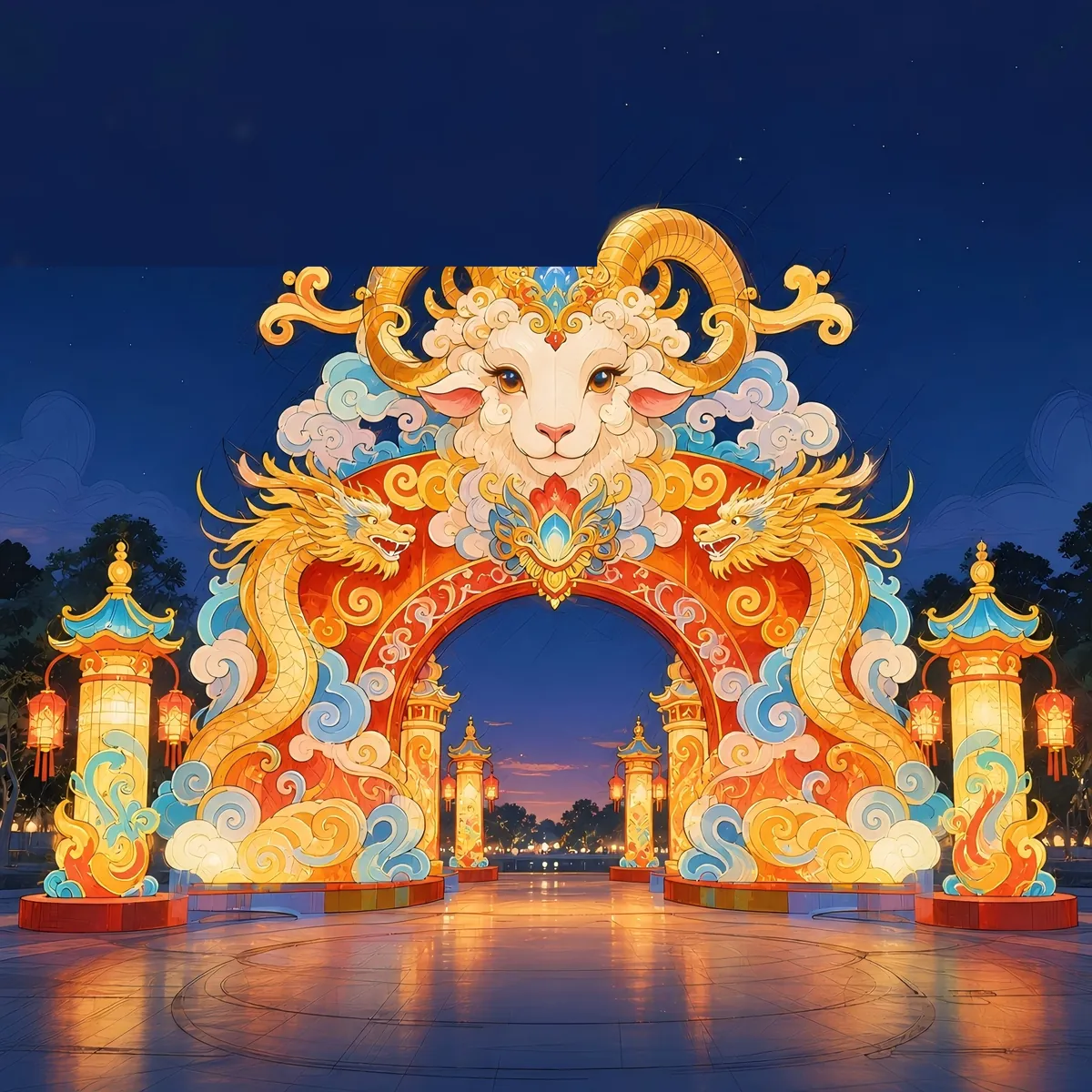
- Gentleness and abundance — soft forms, curved horns, wool-textured illumination, paired with harvest and floral motifs.
- Fire-element warmth — amber and gold illumination, sunrise gradients, warm-red accents rather than pure crimson.
- Flock compositions — a family group of goat figures reads better at scale than a single animal, and gives visitors a natural photo position.
- Cultural pairings — goat and sheep share the zodiac sign in Chinese tradition, which allows both horned and woolly silhouettes in the same route.
For venues that rotate their zodiac piece each year, a goat centrepiece built as part of a modular structure can be re-dressed for later years instead of retired.
Matching Displays to Venue Type
Different venues need different things from the same craft:
| Venue | What Works | What to Avoid |
|---|---|---|
| City plaza / public square | Large gateway, open-format hero piece, high-visibility route | Narrow corridors that bottleneck crowds |
| Shopping centre (indoor/atrium) | Suspended pieces, atrium centrepiece, corridor with ceiling clearance | Heavy ground structures without fixing review |
| Public park | Walking route with corridor, themed zones, seated rest points | Pieces with no viewing distance |
| Cultural centre / museum | Narrative sequence, folk-culture themes, interpretive panels | Effect-driven design without story |
| Temple fair | Traditional motifs, fortune imagery, vendor-lane-compatible scale | Overly modern styling |
Shipping, Customs and Installation
Chinese New Year programmes are usually delivered as containerised cargo, with each piece packed for sea transport and re-assembled on site.
Practical points that decide how smoothly this goes:
- Freight planning — container loading is designed around piece dimensions, so final drawings should be approved before the shipping slot is booked.
- Documentation — commercial invoice, packing list and origin documents prepared against the destination country’s requirements.
- Installation support — either a supervised install with a technician team on site, or a documented assembly plan with remote guidance, depending on the venue’s own crew.
- Power and fixing review — the venue’s electrical capacity and fixing points should be confirmed at design stage, not after arrival.
For European programmes, our shipping guide for festival lanterns covers transit times, documentation and site-readiness checks in more detail.
What to Check Before Choosing a Manufacturer
Most enquiries come down to a handful of practical questions:
Can they design for your site, not just sell a catalogue? A programme that ignores your route width, ceiling height and power layout will need expensive changes on site.
What compliance documentation comes with the pieces? Ask about UL or CE material standards, and confirm the display is rated for outdoor use where relevant.
Who is responsible for installation? Clarify supervised installation, assembly documentation and the hand-over process before the order is placed.
Can they show comparable venues? Ask for programmes of similar scale and venue type, ideally in your region.
How is the design phase handled? A manufacturer that provides 3D concept renderings and revision rounds before production is a different partner from one that works from a spec sheet.
A Note on Cost and Scope
Programme budgets vary with route length, the share of custom pieces, the number of interactive elements and freight destination. Rather than work from a published list, we scope each programme individually: send the venue type, the available footprint and the hero-piece direction, and you receive an itemised proposal with a line-by-line breakdown.
Planning a 2027 Programme?
Whether the site is a city square, a shopping centre atrium or a park route, the design conversation is the part that determines everything downstream.
- Start with the complete guide to Chinese New Year lanterns for planning fundamentals.
- Explore 2027 Year of the Goat lantern themes and design ideas for zodiac direction.
- See custom lantern designs for malls and parks for concept references.
- Review our custom lantern manufacturer capability for scope and process.
To begin a 2027 programme, send your venue type, footprint and target opening date through our contact page.
Frequently Asked Questions
When should we order a Chinese New Year lantern display for 2027?
October to December 2026 is the practical ordering window for a 6 February 2027 opening. Programs that start in December have limited room for design revisions and freight delays.
What is the zodiac animal for 2027?
2027 is the Year of the Goat (Fire Goat). Design direction usually combines soft forms, warm amber and gold illumination, and flock compositions.
Can a lantern display be installed indoors?
Yes. Atrium and indoor programmes use suspended pieces and ceiling-clearance planning, while outdoor programmes are specified for outdoor use with appropriate fixing and power review.
Do you provide installation on site?
Installation can be delivered as a supervised install with our technician team, or as a documented assembly plan with remote guidance for the venue’s own crew.
What compliance documentation is available?
Pieces are produced to UL or CE material standards, with documentation provided for the delivered programme.
Can the same structures be reused in later years?
Modular entrance and corridor structures can be re-dressed for later zodiac years, which is often planned at the design stage for venues that run an annual programme.