You have a story. A founding legend, a local animal, a harvest ritual your city has celebrated for two centuries. You want it lit up at your venue this winter. Then you open a supplier’s catalog and find four hundred generic designs — pandas, dragons, pagodas — none of which have anything to do with where you are.
That gap is where most lantern festivals quietly underperform. The lanterns are well made. The installation runs on time. But the display could be anywhere, and visitors can tell. They walk through, take one photo, and forget which venue they were standing in.
This guide is written for the buyer’s side of the table. It covers what cultural material to collect before you talk to any manufacturer, how to brief a design team so the first concept comes back close to right, which decisions are yours and which belong to the factory, and how long each stage realistically takes.
The custom lantern design process is the sequence that turns a client’s cultural material — folklore, local species, architectural motifs, colour systems, festival customs — into engineered, weatherproof light sculptures. It runs from discovery through 3D concept, cultural review, engineering, production, and installation, and it is what separates a venue-specific landmark from an off-the-shelf display.
Key Takeaways
- Most venues already own more usable cultural material than they think. The problem is rarely a lack of stories; it is that nobody has written them down as a brief.
- The single most useful thing you can send a manufacturer is a one-paragraph story plus a list of what to avoid. Reference images come second.
- Cultural review is not a formality. Symbols that read as decorative in one region can be sacred or contested in another, and it is cheaper to catch that on paper than in production.
- Design is the fast part. Production, freight, and installation are what set your calendar — work backwards from your opening date, not forwards from your first email.
- A venue-specific design earns press coverage and repeat visits in a way that a catalog selection does not, because local media can only write that story about you.
Why Cultural Content Decides Whether a Lantern Festival Works
Three things change when a display is built around your culture instead of a generic theme.
Differentiation you can defend
Any venue with a budget can buy a dragon. Nobody else can buy your river legend, your founding family, your city bird rendered at four metres with local plant motifs worked into the base. When two venues in the same region both run winter light events, the one with a recognisably local story wins the comparison articles and the social media arguments.
Local buy-in before you open
A design drawn from local culture gives community groups, schools, and regional press a reason to care before the gates open. We have watched venues get coverage in the planning stage simply because the design referenced something the town argues about, celebrates, or grew up with. That coverage is free, and it lands before you have spent anything on advertising.
A reason to come back
Generic displays photograph well once. Specific ones get revisited, because visitors want to show the thing that means something to a visitor from here. Repeat visits matter more than first visits if you are measuring revenue per square metre across a six-to-ten-week run.
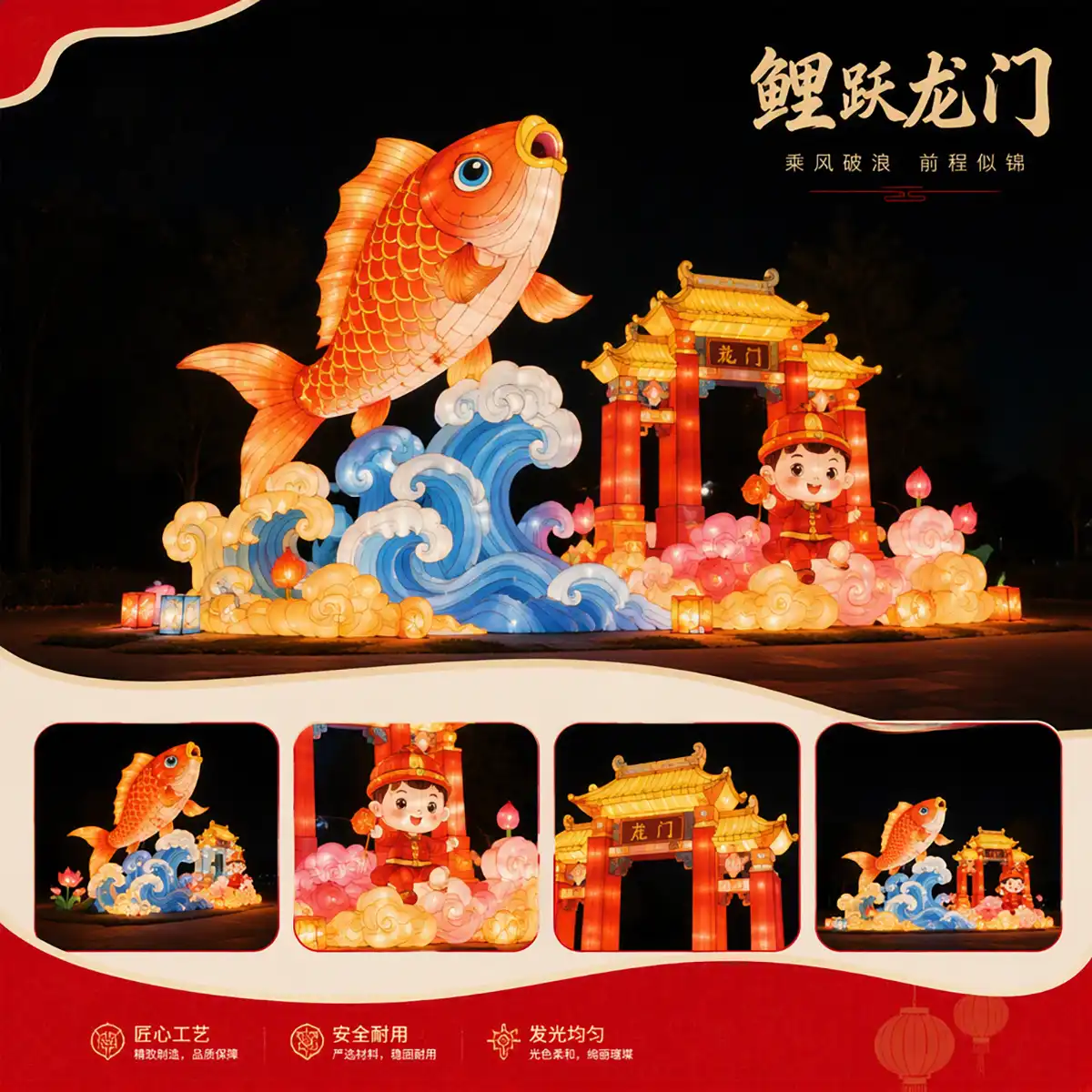
The koi-dragon-gate lantern above is a straightforward example. A folk tale about persistence — a carp swimming upstream and leaping a waterfall to become a dragon — becomes a walk-through archway with a child figure placed at the visitor’s eye level. Nothing about it is generic. It would not make sense at a venue that had not chosen that story.
What Counts as “Cultural Content”
The most common thing we hear on a first call is: “We’re not sure we have anything distinctive enough.” In our experience, that is almost never true. It usually means the material has not been written down. Here is what we can actually work with.
- Founding stories and folklore. Why the town exists, who settled it, what the local legend explains. Myths travel well into lantern form because they usually come with named characters and a visual moment.
- Local flora and fauna. A regional bird, a native tree, a fish from the river that runs through the city. These are the easiest briefs to translate and the most reliably photogenic.
- Historic figures and events. A specific person, an industry the town was built on, a moment the community marks annually.
- Festival customs and food. What people eat, wear, and do at the time of year your event runs. Food customs in particular translate into warm, character-driven scenes that families photograph.
- Architecture, pattern, and colour systems. Rooflines, tile patterns, textile motifs, and the colours your region already associates with celebration. Colour matters more than most buyers expect.
- Existing mascots or IP. If your venue already has a character, a logo system, or licensed properties, we work to those guidelines rather than inventing something new.
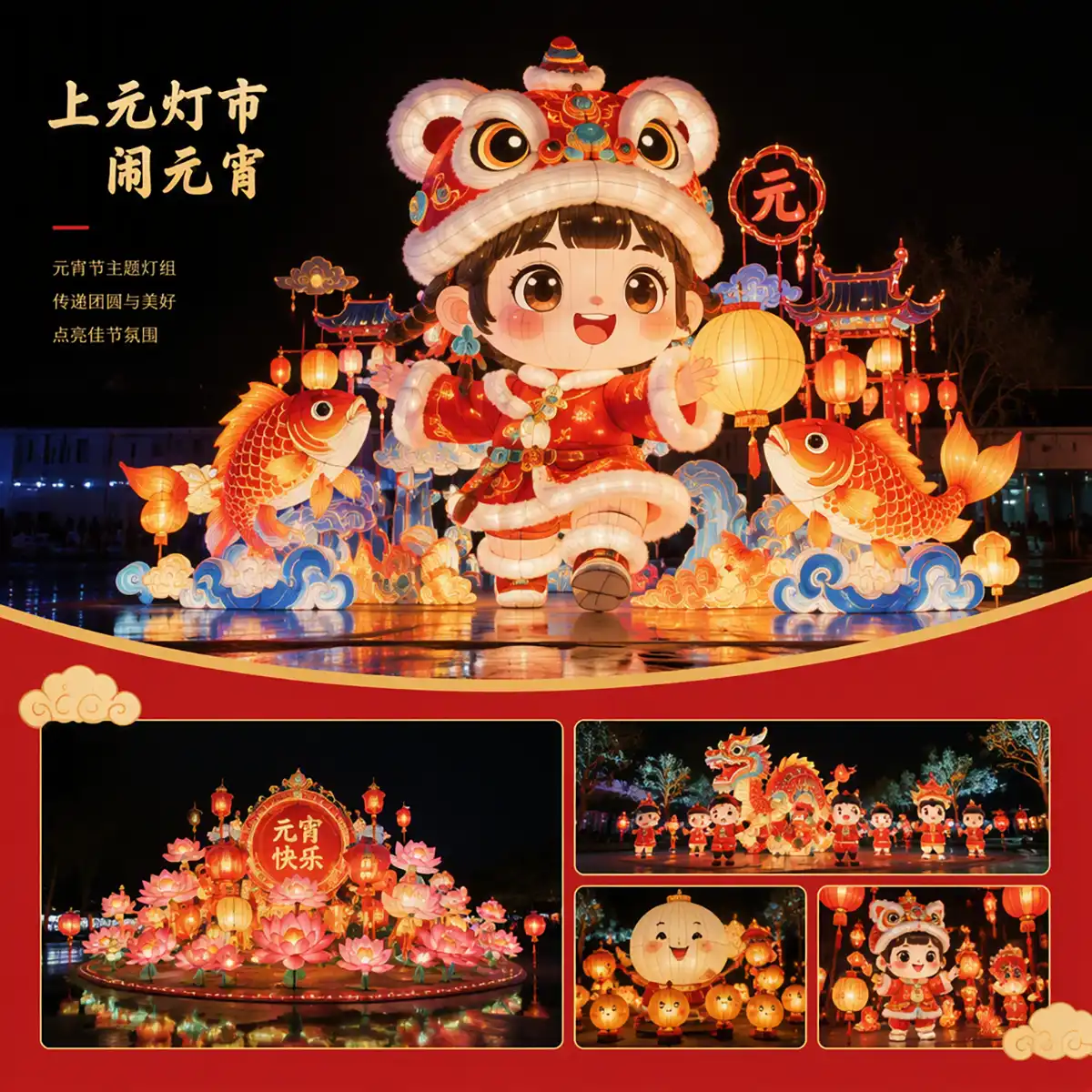
Festival custom is often the richest source material because it arrives with its own visual language. The Yuan Xiao lantern above takes a specific practice — children carrying lanterns on the fifteenth day of the new year — and builds a scene around it: a child in a tiger hat, lotus forms, a colour palette already loaded with meaning for the audience that recognises it.
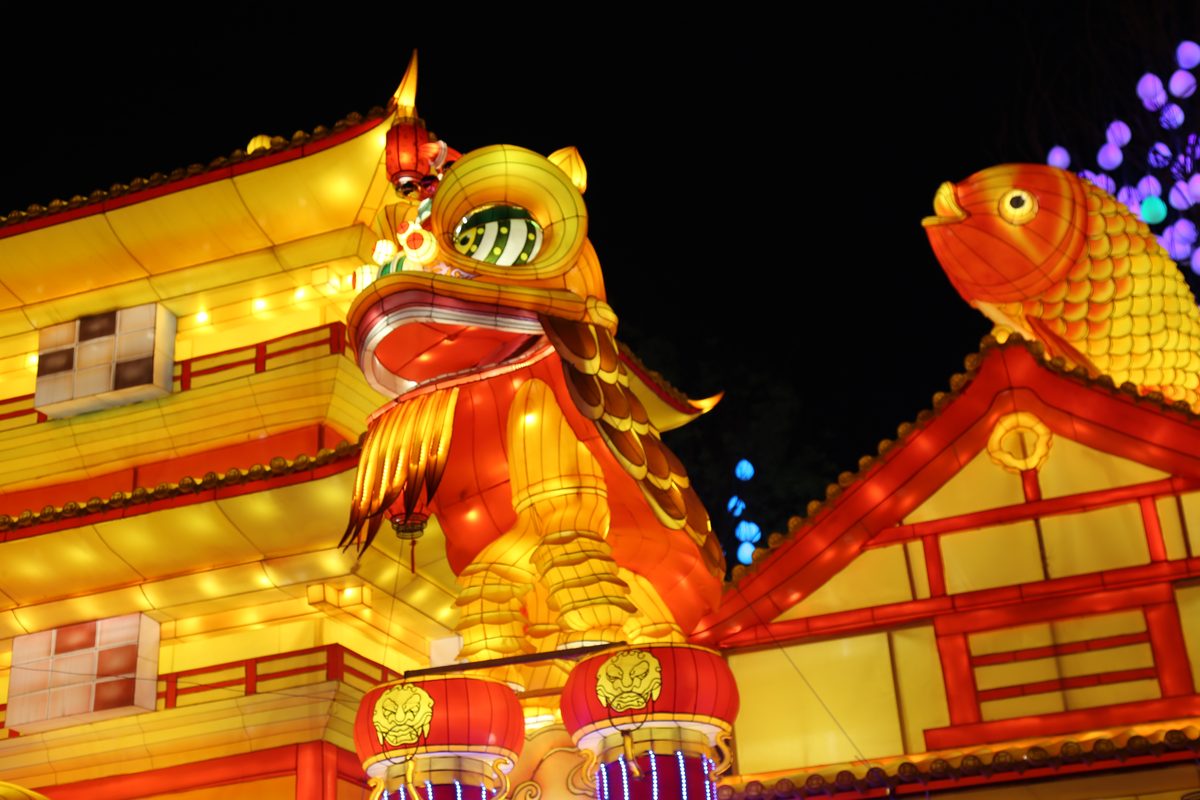
Some of our most-requested work is cultural rather than seasonal. Our custom animal lanterns range exists because regional species are the most common starting point a venue brings us.
The Custom Lantern Design Process, Step by Step
Here is the full sequence, with the honest time ranges. The design stages are quick. The manufacturing and logistics stages are what determine whether you open on time.
Step 1 — Discovery call
A working session, not a sales call. We ask what story you want to tell, what your site can physically hold, what your opening date is, and what has gone wrong on previous light events. Bring whoever will actually sign off on the design.
Step 2 — You send the brief kit
Covered in detail in the next section. This is the step where most of the quality is determined, and it costs you a few hours of internal work rather than weeks of revisions later.
Step 3 — Concept and 3D design
We return concept sketches and 3D renders showing the forms at scale in your actual site, usually including a night view, because a lantern design that has not been evaluated after dark is not finished. You pick a direction and we refine it.
Step 4 — Cultural and technical review
Two reviews run in parallel. Culturally, we check the symbols, gestures, and colour choices against the audience that will see them. Technically, we check wind loading, power availability, sightlines, and how each piece breaks down for shipping.
Step 5 — Engineering and sample approval
Approved concepts become engineered builds: internal frame drawings, skin and fabric specifications, LED layout, and control programming. Where the design depends on a specific finish or colour, we produce a physical sample panel for sign-off before full production begins.
Step 6 — Production, freight, and installation
Production runs in parallel across our Zigong facility, then ships modularly. Installation is handled by our field team with local rigging support, or supervisor-only if you prefer to use local labour. You can see how finished work looks in place across our project case studies.
The Client Brief Kit: Exactly What to Send Us
This is the part that determines whether your first concept is close or three rounds away. Send these seven things and you will save more time than any other step in the process.
- The story in your own words. One paragraph minimum, written by someone who knows it. Do not send a marketing summary — send the version you would tell a colleague. We can compress a good story into a design. We cannot expand a slogan into one.
- Reference images, ranked. Ten images with a note on what you like about each beats two hundred with no comment. Mark your top three.
- Colour and pattern rules. Palette, motifs, and any brand guidelines that must be respected. If your region has colours that mean something specific, say so.
- Site constraints. Dimensions, ground conditions, power availability, overhead restrictions, and where visitors will be standing. A site plan with dimensions saves a full revision cycle.
- Things to avoid. The most underrated item on this list. Religious symbols to stay away from, colours with unwanted associations, historical figures who are contested locally. Tell us before we draw them.
- Timeline and campaign window. Your opening date, your closing date, and whether the display is permanent or seasonal.
- Who signs off. One named decision-maker. Designs that must satisfy a committee of eight tend to converge on the least distinctive option.
If you want to see the range of what a finished brief can produce, our creative design library collects concept work across seasonal, cultural, and narrative themes.
Common Briefing Mistakes (and What They Cost)
1. “Make it Chinese”
This is the phrase that produces the most generic work. Chinese lantern craft is a technique, not a theme. It can carry a Welsh mining story or a Mexican Day of the Dead scene as readily as a Chinese folk tale. Tell us the story; let the craft serve it.
2. Sending a folder of 200 images with no priority
Unranked reference material forces the design team to guess what matters, and they will guess wrong roughly half the time. Rank them, or write one line per image.
3. Not naming taboos
If a symbol is sensitive in your region and you do not mention it, we may use it in good faith. The correction then costs a redesign and, depending on when it is caught, production time. This is the single most expensive thing to leave out of a brief.
4. Briefing too late
Design is fast. Production, sea freight, customs, and installation are not. Work backwards from your opening date: a realistic custom programme needs the design locked early enough that production and shipping are not compressed. Compression is where quality problems and freight premiums come from.
5. Approving the render without walking the site
A render at eye level on a screen is not the same thing as a six-metre form on a slope with a cable route and a crowd flow behind it. Walk the site with the design in hand before final sign-off.
Cultural Sensitivity: What We Check Before Production
This stage exists because we have been burned, and because our clients’ reputations are attached to what we install. Before anything goes into production, a design goes through a cultural review that asks four questions.
- Is any element sacred or ceremonial? Religious iconography, ritual objects, and ceremonial dress are treated differently from decorative motifs. Where there is any doubt, we ask — and we ask the client to ask locally.
- Does it belong to a specific community? Indigenous and minority cultural expressions are not free material. Where a design draws on a living community’s heritage, we want that community’s involvement documented before we build.
- Is anything historically contested? Figures or events that one group celebrates and another disputes are a reputational risk for the venue, not the factory. We flag them rather than quietly designing around them.
- Are the rights clear? If the material comes from a living author, illustrator, or licensor, we need written permission before it is reproduced at four metres.
Our approach to this is discussed in more depth in our article on how Zigong lantern art engages with cultures outside China. The short version: adaptation is a craft skill, and doing it respectfully is part of the service, not an obstacle to it.
From Approved Design to Installed Display
Once the design is signed off, the work becomes manufacturing and logistics. Each approved form is built on a weatherproof internal frame, wrapped in high-density fabric, and lit with outdoor-rated LED modules using listed cable assemblies and certified drivers. Nothing about this stage should surprise you, which is why good briefs matter: surprises at the production stage are expensive.

Large pieces are built in sections so they can be packed, shipped, and reassembled without re-engineering on site. Section joints are designed around your access route, not around what is convenient in the workshop.
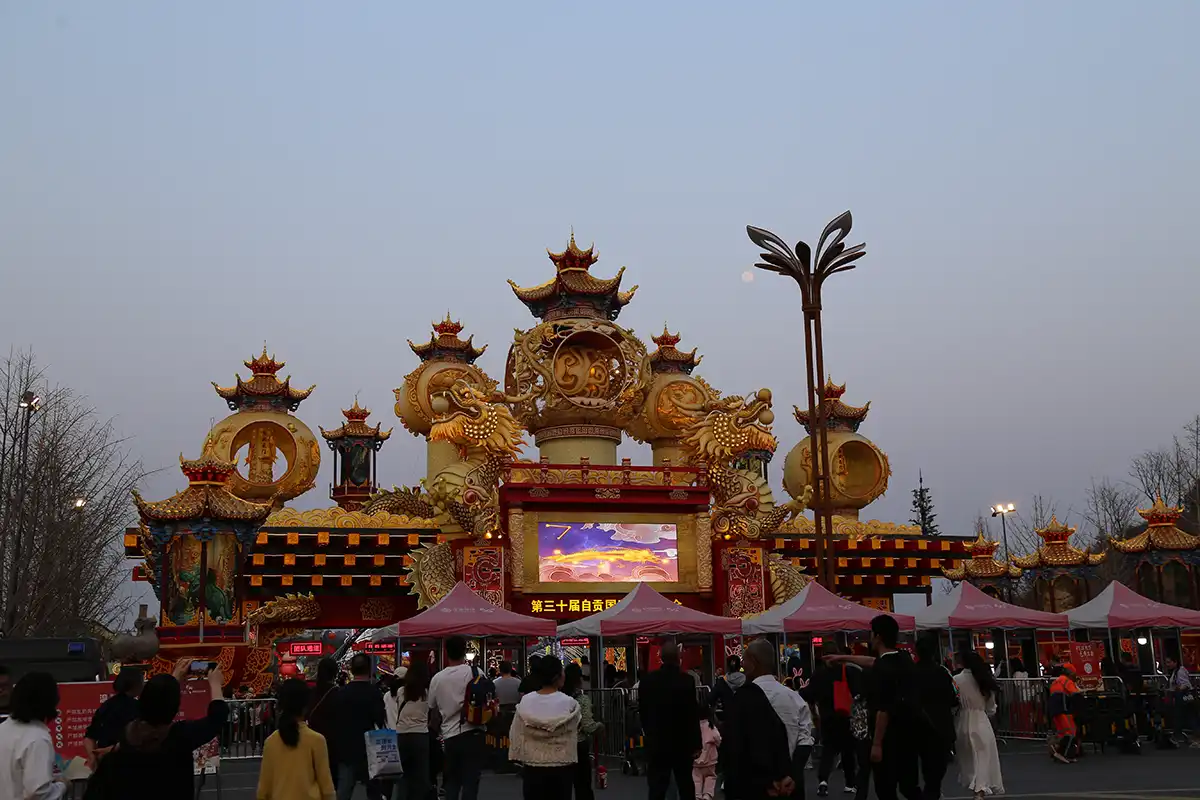
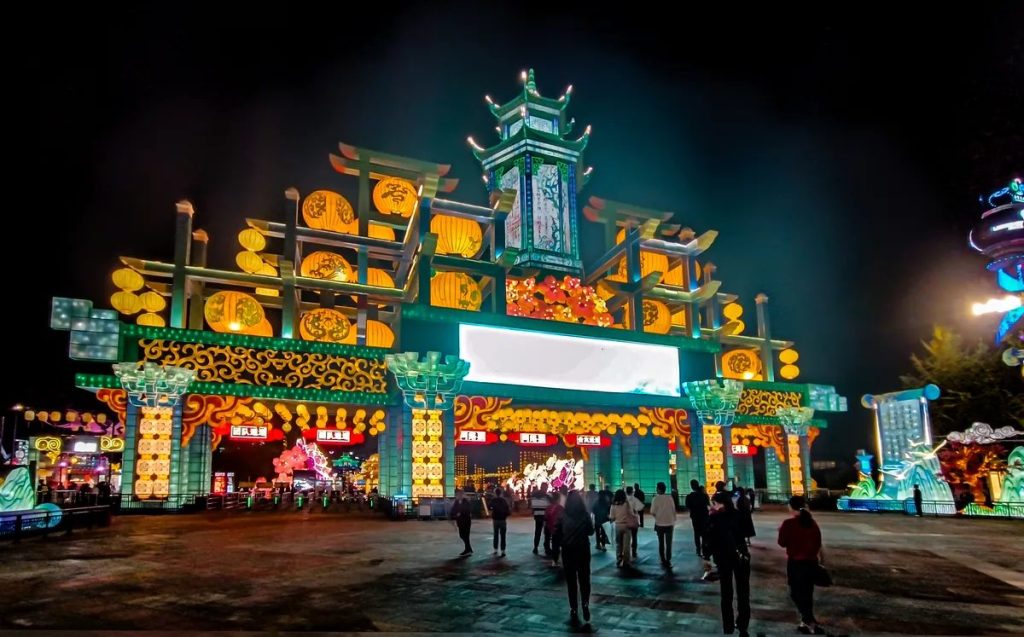
Entrance pieces do the heaviest lifting in any festival layout. They frame the first photograph, set the scale expectation, and signal to passing traffic that something is happening. If your budget is limited, this is usually the last place to economise.
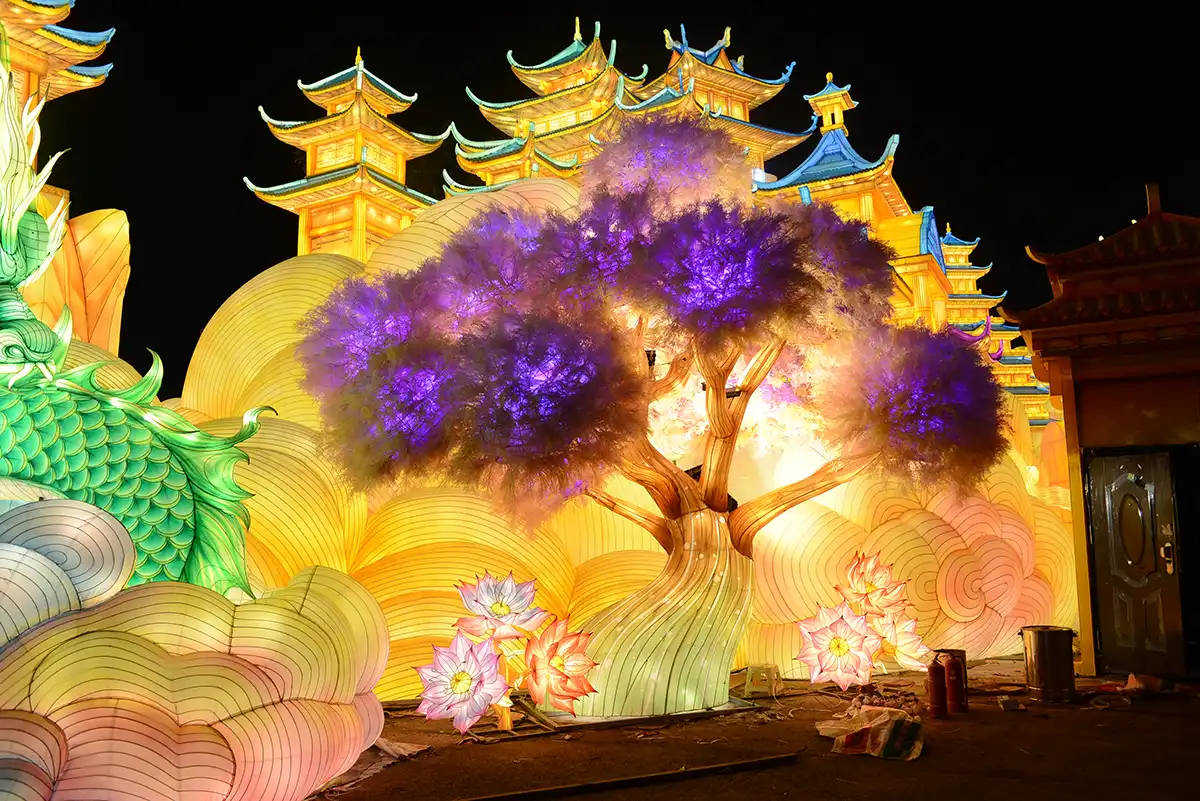
You can browse the full range of what we build in the lantern products collection, or read how these displays function inside a wider programme in our guide to Chinese lantern ceremony and festival formats.
FAQ
How early should we start the custom lantern design process?
Earlier than feels necessary. Design itself is quick; production and freight are not, and both get more expensive when compressed. As a working rule, start conversations at least two seasons before your opening date, and have your brief kit ready before the first design call. If your opening date is fixed and close, tell us immediately — we can often phase a programme so the entrance and hero pieces land first.
Do we need finished artwork, or can you work from a sketch?
A sketch plus a written story is enough to start. Plenty of our best work began as a narrative paragraph and a handful of reference photos. We produce the concept sketches, 3D renders, and engineering drawings; you do not need to arrive with production-ready art.
Who owns the design once it is built?
Design ownership is settled in the contract before production begins, and it varies by project. In most custom commissions the client owns the approved design; in some cases we retain the right to adapt non-exclusive elements for other markets. Ask for this in writing at the briefing stage rather than after the concept is approved.
Can we reuse the lanterns in future seasons?
Yes, and most venues do. We build seasonal programmes with storage in mind: modular sections, labelled packing, and a refurbishment service between runs so pieces return looking new. If you intend to reuse, say so during design — it affects how we detail the frames and finishes.
What if our cultural story is complex or contested?
So much the better, provided you tell us early. Complex stories produce more interesting designs than simple ones. What we need is a clear account of which interpretations are safe, which are contested, and who in your community should be consulted. We would rather spend two extra weeks on review than discover a problem after installation.
Conclusion
A lantern festival built around your culture is one of the few forms of venue marketing that appreciates rather than depreciates — it earns press before it opens, photographs well for six to ten weeks, and comes back out of storage the following year.
The process is not complicated, but it is front-loaded. Most of the quality is decided by what you send in the brief kit, not by what happens in the workshop. Write the story down. Rank your references. Name the things to avoid. Give one person the authority to sign off.
If you are planning a seasonal or permanent lantern programme and want to know whether your story will translate into light, the fastest way to find out is a concept session. Send us your story, your site dimensions, and your opening date, and we will come back with a concept and a design route. Contact our design team to start.