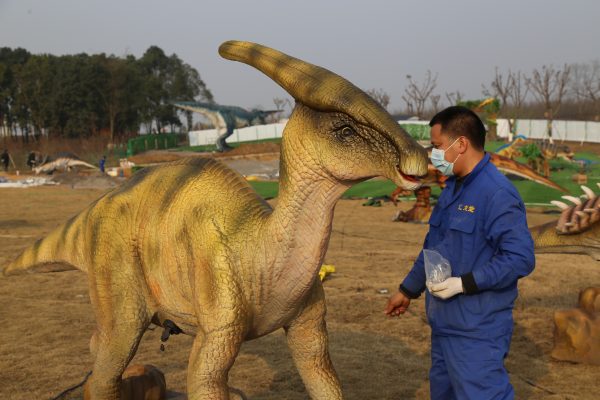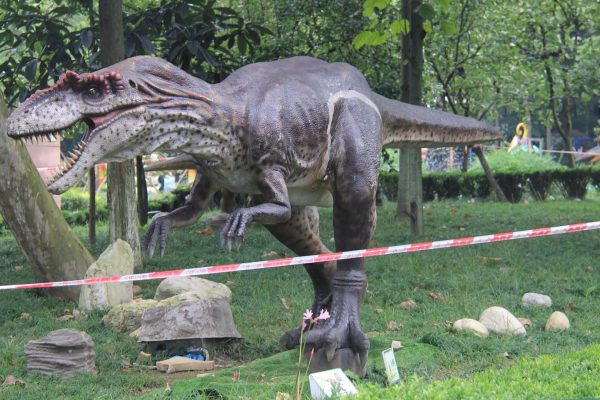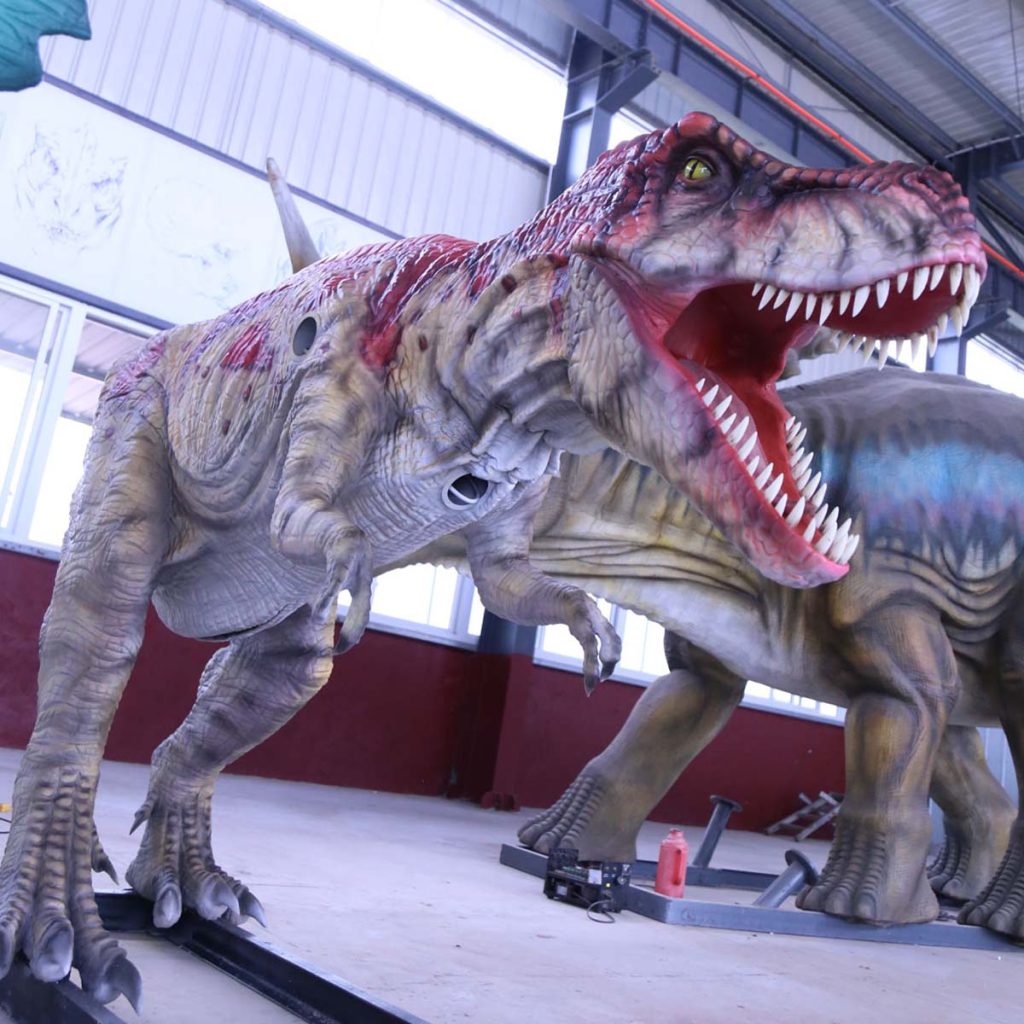
A life-size Tyrannosaurus rex turns its head, blinks, swings its tail, and lets out a deep, chest-rattling roar the moment a visitor steps into its sensor range. To the audience, it feels like stepping back 66 million years. To the engineers behind the exhibit, it is a carefully orchestrated symphony of metal, motors, surface finish, sensors, and sound — the product of decades of animatronic dinosaur technology evolution.
Animatronic dinosaurs are no longer a novelty reserved for Hollywood blockbusters. Today they are a mainstream attraction for theme parks, museums, zoos, shopping malls, and seasonal events around the world. Over the past 14+ years, factory-direct animatronic dinosaur manufacturers have shipped life-size creatures to more than 50 countries, helping venues turn empty spaces into high-traffic, high-revenue experiences.
But not all animatronic dinosaurs are built alike. The difference between a convincing, durable, and safe exhibit and a disappointing one comes down to the underlying technology. In this guide, we break down the six key systems that define a modern animatronic dinosaur — and what to look for when you are sourcing one for your venue.
1. The Metal Skeleton: Engineering a Life-Size Dinosaur Frame
Every believable animatronic dinosaur starts not with skin, but with a skeleton. A life-size dinosaur must support hundreds of kilograms of structure while standing for months or years in outdoor environments, often in wind, rain, and direct sunlight. That requirement begins with the internal frame.
Load-Bearing Design and Balance
The frame of an animatronic dinosaur is typically engineered from industrial-grade metal, shaped to mimic the natural skeletal posture of the animal. Engineers calculate the center of gravity at every pose so the creature remains stable whether it is standing upright, leaning into a lunge, or positioned on a sloped surface. This load-bearing design is what allows a multi-meter-tall T-Rex to remain safely planted even during full-body movement.
Balance is not just a safety concern — it is a realism concern. A dinosaur that wobbles or sags at the joints breaks the illusion instantly. A properly designed internal frame keeps every limb, neck, and tail segment aligned so movement looks weighty and deliberate, exactly as a real animal would carry itself.
Materials That Survive Outdoors
Because most animatronic dinosaurs are installed outdoors, the frame must resist corrosion. Manufacturers treat the metal with corrosion protections and weather-resistant finishes, and use fasteners designed for long-term outdoor exposure. The goal is a structure that looks as good in year two as it did on delivery day, without requiring constant maintenance.
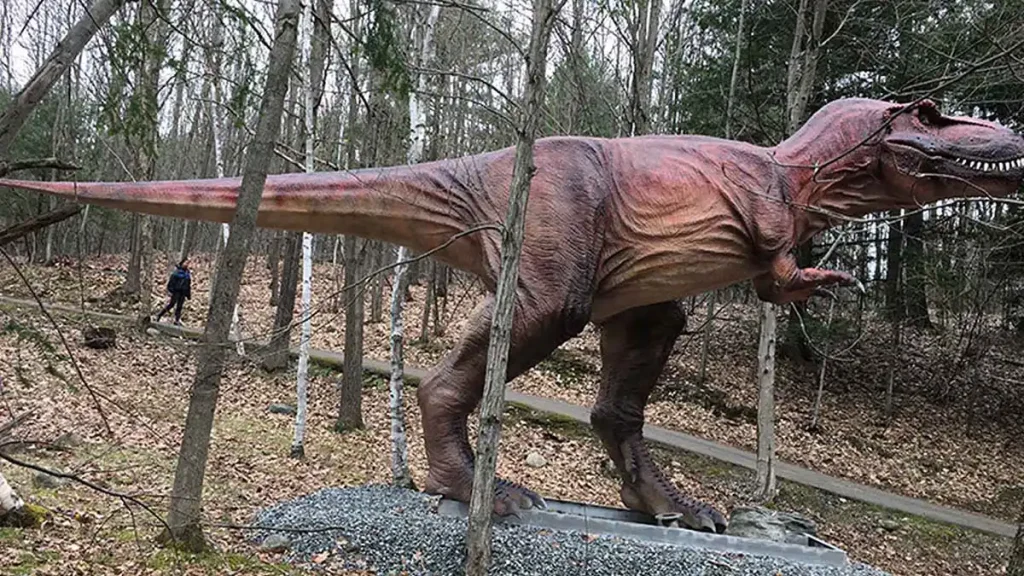
2. Motion Systems: How Animatronic Dinosaurs Move
Motion is the heart of animatronic dinosaur technology. A static dinosaur is a sculpture; a moving one is an attraction. The motion system determines how convincingly a creature breathes, blinks, turns, and reacts — and how reliably it does so over thousands of operating hours.
Degrees of Freedom and Actuators
Each moving part of a dinosaur — the neck, the jaw, the eyelids, the tail, the limbs — represents a “degree of freedom.” A premium animatronic dinosaur may have a dozen or more degrees of freedom working together. Electric motors and pneumatic or hydraulic actuators drive these joints, translating control signals into precise, repeatable movement.
The sophistication of this system varies enormously between products. A budget dinosaur might move only its head and tail with simple, repetitive motion. A high-end exhibit coordinates head, eyes, mouth, arms, and tail in a continuous performance loop that looks genuinely alive.
From Subtle Blinks to Full-Body Lunges
Great animatronic dinosaurs combine fast, dramatic actions with slow, subtle ones. A sudden head lunge toward the crowd creates the “startle” moment that guests remember and photograph. But equally important are the micro-movements: a slow blink, a slight tilt of the head, the gentle rise and fall of the chest as if breathing. These small motions are what make a dinosaur feel like a living animal rather than a machine.
3. Hand-Finished Surface: The Secret to Realistic Texture
If motion is the heart, skin is the face. The texture, color, and elasticity of the outer layer are what visitors see up close, and surface finish has become the material of choice for premium animatronic dinosaurs.
Patented Hand-Finished Surface Technology
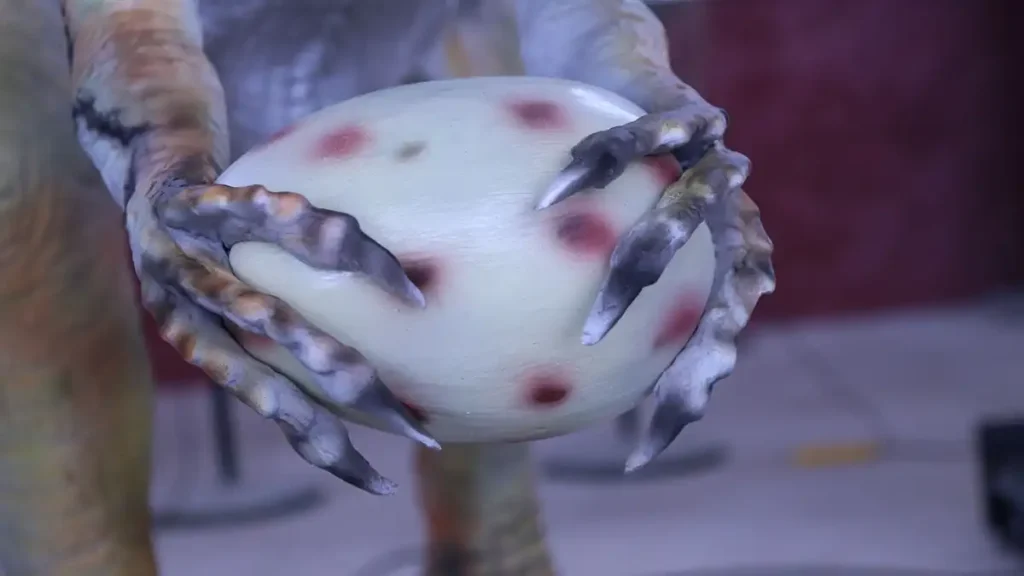
Modern animatronic dinosaurs use medical-grade hand-finished surface that is soft to the touch, stretches naturally over moving joints, and reproduces the fine wrinkles and folds of real reptile skin. This is a field where manufacturing expertise matters — companies that have developed proprietary surface finish technology produce creatures with noticeably more realistic texture than competitors using cheaper rigid or foam alternatives.
Color, Weathering, and UV Resistance
hand-finished surface is also the canvas for color. Skilled artists hand-paint each dinosaur, layering tones to create the mottled, weathered look of a real predator rather than a flat, toy-like finish. For outdoor installations, the paint and surface finish are treated for UV resistance so colors do not fade after a single summer in the sun. This durability is a key differentiator between an animatronic dinosaur built for a one-weekend event and one designed for permanent installation.
4. Sensors and Control Systems: Making Dinosaurs Interactive
The most memorable animatronic dinosaurs do not just perform on a loop — they react to the audience. Interactivity is driven by sensors and the control system that interprets them.
Infrared and Motion Sensors
Many modern animatronic dinosaurs are equipped with infrared or motion sensors that detect when a visitor approaches. When triggered, the dinosaur can turn its head toward the person, blink, open its jaw, and roar — creating a one-on-one moment that feels personalized. This kind of interactive dinosaur turns passive viewing into active participation, which is why sensor-equipped models are so popular for malls, museums, and family entertainment centers.
Programmable Show Logic
Behind the sensors is a control system — often a programmable controller — that runs the creature’s behavior. Operators can adjust movement speed, trigger sensitivity, sound volume, and performance sequences to match the venue. A museum might program slow, gentle movements with educational narration, while a theme park might favor fast, aggressive lunges with maximum volume. This programmability is what makes a single animatronic dinosaur platform adaptable to many different applications.
5. Sound Systems: Roars That Sell the Illusion
Sight and motion do most of the work, but sound completes the illusion. A dinosaur that moves silently feels broken; a dinosaur that roars in sync with its movements feels real.
A quality animatronic dinosaur pairs synchronized audio with motion — the jaw opens as the roar peaks, the head rises as the growl deepens. Industrial-grade, weather-resistant speakers built into the creature deliver clear, powerful audio even outdoors. The best systems use layered, studio-recorded vocalizations rather than generic stock effects, so each species sounds distinct: the guttural rumble of a T-Rex is very different from the higher shriek of a Velociraptor.
6. Weatherproofing and Safety: Built for Real-World Operation
An animatronic dinosaur is not just an art piece — it is a piece of commercial equipment that must operate safely, day after day, often in public spaces with thousands of visitors.
UL/CE-Certified Electrical Components
Because these creatures run on electric motors, controllers, and audio systems, electrical safety is non-negotiable. Reputable manufacturers build with UL- and CE-certified electrical components, ensuring the wiring, power supplies, and controls meet international safety standards. This certification matters for venues that must pass their own insurance and safety inspections.
Long-Term Outdoor Durability
A properly built animatronic dinosaur is engineered for continuous outdoor operation. Weatherproof motors, sealed electronics, corrosion-resistant frames, and UV-stable skin all work together so the creature survives heat, rain, humidity, and dust. When evaluating a supplier, durability specifications are just as important as visual appearance — a dinosaur that looks great on day one but fails after one season is a costly mistake.
Applications: Where Animatronic Dinosaurs Shine
Animatronic dinosaur technology is versatile, and different venues use it in different ways.
Theme Parks and Family Entertainment Centers
Theme parks are the classic home of the animatronic dinosaur. Life-size creatures line walkways, guard attraction entrances, and anchor dinosaur-themed zones. Interactivity — roaring at passersby, lunging at triggered moments — drives the repeat visits and social-media shares that parks rely on.
Museums and Educational Exhibits
Museums use animatronic dinosaurs to make paleontology tangible. A moving, breathing dinosaur is far more memorable than a static skeleton, and paired with interpretive signage, it becomes a powerful educational tool for school groups and family visitors.
Shopping Malls, Events, and Pop-Ups
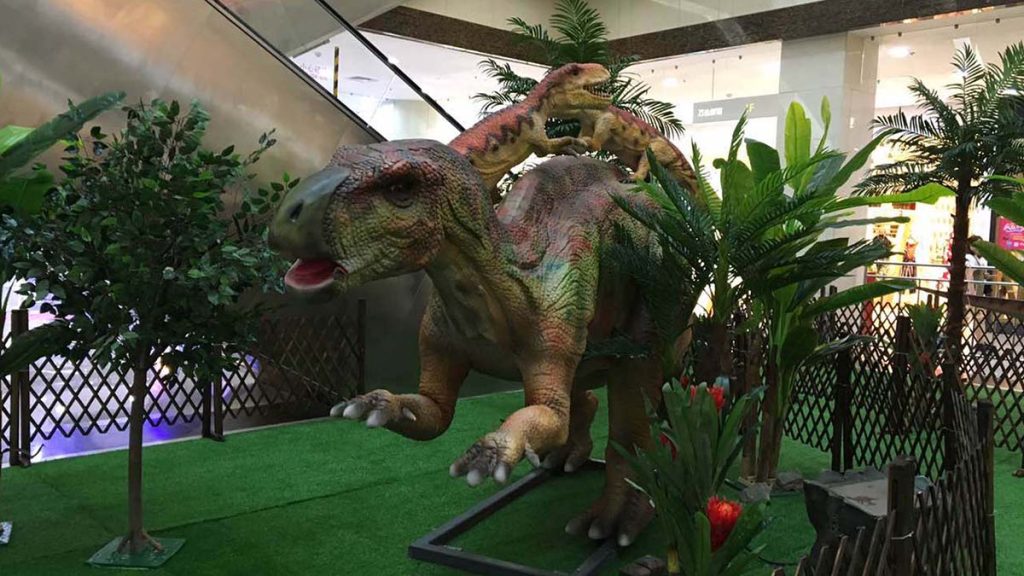
Because they attract crowds and photos, animatronic dinosaurs are increasingly used for retail promotions, seasonal events, and traveling exhibitions. Their portability and programmability let venue owners create a temporary attraction that generates foot traffic and revenue without permanent infrastructure.
Choosing the Right Animatronic Dinosaur Manufacturer
The technology covered in this guide is only as good as the manufacturer behind it. When sourcing an animatronic dinosaur, look beyond the showroom photos and ask about the engineering underneath.
Key questions to ask a potential animatronic dinosaur manufacturer include:
- What motion capabilities does each model include? Ask about degrees of freedom, movement range, and whether motion is programmable.
- What skin material and finishing process is used? Confirm whether the dinosaur uses hand-finished surface and how it is treated for outdoor UV exposure.
- What electrical and safety certifications apply? Verify UL/CE compliance on electrical components.
- What is the expected outdoor service characteristics? Request durability specifications, not just a support promise.
- Can the dinosaur be customized? Confirm size, species, color, and interactive features can be tailored to your venue.
For a deeper dive into selecting the right creature for your space, see our animatronic dinosaur buying guide for museums and theme parks.
Frequently Asked Questions
How do animatronic dinosaurs move?
Animatronic dinosaurs move through a combination of electric motors and actuators that drive articulated joints. A control system coordinates these joints across multiple degrees of freedom, producing everything from subtle blinks to full-body lunges. Sensor-equipped models can also react to approaching visitors in real time.
What material is used for animatronic dinosaur skin?
Premium animatronic dinosaurs use medical-grade hand-finished surface, which stretches naturally over moving joints and reproduces fine wrinkles and folds. Surface Finish is favored over rigid or foam alternatives for its realistic texture and durability, and it is treated for UV resistance for outdoor use.
How long do animatronic dinosaurs last outdoors?
A well-built animatronic dinosaur with a corrosion-resistant internal frame, weatherproof motors, sealed electronics, and UV-stable hand-finished surface is engineered for continuous outdoor operation. Exact service characteristics depends on climate and usage, but premium models are designed for multi-year installation rather than single-event use.
Are animatronic dinosaurs interactive?
Yes. Many modern animatronic dinosaurs include infrared or motion sensors that trigger movement and sound when visitors approach. Operators can program trigger sensitivity, movement speed, and volume to match the venue, from gentle museum behavior to aggressive theme-park lunges.
Related Systems and Buying Decisions
The six systems on this page are only useful in combination — actuators need a frame that can take the reaction force, skin that can stretch over the joint, sensors that trigger the movement and control gear that survives the site. These pages cover the neighbouring decisions:
- Hydraulic vs pneumatic actuation — force, smoothness and maintenance compared, including which one suits which joint.
- Brushless, servo and stepper motors — the electric route, torque figures and where it beats fluid power.
- Sound and light detection — the trigger layer that decides when a system moves at all.
- Gesture-sensing exhibits — sensor fusion, response timing and what visitors actually do in front of a reacting dinosaur.
- The interactive exhibit guide — how the interactive layer is planned alongside the mechanical build.
- The complete buying guide — specification, supplier evaluation, timeline and delivery.
- Animatronic animals — the same systems applied to mammals, where movement language changes.
- The full animatronic dinosaur range — species, sizes and movement options in one catalogue.
- Interactive exhibit builds — projects where sensing and control are specified from the start.
- Interactive T-Rex in action — a worked example of a high-movement build with sensor triggers.
Conclusion
Animatronic dinosaur technology is a fusion of engineering and artistry. The internal skeleton provides strength and balance, the motion system delivers lifelike movement, hand-finished surface supplies realistic texture, sensors and control systems create interactivity, sound completes the illusion, and weatherproofing keeps it all running in the real world. Together, these six systems are what separate a convincing, durable attraction from a forgettable one.
Whether you are outfitting a theme park, a museum, or a seasonal event, understanding these key technologies helps you source an animatronic dinosaur that performs — not just on opening day, but season after season.
Ready to bring a prehistoric giant to your venue? Contact the Festive Lanterns team to discuss a customized animatronic dinosaur built around your space, species, and interactive requirements.