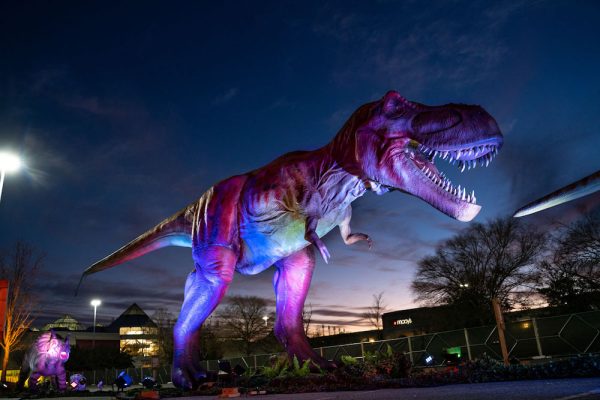
Choosing the right animatronic dinosaurs for your venue is not just about picking the most famous species — it is about matching each dinosaur to the space, the audience, and the experience you want to create. A roaring T-Rex at a theme park entrance delivers a completely different visitor reaction than a gentle Apatosaurus on a museum gallery path.
Based on our order history across 50+ countries, here are the 6 most popular animatronic dinosaur species in 2026 — each selected for a specific venue type, with real specifications, size and motion options, and the scene it performs best in.
Top 6 Animatronic Dinosaurs: Quick Comparison Table
| Rank | Species | Typical Size | Best For | Motion Level | Project Scale |
|---|---|---|---|---|---|
| 1 | Tyrannosaurus Rex | 4–10m | Entrance plaza, theme park center | Full body + roar | Flagship |
| 2 | Apatosaurus | 6–10m | Museum gallery, outdoor path | Neck + head + blink | Flagship |
| 3 | Ankylosaurus | 3–5m | Zoo trail, educational exhibit | Full body + tail club | Mid-scale |
| 4 | Iguanodon | 4–6m | Family zone, museum gallery | Full body + sound | Mid-scale |
| 5 | Pterosaur | 2–3m wingspan | Photo zone, garden exhibit, museum entry | Head turn + wing flutter | Compact |
| 6 | Large Theropod | 5–8m | Thrill zone, predator trail | Aggressive motion | Flagship |
Project scale reflects overall exhibit size and motion complexity — compact builds suit a single photo moment, mid-scale builds suit trail stops and gallery bays, and flagship builds anchor an entire zone. Every project is custom-quoted based on your species selection, dimensions, and motion programme.
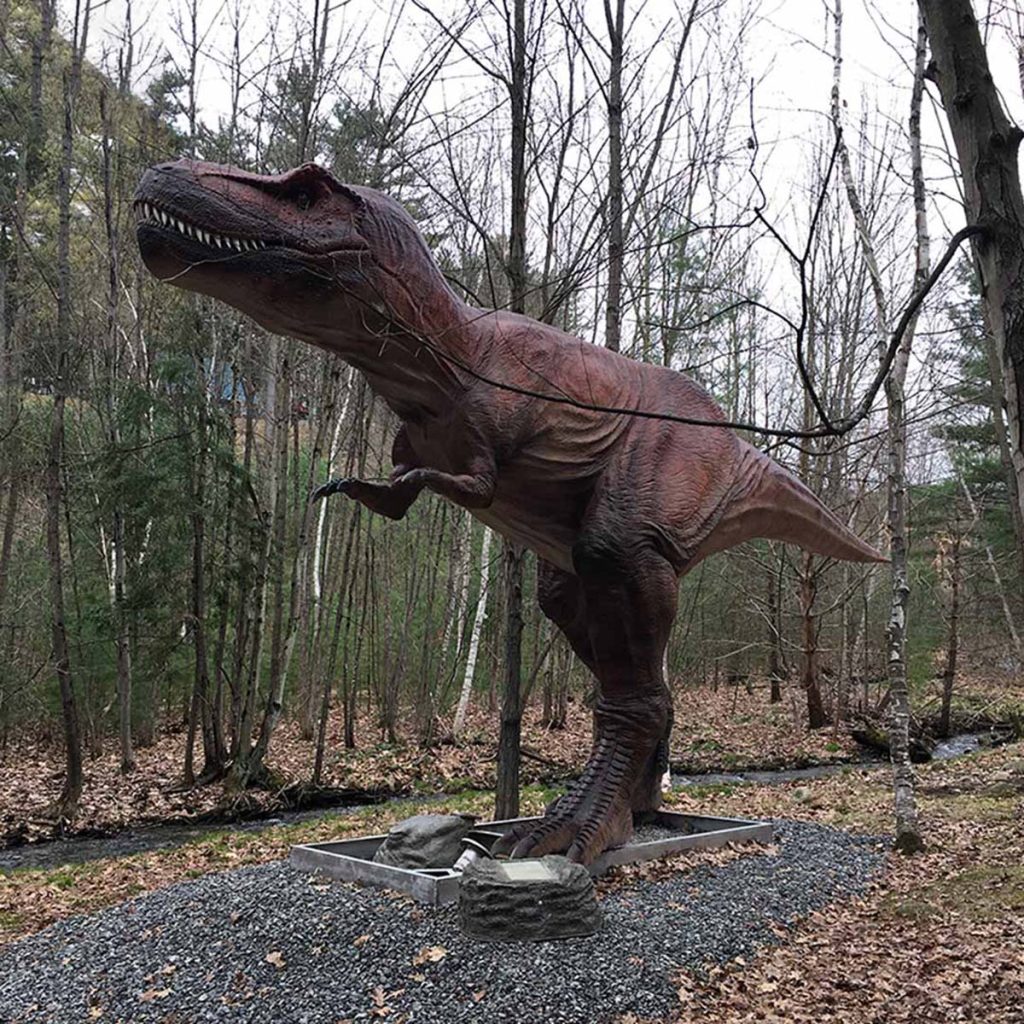
A life-size Tyrannosaurus Rex animatronic in a roaring pose outdoors — the single most-ordered dinosaur species worldwide. The silhouette alone is enough to draw a crowd: visitors recognize it instantly from any angle, photograph it compulsively, and remember the experience. This is the species that defines a venue’s dinosaur investment.
1. Animatronic T-Rex (Tyrannosaurus Rex) — The Ultimate Centerpiece
No dinosaur sells tickets like a T-Rex. It is the #1 most-requested animatronic species globally, and the reason is simple: everyone from a three-year-old to a ninety-year-old knows exactly what they are looking at.
Venue fit: Theme park entrance plazas, museum grand halls, zoo dinosaur trails, festival centerpieces. A 7-meter T-Rex at your gate becomes your venue’s brand image — it appears in every visitor photo, every social media post, and every piece of press coverage.
What makes it popular:
- Near-universal recognition — no species requires less explanation
- Works as a standalone anchor or as the dominant piece in a multi-species scene
- Full-body motion: articulated jaw, neck, arms, tail, torso breathing, and integrated roar speaker
- Can be programmed for different show modes (ambient breathing, triggered roar, timed performance)
Our T-Rex models use our proprietary hand-finished surface (Patent ZL 2022 1 0224489.5) for outdoor durability. View the life-size animatronic T-Rex with full specifications and motion programming options.
2. Animatronic Apatosaurus — The Gentle Giant
If T-Rex dominates horizontally, Apatosaurus dominates across the entire field. At 6–10 meters long with a sweeping neck and tail, it fills a space in a way that no compact carnivore can. Visitors photograph it from distance, walk under its neck, and feel genuinely small — which is exactly the reaction a quality exhibit should deliver.
Venue fit: Museum galleries, outdoor dinosaur parks, botanical garden paths, and any venue with a long, open exhibit footprint. Often ordered as a herd (2-3 individuals) to create a complete sauropod landscape.
What makes it popular:
- The horizontal silhouette fills long exhibit spaces efficiently with one dinosaur
- Slow, sweeping neck motion is hypnotic and highly photographable
- Often ordered with a juvenile companion for “family herd” storytelling
- Classic “long-neck” dinosaur — no explanation needed for any audience
Browse our Apatosaurus exhibit with programmable neck articulation and breathing torso.
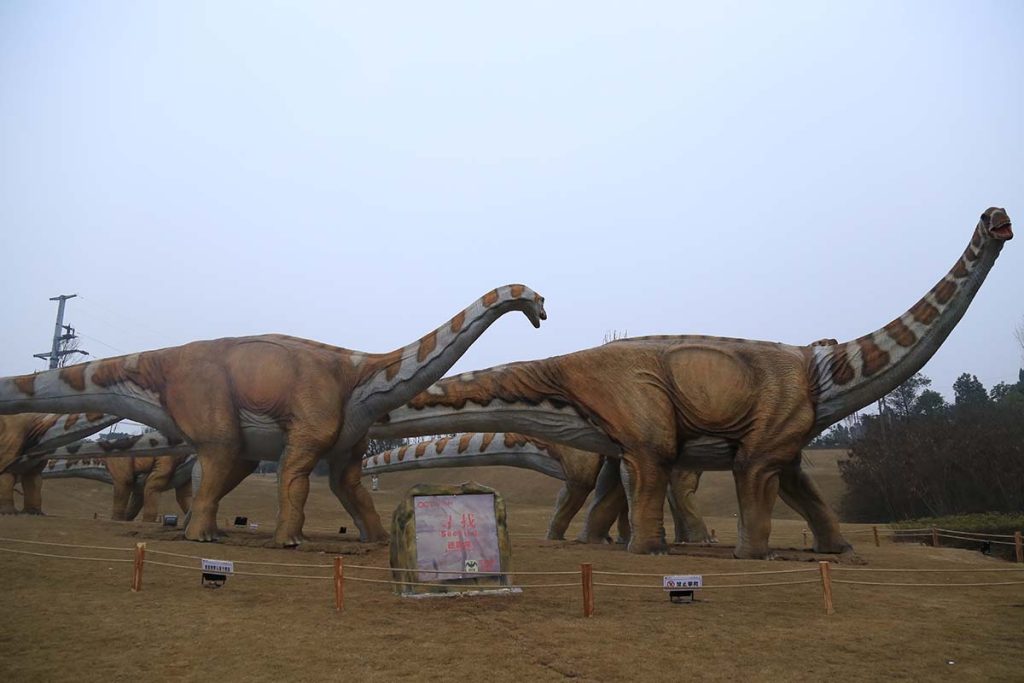
Multiple Apatosaurus sauropods arranged across a landscaped field — a herd installation that transforms an open space into a prehistoric landscape. Sauropods work best in groups: a single long-neck dinosaur is a curiosity, but a herd creates an entire scene.
3. Animatronic Ankylosaurus — The Armored Trail Star
Ankylosaurus fills a unique niche: it is one of the most visually distinctive dinosaurs ever discovered, yet surprisingly few venues have one — which means the venue that installs an Ankylosaurus stands out immediately. With a back covered in bony armor plates, lateral spikes, and the famous tail club, it is the walking tank of the dinosaur world.
Venue fit: Zoo dinosaur trails, museum paleontology exhibits, outdoor educational trails, and any venue looking to differentiate its species lineup from competitors.
What makes it popular:
- The tail club and armor plates create a silhouette that exists in no other genus
- Herbivore classification makes it suitable for all-age zones — zero scare factor
- Mid-range size (3–5m) fits standard trail widths and indoor footprints
- Works exceptionally well as a “second species” alongside a T-Rex or sauropod centerpiece
Custom Ankylosaurus available — contact us for a design proposal with your desired size, pose, and motion requirements. Browse all animatronic dinosaur species to see our full catalog.
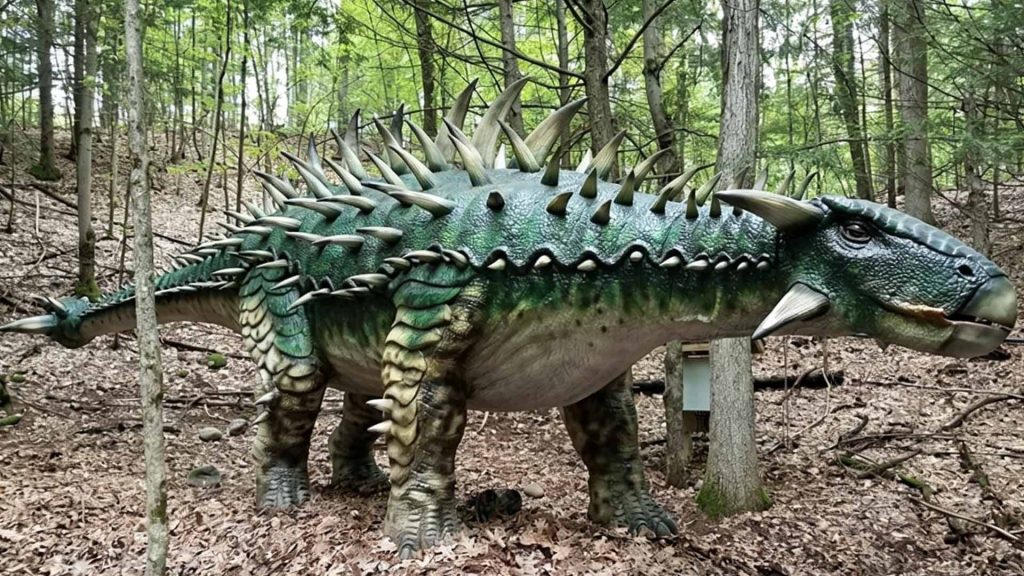
An Ankylosaurus animatronic with full body armor, lateral spikes, and a tail club — standing trailside in a forested exhibit. This is the species that makes visitors stop and point: even people who cannot name it know they have never seen a dinosaur that looks like this before.
4. Animatronic Iguanodon — The Family-Friendly Classic
Iguanodon holds a special place in dinosaur history — it was one of the first dinosaurs ever scientifically described — and it remains one of the most visitor-friendly species for family-oriented venues. With its beaked face, powerful build, and completely non-threatening herbivore posture, it is the dinosaur that children want to get close to.
Venue fit: Family zones, educational trails, museum discovery corners, zoo dinosaur exhibits, and any venue where the target audience includes children under 12.
What makes it popular:
- Beaked face and gentle posture convey “approachable” — ideal for photo zones
- Bipedal/quadrupedal stance gives the dinosaur dynamic visual presence
- Mid-size (4–6m) fits standard exhibit footprints
- Strong educational appeal — museums love the “first-described dinosaur” narrative
Custom Iguanodon available — request a free design proposal with your venue dimensions and motion preferences. Or explore all animatronic dinosaur options in our catalog.
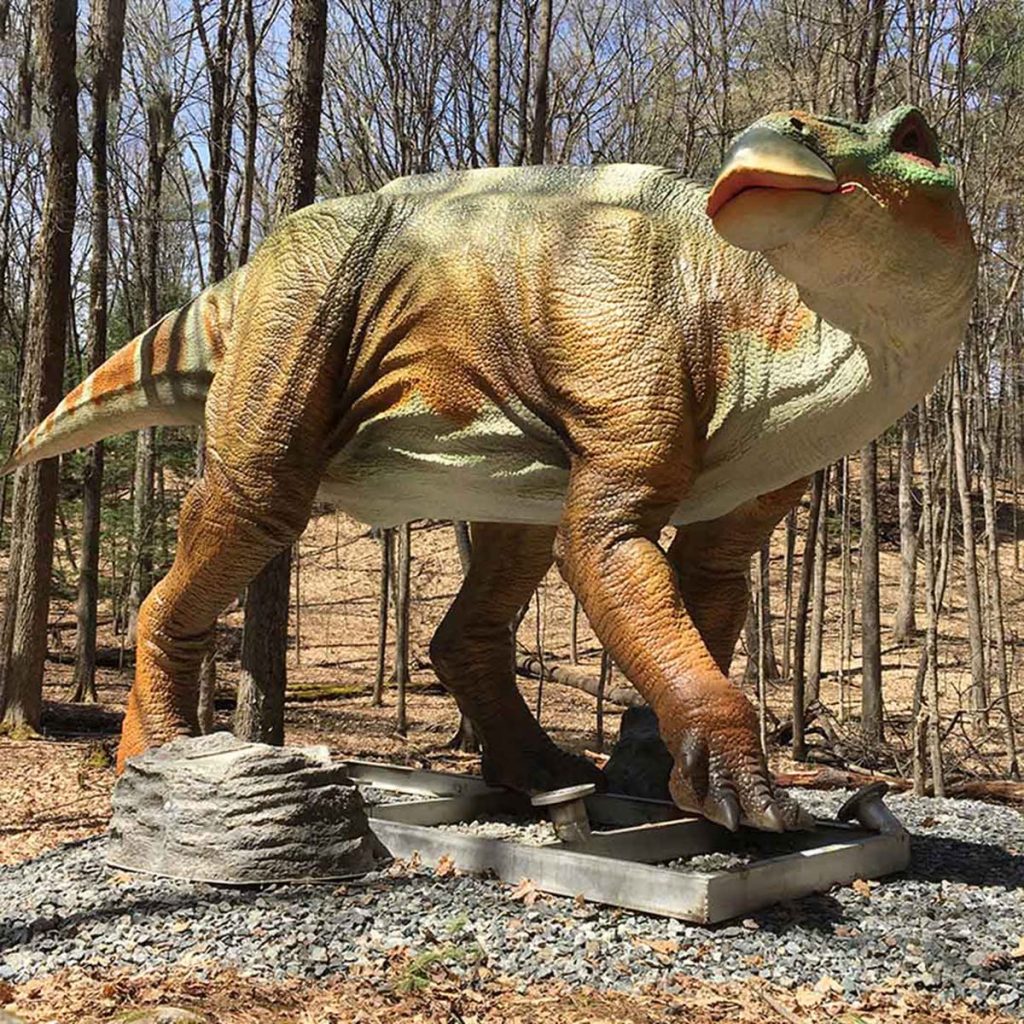
An Iguanodon animatronic in a walking pose on a display base — the beaked face and sturdy build make it one of the most approachable animatronic species for family-oriented venues. Children gravitate toward it instinctively, making it a natural fit for photo zones and interactive trails.
5. Animatronic Pterosaur — The Prehistoric Flying Reptile
No prehistoric exhibit is complete without at least one flying creature overhead. Pterosaurs — the winged reptiles that shared the Mesozoic skies with the dinosaurs — are the only flying animals that visitors expect to see in a dinosaur exhibit, and they fill a unique role: they add vertical variety, signal “prehistoric era” before any caption is read, and create natural photo moments.
Venue fit: Museum entryways, themed photo zones, garden exhibits, and any venue that wants to add a flying creature to a ground-based dinosaur lineup.
What makes it popular:
- The wingspan silhouette is instantly recognizable as “prehistoric flying”
- Compact body size (2–3m wingspan) fits ground-level display or hanging installations
- Often shown with palm tree and fern decor to create lush prehistoric scenes
- Pairs well with any ground-dwelling dinosaur as a complementary display
Note: Pterosaurs are flying reptiles, not technically dinosaurs — but they are universally grouped with dinosaurs in public exhibits and visitor expectations. Browse all animatronic dinosaurs for ground-dwelling species, or contact us to specify your preferred size, pose, and motion programming.
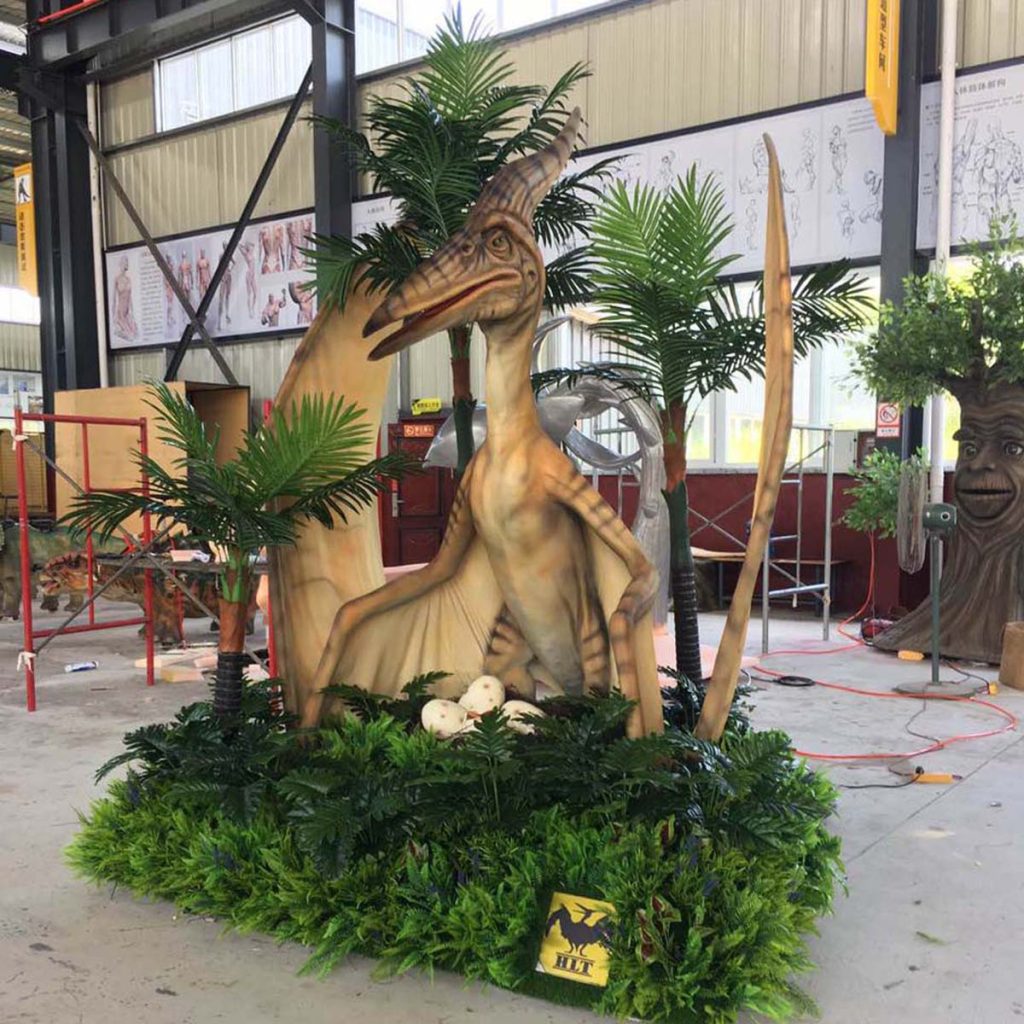
A Pterosaur animatronic (prehistoric flying reptile) displayed in a themed setting with palm trees and decorative greenery. Pterosaurs are not technically dinosaurs but are the most popular prehistoric flying reptiles — ideal for museum entryways, themed photo zones, and any exhibit that wants to add a sky-era creature to the ground-based dinosaur lineup.
6. Large Animatronic Theropod — The Thrill Zone Predator
Not every venue needs a full-size T-Rex. For thrill zones, predator trails, and any exhibit where “aggressive motion, mid-range budget” is the design brief, a large theropod dinosaur — with its muscular build, dramatic rearing pose, and open-jaw threat display — delivers the scare factor without the T-Rex price point.
Venue fit: Thrill zones, predator-themed trails, Halloween-season dinosaur events, museum predator galleries, and any venue where visitors want to feel a little bit nervous.
What makes it popular:
- Rearing pose and open-mouth display create maximum dramatic impact
- Brown-and-orange striped skin gives a naturalistic, convincing appearance
- Aggressive motion programming — sudden lunges, head snaps, and integrated roar — amplifies the thrill
- Pairs effectively with smaller theropods to build a carnivore scene trail
Custom theropod design — contact our engineering team to specify your preferred size, pose, motion programming, and color scheme. Free 3D concept rendering included. Or see our life-size T-Rex options for the classic centerpiece approach.
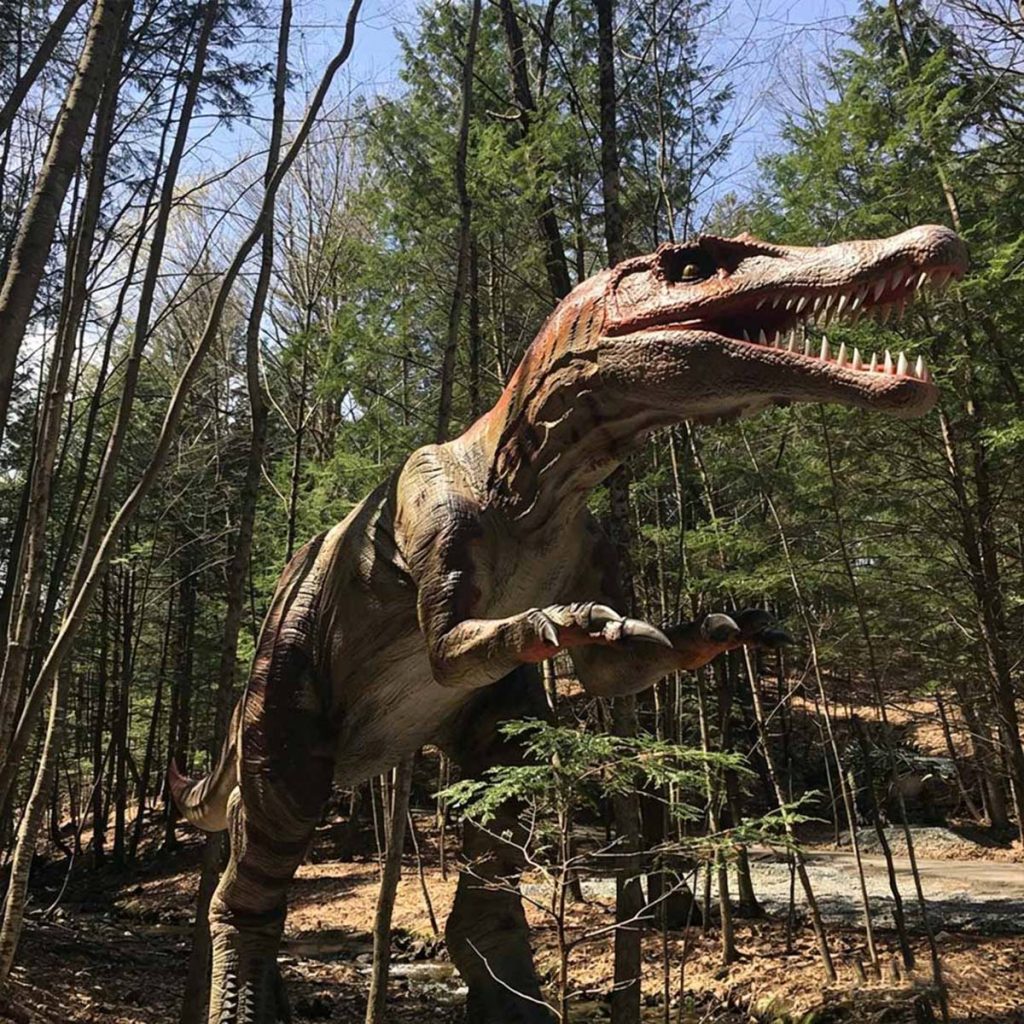
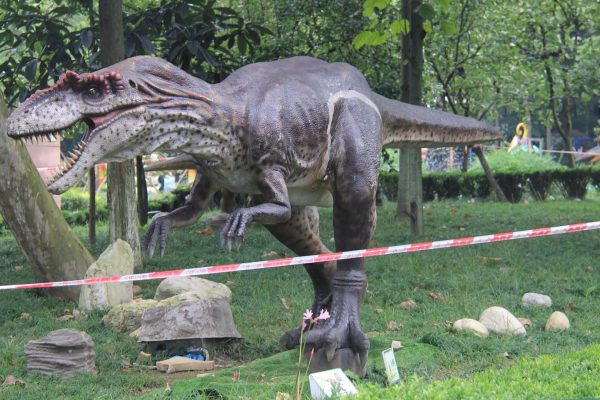
A large theropod animatronic in a dramatic rearing pose with mouth open — brown and orange striped skin, powerful hind legs, and a pose designed to make visitors jump. This is the species for thrill zones: maximum visceral impact in a mid-size footprint.
How to Choose the Right Animatronic Dinosaur for Your Venue
After 22+ years of manufacturing animatronic dinosaurs for clients worldwide, here is the decision framework we use with new buyers:
| If your venue is… | Start with… | Then add… |
|---|---|---|
| A theme park | T-Rex (anchor) | Large theropod thrill zone |
| A natural history museum | Apatosaurus (atrium) | Ankylosaurus + Iguanodon |
| A zoo or safari park | Ankylosaurus (trail) | Pterosaur (entry display) |
| A shopping mall event | Iguanodon (family) | Pterosaur (photo) |
| A dinosaur trail | Ankylosaurus (first stop) | Apatosaurus + Iguanodon |
| An educational exhibit | Iguanodon (history) | Pterosaur (prehistoric variety) |
Why species diversity matters: Our order data shows that venues who install 3+ different species see significantly higher repeat visitation than single-species installations. A T-Rex brings them in; an Ankylosaurus on the trail and a Pterosaur at the entrance bring them back.
For a full catalog of available species with specifications, browse our complete animatronic dinosaur collection.
Animatronic Dinosaurs for Theme Parks, Museums and Zoos
The same species behaves very differently in different venues. Here is how we see the six models above specified in practice.
Theme parks. Footfall is the metric, so the dinosaur has to read from fifty metres away and survive being photographed ten thousand times a week. A T-Rex at the entrance plaza or a large theropod at the end of a thrill trail delivers that. Parks usually run their anchors on a triggered show cycle — ambient breathing by default, roar and head sweep when a sensor fires — so the exhibit never looks static between visitor groups. Start from the animatronic dinosaur collection and size up from there.
Museums and science centres. Accuracy outranks spectacle. Curators want species that match the fossil record on the label beside them, colour palettes that stand up to curatorial review, and motion slow enough that younger visitors can watch the mechanics rather than flinch at them. Apatosaurus and Iguanodon carry most museum orders for exactly that reason. If you are writing the brief now, our animatronic dinosaur buying guide for museums and theme parks covers specification, lead times and installation planning in detail.
Zoos and safari parks. Here the dinosaur joins an existing trail rather than replacing it, so the constraint is usually path width and sightlines, not impact. Ankylosaurus and Pterosaur are the two that fit a standard zoo trail — one reads at ground level along the path, the other works as an overhead entry moment. Both are also the easiest to theme into an existing prehistoric or conservation zone. See how these sit alongside fossil replicas and skeleton pieces in our dinosaur park exhibits range.
Frequently Asked Questions About Animatronic Dinosaurs
Q: Which animatronic dinosaur is the most popular?
A: Tyrannosaurus Rex is the #1 most-ordered species globally. Its iconic silhouette, maximum visual impact, and universal recognition make it the default choice for theme park centerpieces and museum anchor exhibits.
Q: Can I order a species that is not currently listed on your website?
A: Absolutely. As a custom manufacturer, we build any dinosaur species to your specifications — including Ankylosaurus, Iguanodon, Pterosaur, and any less-common species you require. Our sculpting and painting teams create fully bespoke creatures from reference images, fossil records, or concept sketches.
Q: How long does it take to manufacture and ship an animatronic dinosaur?
A: Production takes 30–60 days depending on size and complexity. Sea freight shipping adds 3–5 weeks. Total door-to-door: 8–12 weeks. We recommend ordering at least 4 months before your target opening date.
Q: Can the dinosaurs be customized with specific colors, poses, or motion programs?
A: Every dinosaur is custom-built. You choose the pose (alert, stalking, rearing, or custom), the color pattern, and the motion programming. Free 3D concept rendering before production begins.
Q: Are these dinosaurs suitable for outdoor use in all weather?
A: Yes. Every model is specified as an outdoor-rated exhibit — UV-stable skin finish (Patent ZL 2022 1 0224489.5), sealed motion and control systems, and weatherproof construction matched to your site conditions. Tell us where the exhibit will stand and we will confirm the build specification before production starts.
Q: Do you offer installation support?
A: Every order includes remote video installation support and full commissioning guidance. On-site installation crews are available for complex multi-species installations. Standard installation takes 3–7 days.
Q: What is the minimum order quantity?
A: Single-unit orders are welcome. Many venues start with one signature species and expand over subsequent seasons. Volume pricing is available for 3+ dinosaurs ordered together.
Ready to Build Your Dinosaur Exhibit?
Every project starts with a conversation. Tell us your venue type, available space, desired species, and budget range. Our engineering team will prepare a free 3D concept rendering and detailed quotation — typically within 48 hours.
Request Your Free Design Proposal →
Or browse our full animatronic dinosaur catalog to explore all available species and their detailed specifications.
Related Products & Resources
- Animatronic Dinosaurs — Full Species Catalog — Browse all life-size dinosaur species with specifications, motion levels, and venue recommendations.
- Dinosaur Exhibits & Fossils Collection — Complete range including animatronics, skeletons, ride-on dinosaurs, and fossil replicas.
- Animatronic Dinosaur Price Guide 2026 — Detailed cost breakdown by species, size, and motion complexity.
- Request Your Free Exhibit Design Proposal — Custom species selection, 3D rendering, and quotation within 48 hours.
Animatronic Dinosaur Build Quality: What to Expect
Buyers comparing an animatronic dinosaur supplier are usually judging two things: how real the animal looks at three metres, and whether it still looks that way after a full season outdoors. Our answer to both is the skin finish — a patented formulation (Patent ZL 2022 1 0224489.5) developed in our Zigong workshop and used across every species in this guide.
What that means on site:
- Museum-grade surface detail — Skin folds, scale texture and muscle definition are reproduced at a level of realism that generic rubber or latex finishes cannot reach, so the exhibit reads as a creature rather than a prop.
- Outdoor-rated construction — Each model is specified for permanent outdoor display, with sealed motion and control systems and a finish that holds its colour under direct sun.
- Hand-finished colour — Pigment is applied by hand, so every animal carries depth and shading instead of a flat factory coat.
- Matched to your site — Exposure, layout and local conditions at your venue are reviewed before the build specification is finalised.
Every exhibit is produced in our Zigong, China workshop and ships with UL/CE-compliant electrical components. If you would like to see the finish before committing, ask for material and colour samples alongside your proposal.
🦖 Request Your Free Dinosaur Exhibit Quote
If you are sourcing an animatronic dinosaur supplier with factory-direct pricing and 22+ years of craftsmanship, tell us what you need:
- ✅ Custom species & size — T-Rex, Spinosaurus, Velociraptor, Triceratops & 20+ more
- ✅ Patented surface finish rubber skin (Patent ZL 2022 1 0224489.5) — museum-grade realism
- ✅ Interactive sensor upgrade — motion-activated roar, head tracking, gesture response
- ✅ 3D renderings & itemised quote within 24 hours
Related Products
- Life-Size Animatronic Apatosaurus — Long-neck sauropod — one of the most popular species
- Realistic Animatronic T-Rex — The ultimate apex predator display
- Realistic Animatronic Stegosaurus — Armored herbivore with iconic back plates
- Life-Size Animatronic Hadrosaurus — Gentle giant duck-billed dinosaur
- Life-Size Animatronic Argentinosaurus— One of the largest sauropods ever discovered, built to 20m
Explore our Realistic Animatronic Zebra with Foal — Life-Size Zebra Statue for Zoos & Safari Parks for your next custom festival or themed event.
Explore our How to Buy an Animatronic Dinosaur: The Complete 2026 Buying Guide for Theme Parks, Museums, and Zoos for your next custom festival or themed event.
Explore more: Beyond the most popular species, these animatronic dinosaur exhibits are also worth seeing: animatronic dinosaur for shopping mall case study · giant Brachiosaurus wallpaper · life-size T-Rex display wallpaper
The appeal of prehistoric animals extends well beyond dinosaurs. Ice Age giants are increasingly requested for museums and theme parks. Our animatronic woolly mammoth combines curved tusks, shaggy synthetic fur, and realistic trunk motion to extend any prehistoric exhibit storyline.