Buying an animatronic dinosaur is not like ordering office furniture. There is no “add to cart” button. No fixed price list. If you’re searching for animatronic dinosaurs for sale, you’ll quickly discover that every purchase is a custom negotiation involving species selection, movement specifications, material choices, shipping logistics, and installation requirements.
This is exactly why most first-time buyers feel overwhelmed — and why experienced venue operators have learned, often through costly mistakes, what to look for and what to avoid.
This guide walks through every step of buying an animatronic dinosaur, from understanding what you’re actually buying to evaluating manufacturers, negotiating terms, and planning for installation. Whether you’re a museum curator, a theme park operator, or a zoo director, this guide covers everything you need to know about finding animatronic dinosaurs for sale from reliable manufacturers.
What “Animatronic Dinosaur” Actually Means
Before you start comparing prices, you need to understand what you’re comparing. The term “animatronic dinosaur” covers a surprisingly broad range of products, and two identically described dinosaurs can differ by $50,000 or more in price depending on construction details that most buyers never think to ask about.
Static Display Dinosaurs (No Movement)
These are life-size sculptural replicas with no moving parts. They are the entry-level category, typically priced in the $3,000-15,000 range depending on size and detail level. While positioned as “animatronic” by some sellers, they contain no motors or control systems. They are appropriate for background scenery in larger exhibits but should not be the centerpiece of an interactive display.
Basic Animatronic Dinosaurs (2-4 Movements)
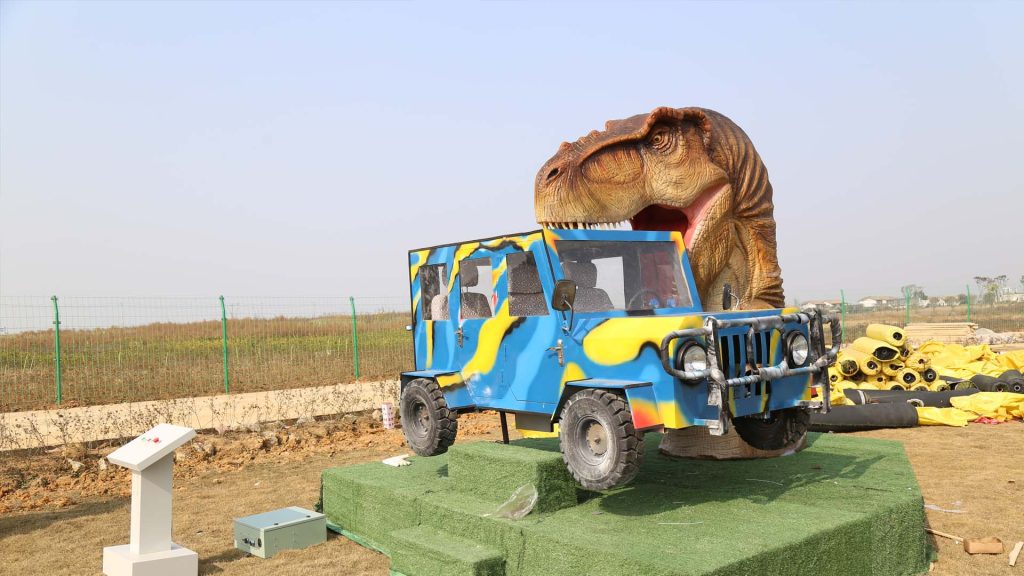
This is the most common and popular category for first-time buyers. These dinosaurs feature basic movements: head turning, mouth opening and closing, tail swaying, and blinking. A 4-meter basic animatronic T-Rex in this category typically costs $5,000-12,000. The movement is controlled by a simple controller box — press a button and the dinosaur performs its programmed sequence.
This category delivers the best value for most venues. The movement is sufficient to create an exciting visitor experience, while the cost remains accessible for institutions with limited budgets.
Advanced Animatronic Dinosaurs (6-12+ Movements)
Advanced dinosaurs include more complex movement systems: articulated necks, independently moving arms, synchronized breathing motion in the torso, and coordinated roars timed to specific movements. These dinosaurs feel more “alive” and create significantly more dramatic visitor reactions.
Advanced dinosaurs typically cost $15,000-80,000, with the price driven primarily by the number of independent movement axes and the complexity of the control system. The control systems in this category often include programmable sequences, allowing staff to customize the dinosaur’s behavior.
Interactive Animatronic Dinosaurs (Sensor-Driven)
The premium category includes dinosaurs with integrated sensors that respond to visitor presence. Infrared sensors detect approaching visitors and trigger specific behaviors. Touch sensors allow visitors to “pet” the dinosaur. Some installers add voice interaction — a hidden staff member or AI system speaking through the dinosaur’s speaker system.
Interactive dinosaurs represent the current cutting edge of exhibit technology. They typically cost $40,000-150,000+ and require more sophisticated installation and maintenance. However, they also generate the highest visitor engagement metrics and longest dwell times of any exhibit type.
Custom Hybrid Exhibits (Animatronic + Lantern)
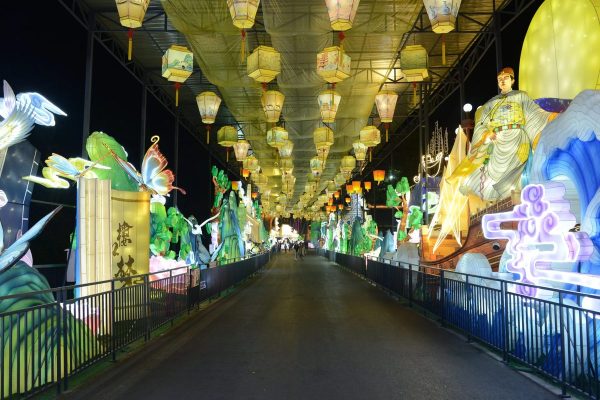
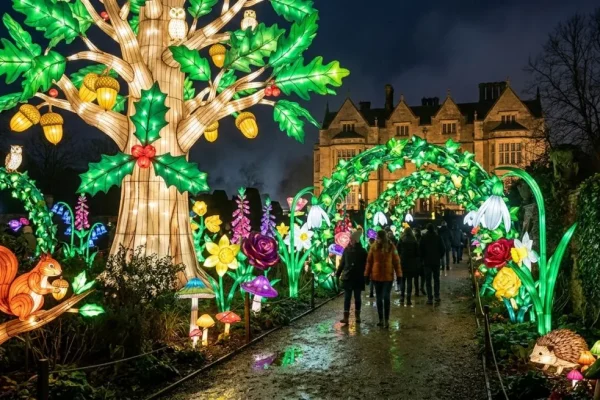
A niche category that combines animatronic movement with illuminated lantern-style construction. These dinosaurs are outlined in LED lighting, creating a spectacular visual effect at night while still featuring mechanical movement. This hybrid approach is particularly popular for outdoor evening events and zoo light festivals.
Key Purchasing Decisions You Need to Make
Before contacting any manufacturer, clarify these decisions. They will directly impact your budget and timeline.
Species Selection
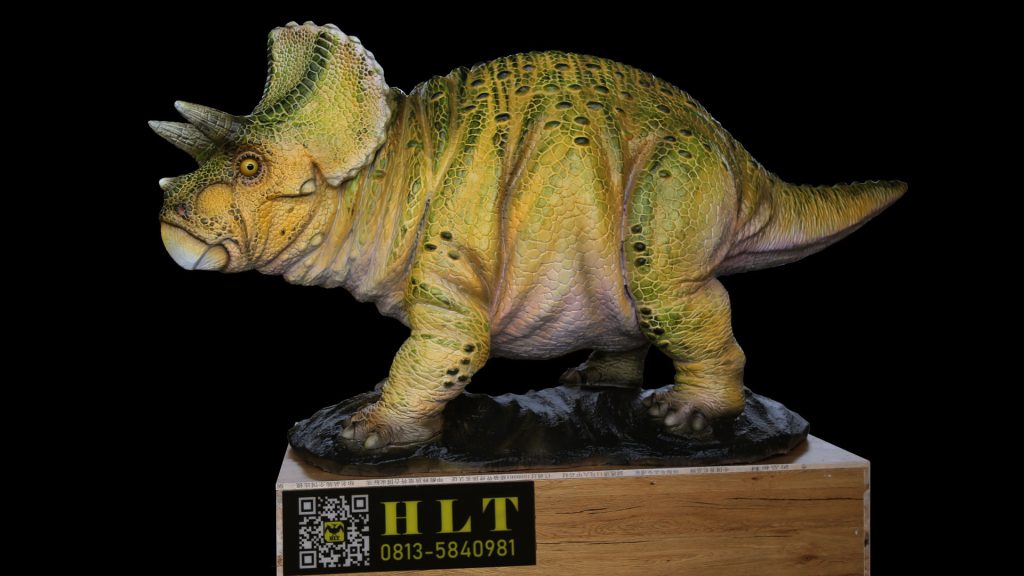
The most popular animatronic dinosaur species, in order of demand: Tyrannosaurus Rex, Triceratops, Stegosaurus, Velociraptor, Brachiosaurus, Spinosaurus, and Pteranodon. T-Rex consistently outsells every other species by a wide margin — it is the one dinosaur that every visitor recognizes instantly, making it the safest investment for any venue.
However, species popularity varies by region and audience. Children’s museums often prefer friendlier herbivores. Science centers lean toward scientifically significant species. And parks with existing dinosaur exhibits may need specific species to fill collection gaps.
Size Specification
Animatronic dinosaur sizes range from 1.5 meters (small Velociraptors and juvenile dinosaurs) to 25+ meters (full-size Brachiosaurus for outdoor installations). The most common size range for indoor exhibits is 3-6 meters, balancing visual impact with practical installation requirements.
Larger is not always better. A 10-meter dinosaur requires significantly more exhibition space, costs more to ship, and demands more complex installation. For most indoor venues, 4-5 meters is the sweet spot between visitor impact and practical constraints.
Movement Complexity
More movements equal more visitor engagement, but also more cost, more potential failure points, and more maintenance requirements. For first-time buyers, we recommend starting with 3-4 movements: head turn, mouth open/close, tail sway, and blinking. This provides sufficient interactivity without overwhelming complexity.
If your venue already has animatronic exhibits and visitors are accustomed to high-quality interactive displays, the advanced category is worth the investment. But if this is your first animatronic purchase, the basic category will likely exceed your visitors’ expectations.
Skin Material Selection
This is the single most important material decision and the one most overlooked by first-time buyers.
Standard surface treatment: Painted foam and fabric construction. Good for indoor use. Costs less. Details are adequate but not exceptional. LED System of 3-5 years with proper maintenance.
hand-finished surface: Patented surface finish-based surface that mimics real skin texture and flexibility. Used by our factory under patent ZL 2022 1 0224489.5. The surface finish moves naturally with the underlying mechanical structure, creating a far more realistic appearance. Weather-resistant for outdoor use. Significantly more durable. Costs 30-50% more than standard surface but delivers a disproportionate improvement in visual quality.
For outdoor installations, hand-finished surface is essentially mandatory. Standard fabric construction deteriorates rapidly in direct sunlight and moisture. For indoor museum exhibits where visitors will be within 1-2 meters of the dinosaur, the visual difference between standard and surface finish is immediately obvious.
Indoor vs. Outdoor Installation
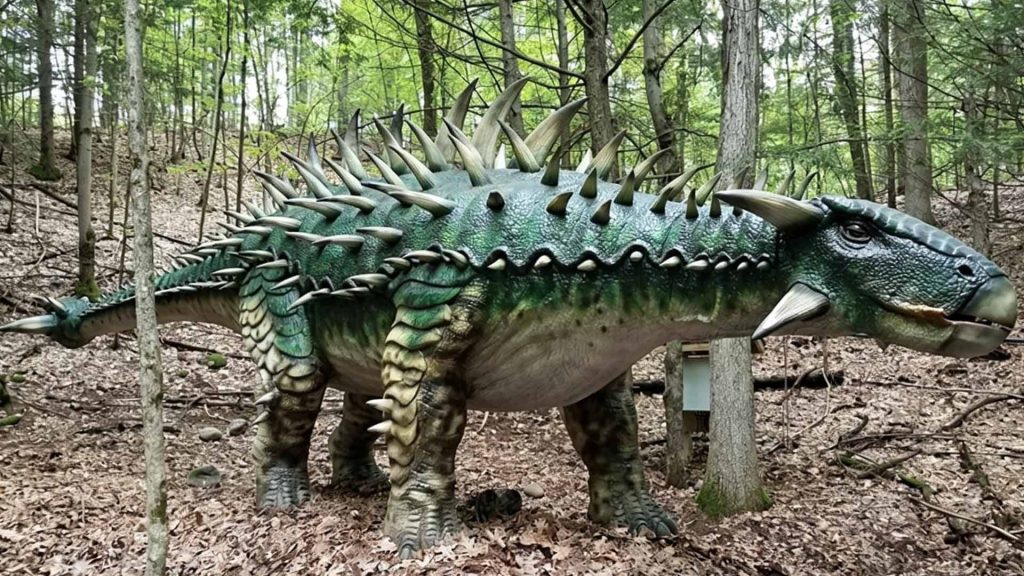
Indoor dinosaurs require different engineering than outdoor installations. Indoor units need smaller power systems, less weatherproofing, and often include sound systems calibrated for enclosed spaces. Outdoor units require outdoor-rated weather sealing, UV-resistant surface treatments, anti-corrosion internal frames, and drainage systems for rain.
Outdoor dinosaurs cost approximately 15-25% more than equivalent indoor models due to the additional weatherproofing requirements. But they also open up entirely different use cases: park trails, zoo pathways, outdoor event spaces, and seasonal attractions.
How to Evaluate Animatronic Dinosaur Manufacturers
The animatronic dinosaur industry is concentrated in Zigong, Sichuan, China — known globally as the center of animatronic and lantern manufacturing. Within Zigong alone, there are dozens of manufacturers with wildly varying quality standards. Here is how to separate the professionals from the pretenders.
Factory Verification
Any legitimate manufacturer should provide:
- Factory photos and videos showing production in progress
- A live video walkthrough of their facility (request this during your evaluation)
- Company registration documents
- Export records or references from previous international clients
A manufacturer that hesitates to provide any of these items should be eliminated immediately. The best manufacturers are proud of their facilities and actively want to show them to potential clients.
Quality Indicators to Look For
When evaluating product samples or photos, focus on these visual quality indicators:
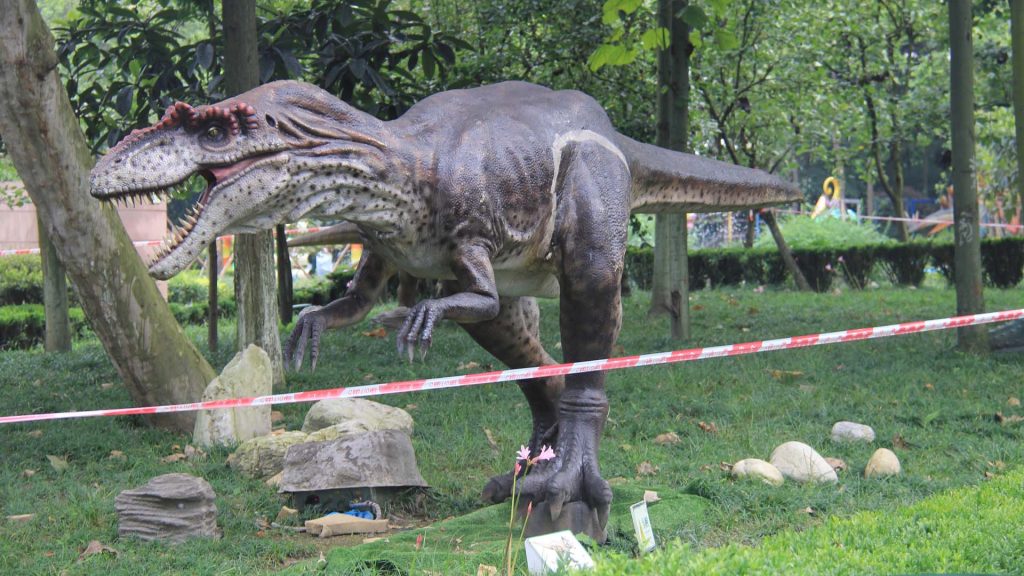
Movement smoothness: Jerky, abrupt movements indicate low-quality motors and poor control systems. Smooth, natural-looking movement is the hallmark of professional-grade animatronics.
Skin detail level: Examine the transition areas between skin panels, the depth of skin texture, and the realism of the eyes. These are the details that visitors unconsciously notice.
Sound synchronization: The roar should match the mouth movement exactly. A common problem with low-cost animatronics is audio that plays independently of the mechanical sequence.
Frame construction: Ask about the internal frame thickness and welding standards. Industrial-grade animatronics use internal frames rated for structural integrity far beyond what the dinosaur’s weight requires.
The Communication Test
How a manufacturer communicates during the sales process reveals how they will communicate during production. Look for:
- Responsiveness: Do they reply within 24 hours?
- Clarity: Do they answer your specific questions or provide generic responses?
- Documentation: Do they provide written specifications and visualization materials?
- Language capability: Do they have English-speaking staff if you need them?
Poor communication during the sales process almost always predicts worse communication during production — which leads to delays, misunderstandings, and quality issues.
Understanding the Ordering Timeline
A typical animatronic dinosaur purchase follows this timeline:
Discovery and negotiation (2-4 weeks): Initial contact, species selection, specification discussion, quotation, and contract negotiation.
Design and engineering (2-3 weeks): Our design team creates detailed 3D renderings, mechanical specifications, and movement sequence designs for your approval.
Production (6-10 weeks): Frame welding, motor installation, skin fabrication and fitting, movement calibration, and quality control testing. Complex custom orders take longer.
Shipping (2-5 weeks): Sea freight to most destinations takes 2-5 weeks. Air freight takes 5-10 days but costs significantly more.
Installation (3-7 days per dinosaur): On-site assembly, electrical connection, movement calibration, and staff training.
Total timeline from contract to operational exhibit: 12-20 weeks. Plan your ordering date accordingly — for an exhibit opening in June, you should be in contract by January or February.
Shipping and Installation: What to Expect
Shipping Methods
Animatronic dinosaurs ship in custom-built wooden crates with internal foam padding and moisture barriers. Sea freight is the standard method for most orders, with costs of $2,000-8,000 per container depending on destination. Air freight costs 3-5 times more but may be justified for single-dinosaur orders or rush timelines.
Our factory handles all export documentation, including commercial invoices, packing lists, certificates of origin, and harmonized system (HS) codes for customs clearance. Import duties are the buyer’s responsibility and vary by country and product classification.
Installation Requirements
Most medium-sized animatronic dinosaurs require a team of 3 to 5 technicians for 3 to 7 days of installation. The process includes:
- Crate unpacking and component inventory
- Internal frame assembly
- Mechanical system connection and testing
- Skin fitting and detail work
- Movement calibration and sequence programming
- Staff training on operation and basic troubleshooting
We provide installation teams that travel to your site anywhere in the world. Installation fees are quoted separately and include airfare, accommodation, and daily labor rates.
Power Requirements
Most animatronic dinosaurs operate on standard AC power (110V or 220V depending on your region). A typical medium-sized dinosaur draws 1-3 kW during operation. Larger installations with multiple dinosaurs may require dedicated electrical circuits — our engineering team provides a complete electrical plan during the design phase.
Maintenance and Longevity
With proper maintenance, a professional-grade animatronic dinosaur should operate reliably for 5 to 8 years.
Routine Maintenance Schedule
Daily: Visual inspection of external surfaces, check that all movements are functioning, test audio system.
Weekly: Clean dust from moving joints, check electrical connections, test backup systems.
Monthly: Lubricate mechanical joints, inspect motor mounts, test emergency stop systems, calibrate movement ranges.
Annual: Professional inspection of all mechanical and electrical systems, skin surface treatment, control system software update.
Common Maintenance Issues
The most frequent maintenance issues are, in order: motor wear on high-use joints, skin material degradation from UV exposure (outdoor installations), control system glitches that require simple resets, and loose electrical connections from vibration. All of these are addressable with basic maintenance training.
Spare parts should be ordered with the initial purchase. A basic spare parts kit includes replacement motors for the most heavily used joints, spare LED modules for any integrated lighting, and a set of surface repair materials. The kit typically costs 5-8% of the dinosaur’s purchase price and pays for itself the first time a part needs replacement.
Questions to Ask Before You Buy
Use this checklist when evaluating any animatronic dinosaur manufacturer:
- How many international orders have you completed in the past 3 years? Can you provide references?
- What certifications do your electrical systems carry for my country’s standards?
- Do you offer hand-finished surface as an option, and if so, what technology does it use?
- What is included in the standard support, and what are your extended support options?
- Do you provide on-site installation and what does it include in terms of staff training?
- What is your spare parts availability and typical shipping time for replacement components?
- Can you provide a detailed 3D rendering of our specific dinosaur before production begins?
Next Steps Before You Order
Once the specification and the supplier are settled, the remaining questions are technical and commercial. These pages answer the ones that most often come up in the week before an order is placed:
- Dinosaur park exhibits — how a full park or trail comes together rather than a single animal.
- The six systems inside an animatronic dinosaur — what you are actually buying, system by system.
- Cost by project type — museum, theme park and touring budgets.
- What moves the price — size, movement count, duty cycle and finish.
- The most requested species and poses — a useful check before finalising the list.
- Interactive exhibit guide — deciding whether the exhibit should react to visitors.
- Hydraulic vs pneumatic actuation — performance and maintenance compared.
- Motor selection guide — the electric route, with torque and duty cycle.
- Animatronic animals — extending the same order to a wildlife zone.
- The full animatronic dinosaur catalogue — species, sizes and movement options in one place.
Conclusion: A Purchase That Pays for Itself
An animatronic dinosaur is a significant capital investment. But it is also one of the most reliable visitor draws in the entertainment and education industries. Animatronic dinosaurs for sale from reputable manufacturers have been proven to increase museum attendance by 20-40%. They extend visitor dwell time in themed areas. They generate earned media coverage and social media sharing that would cost far more through paid advertising.
The key to a successful purchase is not finding the lowest price. It is finding a manufacturer who delivers reliable quality, clear communication, and post-sale support that keeps your exhibit running for years. The upfront savings from a budget manufacturer evaporate quickly when an animal stops moving mid-season and replacement parts are weeks away.
Buy smart. Buy once. And watch your visitors’ faces light up the moment the T-Rex roars.
Related Products
- Life-Size Animatronic Apatosaurus — Long-neck sauropod with realistic movement for museums & parks
- Realistic Animatronic T-Rex — Outdoor T-Rex with roaring motion & hand-finished surface
- Realistic Animatronic Stegosaurus — Outdoor-grade stegosaurus with articulated plates
- Life-Size Animatronic Hadrosaurus — Duck-billed herbivore exhibit for dinosaur parks
- Life-Size Animatronic Argentinosaurus — The largest sauropod ever discovered — museum-grade exhibit
Explore our Realistic Animatronic Zebra with Foal — Life-Size Zebra Statue for Zoos & Safari Parks for your next custom festival or themed event.