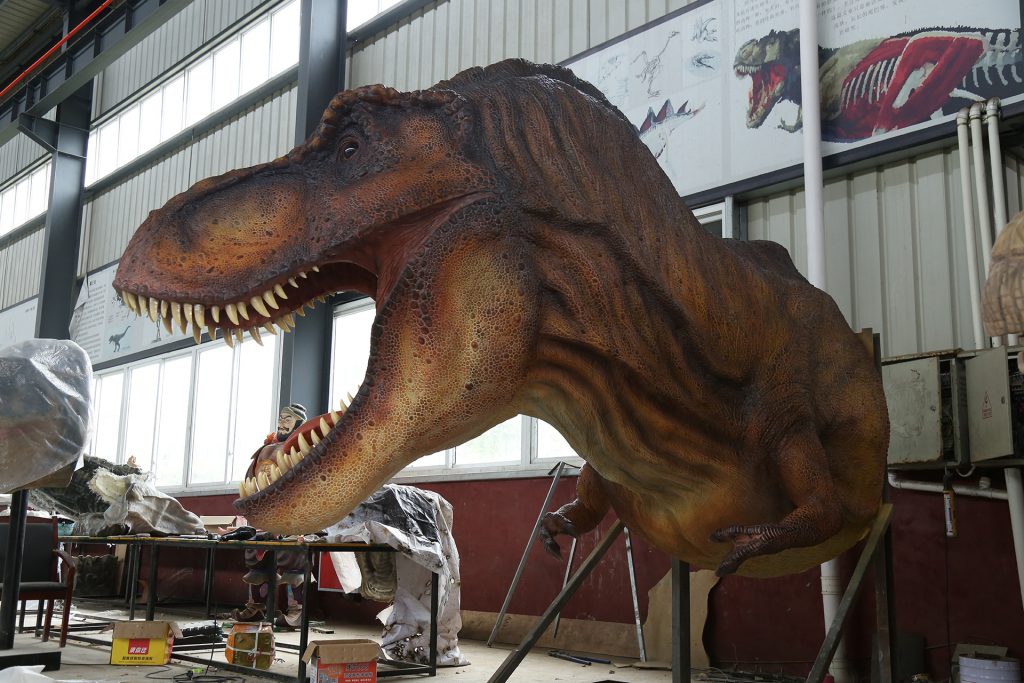
The Traditional Process: Foam Carving + Surface Finish Sealant Coating
How It Works
- Metal Frame Welding — Tubular internal skeleton construction
- Foam Sculpting — High-density foam is cut, shaped, and carved to form muscle contours
- Surface Finish Sealant Application — Multiple coats of surface finish sealant brushed onto foam surface to create a “skin” layer
- Manual Texturing — Skin patterns pressed into uncured sealant with hand tools
- Paint Application — Surface painted with airbrush or spray gun
Limitations of the Traditional Method
| Issue | Manifestation | Impact |
|---|---|---|
| Hard, Plastic Feel | Cured sealant becomes rigid | Poor visitor interaction |
| Coarse Texture | Hand-pressed patterns are uneven | Looks like plastic toys up close |
| Cracking & Peeling | Thermal expansion mismatch | High maintenance costs |
| Color Fading | UV radiation degrades surface paint | Worn appearance after 1-2 years |
| Poor Water Resistance | Foam absorbs moisture | Unreliable for outdoor use |
The traditional method persists primarily because of its low cost. However, the quality ceiling is fundamentally limited, making it unsuitable for premium museums, themed attractions, and high-end exhibitions.
Our Innovation: Molded Hand-Finished Surface Overmolding Technology
Process Overview
- 3D Modeling & Sculpting — Precise 3D models built from fossil data; 1:1 clay sculptures created by master artisans
- Mold Fabrication — High-precision fiberglass molds produced from the clay master
- Hand-Finished Surface Casting — Platinum-cured addition-type RTV surface finish rubber poured into molds, producing complete skin in a single cast
- Multi-Layer Structure Design — Surface layer optimized for softness; backing layers provide support; zone-specific hardness variation
- Overmolding Installation — Pre-formed hand-finished surface fitted over internal frame and foam core
- Detail Finishing — Seamless joint treatment, installation of eyes, teeth, claws
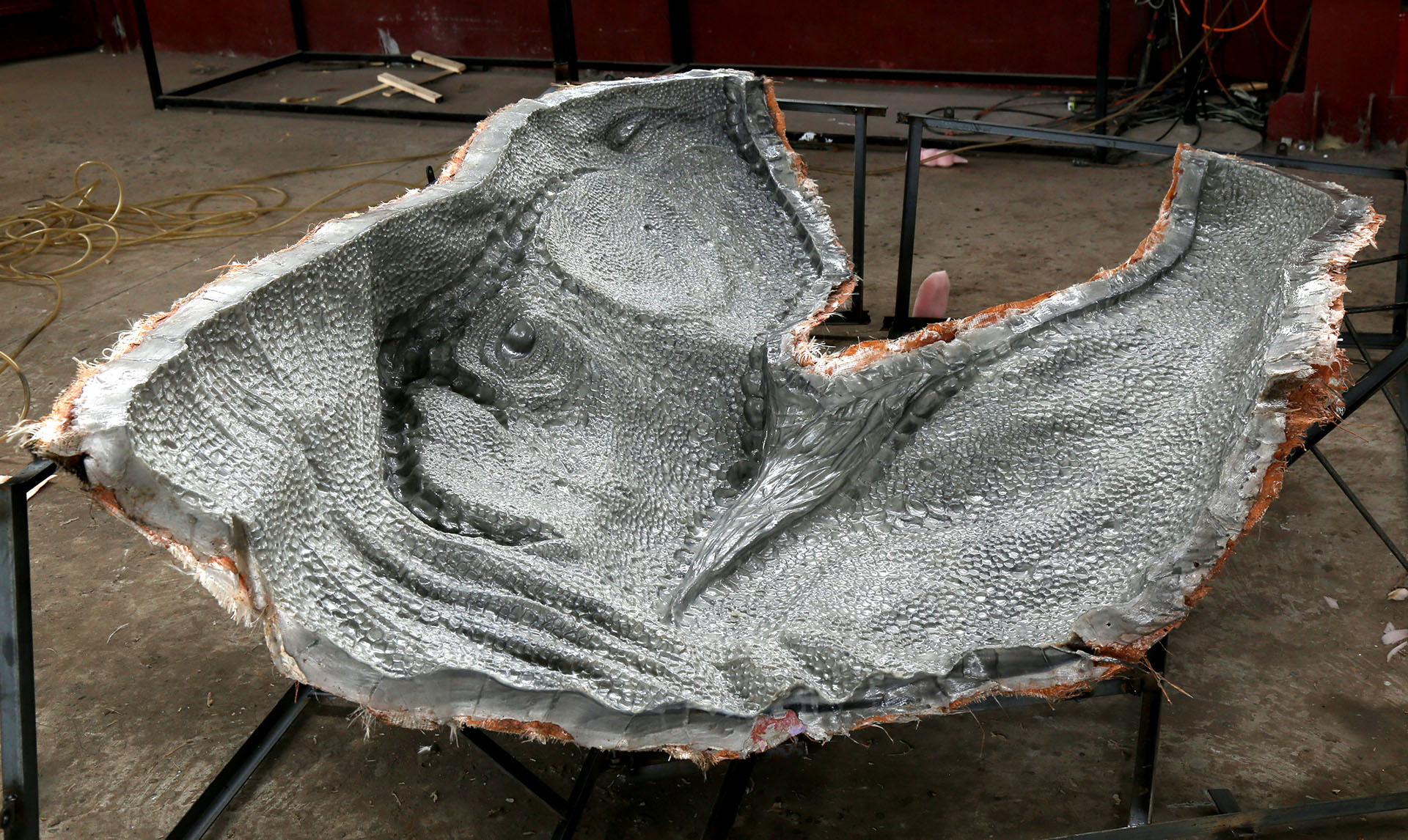
The fiberglass mold interior precisely replicates every scale, wrinkle, and fold of dinosaur skin. Each casting produces a texture accuracy that hand-pressing simply cannot match.
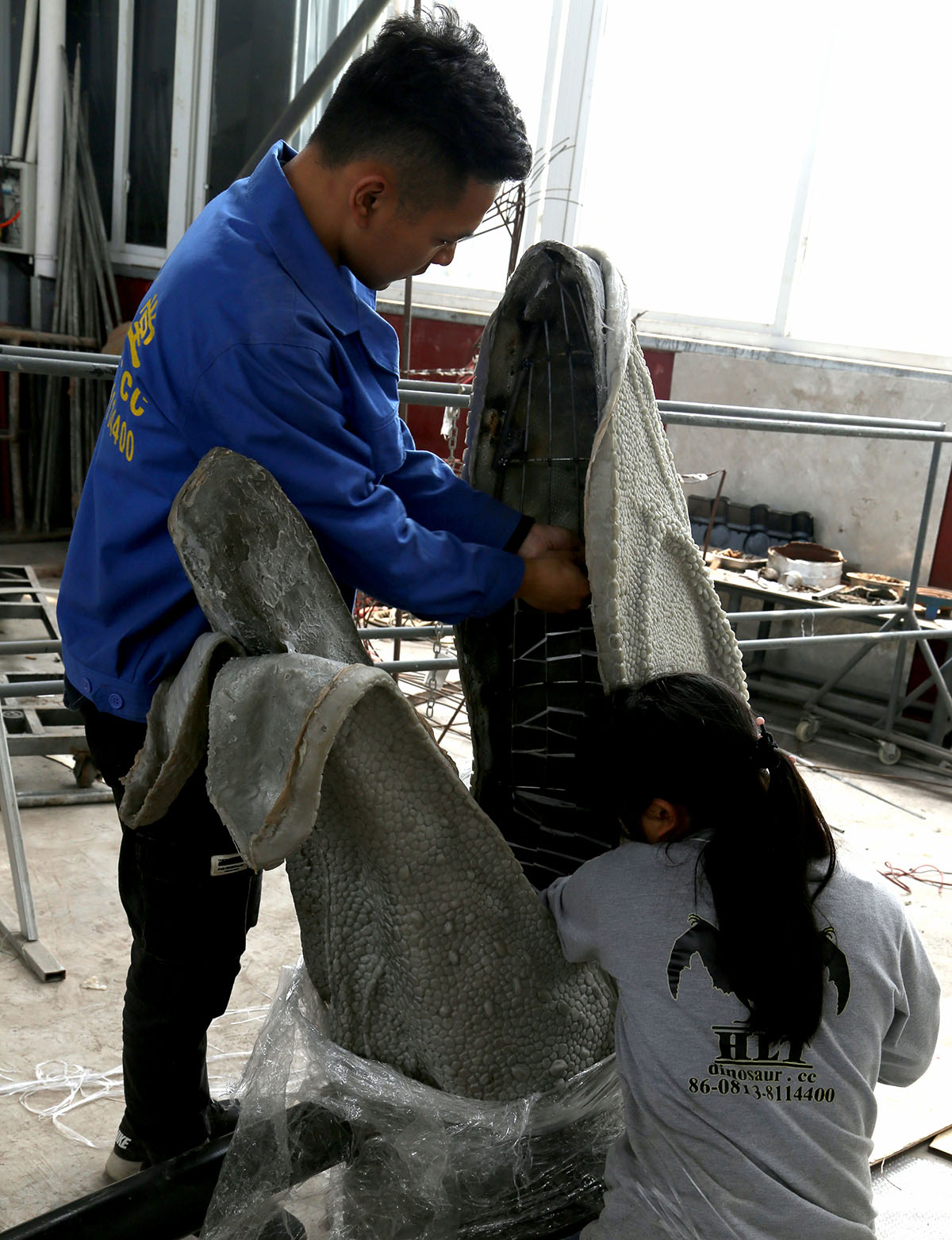
Once cast, the hand-finished surface is removed from the mold and fitted over the model’s internal frame — like putting on a perfectly tailored suit. Surface texture is fully formed during demolding.
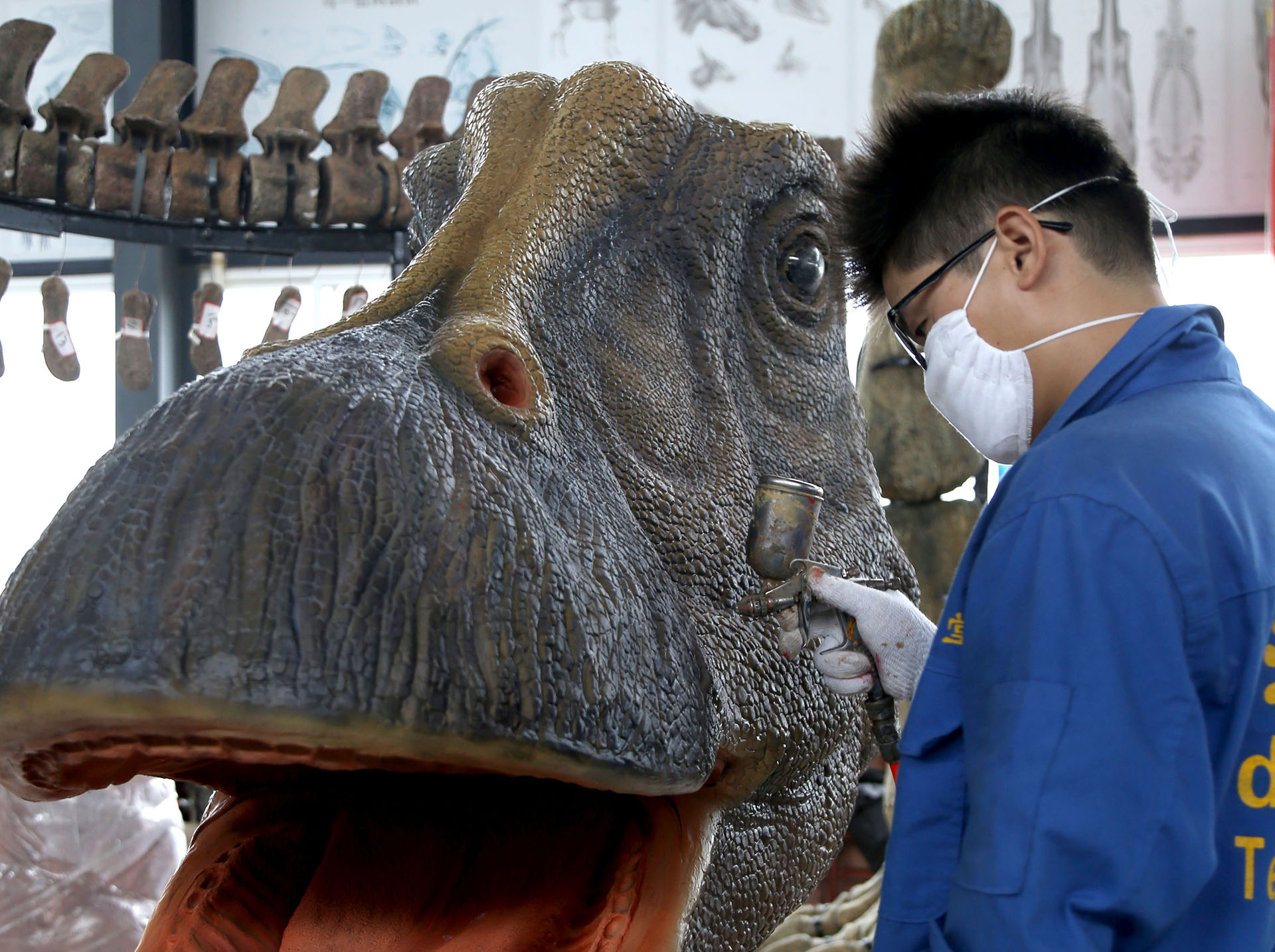
After overmolding, our artisans apply multi-layer airbrush painting. Because surface finish has a micro-porous structure, pigments penetrate more evenly and bond more deeply.
Core Advantages: Side-by-Side Comparison
| Feature | Traditional | Our Patented Technology |
|---|---|---|
| Tactile Feel | Hard, plastic-like | Soft, elastic, realistic |
| Texture Precision | Hand-pressed, coarse | Mold-formed; pores, wrinkles, scales clearly visible |
| Durability | Cracking within 1-2 years | -60°C to 200°C; 5+ years without degradation |
| Water Resistance | Foam absorbs water | Inherently weatherproof |
| Maintenance | Annual repair required | Routine cleaning; virtually zero maintenance |
| Installation | On-site application; longer | Pre-cast; 40% shorter installation |
Why Molded Hand-Finished Surface Delivers These Results
Material Breakthrough: Platinum-Cured Addition-Type RTV Surface Finish Rubber
- No byproducts during curing — environmentally safe
- Extremely low shrinkage rate (<0.1%), ensuring precise texture replication
- UV-resistant, ozone-resistant, temperature-resistant (-60°C to 200°C)
- Deep-cure capability — even thick sections cure completely
Process Breakthrough: Multi-Layer Differentiated Design (Patented)
- Surface Layer: Low hardness, high elasticity — soft and realistic
- Dorsal Region: Higher hardness, simulating taut back skin
- Abdominal Region: Even lower hardness, naturally supple
- Skin functions as a “garment” — independent thermal expansion eliminates cracking
Close-Up Detail Showcase
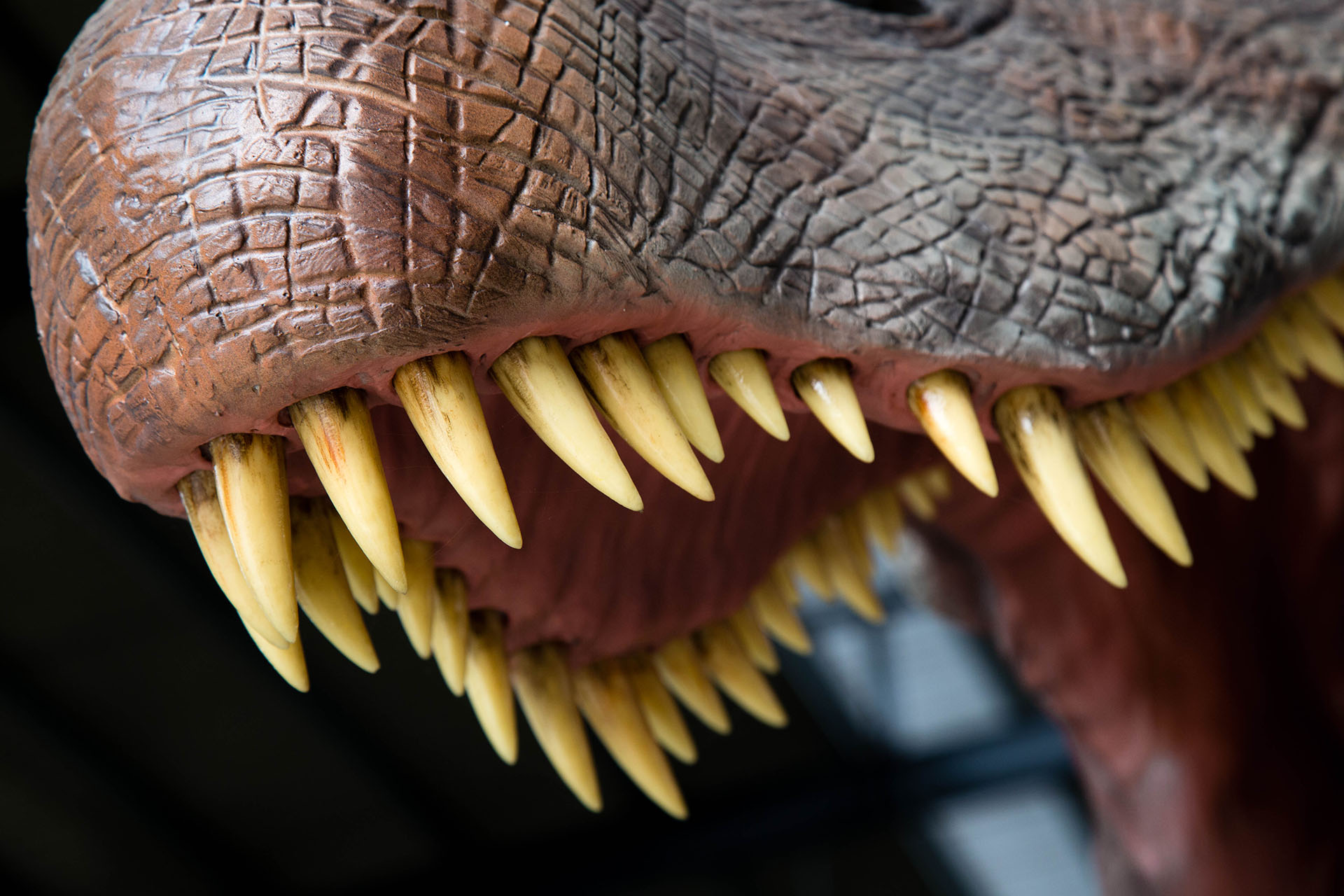
This eye-area close-up of our T-Rex reveals skin texture with remarkable depth: scale layers are clearly defined, eye-area wrinkles are natural and precise. This level of detail is impossible to achieve with hand-pressing.
The Spinosaurus displays equally refined skin texture — the dorsal sail features smooth color gradients, while the skin surface shows realistic micro-cracks and pores.
Product Gallery
All models below are manufactured using our patented molded hand-finished surface overmolding technology:
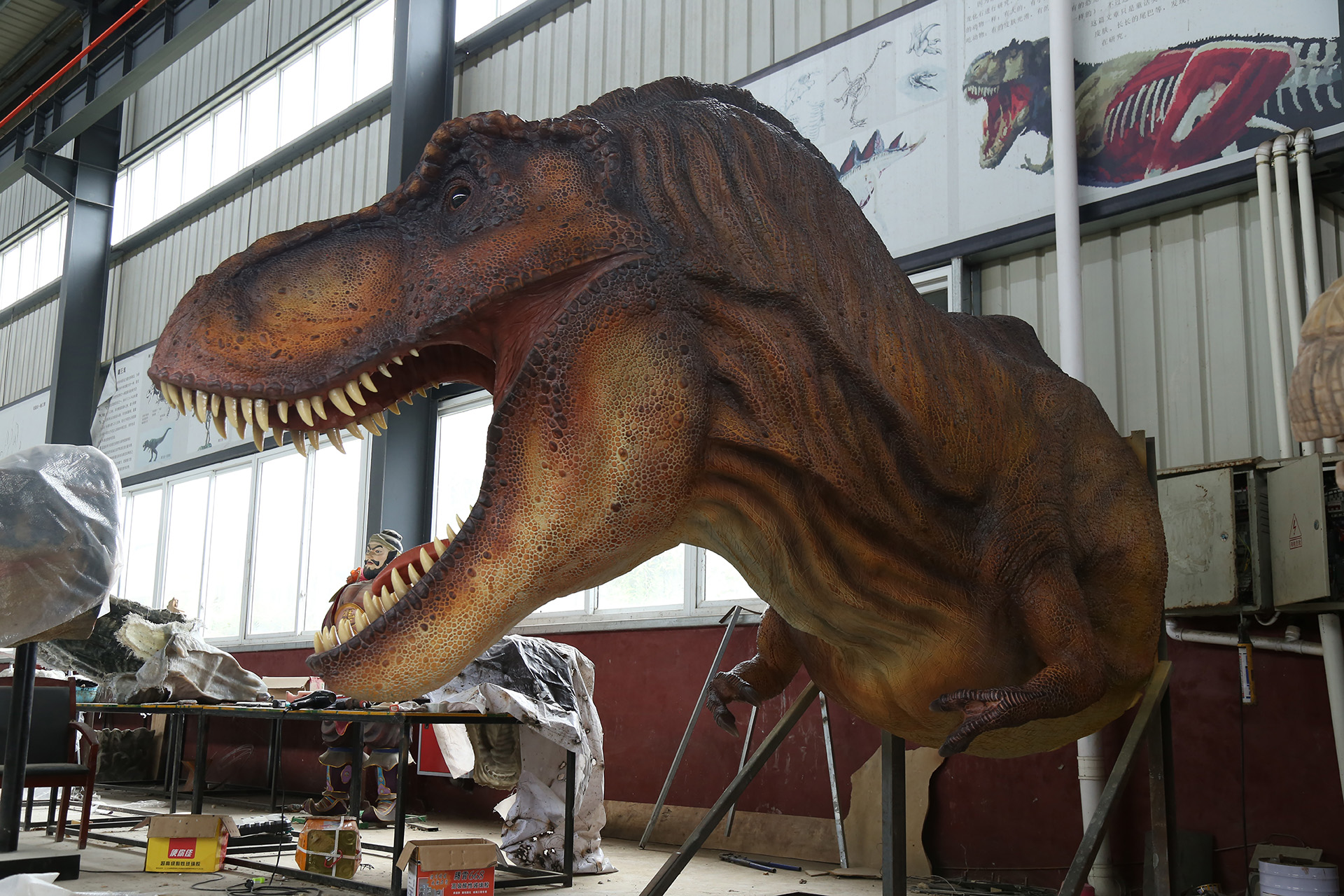
T-Rex half-body model — imposing posture with natural color gradients from deep brown to golden, razor-sharp teeth, and richly layered neck wrinkles.
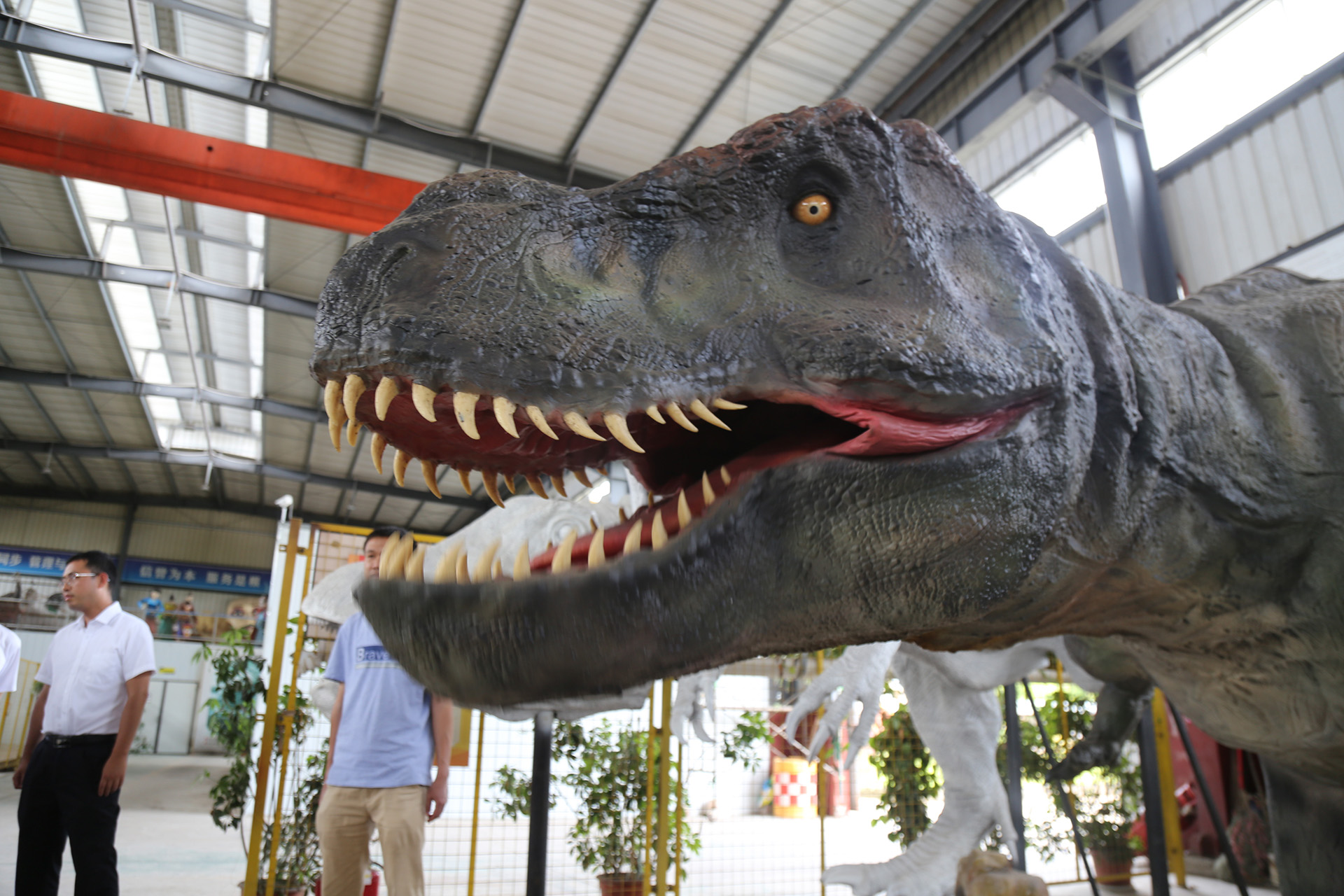
Alternate angle showcasing the T-Rex’s head contour, skin texture quality, and overall proportional accuracy.
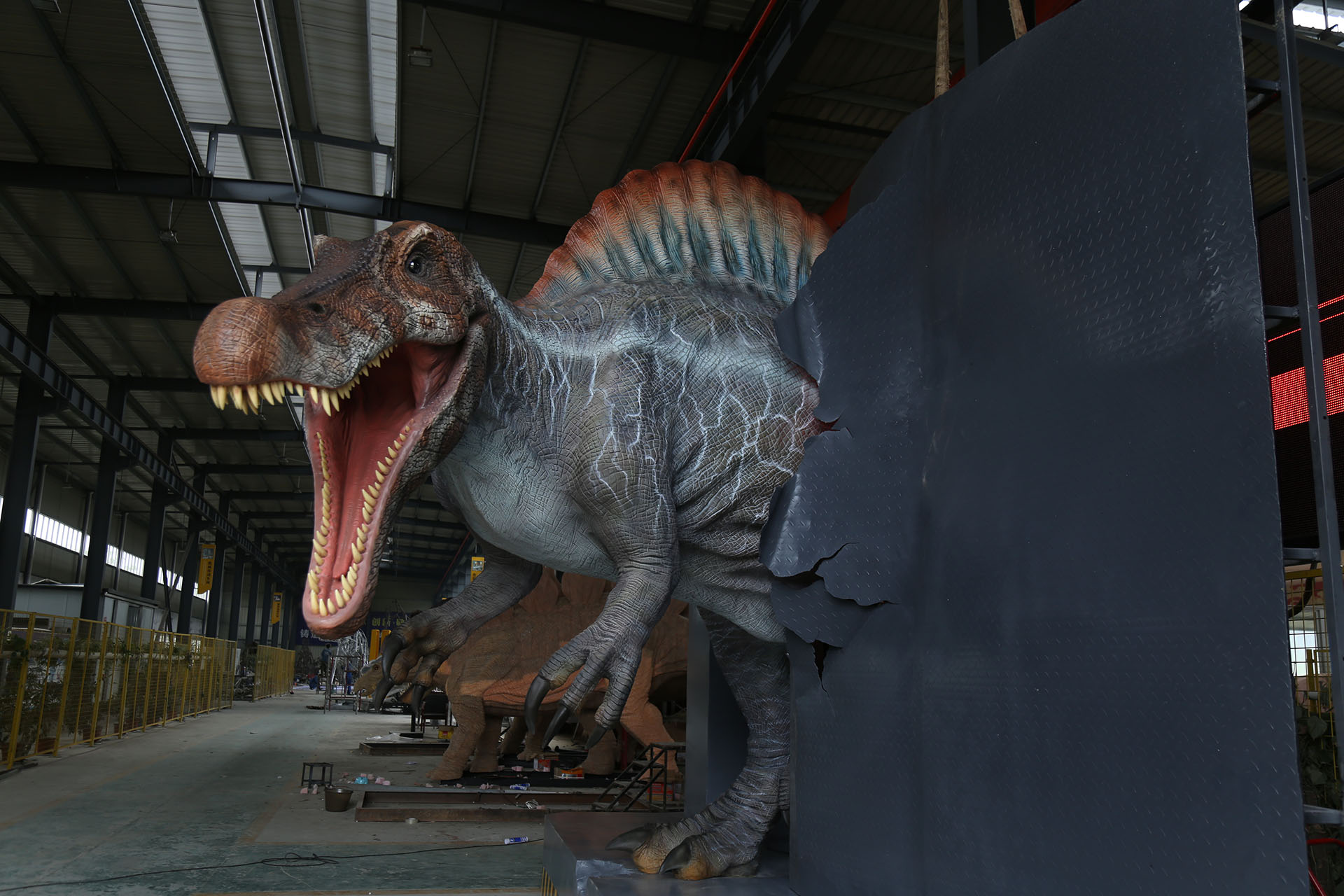
Full-body Spinosaurus in a dramatic wall-breaking pose — the signature dorsal sail transitions from red to blue with natural color blending.
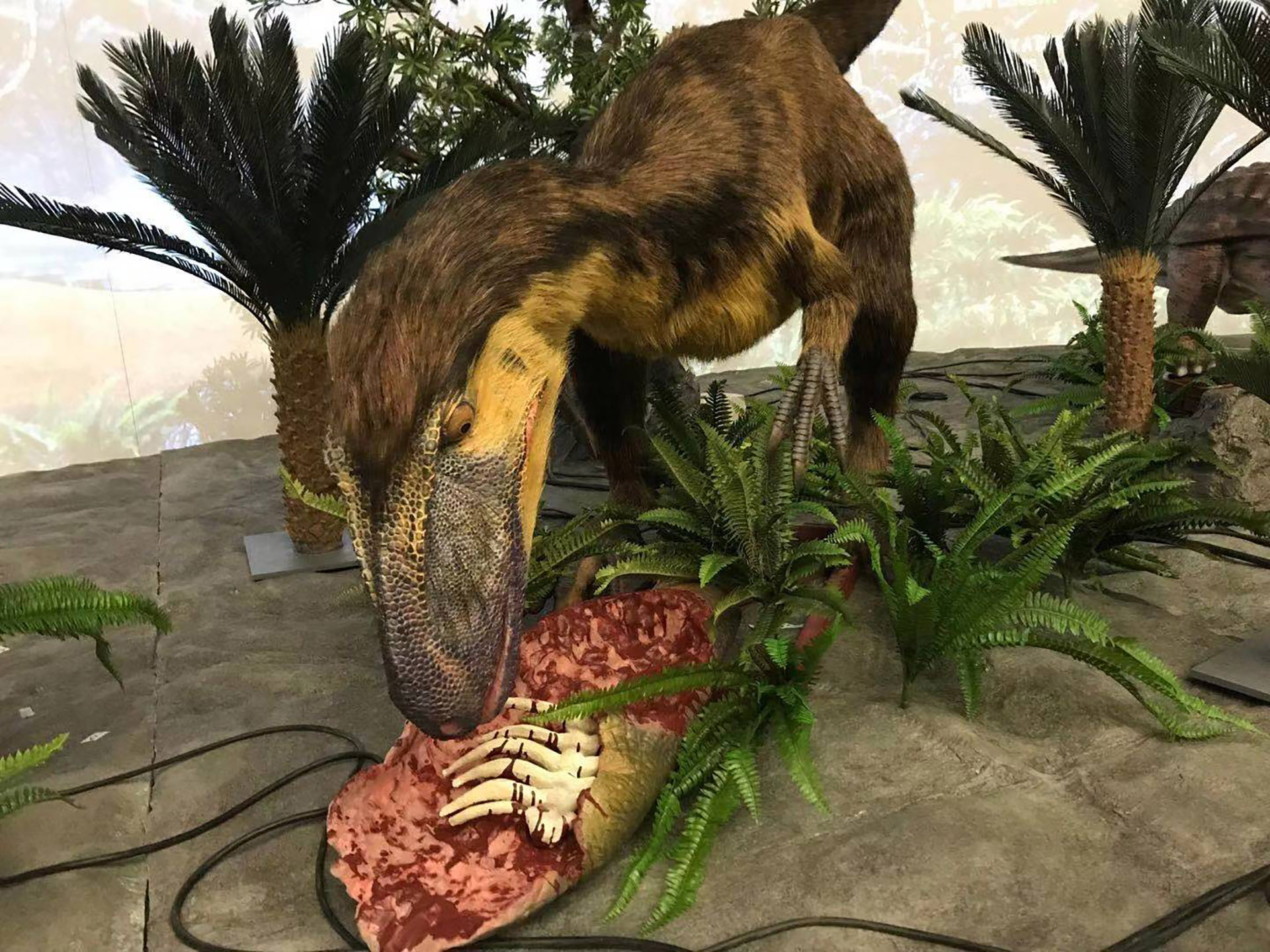
Tiamat (Talarurus) model demonstrating consistent manufacturing quality across diverse dinosaur species.
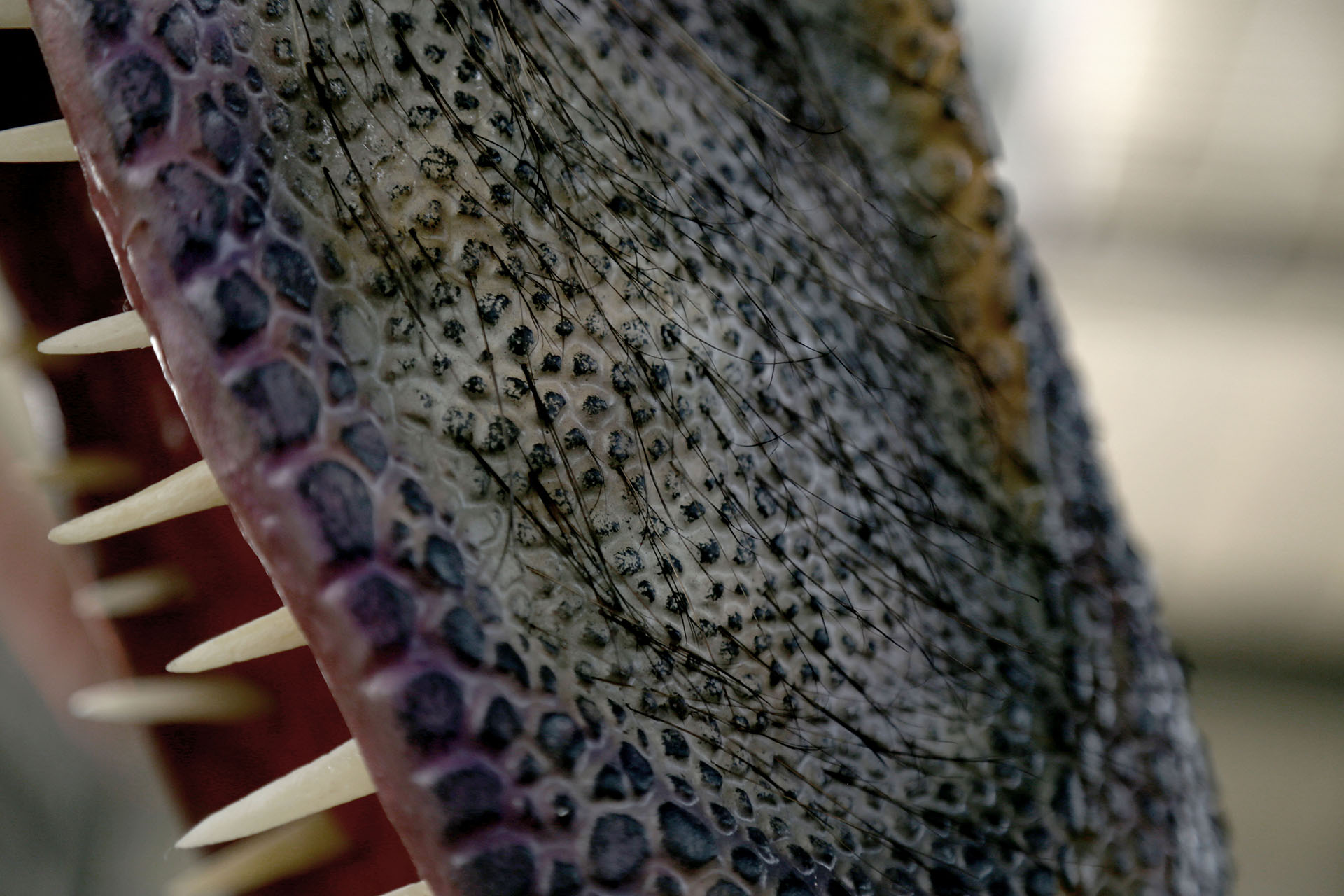
Tiamat skin close-up revealing the fine texture and color layering achievable with our molding process.
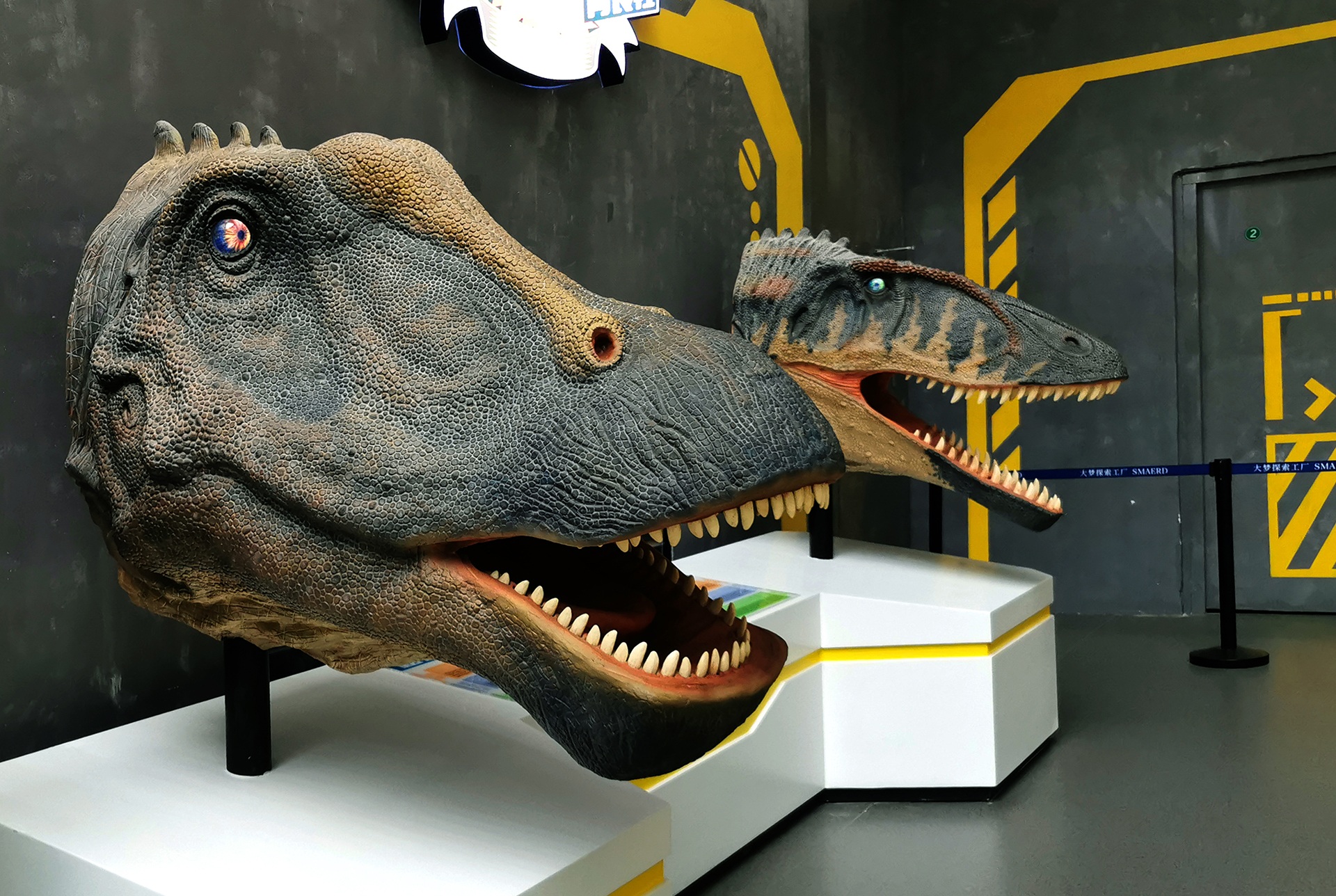
Diplodocus and Carcharodontosaurus displayed together — showcasing manufacturing maturity across multiple species and size ranges.
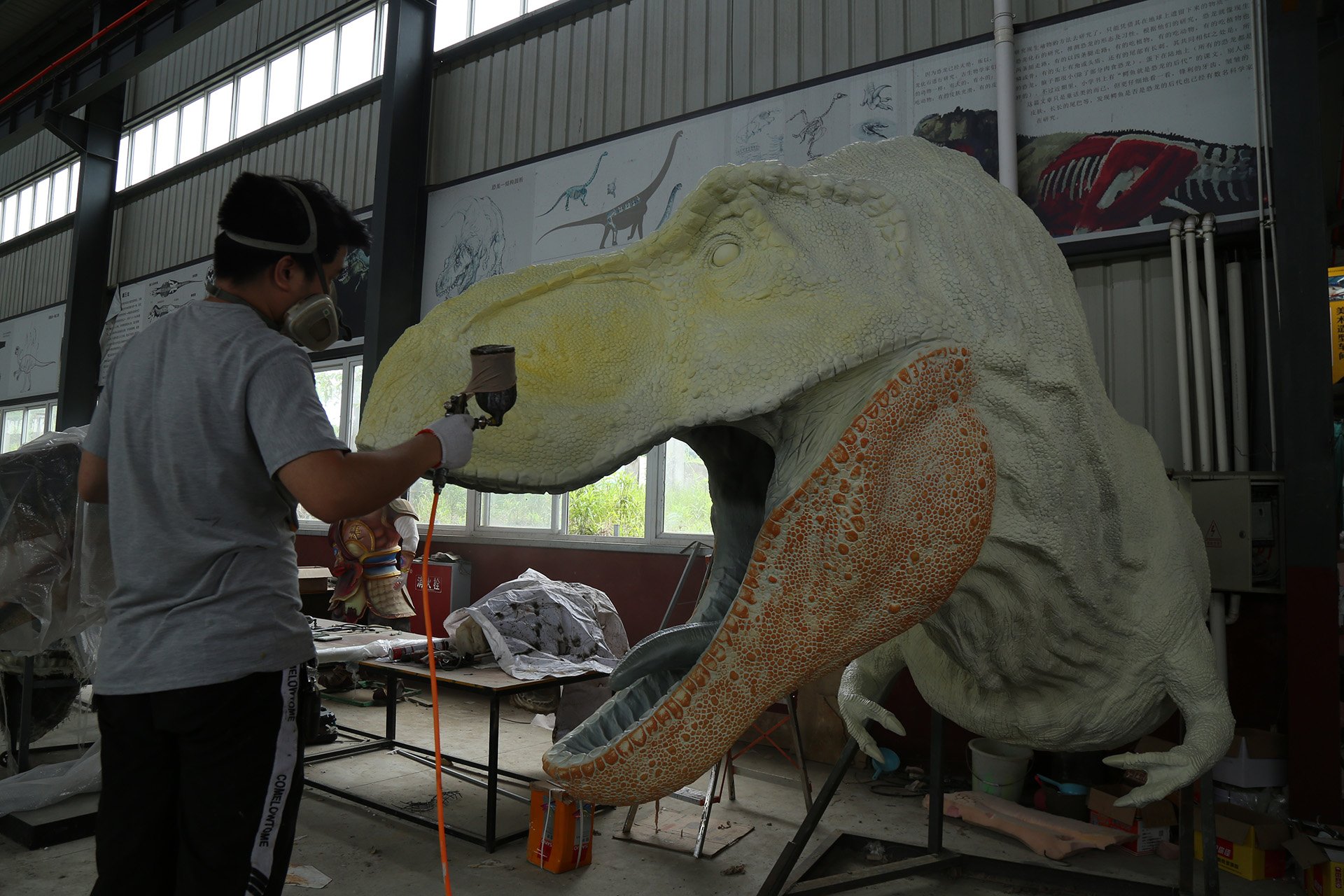
Post-overmolding finishing process — artisans refine seam lines and edges to ensure a flawless, seamless appearance.
Patented Technology Guarantee
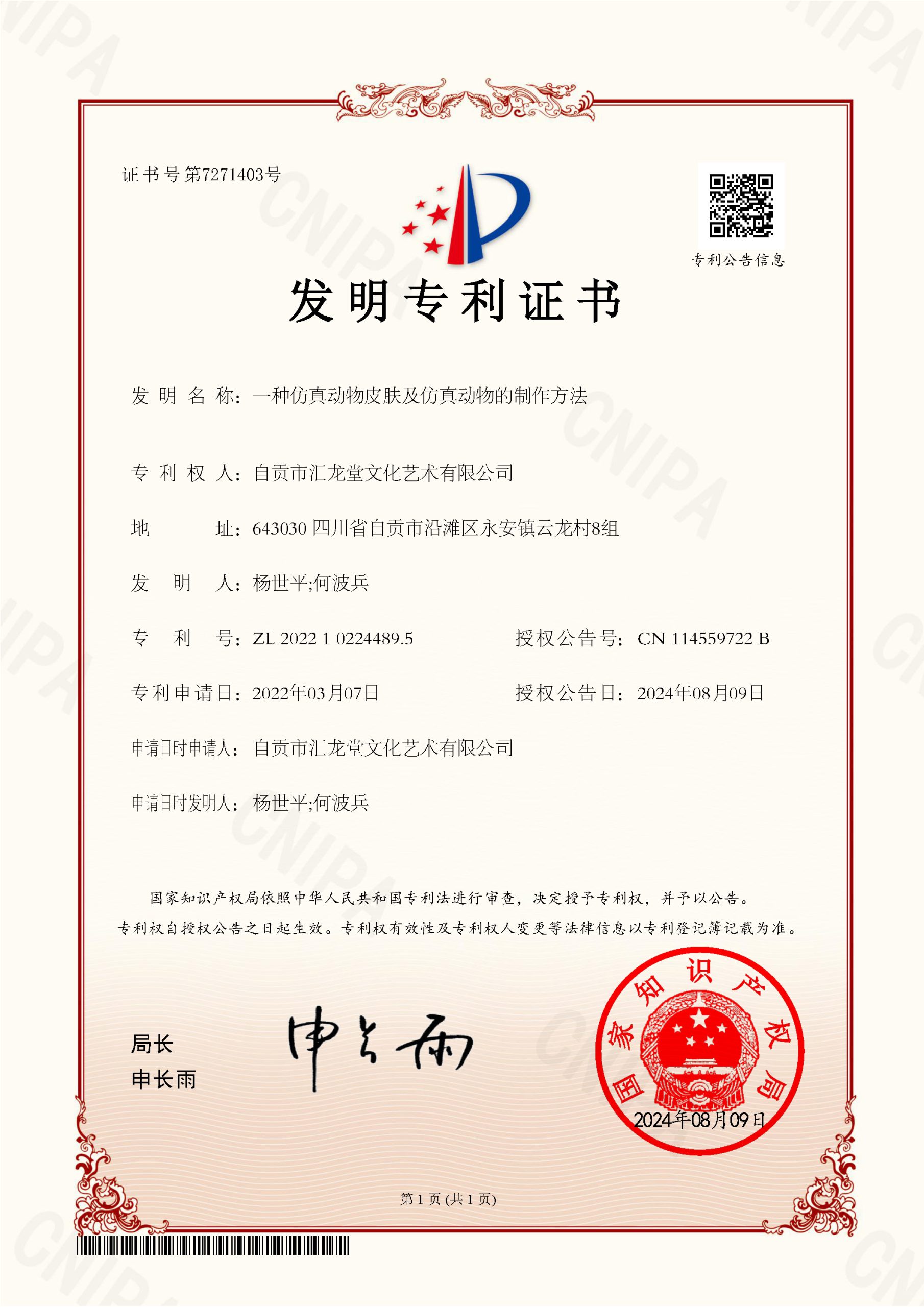
Our molded surface finish technology is protected by a Chinese national invention patent:
- Patent Name: A Method for Producing Simulated Animal Skin and Simulated Animals
- Patent Number: ZL 2022 1 0224489.5
- Authorization Publication No.: CN 114559722 B
- Authorization Date: August 9, 2024
- Patent Holder: Zigong Huilongtang Culture & Art Co., Ltd.
- Inventors: Yang Shiping, He Bobing
Recommended Applications
Where We Strongly Recommend Our Patented Technology:
- Museums & Science Centers — Permanent exhibitions demanding the highest realism
- Premium Theme Parks — Brand-defining installations with high visitor interaction
- Outdoor Tourist Attractions — Full sun and rain exposure resistance
- Commercial Complexes — High-traffic environments requiring pristine appearance
- International Projects — Long shipping timelines demand zero-defect delivery
Frequently Asked Questions
Q: How much more does the new technology cost?
A: Material and mold costs increase approximately 30-50% compared to traditional methods. However, when factoring in 5-year maintenance costs, total cost of ownership is actually lower.
Q: Does customization take longer?
A: First-time production requires mold fabrication (7-10 days), but molds are reusable. For batch orders, subsequent production is 40% faster than traditional methods.
Q: Can we use a hybrid approach?
A: Absolutely. Many clients choose molded hand-finished surface for high-interaction areas (face, forelimbs, tail) and traditional methods for less visible areas.
Q: Can damaged skin be repaired?
A: Yes. We provide hand-finished surface repair kits for minor damage. For major damage, skins can be returned for full section replacement.
Conclusion
The animatronic dinosaur industry is transitioning from “looks like” to “feels real.” Our patented molded hand-finished surface overmolding technology addresses all five critical pain points of the traditional method: hard feel, coarse texture, cracking, color fading, and poor water resistance.
Whether you’re planning a new exhibition or upgrading an existing installation, understanding this technology difference is essential. After all, a dinosaur that visitors want to touch, photograph, and share on social media — that’s an exhibit that delivers real value.
Interested in learning more? Contact us to discuss your project or schedule a factory visit.