A Christmas light festival is one of the highest-return winter investments a venue can make — but only when the budget is built correctly. This guide breaks down the real cost drivers, realistic ranges by scale, the line items buyers forget, and a timeline that protects your opening night.
Request a tailored Christmas quote →
What Drives the Cost of a Christmas Light Festival
No two Christmas light festivals cost the same, because almost every element is custom-built for the venue. But the price always comes down to the same five decisions:
- Scale and route length. A 300-metre illuminated trail costs more than a single plaza display, because it multiplies every downstream line item.
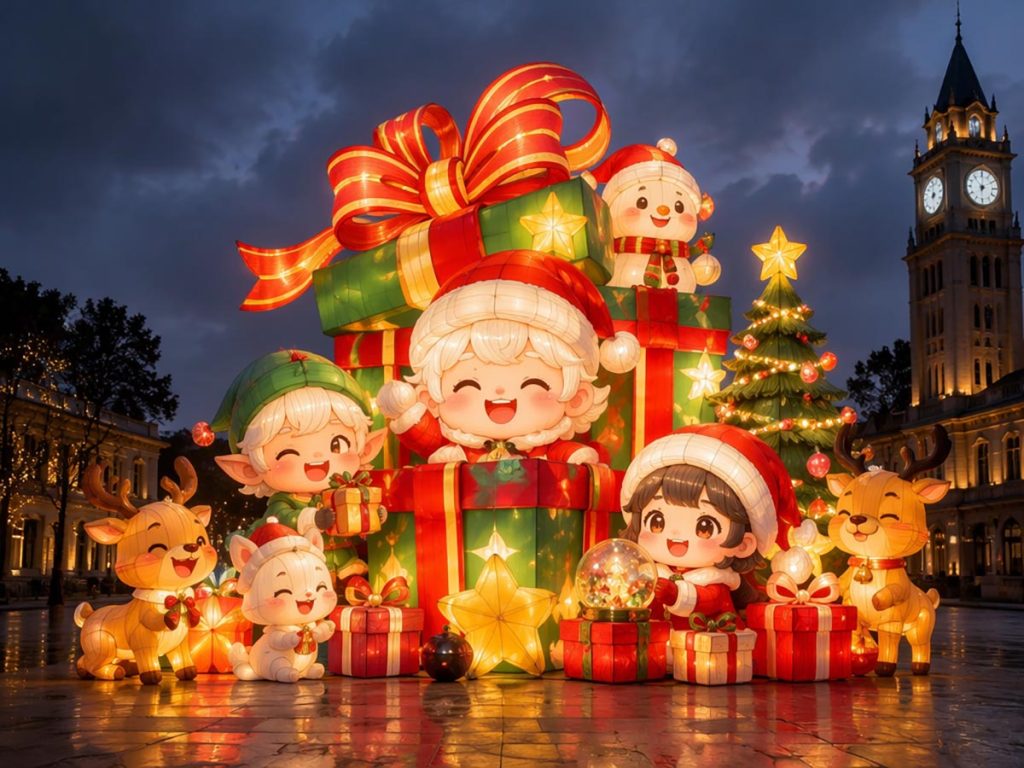
- Design complexity. Custom Christmas characters — Santa, snowmen, reindeer, candy canes, gift towers — require bespoke internal frames and silk-skin fabrication, while simpler geometric light forms cost less to produce.
- Materials and lighting quality. Energy-efficient LED fixtures and certified components cost more up front and less every night of the season. For venue safety we use UL-listed cables and CE-certified LED drivers in our builds.
- Installation and logistics. On-site assembly, cranes for tall pieces, and freight to your city are scoped per project by destination and venue layout.
- Operating window. A six-week Christmas season demands weatherproof construction, power planning, and a maintenance plan that a one-weekend event never needs.
If you are new to scoping holiday lighting, our christmas lighting show displays page walks through the display types venues commonly choose before any budget conversation starts.
Christmas Light Festival Cost Ranges by Scale
Because every piece is made to order, there is no fixed price list. The purchase price is driven by size, materials, and design style — the ranges below are planning-level estimates to anchor an internal budget, not quotes. Use them to decide which scale fits your visitor target, then request a tailored quote for your exact route.
- Small community display (3–8 illuminated pieces). A town-centre or shopping-mall installation with a decorated Christmas tree, a Santa lantern, and a few archways. Typically the lightest investment and the fastest to deploy.
- Mid-size park or botanical-garden show (10–20 pieces). A themed walking route with character lantern groups, light tunnels, and path lighting — the most common scale for paid-ticket winter events at parks and gardens.
- Large destination festival (25+ pieces, multi-zone). Zoo- or theme-park-scale events with multiple themed zones, giant centrepieces, interactive lighting, and nightly programming. This is where reuse planning across seasons pays off fastest.
For a wider view across non-Christmas lantern festivals, our lantern festival cost breakdown covers the same budgeting logic for general festival themes.
The Christmas Elements That Move the Budget Most
Christmas-themed festivals carry a few signature elements that general lantern shows do not. Plan for them explicitly:
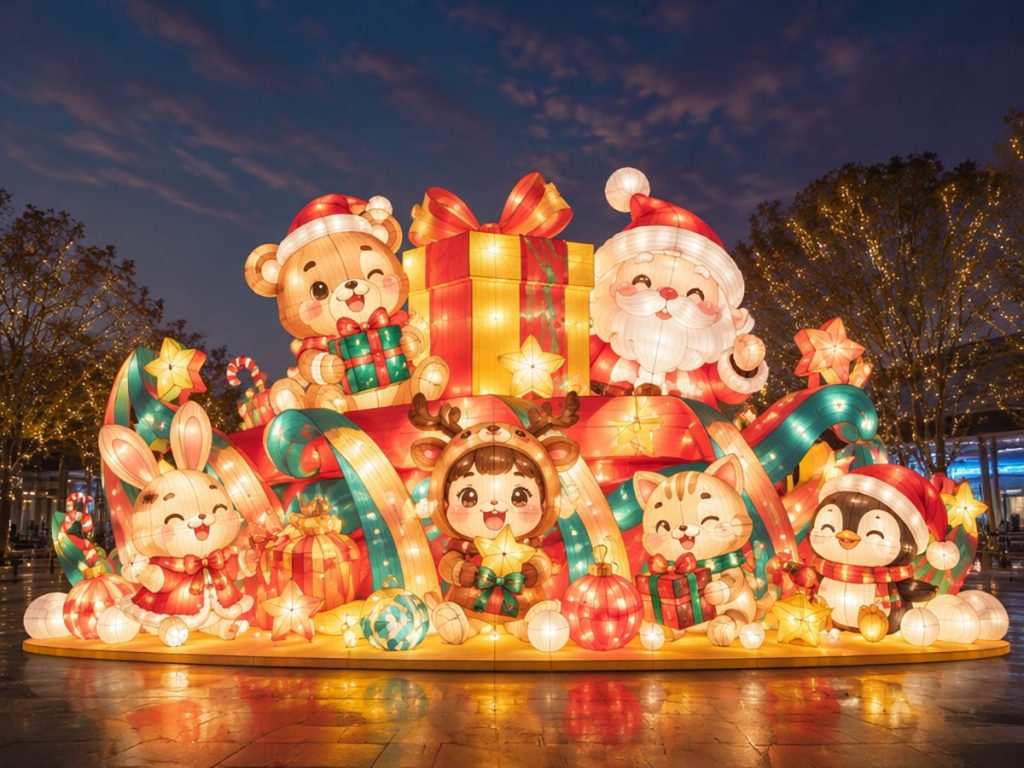
- The Christmas tree. A large illuminated tree is usually the visual anchor and the most photographed object on site — worth allocating a dedicated budget line.
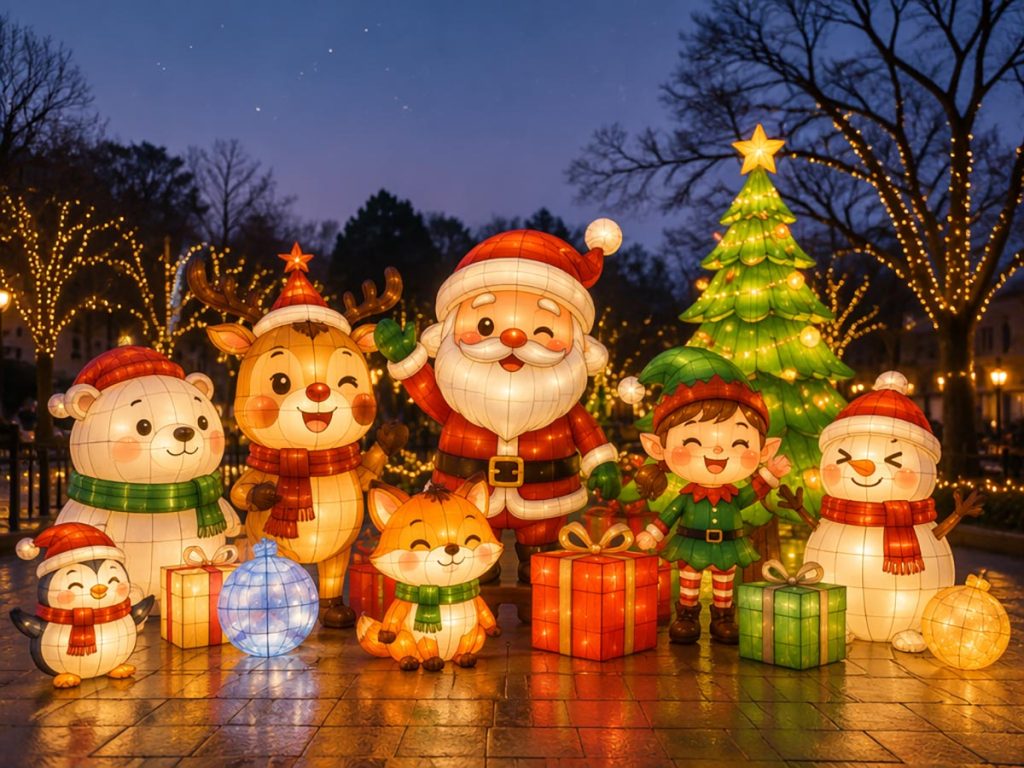
- Character lantern groups. Santa, snowmen, reindeer, gingerbread houses, and candy-cane figures create the storytelling that families photograph and share. Custom characters are fabricated to order, so lead time and design depth directly affect cost.
- Light tunnels and archways. Immersive walk-through tunnels are the highest-engagement element per square metre — and the easiest way to make a route feel larger than it is.
- Winter-proofing. December weather means frames and fixtures must handle cold, wind, and snow load. Specifying weather-resistant construction up front avoids mid-season failures that cost more than the upgrade.
Venues that already know their display mix can move straight to budgeting — our zoo Christmas lights buyer’s guide shows how a similar display plan is scoped in a zoo setting.
Hidden Costs That Appear After the First Quote
Most Christmas light festival cost overruns are not from the displays — they come from line items that sit outside the fabrication quote:
- Power and electrical work. Event-grade power distribution, generators, and licensed electricians for site hook-ups.
- Installation days and lifting equipment. Cranes for tall centrepieces, scissor lifts for tree lighting, and a qualified crew for the build window.
- Permits, insurance, and safety checks. Municipal permits, public-liability cover, and daily electrical safety inspection during the run.
- Nightly operations. Staffing, spot repairs, and spare fixtures for a six-to-eight-week season — budget about 10–15% of the build cost as an operating contingency.
Five Ways to Cut Cost Without Cutting the Magic
- Buy reusable structures. Metal-frame lanterns and hand-finished surfaces survive multiple seasons and multiple venues — the year-two cost drops to install and power only.
- Anchor the route around light tunnels. They deliver high immersion per dollar and make a small route feel large.
- Bundle design, fabrication, and installation with one supplier. We work as a single supplier across design, manufacturing, and installation, which removes hand-off gaps and duplicate coordination that separate vendors create.
- Specify LED and certified components from the start. UL-listed cables and CE-certified LED drivers lower nightly power draw and shrink generator and permit costs.
- Plan storage before you buy. Flat-pack crates and a storage plan turn a one-season expense into a rolling seasonal asset.
For the full cost-per-visitor and approval framework, our lantern festival budget and ROI guide pairs with this article as the procurement companion piece.
When to Start Budgeting for the Christmas Season
Christmas is the least flexible deadline in events: opening night is fixed, and the season runs for only six to eight weeks. Working backwards from a late-November opening:
- Q1 (January–March). Lock the budget, choose the route length, and brief suppliers on theme and scale.
- Q2 (April–June). Confirm design concepts and fabrication schedules so custom pieces are in production before the busy half of the year.
- Q3 (July–September). Finalise shipping, installation windows, and permits; order spare parts.
- Q4 (October–November). Deliver, install, test, and open. Early budgeting is the cheapest insurance against a missed launch date.
As a custom manufacturer with seasonal production windows, we scope projects per order — the earlier we lock your build slot, the safer your opening date. If you are also planning a winter theme beyond Christmas, our winter lantern festival manufacturer page covers adjacent seasonal programming.
What a Christmas Light Festival Returns
The budget conversation usually ends with ROI. Christmas light festivals generate revenue across four channels: ticket sales for the trail or drive-through, food and beverage spend inside the event, extended venue hours that lift December retail and dining, and free social-media reach from photo moments. Many venues also reuse the same structures for other seasonal programming, spreading the capital cost across multiple revenue events.
Frequently Asked Questions
How much does a Christmas light festival cost?
Because every display is custom-made to order, there is no standard price. Cost is driven by scale, materials, and design complexity — from a small community display of a few pieces to a large multi-zone destination festival. The fastest way to a realistic number is to define your route length and visitor target, then request a tailored quote.
What is the biggest factor in a Christmas light festival budget?
Scale. Route length and the number of custom pieces multiply every other line item — fabrication, installation, power, and operations. Halving the route length can cut more than half the budget.
Should we rent or buy Christmas lantern displays?
If the event repeats or tours, owning reusable metal-frame structures almost always wins from the second season onward. Single-use activations may favour rental.
How early should we start budgeting for Christmas lights?
Start in Q1 if possible. Custom fabrication and shipping are planned per project, and the Christmas season has a fixed opening night — early scoping protects your launch date and lets you lock a production slot.
Can a Christmas light festival budget also cover winter programming?
Yes. Many venues extend the same route into a winter light festival that runs past the holidays, spreading the capital cost across a longer season and more ticket nights.
Do you install the displays as well?
Yes. We work as a single supplier across design, manufacturing, and installation — concept, fabrication, logistics, and on-site assembly are scoped together so the budget stays connected from quote to opening night.
For a full holiday budget breakdown by scale, see our Christmas light festival cost guide.
Planning the full programme?