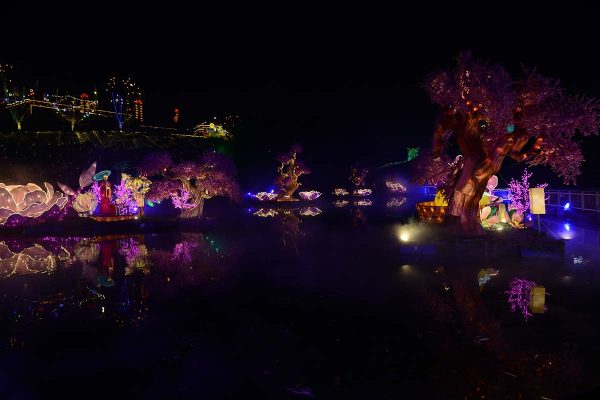
December is the quietest month for most zoos. Admissions fall after the summer rush, and the animal houses run at a fraction of their capacity. Zoo Christmas lights flip that: a walk-through light trail turns the shortest evenings of the year into the busiest nights of the season, and it does it without a single new animal on site.
This guide is written for the people who buy and plan those displays, zoo directors, event managers, and operations teams, and it answers the questions that actually decide a purchase: what to buy, what it really costs, how long it takes, and how to pick a supplier that will not leave you stranded in November.
Decide What the Lights Are For Before Pricing Anything
The cheapest mistake in zoo lighting is buying before defining the job. A display built to add a gentle glow to an existing path is a different purchase from a ticketed walk-through attraction, and the two budgets are not in the same league.
Ask three questions first:
- Is this an add-on or a destination? A handful of lit animal sculptures along the main loop adds atmosphere at modest cost. A full light festival with an entrance arch, themed zones, and a Santa village is a second attraction with its own ticketing, staffing, and marketing.
- What is your season? Zoo Christmas lights typically run six to ten weeks, from mid-November through early January. If your climate is harsh, plan for the weather, not just the calendar.
- Who is the audience? A display aimed at families with young children wants bright, friendly, storybook pieces. One aimed at evening diners and corporate events wants elegance and fewer, larger set pieces.
Once those three answers are fixed, every other decision, budget, layout, and supplier choice, follows naturally.
What a Zoo Christmas Light Display Actually Costs
Zoo Christmas lights are priced per piece, not per square metre, and the total depends on three things: the size of the display, the number of pieces, and the level of customisation.
- Small add-on displays, a dozen lit animal and Christmas pieces placed along an existing route, are the entry point and suit zoos testing the idea for the first season.
- Mid-size trail installations, the most common format, combine twenty to forty pieces across themed zones, with a couple of larger centrepieces anchoring the route. This is the range where most zoos land for their second and third seasons.
- Full festival builds, fifty or more pieces with walk-through tunnels, a hero entrance piece, and branded zones, are the top end and are usually planned as multi-year investments that pay back across several seasons.
Across the industry, a realistic planning figure is that the display cost, the build, shipping, installation support, and spares, should be treated as a line item in the venue’s seasonal event budget rather than a one-off equipment purchase. A useful habit is to divide the total by the number of paying visitors the trail is expected to draw; if the cost per visitor stays below the ticket price, the display funds itself. Most zoos recover a mid-size trail’s investment in its first season and run profit in the second.
For a structured breakdown of the factors that move the price, see our lantern festival cost guide, which covers the same cost logic for festival lighting in general.
Animal Safety Comes First, Not Last
A zoo is not a city square. The animals are not spectators, they are residents, and a light display has to live around them without disturbing them. This is the part of a zoo buy that has no equivalent anywhere else, and it should shape the whole plan.
- Keep displays out of animal habitats. Lights go on visitor routes and behind barriers, never inside enclosures or within reach of any species that could chew a cable or pull a fixture.
- Watch the light levels. Some species are sensitive to bright, flashing, or suddenly appearing light. Use steady illumination near enclosures, and keep any strobing or rapid colour changes to zones away from habitats.
- Guard the power. Every cable run must be armoured or buried, every junction box locked, and every fixture on an earth-leakage protected circuit. In a venue where the public and animals both share the space, electrical safety is not a compliance checkbox, it is the whole point.
- Check noise and vibration. Anything with moving parts should be placed so its motors and mechanisms are out of sight and well away from enclosures.
Work these rules into the design before you sign anything. A supplier who has built for zoos before will raise them themselves; one who has not may need to be reminded.
Choose Display Types That Fit a Zoo
Not every lantern suits a zoo, and the pieces that work best are the ones that extend what the venue already is. The strongest zoo displays lean on these types:
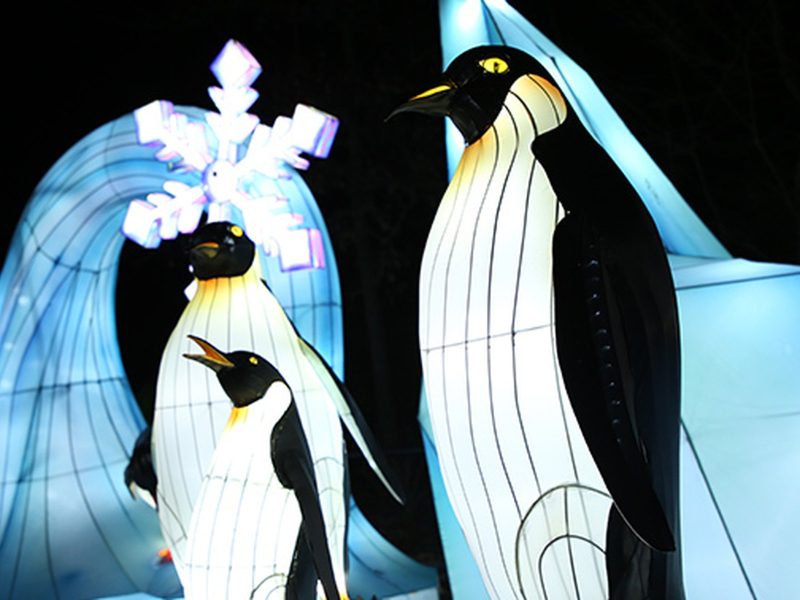
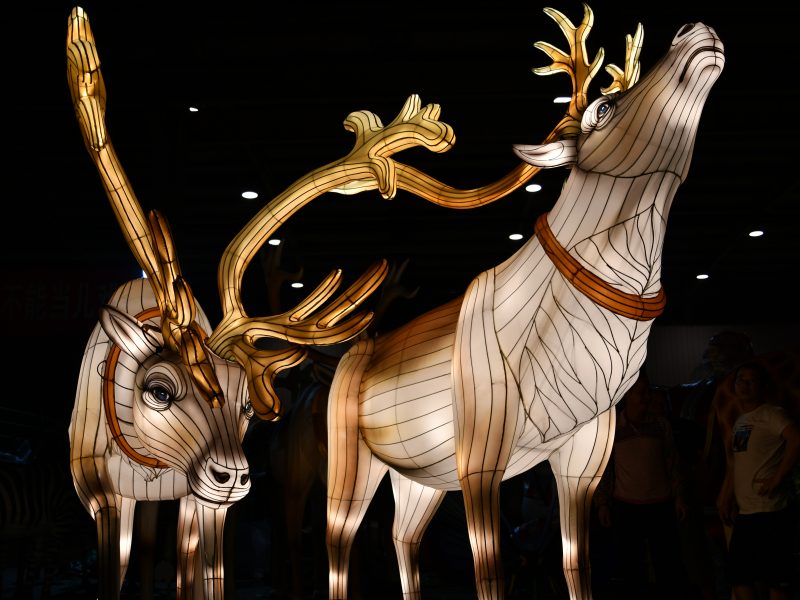
- Animal-themed lanterns are the natural fit. Lit polar bears, penguins, reindeer, and winter wildlife sit comfortably beside the real exhibits and blur the line between the animal park and the light trail. See how to choose animal lanterns for your event for a fuller run-through.
- Winter scenes and ice-age pieces, igloos, glacier arches, and snow globes, build a coherent “winter at the zoo” story that works in any climate, even where real snow never falls.
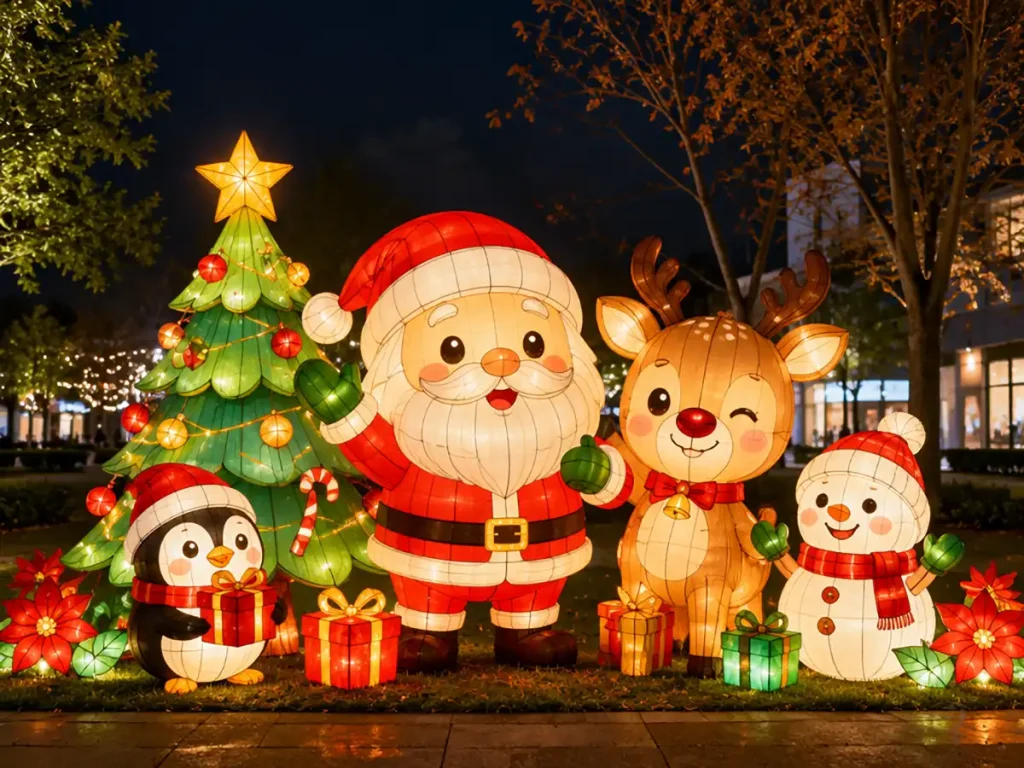
- Classic Christmas centrepieces, Santa, reindeer families, and gift towers, anchor the entrance or the main plaza where the crowds gather and the photos get taken.
- Walk-through elements, a lit tunnel or archway, create the “can’t miss” moment that sells tickets and keeps visitors moving along the route.
Resist the urge to order everything at once. Two or three strong themes beat a scatter of twenty disconnected pieces, and a themed trail reads as a planned event where a random collection reads as a stockroom.
Plan the Timeline Backwards from Opening Night
Zoo Christmas lights are made to order, and the calendar is unforgiving. Work backwards from your target opening date and add margin at every step.
- Design and proposal: four to eight weeks. A good supplier works from your site plan, not a catalogue, and that takes a couple of rounds.
- Production: six to twelve weeks, longer for fully custom pieces. Hand-built lanterns do not come off a shelf.
- Sea freight: four to six weeks to the US or Europe, plus customs clearance. Air freight exists and is faster, but it is a different price class.
- Installation: two to four weeks on site, depending on trail length and crew size.
Add those up and a custom display ordered in September for a late-November opening is already tight. Order in July or August and you have room to breathe. The venues that open on schedule are the ones that started early, not the ones that tried harder.
How to Vet a Supplier
The factory-direct world that makes most festival lanterns is concentrated in Zigong, China, and the difference between suppliers is mostly invisible in a photo. Vet the candidate the way you would vet any long-term vendor:
- Ask for zoo or park references. A supplier who has built for zoos knows the animal-safety questions before you raise them. If they cannot name a single zoo project, treat that as a risk.
- Check the materials spec. Internal frames, fabric that is rated for outdoor use, and electrical components with UL-listed cables and CE-certified LED drivers are the floor, not the ceiling.
- Demand a design round before the price. A supplier who can work from your site plan and return a layout with themes, piece sizes, and sightlines is a partner. One who only quotes from a catalogue is an order-taker.
- Get installation and spares in writing. Who installs it, who trains your crew, and how spares are replaced mid-season matters more than the brochure promises.
- Ask about shipping to your door. Landed cost, including freight, customs, and any import fees, is the number that matters. See how festival lanterns are shipped from China for the full picture.
For a broader look at what a factory-direct lantern partner should offer, see how zoo lantern festival displays are built.
Common Mistakes Zoo Buyers Make
- Buying pieces before defining whether the display is an add-on or a destination.
- Treating the budget as an equipment purchase instead of a per-visitor event cost.
- Planning the trail without routing it around animal habitats and quiet zones.
- Ordering in September for a November opening, then discovering production plus shipping cannot make the date.
- Choosing a supplier on photo quality alone, without checking zoo references or the electrical spec.
The Short Version
Zoo Christmas lights are a proven way to turn December’s quiet month into a paying season. Define the display as an event, plan it around animal safety, choose pieces that extend the zoo’s own theme, start the timeline early, and vet the supplier on references and materials, not pictures. Get those five things right and the trail sells itself; get them wrong and no amount of lights fixes it.
If you are planning a zoo Christmas light display for the 2026 season, we are happy to talk through the numbers with your site plan in hand. Request a free design proposal and quote and we will come back with a layout and a landed-cost estimate, no obligation.
Lighting is only one part of a memorable zoo visit. Many zoos now pair their holiday light trails with lifelike animal exhibits that draw crowds year-round. Our animatronic African elephant is a popular choice for zoo and wildlife-park installations, bringing a recognizable, family-friendly centerpiece to any exhibit space.
Running a seasonal programme?
- zoo christmas light festival — how a complete seasonal build is planned and installed