Animatronic Dinosaurs Collections
Animatronic Dinosaurs & Life-Size Exhibits
Animatronic Dinosaurs — The World's Most Realistic Prehistoric Exhibits
Command attention with our animatronic dinosaurs — the undisputed kings of prehistoric displays. Each life-size dinosaur statue is built on a reinforced internal frame with our proprietary animatronic system, featuring synchronized movements, realistic roaring sound effects, and motion-activated responses that create genuine surprise moments for visitors.
Scientific accuracy meets entertainment value: our moving dinosaur displays are faithfully reconstructed based on the most complete fossil specimens, from the massive T-Rex "Sue" skeleton to the iconic Triceratops. Every proportion reflects current paleontological understanding, while dynamic animation brings these ancient creatures to life in ways that spark imagination and drive social media sharing.
Species Collection
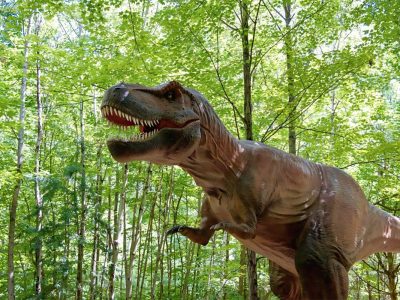
Tyrannosaurus Rex — The world's most famous predator, life-size with roaring animation
Brachiosaurus — Towering long-necked herbivore reaching 10+ meters high
Velociraptor — Pack-hunting intelligence in compact, dynamic poses
Triceratops — Triple-horned defender with authentic frill details
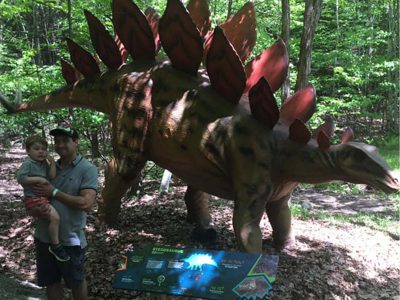
Stegosaurus — Iconic plated herbivore with tail spike defense display
Available in multiple animation packages: Basic (head + jaw), Standard (full head + tail), and Premium (walking motion on track). Configure your animatronic dinosaur for your specific venue.
New to sourcing animatronic dinosaurs? Read our complete 2026 buying guide before you request quotes.
→ Themed Lantern Displays for Events & Venues — read the guide
All Animatronic Dinosaurs
Animatronic Dinosaurs
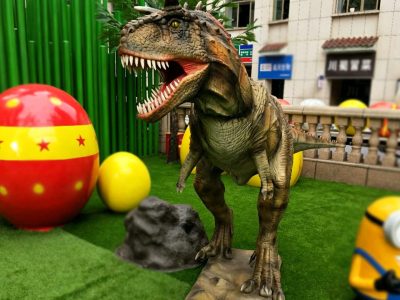
Life-Size Animatronic Carnotaurus Dinosaur Statue
Bring the Cretaceous period to life with our life-size animatronic Carnotaurus statue…
Animatronic Dinosaurs
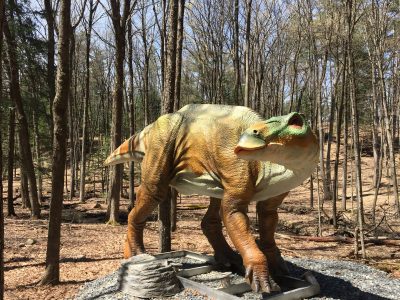
Life-Size Animatronic Hadrosaurus — Realistic Duck-Billed Dinosaur for Museums & Parks
Overview This life-size animatronic hadrosaurus recreates one of North America's most famous…
Animatronic Dinosaurs
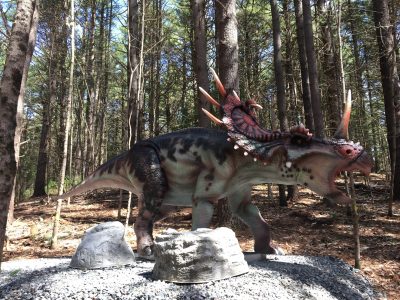
Life-Size Animatronic Styracosaurus — Realistic Horned Dinosaur for Museum & Park Displays
Overview This life-size animatronic styracosaurus brings one of the most visually striking…
Animatronic Dinosaurs
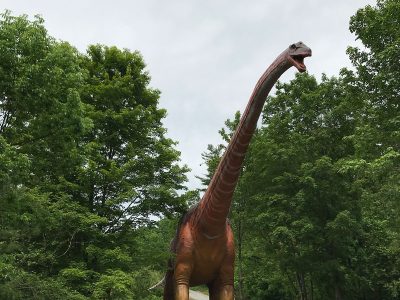
Animatronic Argentinosaurus — Lifesize Sauropod Dinosaur Exhibit
Some dinosaurs impress by size alone. The Argentinosaurus went further — palaeontologists…
Animatronic Dinosaurs
Life-Size Animatronic Stegosaurus — Realistic Jurassic Dinosaur for Theme Parks & Museums
Overview Add one of the most beloved dinosaurs to your exhibition with…
Animatronic Dinosaurs
Realistic Animatronic Tyrannosaurus Rex Model — Outdoor Dinosaur Exhibit
Overview This life-size animatronic Tyrannosaurus Rex is engineered to deliver a museum-grade…
- ← Previous
- 1
- 2
Buying Guide
How to Specify an Animatronic Dinosaur
Size, species, motion, power and installation — the decisions that actually change what you get. Written for museum curators, park operators and zoo teams who are specifying an animatronic exhibit for the first time.
What Size Should Your Animatronic Dinosaur Be?
Size is the first decision because it drives everything downstream — shipping method, foundation, crane access and how many people can stand in front of it. Compact pieces around 1–2 m suit indoor museum cases and retail atriums. Mid-range 4–8 m animals work in most outdoor park settings and still travel in a standard container. Anything above 12 m is a landmark commission: it needs a foundation, a crane, and a route survey before production is scheduled.
Bigger is not automatically better. A 20 m dinosaur in a space built for 8 m will crowd the sightlines and block pedestrian flow. We would rather size a piece to your space and let the motion and sound carry the drama.
Which Species Draw the Biggest Crowds
Tyrannosaurus remains the default hero piece — people know the silhouette before they arrive. Velociraptor and other small theropods work well in pairs or packs, where the motion reads as social behaviour. Long-necked sauropods fill vertical space and are visible from a distance, which makes them useful as wayfinding landmarks. Armoured and plated species give you a very different outline, which matters if you already have a theropod and want visual variety.
Our guide to the most popular animatronic dinosaurs covers the choices in more detail, and Oviraptor and Hyena are examples of less obvious species that still read clearly.
Indoor vs Outdoor Animatronic Installations
Outdoor pieces are built to an outdoor-rated, weatherproof standard: sealed motion compartments, drainage so water cannot sit inside a body cavity, and anchoring designed for your local wind load. They stay out through a full season and are winterised or stored according to your climate.
Indoor installs have their own constraints — floor loading, door and lift dimensions for getting the piece into the building, and noise. An animatronic that sounds fine in a park can be intrusive in a gallery, so tell us if the room has hard acoustics and we will specify quieter actuation. See dinosaur park exhibits for outdoor layout examples.
Movement, Sound and Interactive Sensors
Standard motion sets cover head turn, head raise and lower, jaw open and close with synchronised sound, blinking eyes, tail sweep, forelimb movement and body rise and fall. You choose which of these a piece has — not every dinosaur needs all of them, and fewer moving parts means less to look after.
Trigger options range from continuous loop to motion sensor, push button, coin or token operation, and timed show sequences. Motion sensors are the usual choice for trails, because they make a static-looking exhibit come alive just as a visitor arrives.
If you are weighing actuation types, our comparison of hydraulic versus pneumatic movement and our overview of the key systems inside an animatronic explain the trade-offs in plain language.
Museums, Theme Parks and Zoos: What Each Venue Needs
Museums usually want scientific accuracy first — correct posture, proportions consistent with current research, and restraint on sound and motion so the piece supports the interpretation rather than competing with it. Theme parks want the opposite: drama, volume, and a moment people will film. Zoos sit in between, and often pair animatronics with living-collection messaging.
Tell us which of these you are. We adjust posture, finish, sound level and motion range accordingly, and we will say no if a request would make the piece look wrong for its setting. Our buying guide for museums and theme parks goes deeper on this.
Planning Your Exhibit Layout
Leave more room than feels necessary. A moving dinosaur needs a clear safety margin on every side where a limb or tail travels, plus a viewing area in front where people will stop and film. Blocking that area with benches or signage is the most common layout mistake we see.
Also plan the approach. An animatronic seen head-on from 30 metres away is a completely different experience from one discovered around a bend at five metres. If the reveal matters, tell us and we will orient the piece and its sensor trigger to suit.
Power, Control and Daily Operation
Each piece runs from its own control box, so you can power down individual animals without closing the whole exhibit. We supply the electrical specification — voltage, phase and current draw — early enough for your contractor to run cabling before delivery, which is the single biggest cause of installation-day delays.
Day-to-day running is a morning start-up and an evening shutdown, with a visual check of anchoring and cable condition. We provide an operator checklist and a basic fault-finding guide with every order.
Shipping, Crating and On-Site Installation
Animatronics ship in wooden crates, broken into sections: body, neck or tail, limbs and head. Larger animals are designed around container dimensions from the start, so nothing arrives needing to be cut apart. We supply a packing list keyed to the assembly drawings.
On site, two routes work: our team installs and commissions, or your contractor installs from our drawings with remote supervision. Most overseas clients take the second option. Either way, we stay on call through commissioning.
Animatronic Dinosaur FAQs
Can you build a species from our own artwork or a fossil find?
Yes, and museums ask for this often. Send reference images or reconstructions and we model from them.
How loud is it?
Audio level is adjustable and can be muted entirely for indoor or noise-sensitive settings. Motion noise depends on the actuation type — tell us the setting and we will specify accordingly.
What does it need electrically?
Standard local supply in most cases. We confirm voltage and phase for your country at quotation stage and supply the exact specification for your electrician.
Do you also make skeletons and fossil replicas?
Yes — see dinosaur skeletons and fossil replicas. Many museums pair a full-body animatronic with a cast skeleton in the same gallery.
Can the animatronics go outdoors permanently?
They are built for outdoor seasonal use. For permanent year-round exposure we specify additional protection — tell us your climate and we will advise what is realistic.