Walk past a large animatronic dinosaur and the movement feels real — the chest rises with each breath, the head turns smoothly, the tail sways. What you cannot see is the cylinder doing the work. Behind every convincing movement is a choice: hydraulic power, pneumatic (air) power, or electric actuation. For decades, the two heavyweights in animatronic motion have been hydraulic and pneumatic cylinders. Both push, pull, and rotate. But which makes movement feel more realistic, and which is the right choice for your exhibit?
This article compares hydraulic and pneumatic cylinder technology as used in animatronic dinosaurs and animals — not in theory, but as applied in outdoor festival, zoo, and museum installations around the world.
How Each System Works
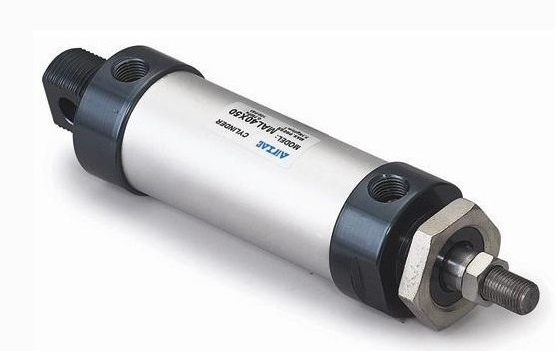
At the core, both hydraulic and pneumatic cylinders convert fluid pressure into linear motion. The difference is what fills the cylinder:
| Hydraulic | Pneumatic | |
|---|---|---|
| Working fluid | Oil (incompressible) | Air (compressible) |
| Power source | Electric motor + pump | Air compressor |
| Pressure | High (100–500 bar) | Lower (6–10 bar typical) |
| Force output | Very high, precise control | Moderate, harder to fine-tune |
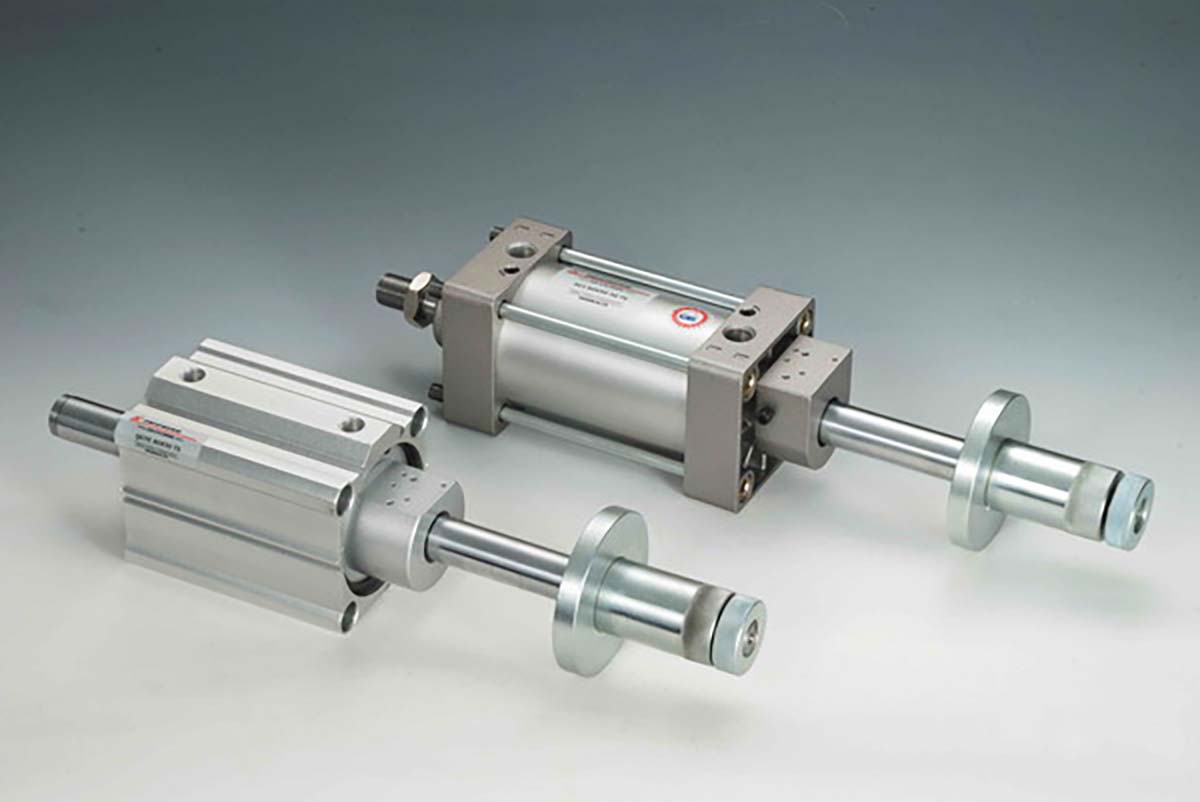
The incompressibility of oil is the fundamental reason hydraulic cylinders deliver smoother, more controllable motion. Air compresses, which means pneumatic cylinders can feel springy or jerky at the extremes of their stroke.
Movement Quality: Smooth vs. Snappy
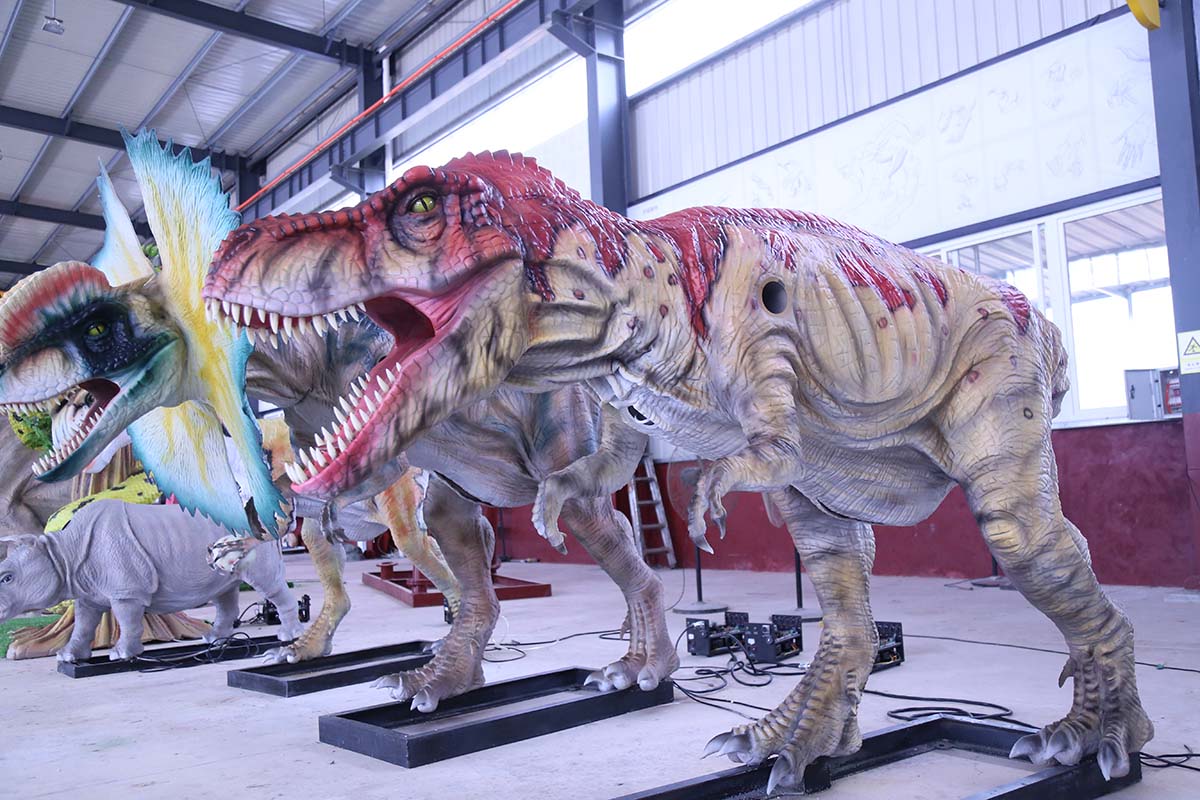
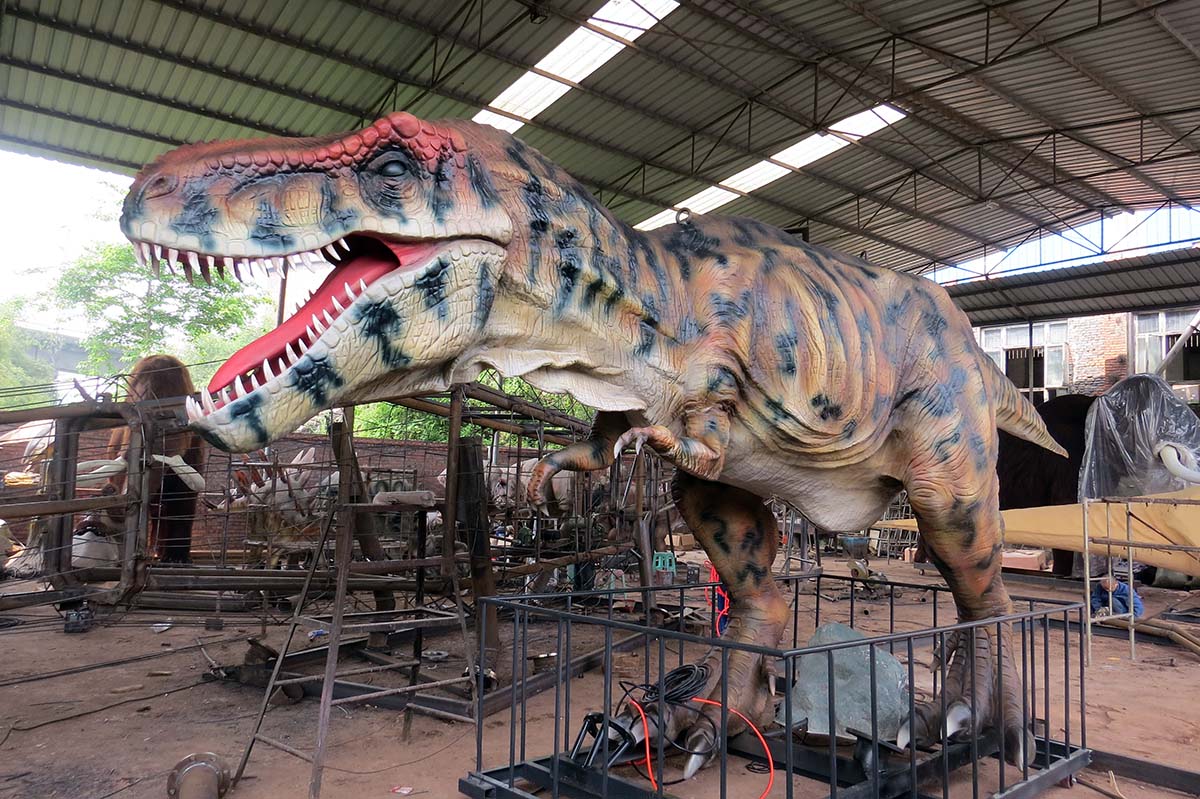
Hydraulic movement is smooth and gradual. Because oil does not compress, the cylinder moves at exactly the speed you command. A T-Rex head turning to look at visitors, a brachiosaurus neck rising slowly — these natural, fluid motions are hydraulic territory. The tech naturally mimics the slow, heavy gait of large animals.
Pneumatic movement is faster and snappier. Air compresses and releases quickly, so pneumatic cylinders accelerate and decelerate abruptly. This works well for small, fast motions — a blinking eye, a twitching claw — but can look mechanical on large-scale figures where audiences expect weight and inertia.
| Motion Type | Better With | Example |
|---|---|---|
| Slow sweep (neck, tail) | Hydraulic | Brachiosaurus neck rising |
| Heavy body motion (walk, turn) | Hydraulic | T-Rex torso rotation |
| Fast snap (jaw, claw) | Pneumatic | Raptor mouth snap |
| Subtle breath effect | Hydraulic | Dinosaur chest expansion |
| Rapid vibration (roar effect) | Pneumatic | Head shake on roar |
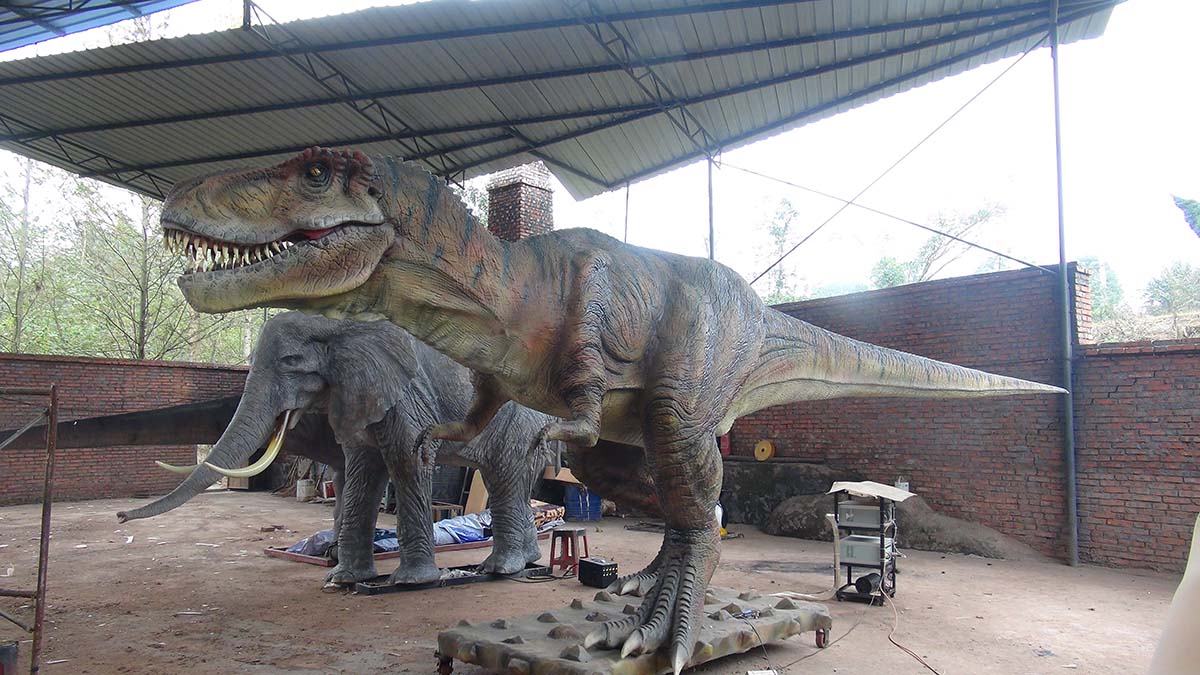
See it in action: Watch the video below to compare the snappy, percussive motion of a pneumatic T-Rex against the smooth hydraulic movement described above.
Realism Depends on Size
The single biggest factor in choosing between hydraulic and pneumatic is figure size. A 4-meter velociraptor has different demands than an 8-meter T-Rex:
- Large figures (6 m+) → Hydraulic tends to win on realism. At this scale, weight and inertia demand high-force, smooth actuation that only hydraulics deliver cleanly. Pneumatic cylinders large enough for big figures become awkwardly sized and deliver force in surges.
- Medium figures (3–6 m) → Hybrid systems are common. Hydraulic cylinders drive the heavy body axes; pneumatic actuators handle fast, light motions like mouth snap and claw curl.
- Small figures (< 3 m) → Pneumatic or electric actuation is often sufficient and simpler to maintain.
Outdoor Durability
Animatronics for festivals and zoos live outdoors, in rain, humidity, and temperature swings. This reshapes the reliability conversation.
Hydraulic systems:
- Sealed oil circuits resist moisture intrusion well
- Oil temperature affects viscosity — cold starts can be sluggish
- A leak is messy and stops the figure; must be addressed immediately
Pneumatic systems:
- Air is clean — a leak is harmless and may go unnoticed
- Moisture in compressed air can freeze or corrode in cold weather
- Compressor noise can be an issue near quiet exhibits
In practice, properly maintained hydraulic systems have proven highly reliable in outdoor installations from theme parks to tropical zoo exhibits. The oil circuit is closed and sealed; routine visual inspection catches issues before they become failures.
Cost and Maintenance
| Hydraulic | Pneumatic | |
|---|---|---|
| Upfront cost | Higher (pump, reservoir, hoses) | Lower (compressor + lines) |
| Running cost | Low (efficient pump) | Higher (compressor energy + air drying) |
| Maintenance skill | Requires hydraulic knowledge | Standard mechanical skill |
| Common failure | Seal wear → slow leak | Valve stick, moisture freeze |
| Fix time | Hours (drain, seal, refill) | Minutes (swap valve or fitting) |
Pneumatics win on simplicity and serviceability. Hydraulics win on long-run performance quality. The trade-off is maintenance convenience versus show realism — and for a paid-entry exhibit charging visitors, realism usually wins the business case.
Electric Actuation: The Emerging Third Option
A growing share of medium-scale figures uses electric linear actuators instead of fluid cylinders. They are clean, quiet, and precise, but currently cap out at lower force outputs than hydraulic cylinders. For large outdoor figures today, hydraulic remains the standard for high-force axes. Electric actuation is advancing quickly and is worth watching for medium-scale new designs.
Which Should You Choose?
The blunt answer: it depends on your figure, your venue, and your maintenance capability.
Choose hydraulic when: you have large figures (6 m+), your audience expects cinematic-quality movement, and you can maintain the system. The motion quality justifies the cost and care.
Choose pneumatic when: you have small-to-medium figures, need fast snappy motions, or maintenance simplicity is a top priority.
Choose a hybrid when: you have a range of figure sizes and motion types across one installation. Big axes get hydraulics; fast accents get pneumatics. A single show controller can manage both.
Hydraulic and pneumatic are the two classic options, but they are not the only ones, and the decision is usually made together with the motor spec, the sensor package and the supplier assessment. These are the pages buyers read next:
- The six systems inside an animatronic dinosaur — frame, motion, skin, sensing, sound and weatherproofing, and how each one constrains the others.
- How to buy an animatronic dinosaur — the specification and ordering route from brief to handover.
- Gesture-sensing interactive dinosaurs — what changes in the build when the exhibit has to read visitors rather than run a loop.
- Cost by exhibit type — budget ranges for museum, theme park and touring builds.
- The most requested species and poses — useful when the movement list is still open.
- Buying guide for museums and theme parks — the specification questions that come before any technical comparison.
- A motion-activated T-Rex — actuation and triggering working together in one exhibit.
- The interactive T-Rex build — a high-movement example where stopping force and speed both matter.
- Interactive dinosaur exhibits — builds where actuation and sensing are designed together.
- Dinosaur rides — the application where duty cycle and safe stopping dominate the actuation choice.
Conclusion
Neither hydraulic nor pneumatic technology makes movement more realistic by itself. Used on the right figure, at the right scale, for the right motion, both deliver. The difference is that hydraulics naturally handle the heavy, slow, fluid motion that large animatronic figures need to feel real, while pneumatics shine on the fast, light, percussive actions that add character.
The most realistic installations do not pick one — they pick both, applied where each is strongest, controlled by a shared show system that treats movement, sound, and light as one performance.
As a Zigong-based manufacturer, FestiveLanterns designs and builds animatronic dinosaurs and animals with hydraulic, pneumatic, and hybrid actuation — selected by figure size and motion requirements, not by habit — so your exhibit moves the way it should, from opening day through the final night.
Related Dinosaur Products & Resources
- Animatronic Dinosaurs — Full Species Catalog — Browse 20+ species with custom motion specs
- Animatronic Dinosaurs — Complete Collection — Figures built with the right actuation for scale and venue
- Dinosaur Park Exhibits — Turnkey Solutions — Complete park-ready installations for theme parks & museums
- Animatronic Animals — From tigers to gorillas, hybrid motion systems for lifelike results
- Request Your Free Exhibit Design Proposal — 3D renderings and itemised quote within 24 hours
Related Products
- Life-Size Animatronic Apatosaurus — Articulated neck and tail movement showcase
- Realistic Animatronic T-Rex — Hydraulic-powered jaw and neck motion
Need a centerpiece predator? Explore our life-size animatronic T-Rex dinosaur statue for museums and dinosaur parks.
Explore our Life-Size Animatronic Stegosaurus — Realistic Jurassic Dinosaur for Theme Parks & Museums for your next custom festival or themed event.
Explore our Realistic Animatronic Zebra with Foal — Life-Size Zebra Statue for Zoos & Safari Parks for your next custom festival or themed event.