Manufacturing guide
Giant Lanterns: How Large-Scale Displays Are Built and Installed
A giant lantern is not a big version of a small one. Past a certain size the questions stop being artistic and start being structural, and the answers decide whether the piece survives the season.
Everything that follows is written for buyers who are responsible for a large-scale display rather than a catalogue purchase: the venue manager who has to justify the spend, the project manager who has to hold a schedule, and the technical lead who has to answer questions from a structural engineer or a fire officer.
It covers what actually changes when a lantern gets large, the four engineering questions that decide the design, how the build runs, and what has to be true on site before anything is delivered.
Size is decided by viewing distance, not by ambition. Everything downstream, from the frame and base through sectioning to the install method, follows from that one number and the surface the piece stands on.
Scale
What Counts as a Giant Lantern
“Giant” is a marketing word until you put a number on it. In practice three thresholds change how a piece is designed and what it takes to deliver.
| Band | Typical height | What changes |
|---|---|---|
| Feature | Up to 3 m | One or two people can assemble it. A ballasted base is usually enough. |
| Large | 3 to 8 m | Frame becomes a welded structure, sections are sized for container loading, anchoring is designed rather than improvised. |
| Giant | 8 m and above | Structural calculation, crane access and a planned install sequence become mandatory. Wind loading drives the base. |
The phrase giant Chinese lantern covers a wide range. At one end, a 3 m figure for a shopping centre atrium. At the other, a 10 m zodiac animal spanning a city plaza. Both are giant Chinese lanterns, and both need a structural answer, though the size of that answer differs.
A giant Chinese lantern at the top of that range is closer to a temporary structure than to a decoration. It is designed to be stood in a public space for a season, in weather, with people underneath it. That is the standard it has to be built to.
Engineering
The Four Engineering Questions
These four come up on every large-scale project. None of them is optional, and all four are easier to answer before production than after it.
What is the wind load?
An open frame lets wind through; a closed surface catches it. This single choice drives the base, the anchoring and the height.
What is it standing on?
Where a piece cannot be anchored to the ground, the base has to carry it with ballast, which is a weight and footprint decision rather than a detail.
Who does the structural calculation?
Ask for the calculation, not a promise. It should exist as a document, produced by whoever welded the frame.
How does it travel?
Anything above container width has to be sectioned. Section boundaries are a structural decision made at design stage.
None of these questions is answered by a drawing on its own. They are answered by a structure that has been calculated, a base that suits the surface, and a sectioning plan that matches the container. Where a supplier answers them with a catalogue photograph, the answers have not been given yet.
Sectioning for transport
Anything wider than a standard container has to be sectioned, and where you cut is a structural decision rather than a packing one. Sections are sized so that no single joint carries more load than the frame was calculated for, and so that the pieces can be handled by the equipment available on site.
Wind load and open construction
The same figure built as a closed balloon and as an open wire frame behaves completely differently in wind. An open frame presents far less sail area, which usually means a lighter base and a taller possible height. It also changes how the piece reads at night: light is drawn along the structure instead of filling a surface.
Base and anchoring
Ask what the surface allows before choosing a height. On soil or grass, ground anchors are normal. On paving, stone or a plaza deck, anchors may not be permitted at all. In that case the base becomes a ballasted plate, and its footprint has to be planned into the layout rather than discovered on install day.
Who produces the structural calculation
This is the single most useful question a buyer can ask. If the calculation is produced in-house by the workshop building the frame, the design and the build cannot drift apart. If it is outsourced or absent, ask what happens when the site engineer asks for it.
Worth knowing: on a public site the display will be asked about by someone: a fire officer, an event safety lead, a landlord’s engineer. Having the calculation and the electrical documentation ready is usually the difference between approval and a delay.
Production
How a Giant Lantern Is Built
The sequence is the same at every scale. What changes with size is tolerance, the number of people, and how much of the work happens on the floor rather than in the air.
Tolerance and trial assembly
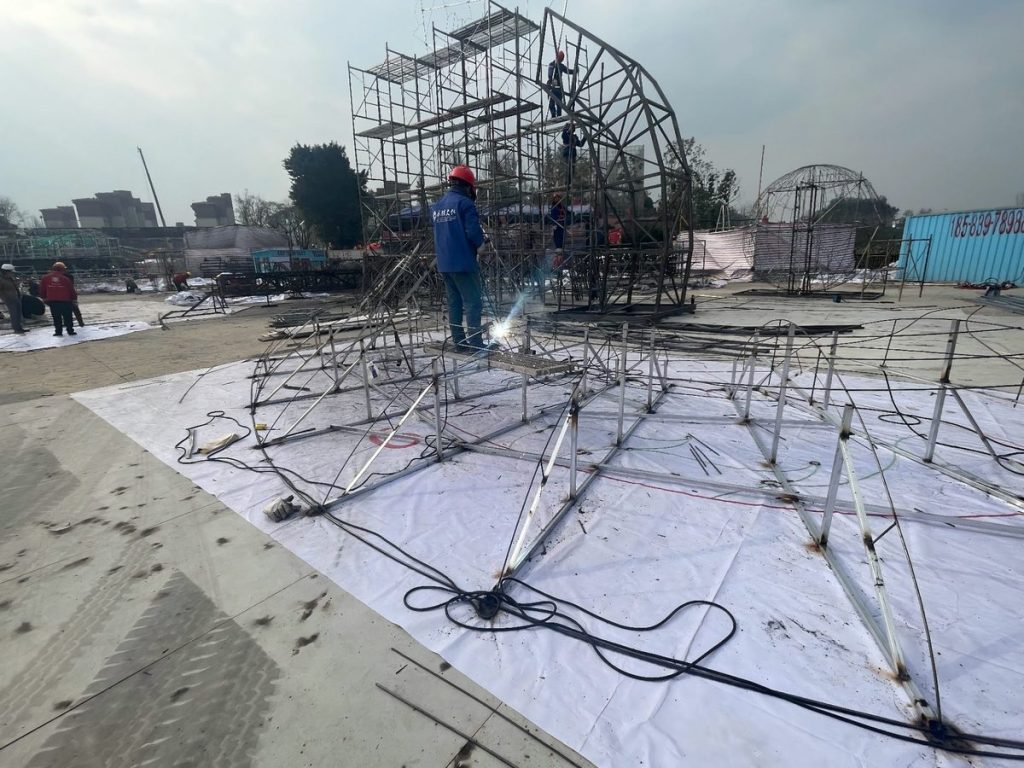
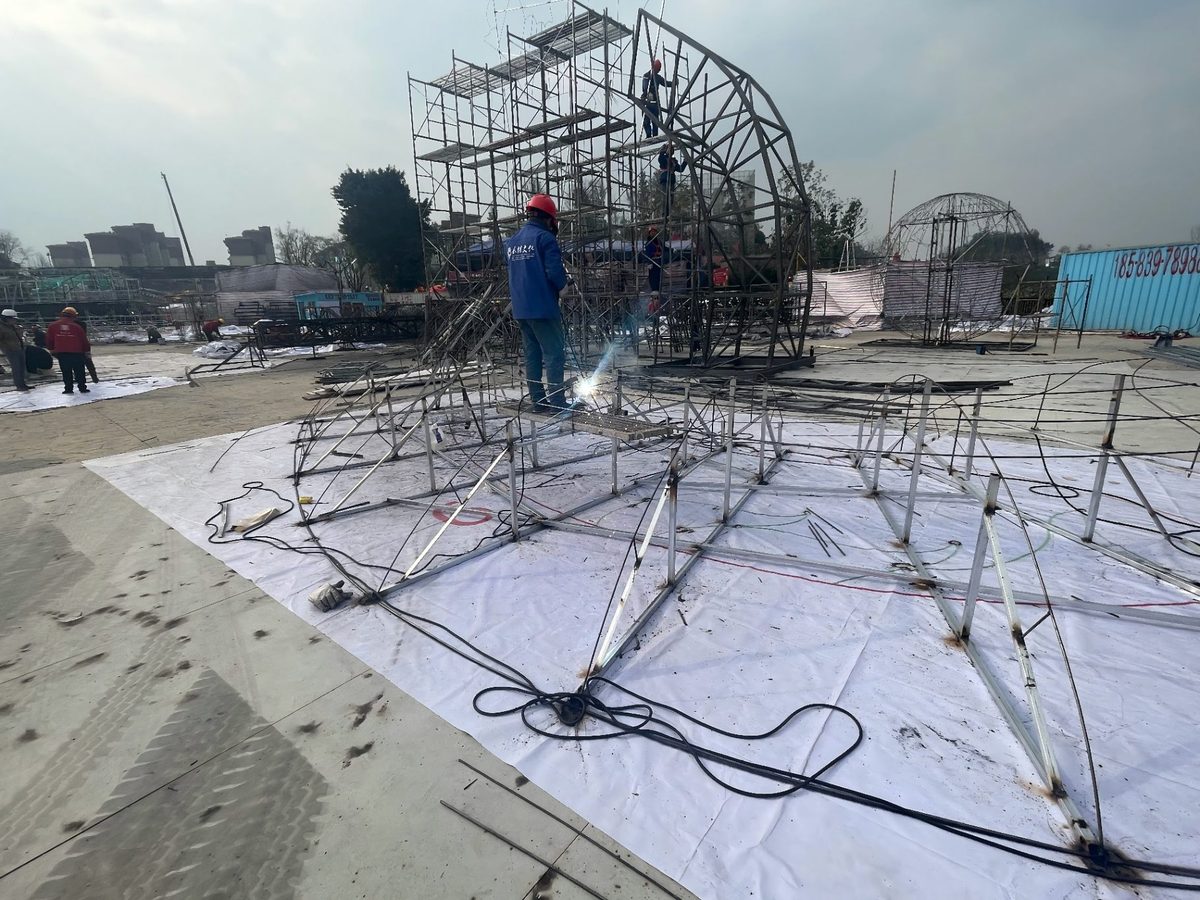
On a large piece, small errors compound. A section that is out by a few millimetres is invisible on its own and obvious once the piece is standing. That is why large frames are trial-fitted on the floor before they are released, and why section boundaries are marked and checked rather than estimated.
Frame
The frame is welded first and it is the part that carries everything else. On a large piece the frame is built in sections on the workshop floor, trial-fitted, and only then released for covering. Getting the geometry right at this stage is what stops the piece looking wrong once the surface goes on.

Surface
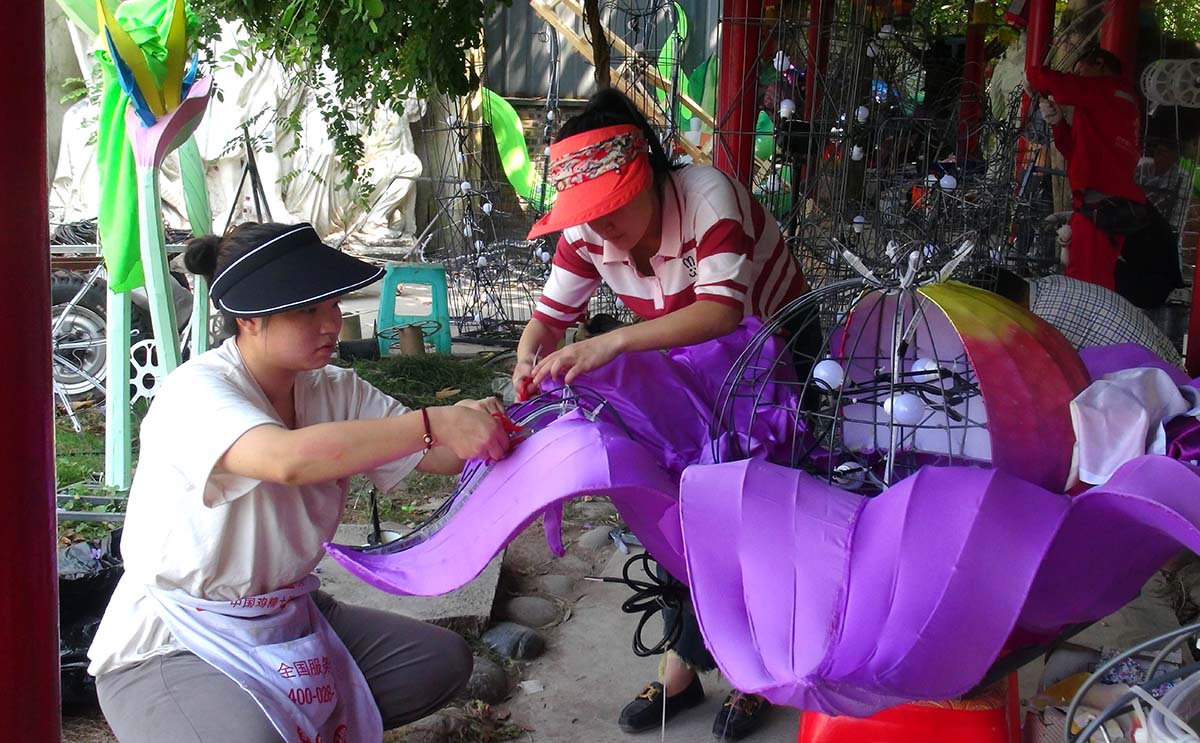
Surface work is where the character of the piece is set. Fabric is applied to the frame, seams are worked so they follow the form rather than fighting it, and any painting or colour work happens before the lighting is installed.
Lighting
Lighting is installed after the surface, and it is specified against the position the piece will occupy. Indoor and outdoor builds use different components, and cable routing is designed at this stage rather than improvised on site.
Testing
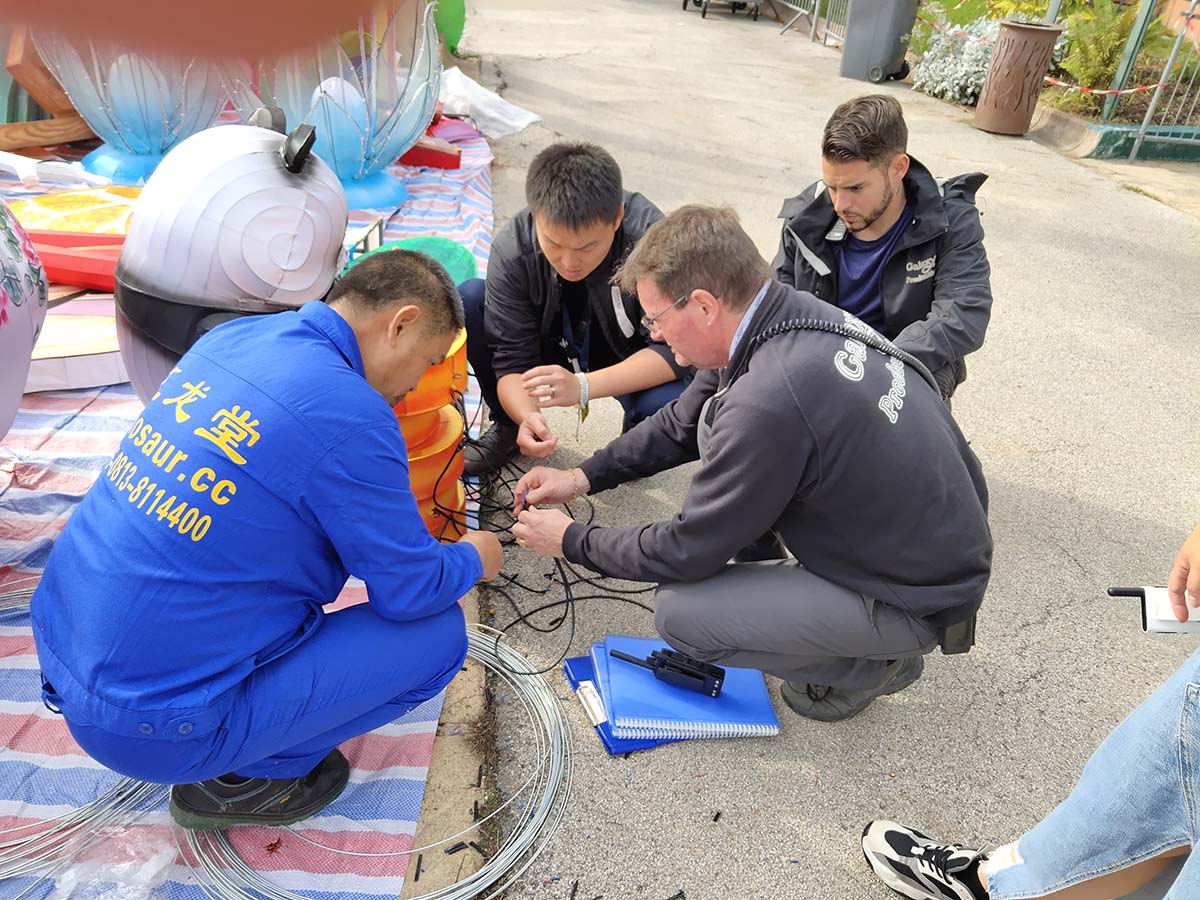
A large piece is lit and run in the workshop before it is released. Electrical inspection is carried out on the assembled piece, and the documentation that comes out of it travels with the display.
Planning
Planning a Large-Scale Lantern Show
A single giant lantern is a product. A large-scale lantern show is a route, and routes are designed around the ground rather than around a catalogue.
Read the site first
Map the usable area, the surfaces, the trees, the water, and where power can actually reach. Then fix the visitor path and the node positions. Displays are placed into the zones the site already has: corridors on covered paths, feature pieces on open ground, scattered pieces near seating and retail.
How many pieces a large-scale show needs
Count the route before counting the pieces. A venue usually works better with one landmark and a set of supporting displays than with a large number of similar items. The number of pieces follows from the length of the walk, the number of decision points, and where people stop.
Scale against viewing distance
The most common mistake on a large-scale show is sizing pieces against the available spend instead of the distance. A figure meant to be read across a plaza needs to clear the heads of a crowd at the far edge; one that only resolves at five metres will not hold the route.
Installation
Installation and Delivery
On a large piece, installation is a planned operation rather than a build. The sequence is worked out before production begins, because on a public site the window is fixed and often overnight.
Power on site
A large piece needs a supply point identified at survey stage, not a cable run across a plaza on install night. Outdoor builds use outdoor-rated enclosures throughout, and the cable route is planned with the section layout rather than added afterwards. Where the site cannot provide enough capacity, the lighting scheme is split across more supply points instead of forced onto one.
Sequence
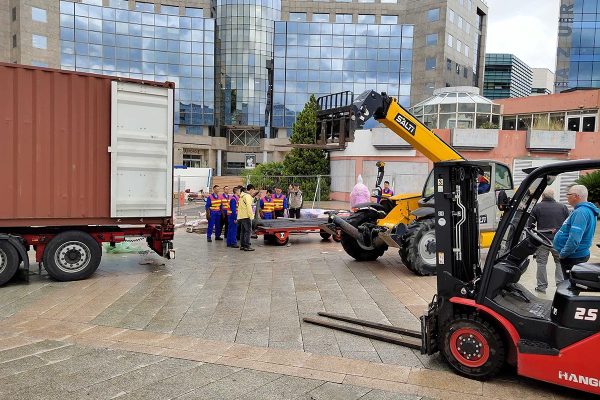
Sections arrive in the order they go up. Base first, then frame sections, then surface and lighting, with the crane pass scheduled around the access window. Working out that order in advance is what keeps a public square open during the build.
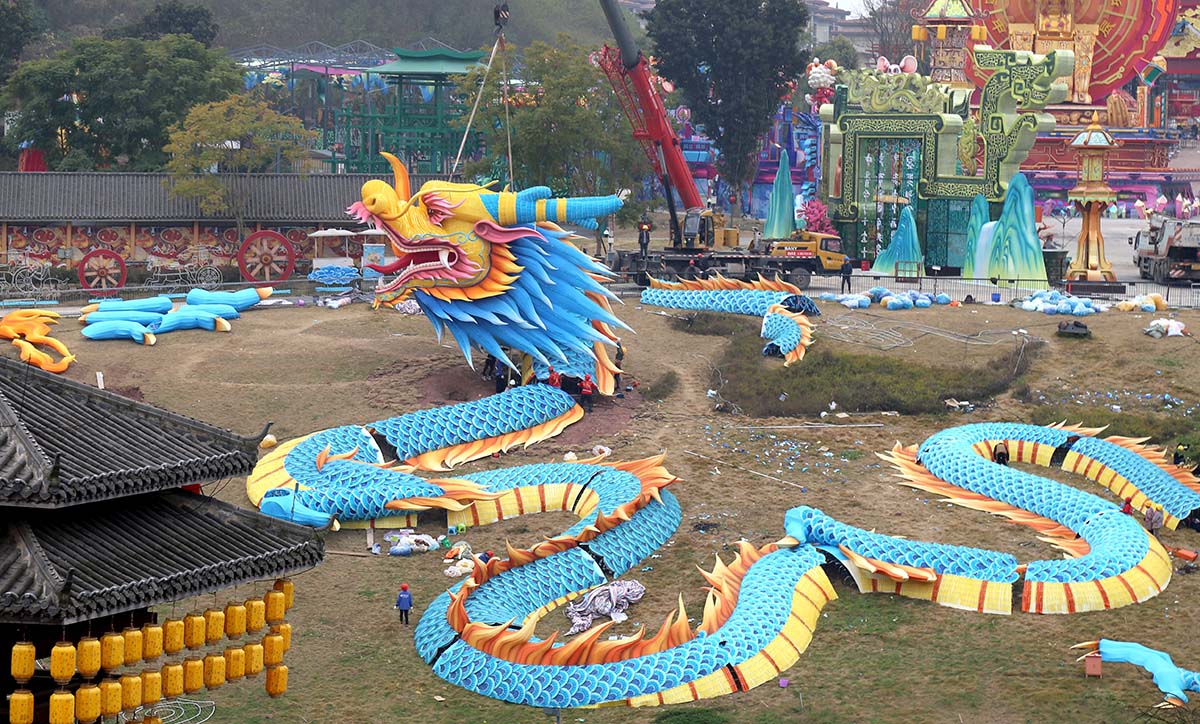
Install windows on public sites are short and fixed. The install sequence has to be planned backwards from that window rather than forwards from the delivery date, because a crane pass that misses its slot can lose a week.
Storage between seasons
A large piece is built to be stored and re-hung rather than rebuilt. Sections are crated so the surface is protected, and the electrical documentation travels with them. Venues planning to re-use a display usually find the storage question easier than the re-hang question.
Delivery and unloading
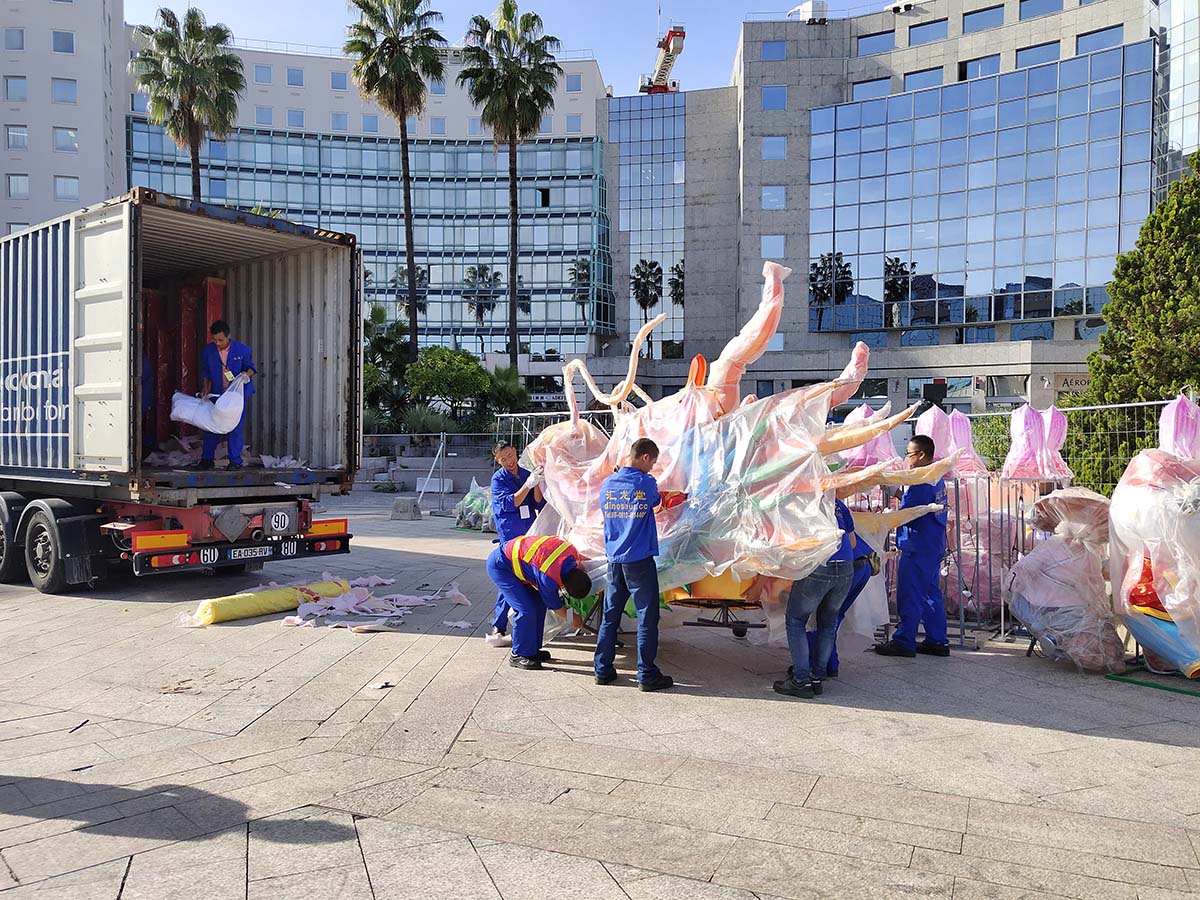
Sections are sized for standard container loading and crated for sea freight. On arrival, unloading is part of the install plan rather than an afterthought. The site needs to accept a vehicle of the right size at the right time.
Suppliers
Choosing a Supplier for Large-Scale LED Lantern Displays
Large-scale work is won or lost on schedule and documentation, not on the quoted figure. Three things are worth establishing early.
A manufacturer who welds the frame can also answer for it. That is the practical test for large-scale LED lantern display work: the manufacturer who produces the calculation is the same one whose workshop built the sections, so a change in week six is resolved by the people who welded the frame. Ask a supplier for that chain and it either exists or it does not.
Is the calculation theirs?
Ask who produces the structural calculation. An in-house answer means the design and the welded frame cannot drift apart.
Who installs it?
Turnkey means the maker’s own team installs. The alternative is drawings only, with your contractor carrying the risk.
What went before?
Ask for the last three projects at this scale, and whether one of those clients can be contacted.
Set the opening date first, then count backwards: installation, sea freight, production, drawing approval. For a large build that is typically several months, and it does not compress at the end. A supplier who agrees to a schedule that leaves no room for freight is agreeing to something they cannot deliver.
Our guide on telling a factory from a trading company covers these in more detail, and how large lanterns are built walks through the production sequence step by step.
Related
Giant and large-scale lanterns
The catalogue side: giant figures, walk-through tunnels and large installations already built to order.
Planning the winter and New Year season
Which display type suits which part of a venue, and how the three winter windows differ.
Main lantern workshop
Where our giant lanterns are built, and how the design and production teams work together.
Frequently Asked Questions
How tall can a giant lantern be built?
Height follows the viewing distance and the wind exposure of the position. Above roughly 8 m the piece needs a structural calculation, a designed base and a planned install sequence.
Does an open frame survive wind better than a closed one?
Generally yes. An open frame presents far less sail area, which usually allows a lighter base and a taller piece. The trade-off is a different look at night: light drawn along the structure rather than filling a surface.
Can a giant lantern stand on paving without anchors?
Yes, with a ballasted base. The footprint of that base has to be planned into the site layout in advance rather than discovered on install day.
How is a large piece delivered?
Sectioned for standard container loading, crated for sea freight, and assembled on site. The largest pieces usually arrive in several sections plus the base.
How is a large display maintained during the season?
Lighting sections are built so they can be reached and replaced without taking the piece apart. On a public site, a fault on opening weekend has to be fixed in hours rather than weeks, which is a design decision made in production, not a repair decision made on site.
Can a display be re-used in a later season?
Yes. Large pieces are built to be stored and re-hung, with the electrical documentation travelling with the sections. The main constraint is storage volume, not the structure itself.
What documentation should come with a large display?
The structural calculation, the electrical inspection record, and the install sequence. On a public site these are what a safety lead or landlord’s engineer will ask to see.
Where the Work Happens
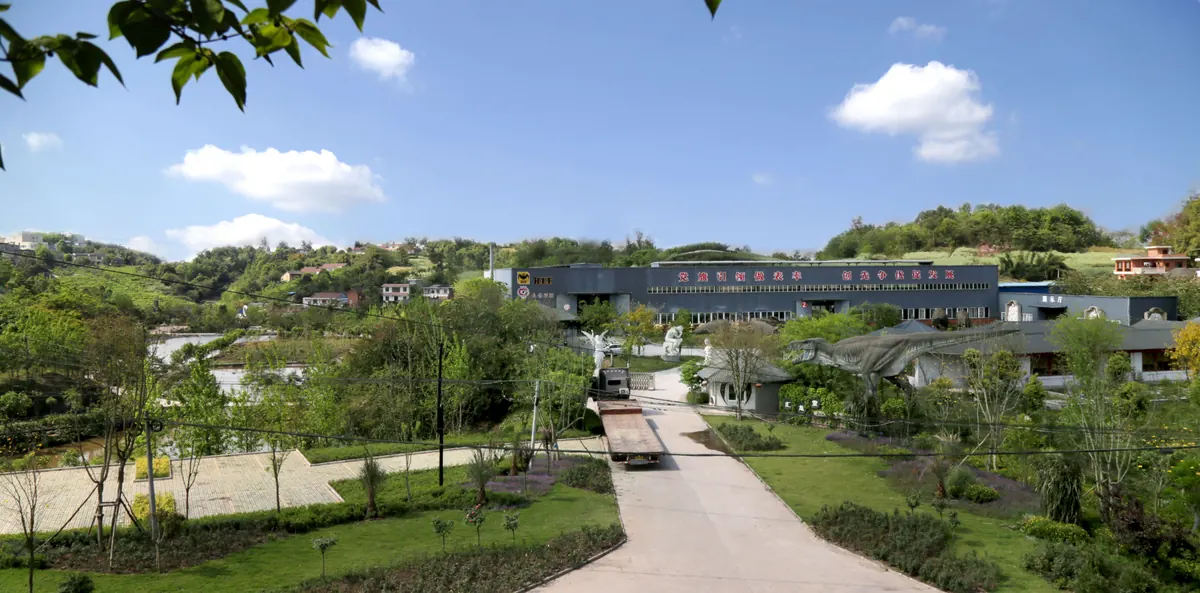
We build in Zigong, in Sichuan, where large illuminated displays have been made for centuries. Frames, surfaces, wiring and testing all happen in our own workshop, and the design and production teams sit in the same building. That matters most on large pieces, where a design change in week six has to be resolved by the people who welded the frame.
Planning a large-scale display for a specific site?
Send the usable area, the surface and the opening date. We will reply with what is buildable inside that window.