Festive season planning
Lantern Festive Displays: Planning the Winter and New Year Season
A winter lantern festival is not one product. It is a season of work that has to be ordered, built, shipped and installed inside a window that does not move.
Venues that plan the season early enough get a trail that reads as a designed route. Venues that start late get a set of attractive objects standing in the dark, and a great deal of spend on pieces nobody walked to.
What follows is how the winter and New Year season is actually put together: which windows matter, which display types suit which parts of a venue, how a route is planned rather than decorated, and what has to be confirmed on site before anything is ordered. The same planning method applies whether the season is a holiday market, a city plaza, a shopping mall or a zoo.
Confirm the site and the opening date before choosing a single piece. Every decision that follows, from scale and count through lighting to base design, depends on those two numbers, and both of them are easier to fix now than in week ten of production.
The Three Winter Windows
Most venues treat the winter as one season. It is three, they run at different times, and each one rewards a different kind of display.
The holiday window
This is the biggest of the three and the one with the least flexibility. Production, sea freight and installation all have to finish before the opening date, which in most Northern European and North American markets falls in the second half of November. Working backwards from that date is the only reliable way to plan a large build: a decision taken in October is a decision taken about what is still achievable.
Displays for this window are built for volume and atmosphere, which is what a winter lantern festival actually needs. Walk-through arches, lit corridors, large figures and tree installations all do well, because the season is about the walk rather than the individual piece.
The New Year window
Shorter, calmer and much less crowded in the market. Venues that cannot complete a large build for the holiday window often find this one more achievable, and the visitor is different: smaller groups, later hours, more adults. It suits feature pieces over volume, and it is the window where a single strong installation can carry a whole site.
The spring festival window
The largest of the three in terms of scale per project, and the one with the longest production tail. These are the big city-scale builds: multi-metre figures, dragon and zodiac motifs, and displays designed to be seen across a plaza. Planning runs roughly the better part of a year ahead, which puts the design conversation in late winter for an opening the following spring.
Festive Lantern Types by Venue
Themed lantern displays are chosen by the space, not by a catalogue. The same arch that works across a market entrance is wasted in the middle of a plaza, and a figure designed for open ground disappears in a corridor. Match the type to the position.
Gateway and entrance displays
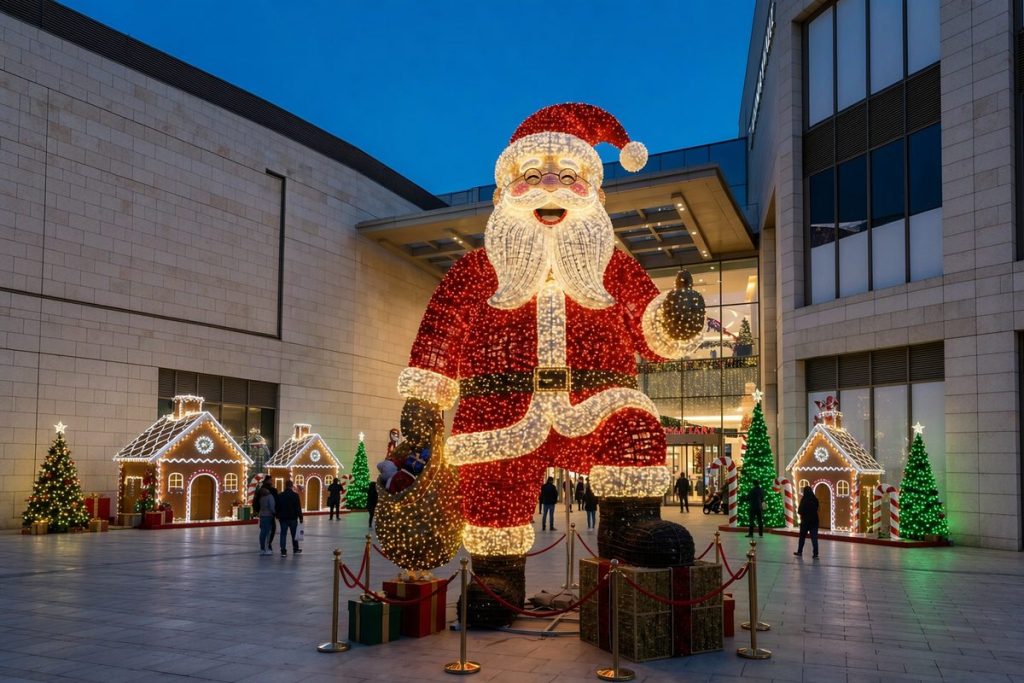
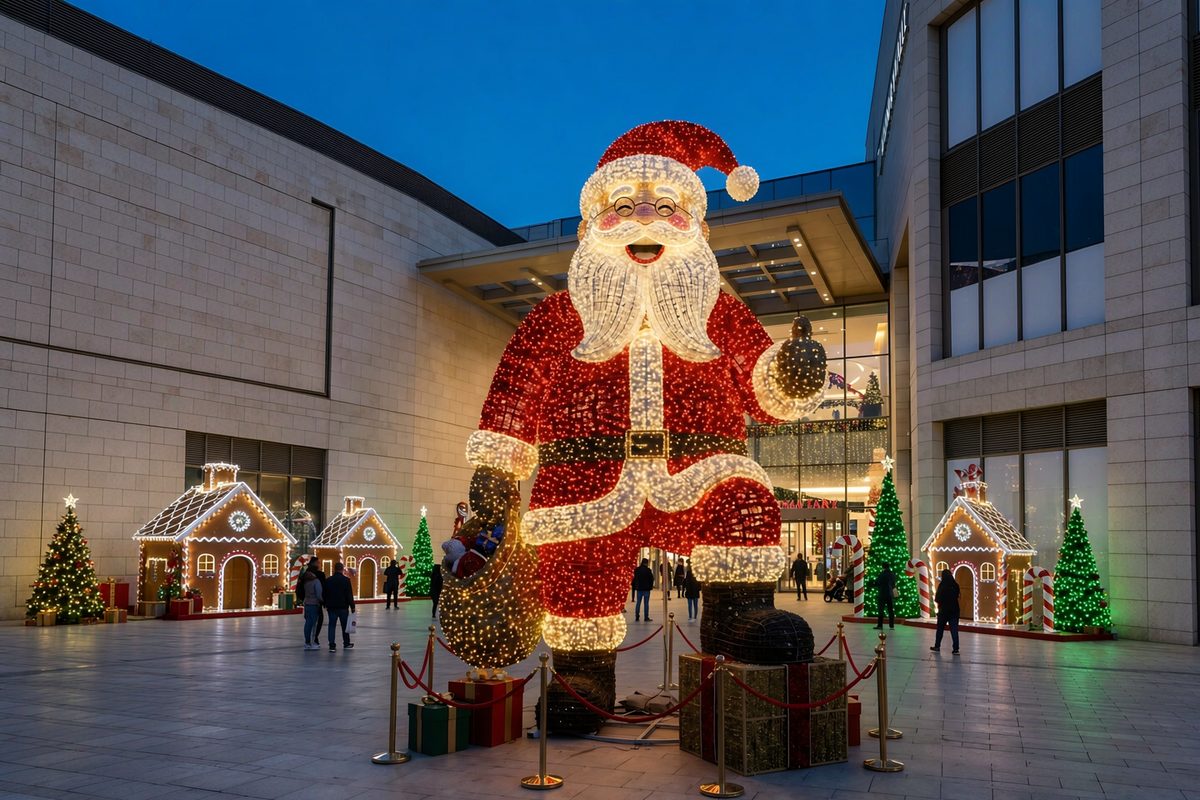
The first thing a visitor sees sets the expectation for everything after it. Gateways, arches and entrance figures are the highest-value positions on any site, because they are seen by everyone including the people who do not continue. They are also the most exposed position, which makes them the place where base design and wind loading matter most.
Walk-through corridors
Arch runs, tunnels and covered walkways turn a plain path into part of the experience. They carry themselves without needing viewing distance, which makes them useful on the stretches between features where a trail would otherwise feel empty. Use them on approaches to major pieces and on any path that has to be walked twice.
Feature figures and centrepieces
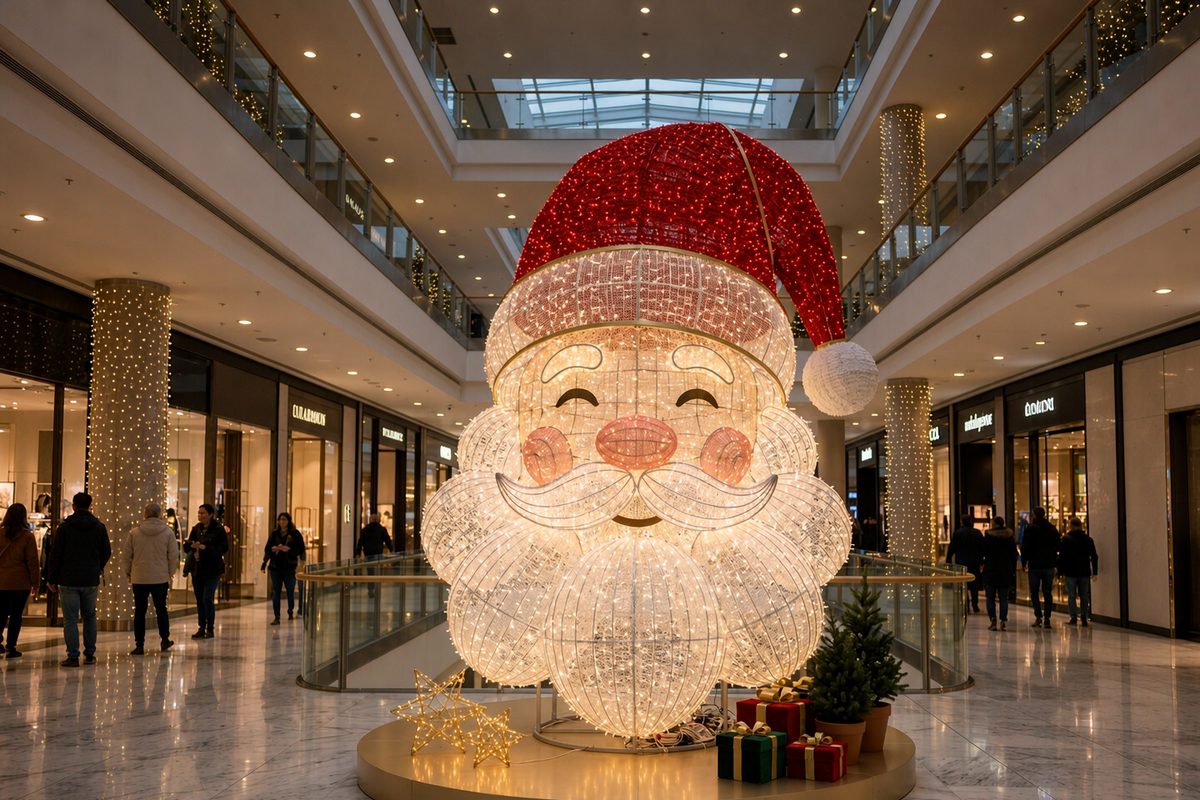
One large figure in the right position does more work than a dozen medium pieces scattered around it. These need room to stand back from, a base that suits the surface, and a sightline from the main approach. Where the site has a plaza or an open lawn, this is where the spend should go.
Low-height scattered pieces
Themed lantern displays at low height, placed near seating, food areas and shopfronts. They are easy to move and re-configure between seasons, and they solve the problem of routes that empty out before the last piece. They are not a substitute for a route, but a trail without them feels like it has no edges.
Highest-value position on the site, seen by every visitor. Needs the most careful base and wind design.
Fill the stretches between features and give the route a rhythm. They carry themselves without viewing distance.
One strong piece in the right position beats a dozen scattered ones. Needs room, a suitable base and a clear approach.
Useful near seating, food and retail. Easy to reconfigure between seasons and quick to move.
Custom vs Standard Festive Lanterns
Most projects end up as a mix of custom holiday lanterns and catalogue forms. The useful question is not “custom or catalogue” but “which positions justify a custom build and which do not”.
Standard catalogue pieces
Proven forms with established tooling: arches, trees, standard figures, gift and ornament motifs. They build faster and need less development work, and they are the right choice for anything that has to be repeated across a large site. Where a venue needs twelve similar pieces, a catalogue form is almost always the better answer.
Custom designs
Custom holiday lanterns are worth it for the one or two positions that carry the whole route: the entrance piece, the plaza centrepiece, anything tied to a sponsor or a local identity. Custom work is slower to develop because it starts with drawings rather than tooling, and it needs more revision time built into the schedule.
The practical split most venues land on is roughly one or two custom pieces for the key positions, and catalogue forms everywhere else. That gets the design benefit where it is visible without putting the whole schedule at risk.
Planning a Festive Lantern Trail
A trail is a route, and a route is designed around the ground. It is the difference between a winter lantern festival that people walk through and a set of pieces that people photograph. The planning method below is the same one we use on garden and zoo sites, and it works for any venue: read the site first, then place displays into the zones it already has.
Map the usable area, the surfaces, the trees, the water and where power can actually reach.
Fix the visitor path and the node positions before choosing any display, so the route is never fitted around a piece.
Corridors on covered paths, feature pieces on open ground, scattered pieces near seating and retail.
Nodes: the junctions and landmarks
After dark visitors lose every reference they used in daylight. A tall, bright, unmistakable piece at each decision point puts those references back, and it is the single most important category on the route. Place them at the entrance, at every branch, in front of the major landmarks and at the exit.
Paths without cover: corridor displays
Where a path runs open and exposed, the walk between features feels long. Corridor lanterns fill it and mark progress, so a plain stretch reads as a sequence rather than a walk from A to B.
Open ground: feature pieces
Plazas, lawns and forecourts take the large set pieces. They need viewing distance and a base that suits the surface, and they are the reason people stop and photograph.
Water: reflections
A piece on or beside water doubles its presence after dark. Water installations need their own base and electrical considerations, and they are the one category where the site’s existing conditions matter more than the display design.
Chinese New Year Installations
A chinese new year display at city scale is the largest single category of work in the season, and it is the one most often planned too late. These are the displays that turn a plaza into a destination: multi-metre figures, zodiac motifs, dragon forms and gateway arches built to be read from a distance.
What the season calls for
Scale and colour. Red and gold dominate, and the displays are designed to be seen across a public space rather than up close. Motifs run to the zodiac animal of the year, lanterns, coins, peaches and the character forms that carry the seasonal greeting. Because chinese new year installations are read from far away, the silhouette matters more than the detail.
Timing and installation
A chinese new year display of this size is heavy, often crane-installed, and almost always in public spaces with restricted access. The site has to be available for a defined installation window, and the pieces have to arrive in a sequence that matches it. Working out the installation order before production starts is what keeps a public square open during the build.
Lunar New Year Displays
A lunar new year display suits venues outside the city-centre scale: malls, hotels, resorts, cultural centres and the retail properties that want a seasonal anchor without a crane in the atrium. The work is smaller in scale and much more varied in form.
Common motifs
Lanterns, the zodiac animal, blossoms, coins and knot forms, plus the animal and figure pieces that read well at closer range. Colour carries the season, and the palette does most of the work even at modest scale.
Where they work
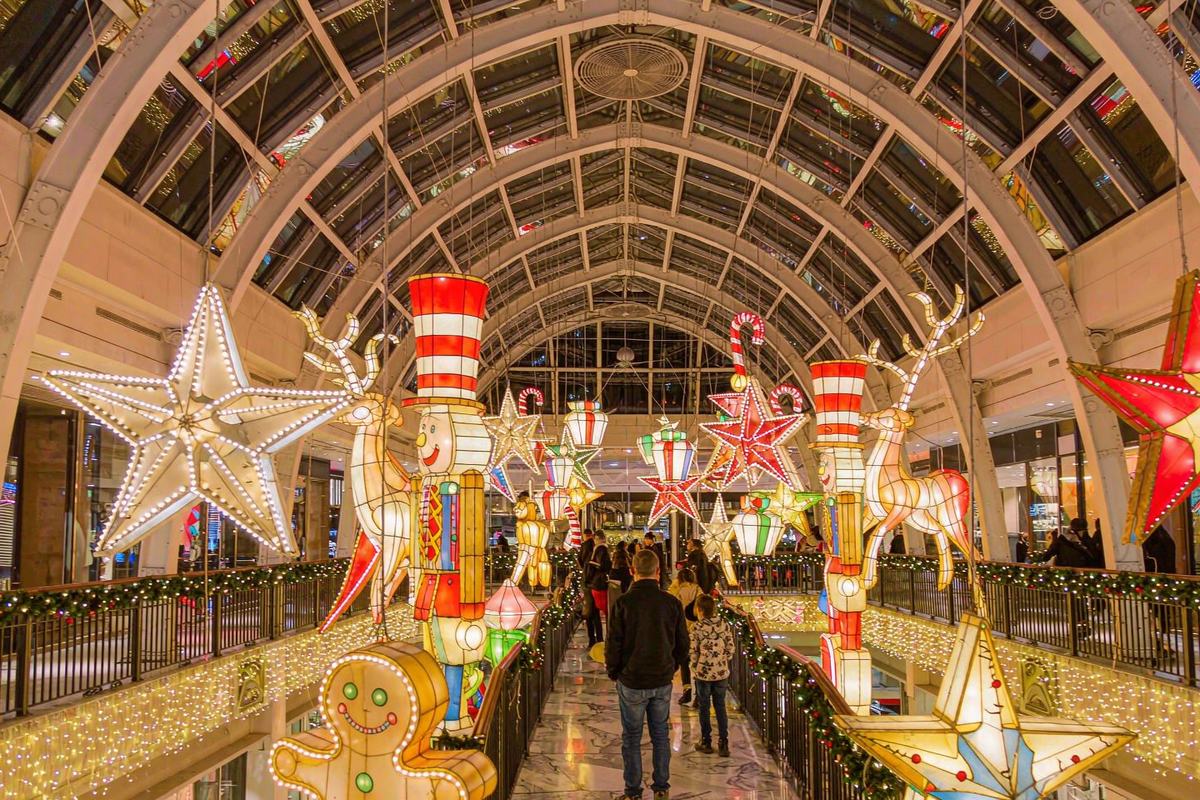
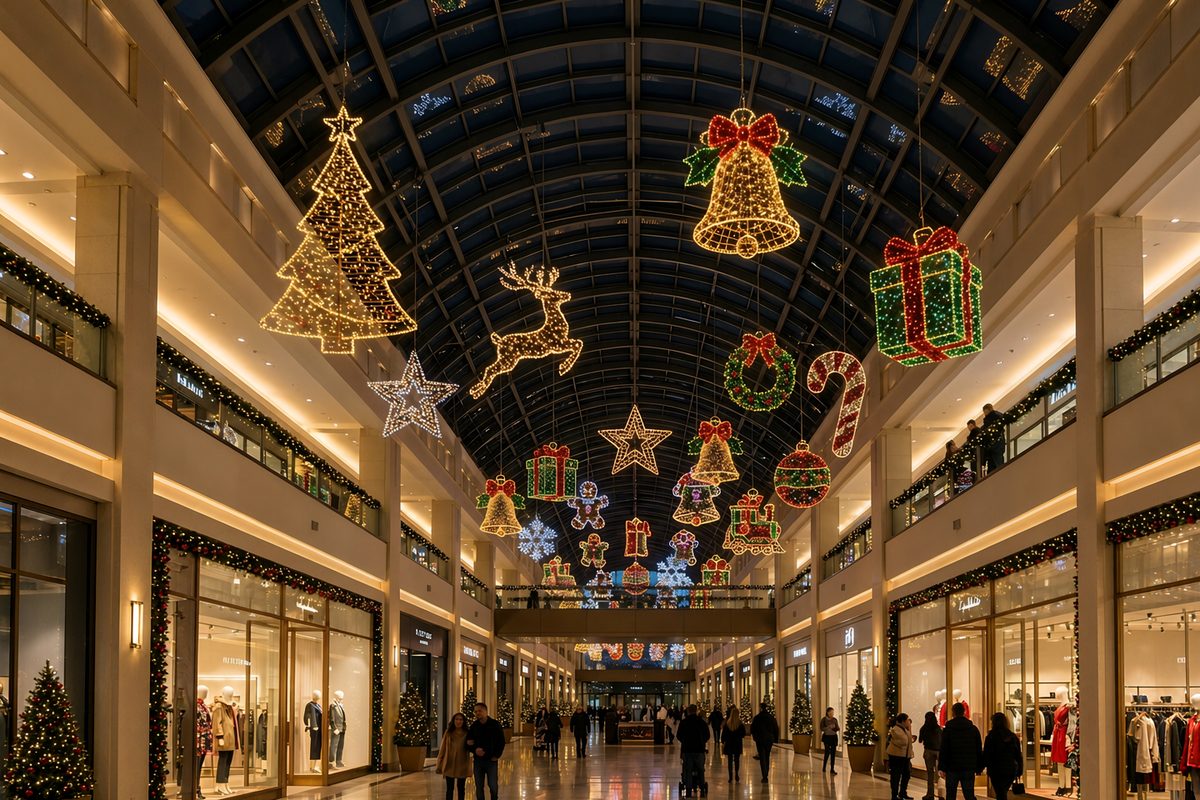
A lunar new year display works in atriums, entrance halls, restaurant courtyards and the corridors between retail units. Suspended installations work particularly well in covered spaces, because they use height instead of floor area and can be seen from several levels at once.
Zoo lantern festivals
How animal and habitat themes are planned for a zoo site, with the route logic that keeps visitors moving.
Botanical garden lantern festivals
Planning a trail on a living site: reading the planting, the surfaces and the water before placing a single piece.
Factory vs trading company
Seven signals you can verify before you sign, and the questions worth asking in the first conversation.
What the Season Needs on Site
Three things decide whether a display survives the season, and all three are easier to solve before the build than after it. The first is power, because a display that cannot be run safely cannot open, and cable routes cannot be improvised once the pieces are standing. The second is the base, because where a piece cannot be anchored to the ground the base design has to change before the frame is built rather than after. The third is access, because a fault on opening weekend has to be fixed in hours rather than weeks, and that depends on whether the lighting sections can be reached at all.
Three things decide whether a display survives the season, and all three are easier to solve before the build than after it.
| Area | What to confirm | Why it matters |
|---|---|---|
| Power | Available capacity, cable routes, access covers, indoor vs outdoor rated components | A display that cannot be powered safely cannot open, and cable routes cannot be improvised on site. |
| Base and anchoring | Surface type, permitted fixings, ballast options, crane access for the largest pieces | Where a piece cannot be anchored, the base design has to change before the frame is built. |
| Maintenance access | Reachable lighting sections, replaceable components, local repair workflow | A fault on opening weekend has to be fixed in hours, not weeks. |
Choosing a Manufacturer for Festive Lanterns
The season rewards suppliers who can hold a schedule, and the schedule is the part that fails first. Two things are worth establishing early.
What to verify
Whether the production happens in their own workshop, whether the structural calculations are produced in-house, and whether installation is carried out by their own team or a partner. These three answers tell you how a change will be handled once the pieces are already in production. Our guide on telling a factory from a trading company covers them in detail.
The timeline to work backwards from
Set the opening date first, then count backwards: installation, sea freight, production, drawing approval. For a large build that is typically three to four months of production, and it does not compress at the end. A supplier who agrees to a schedule that leaves no room for freight is agreeing to something they cannot deliver.
We build in Zigong, in Sichuan, where large illuminated displays have been made for centuries. Frames, surfaces, wiring and testing all happen in our own workshop, and the design and production teams sit in the same building. Our main lantern workshop page covers the production side, and how large lanterns are built walks through the process from frame to illumination.
Frequently Asked Questions
When should we start planning a festive lantern display?
For the holiday window, start at least four to five months before the opening date, because production and sea freight take most of that. For a city-scale New Year build, the better part of a year is the realistic planning horizon.
How many pieces does a venue usually need?
It depends on the usable area and the length of the route. Most sites work better with one strong feature piece and a set of supporting displays than with a large number of similar items. Count the route first, then decide how many pieces it needs.
Custom or catalogue pieces?
A mix. Custom work pays for itself in the one or two positions that carry the whole route, such as the entrance and the plaza centrepiece. Everywhere else, catalogue forms build faster and are easier to repeat across a large site.
Can displays be installed indoors?
Yes, and atriums and entrance halls suit suspended installations well because they use height rather than floor area. The difference is in the components and the base: indoor work does not need weather protection, but it does need a fixing method that suits the ceiling structure.
What happens if a piece is damaged during the season?
Ask before signing who is answerable during the operating period and what the response involves. Displays built with accessible lighting sections and replaceable components can usually be repaired locally, which matters far more on opening weekend than on delivery day.
Do you work with venues directly or through agents?
Both, and we are happy to work with a project manager or agent acting for a venue. What matters is that the site information, the opening date and the installation window come through clearly, because those three set the schedule.
Planning Your Own Season
The parts of this that are worth doing first are the least glamorous: the usable area, the surfaces, the power, and a date that everybody has agreed to. Everything after that, from the display types through the counts to the motifs, follows from those four numbers, and all of them are easier to settle now than once drawings are in production.
Planning a festive lantern display for a specific site?
Send the venue, the usable area and the opening date. We will reply with what is buildable inside that window and what it needs on site.