What Animatronic Products Are Actually Used For
Buyers come to animatronic products with one of two jobs in mind, and the job determines almost every specification decision afterwards.
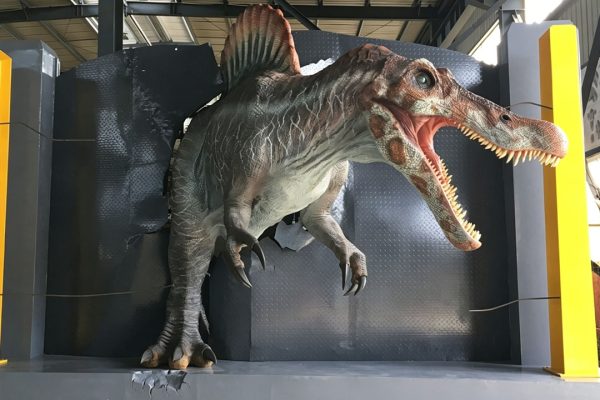
The first is a landmark — one large animal that becomes the thing visitors photograph and the thing that appears in every piece of marketing the venue produces. Landmark builds are judged on silhouette and scale, and they are usually placed where they can be seen from outside the site.
The second is a sequence — a route of models that paces a visit, holds attention, and gives people a reason to keep walking. Sequence builds are judged on variety and spacing. A single spectacular animal in a route of twenty is a mistake; twenty animals of the same size and pose is a worse one.
Both jobs use the same product family, which is why a conversation about applications is really a conversation about what a venue is trying to do. Below are the six contexts we build for most often, and what each one demands.
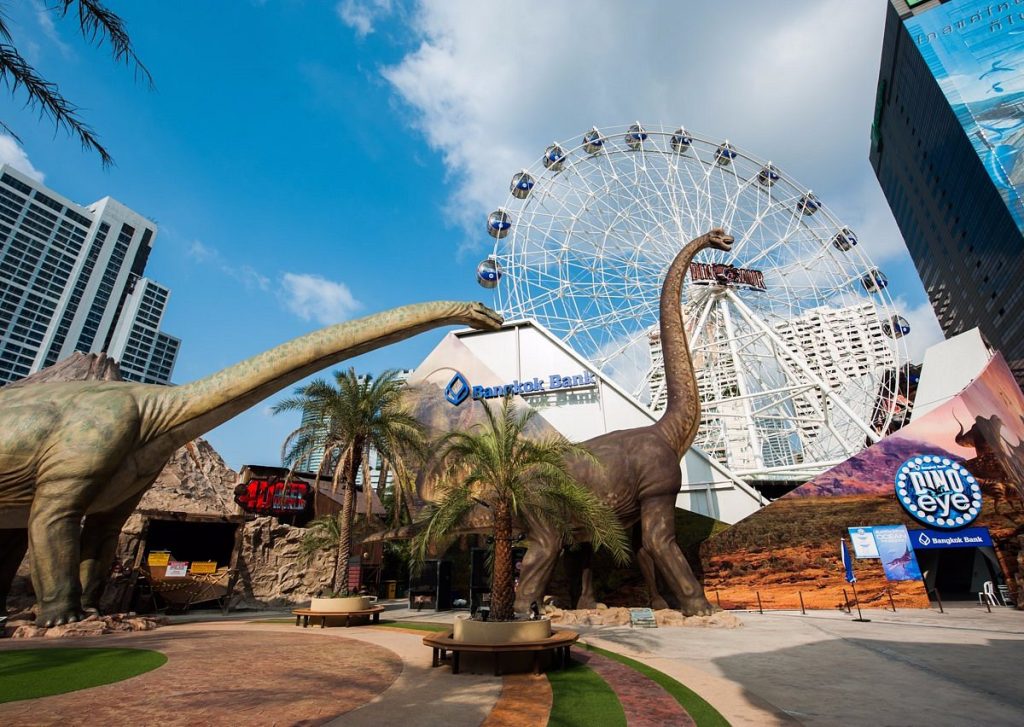
Theme Parks and Prehistoric Zones
A dinosaur zone is the most demanding application, because it has to work on all three counts: scale, pacing, and repeat visits.
What it needs: a mix of large species for the skyline and smaller ones for the trail. A Tyrannosaurus Rex or Brachiosaurus gives the zone a landmark; Velociraptor packs, juvenile animals and nesting scenes give the route texture between them. Interactive models — motion-triggered or gesture-controlled — are what convert a static walk into something visitors describe to other people.
What it constrains: everything has to survive weather and constant public contact, and the site plan has to accommodate viewing distances, queue space, and a maintenance route that staff can walk without crossing visitor paths.
Planning note: the mistake we see most often is spending the entire budget on one enormous animal and leaving nothing for pacing. Visitors photograph it, then walk past everything else. A zone built around three medium animals and one landmark almost always performs better than the same budget spent on one giant.
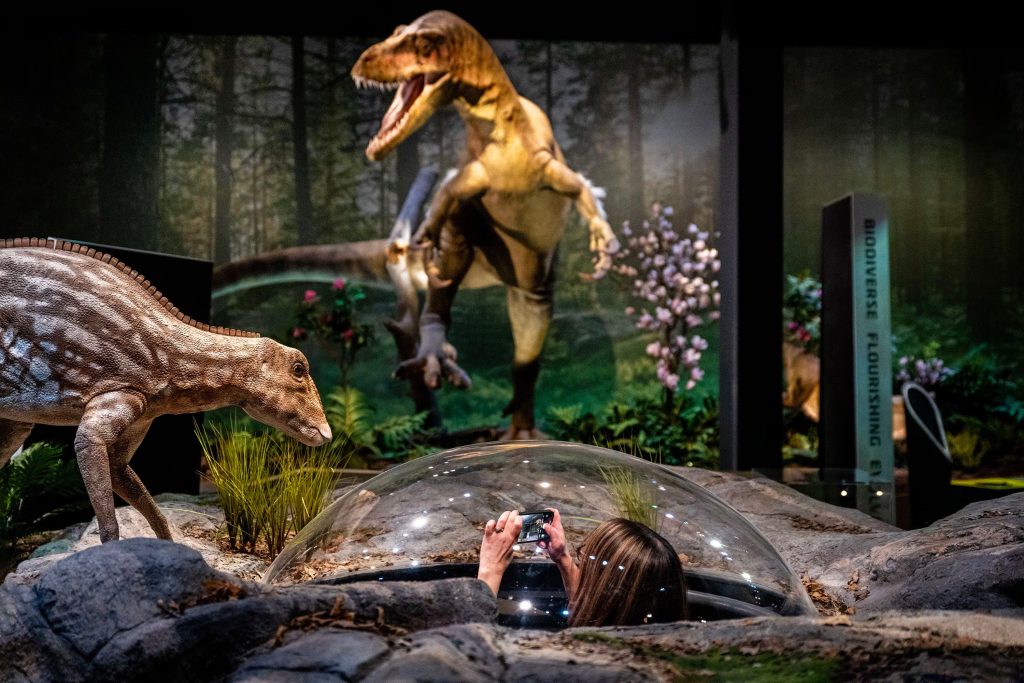
Museums: Teaching, Not Just Spectacle
Museums buy animatronic models for a different reason than theme parks do, and it changes the specification.
The requirement is usually interpretation — a model that supports a label, a programme or a curriculum. That means accuracy matters more than drama: correct proportions, defensible posture, and a species that matches the story being told. It also means the exhibit has to work in a controlled indoor environment, which is the easiest environment a model can be asked to live in.
The most effective museum layouts pair moving models with static evidence. A walking animal beside a replica skeleton and fossil display gives visitors both the reconstruction and the proof, and it gives educators two different tools. Schools that visit for a curriculum session respond to the skeleton; general visitors respond to the animal.
Museums also tend to buy interactive builds rather than purely passive ones, because a model that responds to a visitor is a teaching device. Our guide to interactive dinosaur exhibits covers how the formats compare for education use.
Zoos and Wildlife Parks
A zoo’s animatronic purchase usually has one of two motivations: extending the collection into deep time, or extending the trading day into the evening.
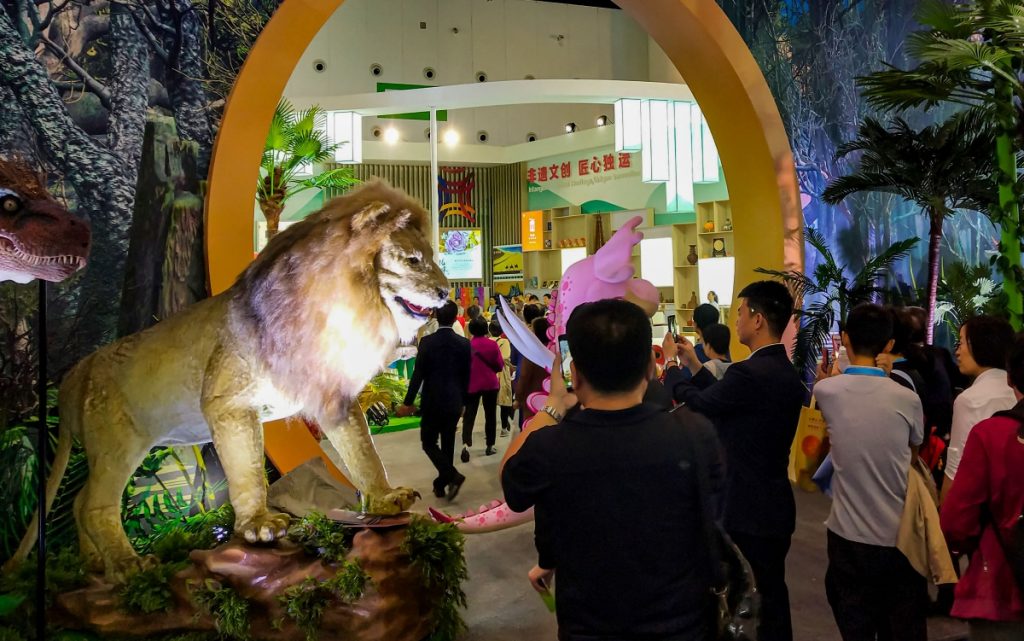
Deep time means prehistoric species — mammoths, cave bears, saber-toothed cats — displayed near the living animals they are related to. This is the strongest educational link a zoo can build, because it lets a visitor compare a modern elephant with a woolly mammoth in the same visit. Our Ice Age animal range exists for exactly this.
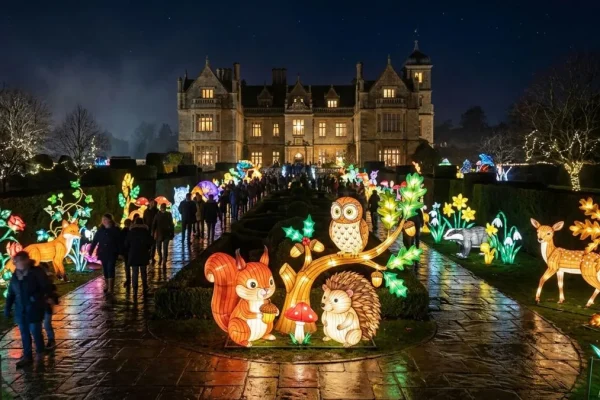
Evening trading means a lit route — often lantern sculptures rather than animatronics, because lighting is what a night trail actually sells. Many zoos run both: animatronic models for the daytime education programme, lantern animals for the winter light trail. The two use different construction entirely, and a venue planning both should say so at the outset, because the site infrastructure overlaps.
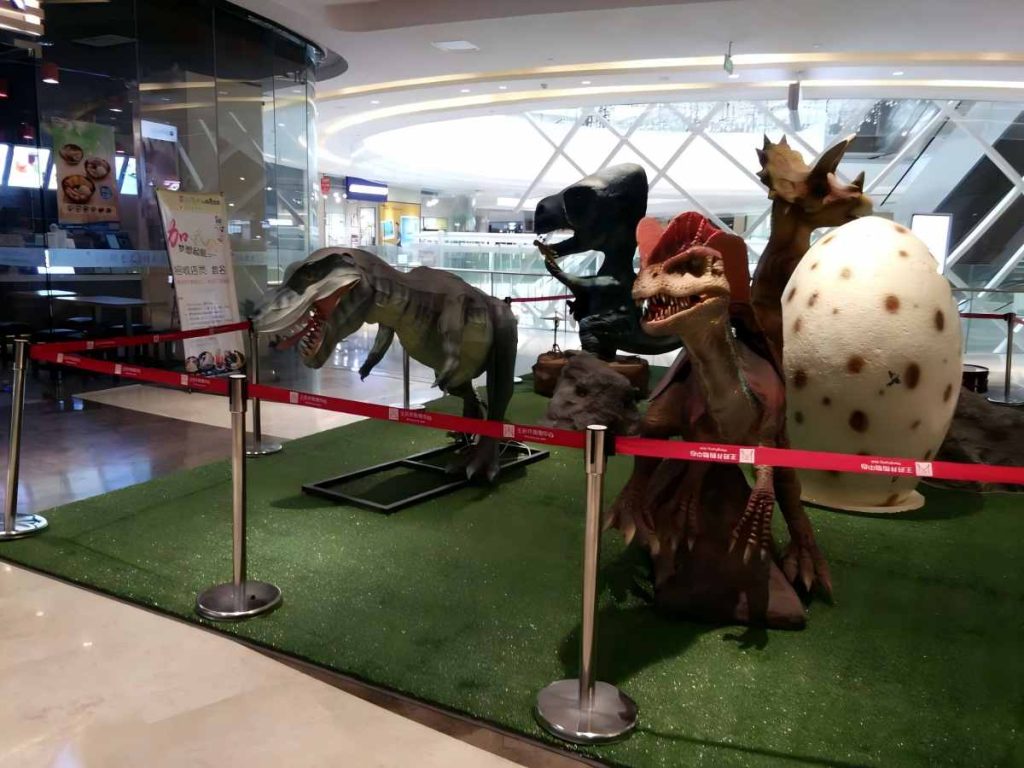
Shopping Malls and Commercial Atriums
This is the application where the specification is least about the animal and most about the building.
A mall is buying dwell time and photographs. The animal needs to be visible from the main circulation route, safe around unsupervised children, and quiet — which rules out some drive systems regardless of how impressive they look. Installation usually has to happen overnight, in a working building, without closing trading.
The builds that work best here are medium species at child height, with interaction that draws a crowd without blocking a fire lane. A Triceratops that reacts to visitors is more effective in an atrium than a Tyrannosaurus that frightens small children, and it costs less. For malls specifically, our dinosaur rides are frequently the better purchase, because they generate revenue rather than just traffic.
Commercial Events and Brand Activations
Short-run applications — a product launch, a roadshow, a seasonal campaign in a public square — are bought on different terms from permanent installations.
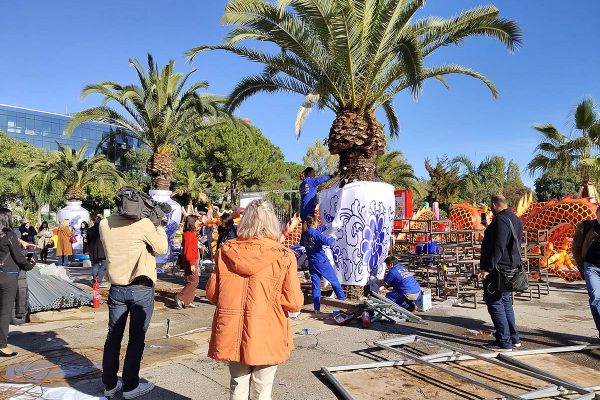
Three things matter and nothing else does: how fast it can be installed, whether it can be re-used at the next location, and whether it photographs well in the conditions the event will run in. A model built for a permanent park is a poor event asset; a model built as a touring unit is a poor permanent one. If an agency plans to move the animal between venues, the build has to be specified for transport from the beginning: sectional construction, crating, and an assembly sequence that two people can follow.
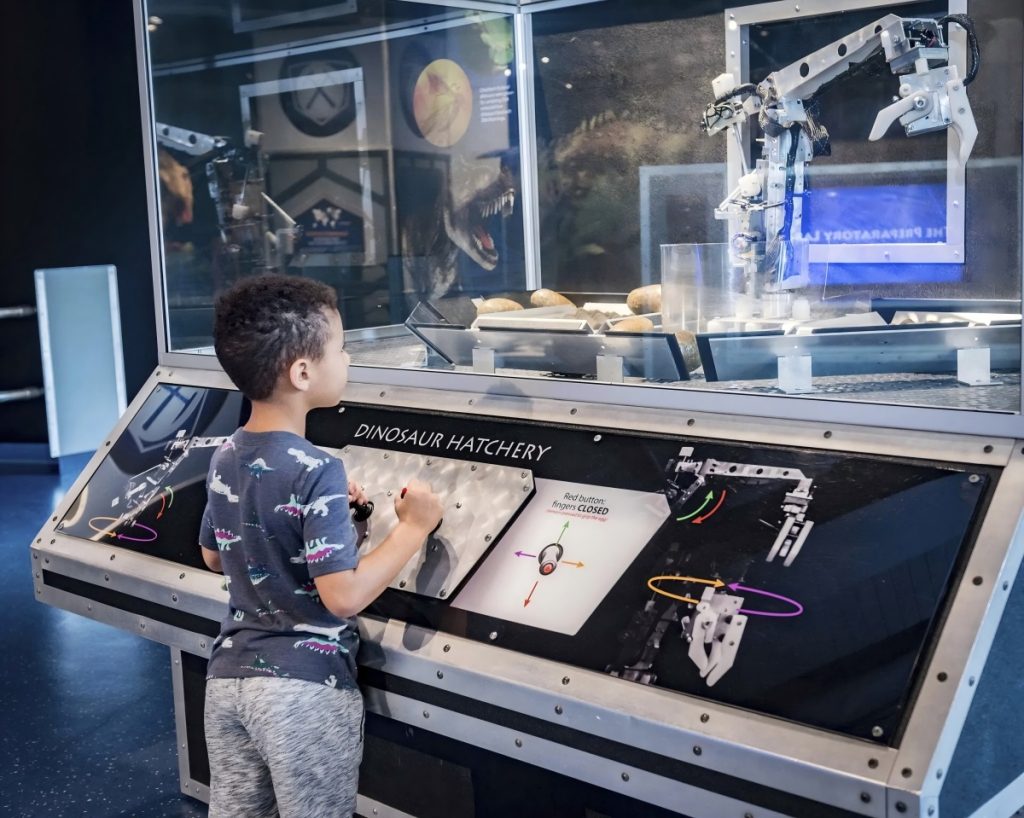
Education and Outreach
Schools, science centres and outreach programmes buy the least glamorous and most reused products in the range: hand puppets, walk-about costumes, and single bone or fossil displays.
These are the formats that fit in a car, survive handling by a class of thirty, and can be used by a presenter with no technical background. A walking costume or a juvenile dinosaur puppet reaches audiences that will never visit the venue, which is why outreach budgets tend to buy two or three smaller pieces rather than one large one.
The specification note here is durability, not spectacle. Equipment that an educator is afraid to let children touch will not get used.
Choosing the Right Format for Your Venue
| Venue | Primary goal | Format that usually wins |
|---|---|---|
| Theme park / dinosaur park | Repeat visits, landmark | Large anchored species + interactive models + ride zone |
| Museum / science centre | Interpretation | Accurate moving models paired with skeletons and fossil displays |
| Zoo / wildlife park | Education, evening trade | Prehistoric species by day; lit route for the winter season |
| Shopping mall | Dwell time, revenue | Medium species at child height; ride units where a charge can be made |
| Event agency | Impact, portability | Touring-specified units with sectional construction and crating |
| School / outreach | Access, handling | Puppets, costumes and individual bone displays |
Indoor and Outdoor: What Changes
Moving a design from indoors to outdoors is not a finishing decision. It changes the build.
Structure. Outdoor models carry wind load, which is concentrated at the neck and limbs on tall species. Bases, anchors and frame sections are designed for the site’s exposure — a coastal installation and a sheltered courtyard are different products.
Materials and sealing. Water ingress into the frame and the control enclosure is the main cause of premature failure. Enclosures, connectors and cable entries are specified for the environment, and the exposed build uses surface finishing developed for outdoor durability — ours is a patented formulation (Patent ZL 2022 1 0224489.5) designed for exactly this.
Access for maintenance. An outdoor model needs to be inspectable in the seasons it runs. If the only way to reach the control panel is to walk through a planted bed in the rain, maintenance will not happen.
Sound and neighbours. Roar volume that is right for a park is wrong for a residential site. Audio is adjustable, but the range should be agreed with the venue before shipping, not discovered on the first evening.
What to Prepare Before You Request a Quote
Quotes get accurate faster when these are settled. Every one of them changes the engineering, which is why we do not publish a price list.
- Site plan or footprint — where the animal stands, how visitors approach, and what is behind it for photography.
- Indoor, covered outdoor, or fully exposed — the single most useful detail in the brief.
- Species, size and pose, and whether it is a landmark or part of a route.
- Movement and interaction list — what the animal does, and whether visitors trigger any of it.
- Ground conditions and fixing method — paved, decking, grass, or existing foundations.
- Power availability and cable route — usually a site cost, and usually underestimated.
- Operating model — permanent, seasonal, or touring; and who will maintain it.
For how these factors translate into budget, see what affects the cost of an animatronic dinosaur and the 2026 pricing guide. Both explain the drivers rather than quoting a figure, because the same species at two sizes with two movement sets is two different builds.
Frequently Asked Questions
Which application is the most cost-effective for a first animatronic purchase?
Indoor retail or event use, in most cases. The build is simpler, the environment is controlled, and installation does not need structural work. A park installation delivers more impact per visitor but carries site costs that catch first-time buyers out.
Can one model serve two applications?
Occasionally. An indoor-outdoor specification exists, but it is a compromise — it costs more than either dedicated version and it is rarely the right answer for a permanent site. Buyers who plan to start indoors and move outdoors later usually find it cheaper to specify for the final location from the start.
How many models does a route need?
It depends on route length and the pace you want, not on a fixed ratio. As a working figure, a 15–25 m gap between animals keeps each one feeling like a separate encounter rather than a repetition — which for most sites means the number of models follows from the route length.
Do animatronic products need a dedicated operator?
No for most passive and sensor-triggered models; they run unattended. Operator-controlled builds — where a presenter drives the animal during a scheduled show — do need someone there, and the value of that format comes from the presentation rather than the hardware.
What is the support position?
Our standard position for animatronic products is a 12-month support, with spare parts and wear components available as part of the order, and remote support for adjustment after commissioning.
Next Steps
If you know the application, we can tell you fairly quickly what the specification should be — species, scale, movement set and site requirements.
The supporting pages are worth a look before you write the brief: the prehistoric exhibit range for what we build, the animatronic dinosaur collection for the standard species, how the key systems work if you need to compare drive types, and past projects to see installations in context.
Send us the site plan and the application. We will come back with a concrete proposal — species recommendations, footprint, movement and interaction list, environmental protection, power and access requirements, delivery schedule and a precise quotation.
Send us your brief to start.