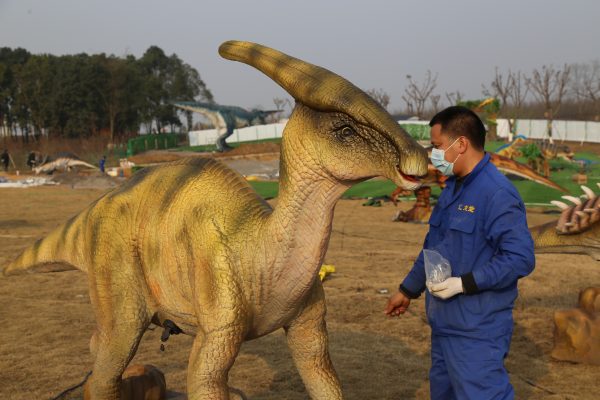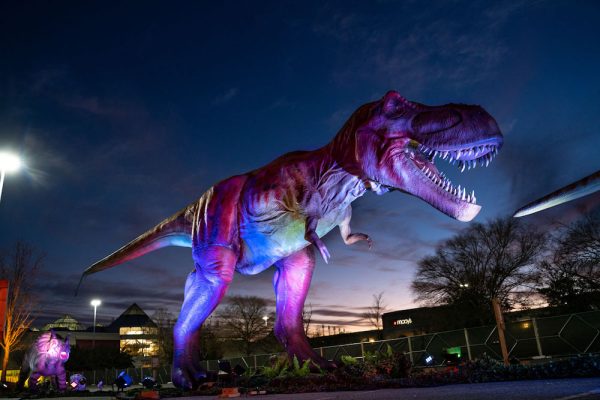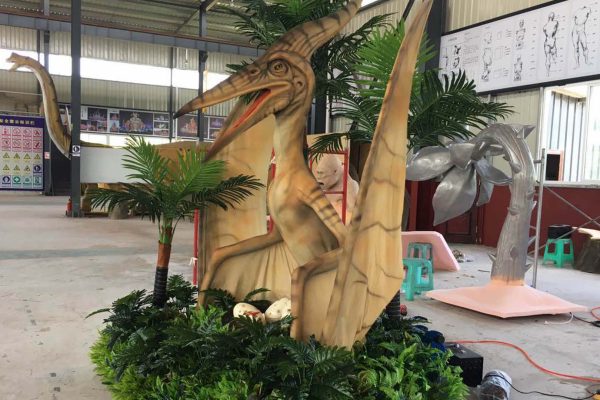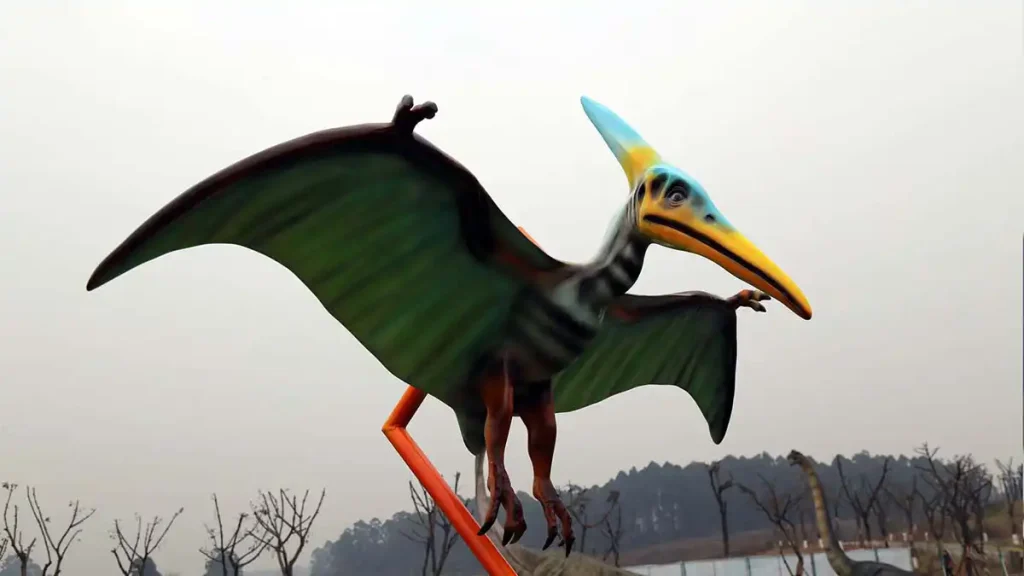
Stand two metres from a FestiveLanterns Tyrannosaurus Rex and the first thing you notice is not the size. It is the skin. The skin has texture — raised scales, fine creases around the jaw, a slight sag where the neck meets the shoulder, the way real muscle sits on real bone. Look closer and you will see the pores, the uneven pigmentation, the small scars. This is what separates a realistic animatronic dinosaur from a moving statue: the surface, not the mechanics.
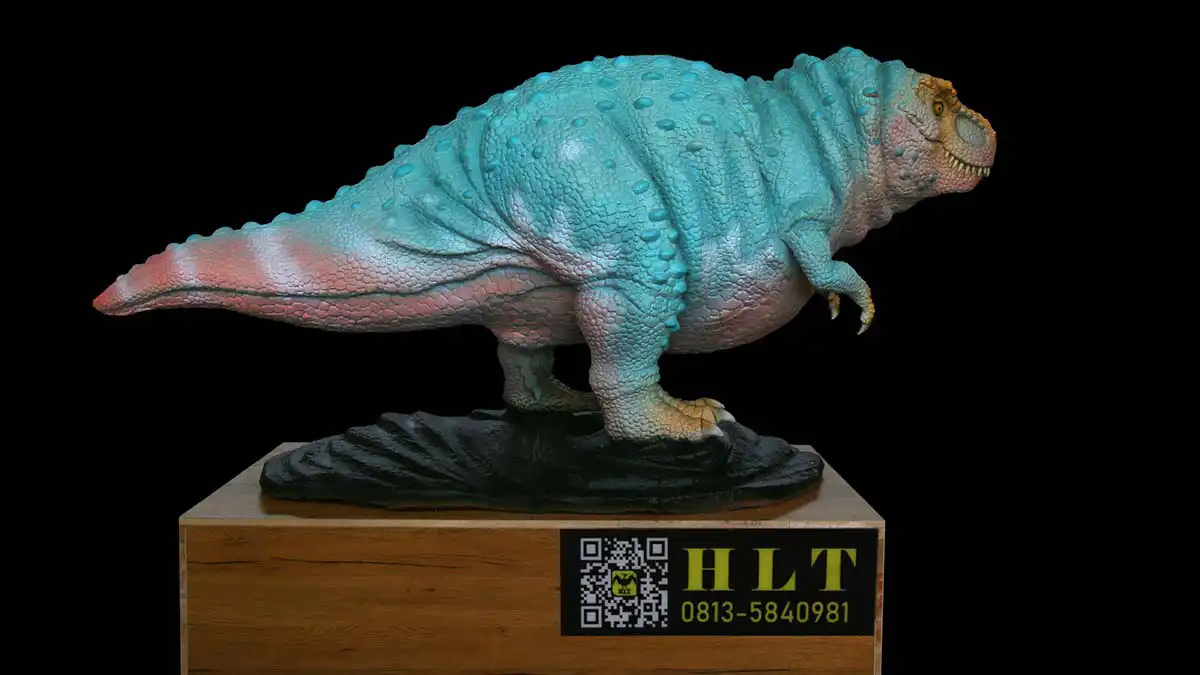
For 14 years our factory in Zigong, China has built animatronic dinosaurs for zoos, museums and theme parks in over 50 countries. In that time we have shipped roughly 4,000 pieces, from 1.2-metre baby raptors to 18-metre Argentinosaurus. The question we hear most often from buyers is a simple one: what actually makes an animatronic look alive? This article answers it — layer by layer, the way we build them.
One thing to know up front: in most of the industry, realism and interactivity are sold as separate products. One manufacturer builds a beautiful static dinosaur; another builds a crude robot that reacts. We build both in the same body — a hand-finished, weighty animatronic that also recognises visitor gestures and responds to them. That combination is the difference, and this article explains how it works.
Planning an exhibit? Request a free design proposal — we return with a 3D rendering and itemised quote within 24 hours.
What “Realistic” Means in an Animatronic Dinosaur
Realism in animatronics is not one feature. It is four systems working together, and most buyers underestimate the first one.
- Surface — skin material, texture, colour, weathering. This is 60% of the perceived realism.
- Mass — the body must look heavy. A dinosaur that “floats” breaks the illusion instantly.
- Motion — slow, fluid, weighty movement with natural pauses. Fast, mechanical movement reads as fake.
- Detail — eyes, teeth, tongue, breathing, micro-movements. The small things visitors notice without knowing why.
Get all four right and a visitor cannot tell the difference at three metres. Get one wrong and the whole display collapses.
Layer 1: The Skin — Premium Surface Finish, Not Rubber
The single biggest difference between a convincing dinosaur and a cheap one is the skin material. We use premium hand-finished surface (Chinese patent ZL 2022 1 0224489.5) rather than the fibreglass or latex used in budget displays.
Why surface finish wins:
- It moves like skin. When the jaw opens, the surface finish stretches and recovers — it does not crack or flake like painted fibreglass.
- It takes fine detail. Our moulds capture scales at 0.5 mm resolution, including the tiny overlapping plate patterns on the back of a Stegosaurus.
- It handles weather. Surface Finish tolerates UV, rain, and temperature swings from −20°C to 50°C without hardening or fading. Most outdoor exhibits in our install base are hand-finished.
- It is repairable. A torn patch can be blended and re-textured on site by our installation crew — no need to ship the piece home.
Skin is hand-painted in our workshop, layer by layer. A T-Rex gets a base coat, two to three shadow washes, scale highlights, and a final weathering pass that adds dust, scratches and sun-fade. Painting a single large adult takes our artisans 8 to 12 working days.
Layer 2: Mass — Internal Frame, Body Core and Weighted Movement
An animatronic dinosaur’s internal structure decides how it moves, and therefore how heavy it looks.
Our standard construction for animals over 2 metres:
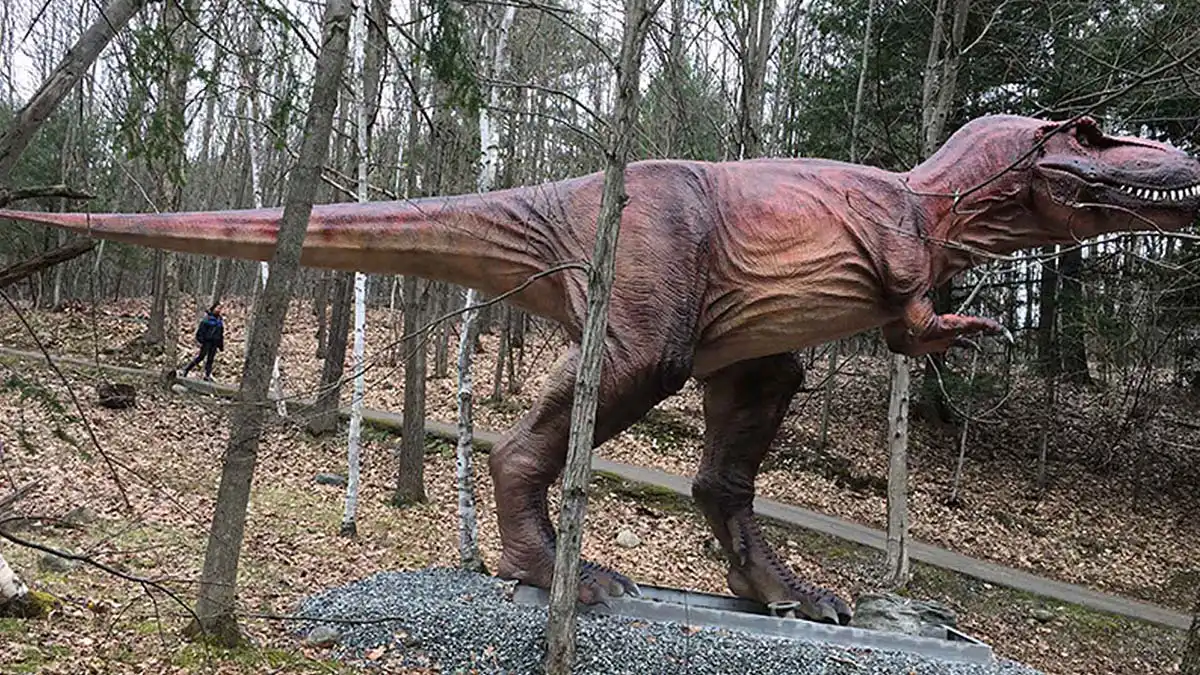
- Structural core. A welded frame sized to the species — a T-Rex frame carries around 900 kg of dead weight and must hold the centre of gravity correctly or the piece will tip during the head-lunge animation.
- Sculpted body core. A lightweight core is carved to the animal’s muscle silhouette. This gives the body its volume — the chest, the haunches, the neck girth — so the surface has something real to wrap around.
- hand-finished surface over the top. Applied in sections and heat-seamed, so the surface is continuous.
Note: not every animal carries a separate core. Slimmer species such as Spinosaurus are built directly onto the internal frame — the core is only used where muscle volume needs to read from the outside. Ask us about your specific species and we will confirm the construction.
The mass budget matters for movement. We counterbalance every animated limb so the servo does not fight gravity — this is what produces the slow, deliberate head-swing of a real predator rather than a jerky mechanical bob.
Layer 3: Motion — Servo, Hydraulic and Pneumatic Systems
Movement systems come in three types, and the right choice depends on the species and the budget:
- Servo-driven — electric motors with programmable control, used for most body axes: head turn, jaw, eyes, tail, breathing. Servos give smooth, repeatable motion and are the easiest to maintain. Most of our pieces are servo-driven.
- Hydraulic — high-force systems for the heaviest movements, such as a full-body lunge or a tail whip on a large T-Rex. Hydraulics move mass that electric motors cannot shift reliably.
- Pneumatic — compressed-air systems for fast, sharp actions: a snapping jaw, a blinking eyelid, a sudden head jerk. Pneumatics deliver speed; servos deliver precision. Most exhibits combine the two.
All motion is controlled by a programmable show controller (DMX512 protocol) that runs sequences or responds to triggers. We explain the differences in depth here, including failure modes and maintenance schedules for each system.
Layer 4: Detail — Eyes, Breath, Sound
Here is where realistic animatronic dinosaurs earn their keep. Three details carry disproportionate weight:
- Eyes. Hand-painted glass eyes with amber or green irises, set to track visitors. Eye movement is the single strongest “alive” signal — a fixed glass stare kills realism faster than any other flaw.
- Breathing. A slow rib-cage rise and fall, 8 to 12 breaths per minute, running even in idle mode. Static exhibits feel dead; breathing exhibits feel watchful.
- Sound. Audio is synced to motion, not looped over it. Our roar tracks are layered recordings — a T-Rex roar is a low-frequency growl with a sub-bass component you feel through your feet, produced by a 200-watt concealed speaker.
We also offer optional gesture-sensing interactivity on any of these bodies — sensors that make the dinosaur respond to visitor movement, for venues that want the exhibit to react rather than simply perform.
Layer 5: Interaction — The Difference Between Us and Other Factories
Here is where we differ from most animatronic manufacturers. A typical factory sells you either a realistic dinosaur on a fixed programme, or a cheap interactive robot with basic sensors and a plastic shell. We sell the realistic body and the interaction in one piece — the same hand-finished surface, the same weighted motion, plus a sensor system that recognises visitor gestures.
What the interaction actually reads:
- Visitor posture. Someone approaching slowly with arms relaxed triggers a curious, low-key response — head tilt, soft vocalisation.
- Raised hand or sweeping gesture. A wave, a raised arm, a slow sweep triggers the full display — head follows the hand, jaw opens, roar.
- Speed and direction of approach. A fast approach from the side reads as a threat; a slow approach from the front reads as curiosity. Two different behaviours from the same dinosaur.
- Group size. One visitor gets a one-on-one encounter; a group of five gets a defensive, wide-stance display.
None of this is AI, and none of it uses cameras. It is ultrasonic and infrared sensor fusion — reliable outdoors, in rain, in crowds, with no facial-recognition privacy concerns. For a venue, the effect is simple: no two visits are identical, and visitors photograph and share the moment. If you want to see how visitors actually behave around these exhibits, our interactive exhibit guide covers dwell time and repeat-visit data.
Two Ways to Buy: Plug-and-Play Small, or Installed Large
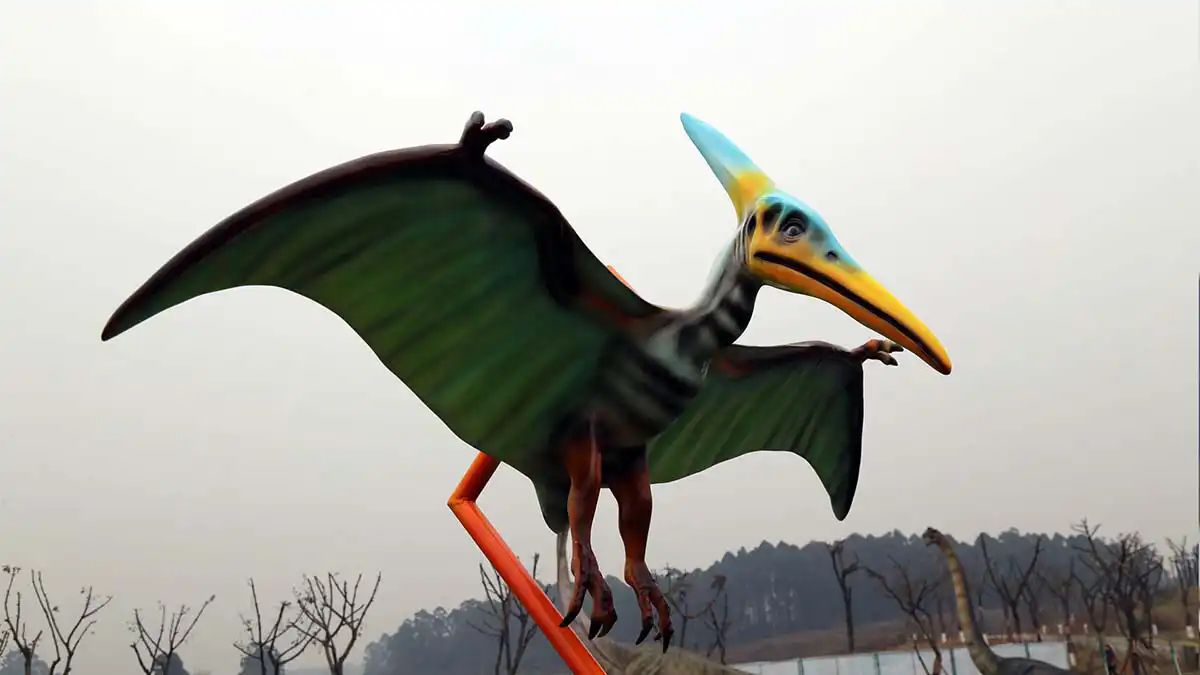
Animatronic dinosaurs are not one product category — they are two, and the buying experience is completely different.
Small Displays (up to 3 metres) — Plug and Play
- Self-contained: frame, surface, controller and speakers built into one unit.
- Arrives with a standard power plug; switch it on and it runs its preprogrammed sequences.
- No installation team required — a 2.4-metre Raptor sits on a weighted base and runs off a normal 220V/110V outlet.
- Interactive option available: the same sensors fit inside a small body, so a lobby dinosaur can react to visitors without any site work.
- Ideal for museums, shopping malls, lobby displays and events that need instant setup.
Large Displays (over 3 metres) — Professional Installation
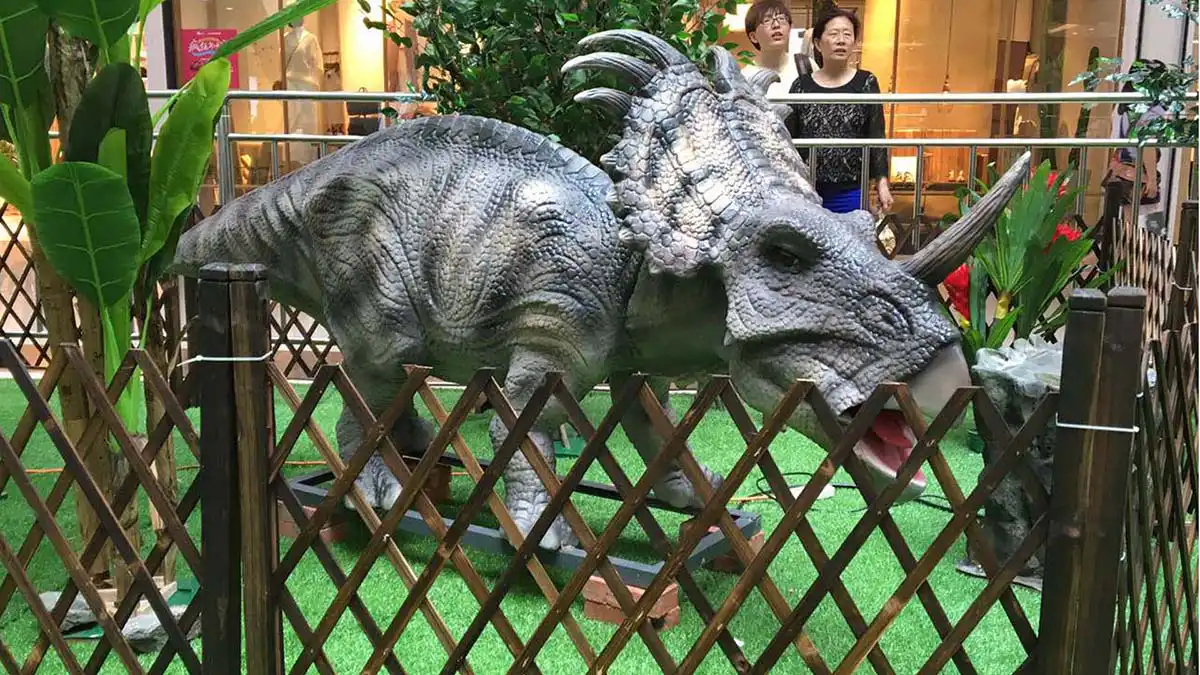
- Shipped as modules with an installation crew — our team has installed exhibits in 50+ countries.
- Site work includes concrete footings or ballast design, structural anchoring, concealed cabling, and safety perimeter planning.
- Full commissioning: motion tuning, audio balancing, gesture-sensor calibration, and a test cycle before opening day.
- Interactive layer recommended for headline pieces — a visitor-responsive T-Rex creates the photo moments that drive repeat visits.
- Ideal for zoos, theme parks and permanent museum exhibits where the piece is a headline attraction.
Tell us the species, the size, whether you want the interactive layer, and the site — we will quote the correct package, not a one-size-fits-all price.
Materials and Certifications: What Our Components Carry
Buyers in Europe and North America frequently ask about component safety. Every FestiveLanterns animatronic is built from certified materials supplied by specialist manufacturers:
- Cables and wiring — supplied with UL-listed or CE-certified insulation, sized for the load of each motor and speaker.
- Lighting and LED components — CE-certified drivers and outdoor-rated fixtures for outdoor use.
- Structural parts — sourced from certified mills with material test certificates available on request.
- Control electronics — CE-marked controllers; wiring layouts follow the relevant electrical codes for the destination country.
We are happy to provide certification documents and component datasheets during the quotation stage. For a detailed breakdown of our skin and manufacturing process, see how our hand-finished surface is made.
How Long Does It Take to Build?
Lead times scale with size and complexity:
- Small pieces (under 3 metres): 3 to 4 weeks from design approval.
- Mid-size (3–6 metres): 5 to 8 weeks.
- Large pieces (6 metres and up): 8 to 14 weeks, plus shipping.
Design approval is the variable. Most projects move fastest when the buyer approves the 3D rendering early — the factory work after that runs on a fixed schedule.
Frequently Asked Questions
How realistic are animatronic dinosaurs?
A well-built hand-finished animatronic is indistinguishable from a static museum replica at close range, and convincing in motion at 3 metres. Realism comes from the skin surface, the body mass, weighted motion and detail work — not from any single component.
What is the difference between realistic and interactive animatronic dinosaurs?
In most of the industry, they are different products: you buy a realistic dinosaur with preprogrammed motion, or you buy an interactive robot with a cheaper shell. At FestiveLanterns we build both into one body — a hand-finished, realistic animatronic that also recognises visitor gestures (posture, raised hand, speed, group size) through ultrasonic and infrared sensors, with no cameras and no AI. If you only need fixed programming, that is the default. Interaction is an add-on layer on the same body, not a different product.
Can a 3-metre animatronic dinosaur be used outdoors?
Yes. hand-finished surface and outdoor-rated components handle outdoor weather, including rain and direct sun. We do recommend a simple cover for extreme winters and a site check for wind loading on pieces over 5 metres.
Do you install large animatronic dinosaurs on site?
Yes — for pieces over 3 metres we provide a full installation crew. Our team has installed animatronic exhibits in 50+ countries, including concrete work, anchoring, cabling and final commissioning before opening day.
What certifications do your materials carry?
Cables, LED components, control electronics and structural metal are supplied with UL or CE certification from their manufacturers. Documentation and component datasheets are available at the quotation stage.
How do I get a price for a realistic animatronic dinosaur?
Send us the species, size, and intended location via our contact form. We return a 3D design proposal and itemised quote within 24 hours — pricing is species- and size-specific, so a quote beats any published price list.
Related Resources
- How Our Hand-Finished Surface Is Made — the material science behind the surface
- Gesture-Sensing Interactive Dinosaurs — sensor-driven exhibits that respond to visitors
- Interactive Dinosaur Exhibit Guide — what visitors actually do with interactive exhibits
- Hydraulic vs Pneumatic Movement — which drive system fits your exhibit
- Animatronic Dinosaur Products — browse the species catalogue
Need a centerpiece predator? Explore our life-size animatronic T-Rex dinosaur statue for museums and dinosaur parks.
Explore our Premium Dinosaur Ride Machine — 4-Seat Coin-Operated Family Dinosaur Ride for Shopping Malls for your next custom festival or themed event.
Explore our Custom Animatronic Tiger Model — Life-Size Zoo Exhibit for your next custom festival or themed event.