Safari Elephant Geometric LED Lantern

Safari Elephant Geometric LED Lantern
Animal Lanterns A geometric elephant is the same animal built from planes instead of curves — a different design language for venues that do not want a naturalistic trail. Animal Lanterns·Built to order·Zigong workshop Two ways to build the same…
Animal Lanterns
A geometric elephant is the same animal built from planes instead of curves — a different design language for venues that do not want a naturalistic trail.
Two ways to build the same animal
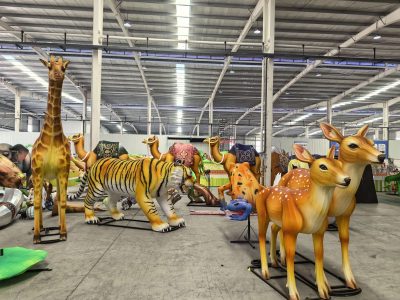
A naturalistic elephant is built from curved surfaces, worked section by section, and reads as the animal. A geometric elephant is built from flat planes meeting at visible angles, and reads as the animal seen through a design filter. Both are recognisable; the difference is what the venue wants the trail to feel like.
Naturalistic suits zoo, cultural and heritage settings, where the visitor expects the animal to look like the animal. Geometric suits city centres, plazas, retail and contemporary art programming, where a naturalistic figure would look out of place beside the architecture.
Why the geometry has to be consistent
The failure mode for this build is mixing the two languages: a faceted body with a smoothly curved trunk reads as a mistake rather than as a style. Every surface has to belong to the same system, including the ears, the tusks and the tail. That is a design discipline rather than a technical one, and it is what separates a designed piece from a low-poly attempt.
Plane size also follows viewing distance. Large planes read at a distance; small facets turn into noise.
Where geometric animals work
These pieces are usually commissioned for a specific architectural context — a plaza in front of glass facades, a retail atrium, a contemporary arts programme. They also work well in mixed trails where the naturalistic pieces are grouped and the geometric pieces mark the transitions.
They photograph differently from naturalistic pieces: the flat planes produce strong shadow lines, which is why they read better in daylight photography than most lantern forms.
Build and finish
The frame is built to the plane geometry, with each face a separate surface panel. That makes the build more modular than a curved form — panels can be replaced individually if a surface is damaged, which is an advantage on high-traffic sites.
Lighting is usually edge-lit rather than flood-lit, so the plane edges carry the light and the faces stay darker. That is what makes the geometry visible at night.
Specification
| Item | Detail |
|---|---|
| Type | Animal lantern — geometric construction |
| Configuration | Single figure on a design system of flat planes |
| Structure | Welded internal frame; each face a separate surface panel |
| Surface | Panel-based finish, replaceable per face |
| Lighting | Edge-lit LED, emphasising plane joints |
| Rating | Outdoor-rated as standard; indoor builds omit the weather package |
| Scale | Built to order — plane size set by viewing distance |
| Installation | Sectioned for container loading; assembled on site |
Related
Animal lanterns
Naturalistic and geometric animal forms in one place.
Outdoor landscape lighting
Structure-led installations for plazas and public space.
Request a quote
Send the architectural context and the position.
Commissioning a piece for a built environment?
Send photographs of the surrounding architecture and the position. We will reply with the plane scale that suits it.

You May Also Like
Related Products
Questions
Frequently Asked Questions
Interested in This Product?
Get a custom quote within 24 hours. Our team is ready to help.