Ice & Snow Lanterns Collections
Ice & Snow Lanterns — Custom Lantern Displays
Winter is the one season when a site is already dark by mid-afternoon — and the one season where the ground, the temperature and the weather all fight back. We build illuminated ice and snow displays for exactly that condition: ice-palace architecture, arctic animals, snow scenes and walk-through structures, engineered for outdoor operation in freezing weather. Sizes, species and scenes are made to order. If your winter programme also includes carved ice or an ice rink, the two are normally planned together so they share sightlines and power instead of competing for them.
Related guides: Themed Lantern Displays for Events and Venues · Chinese Lantern Manufacturer · Chinese Lantern Festival Displays · Lantern Festival Supplier · Zoo Light Trails
Deep reads: Winter Lantern Festival Manufacturer — Custom Ice & Snow Displays for Zoos & Parks · Light Festival Installation in the Netherlands: Canal Guide · How Zigong Became the World’s Lantern Capital: 800 Years of Craft, Innovation & Global Reach
All Ice & Snow Lanterns
Animal Lanterns
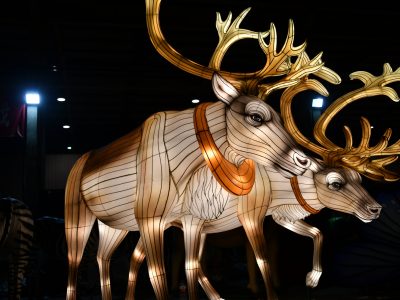
Giant Illuminated Reindeer Lantern — Majestic Moose Light Sculpture
This giant illuminated reindeer lantern sculpture captures the regal spirit of the…
Holiday & Seasonal Decorations
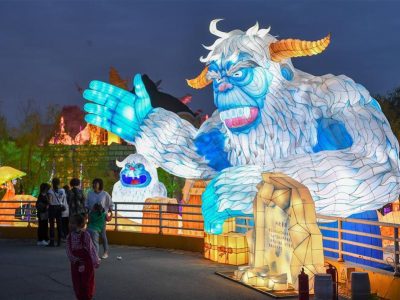
Ice Giant Yeti Winter Wonderland Lantern
Mythical Ice Giant Yeti Winter Lantern from 4-10m tall. Frosty blue-white LED,…
Animal Lanterns
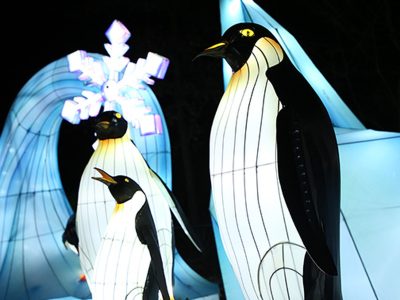
Penguin Colony Lantern — Igloo Scene
Penguin colony lantern — a group of penguins gathered around an internally…
Animal Lanterns
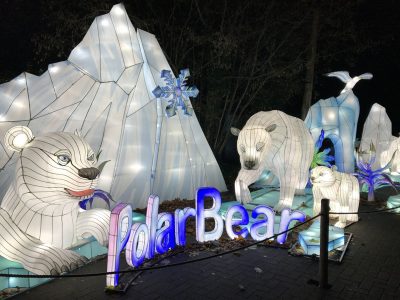
Polar Bear Iceberg Lantern
Majestic polar bear lantern against crystalline iceberg backdrop. Life-size arctic animal light…
The pages below cover the scenes we build, why cold changes the engineering, and what a winter site needs before anything is loaded onto a truck.
What an Ice & Snow Lantern Actually Is
It is an illuminated structure — internal frame, hand-covered translucent panels or fabric, LED inside — finished so that it reads as ice or snow: cool whites and blues, frost texture, translucent walls, crystalline edges, drifting snow forms. Visitors walking through an ice palace at night do not inspect the construction method; they register light, colour, scale and the cold. That is the effect the build has to deliver.
Carved ice is a different trade with a different set of constraints: it needs sub-zero temperatures held around the clock, it melts or loses clarity the moment the weather turns, it is heavy and fragile to transport, and it cannot be stored for a second season. An illuminated ice-look structure is built to survive a warm spell, ships in sections, and can be reinstalled next winter. Many northern venues use both — carved ice as a centrepiece inside a controlled area, illuminated structures for the route, the gateways and everything that has to last the whole season.
Scenes We Build
Most winter programmes mix four or five of these:
Ice palaces and castles
The anchor piece. Translucent walls, spires, towers and an entrance large enough to walk through, built in sections and lit from inside so the whole structure glows rather than being lit from outside. This is the piece that gets photographed from the car park and does most of the marketing work.
Arctic animals
Polar bears on icebergs, penguin colonies with igloos, snow leopards, seals and walrus. Animals do the work that architecture cannot: they give children something to name and adults something to photograph. See our polar bear and iceberg lantern and the penguin colony and igloo display.
Reindeer, moose and winter deer
Reindeer carry the season with less literal Christmas imagery than Santa figures, which makes them the safest centrepiece for a mixed-audience or non-commercial programme. Standing and grazing poses can be grouped into a herd. See the giant illuminated reindeer and moose and reindeer lanterns.
Yeti, snow giants and storybook winter characters
A yeti or snow giant is a scale statement — a two-to-four-metre figure that gives a trail a narrative and a moment of surprise at the point where visitors' attention starts to fade. See the giant yeti winter wonderland display.
Snow scenes, snowmen and candy villages
The family-facing end of the range: snowmen, sweet and candy-cane scenes, gingerbread villages and gift-box kiosks. Lower cost per piece, high photo value, and the part of the route that keeps small children engaged between the large set pieces. See the snowman and ice castle design and the Santa gift-bag light sculpture.
Walk-through archways and corridors
Tunnels, bell archways and colonnades — the connective tissue of any winter route. They slow visitors down, they frame photographs, and they are the cheapest way to make a long path feel designed rather than empty. See the walk-through light archway and giant bell archway.
Why Cold Weather Changes the Build
Most winter failures come from things that are invisible in summer. What we change for a cold site:
- Cable and connectors. Standard PVC cable stiffens and can crack when it is moved at low temperature. Cold-flexible jackets and connectors rated for the site's minimum temperature cost slightly more and are the difference between a display that runs and one that trips a breaker in week three.
- Drivers and control gear. Electronics are happier warm than frozen. Drivers go into sealed, insulated enclosures, ideally sharing heat with the modules rather than being mounted where condensation can collect on cold mornings.
- Thermal cycling. A structure that is −15 °C at 2 a.m. and in direct sun at noon is working much harder than one at a stable temperature. Expansion and contraction at joints is the main cause of water ingress, so sealing detail matters more than the headline IP rating.
- Snow load. Horizontal surfaces accumulate. Roofs of archways, castle turrets and flat-topped pieces are either sloped to shed snow or detailed to carry it — and either way, someone has to be able to clear it safely during the season.
- Wind. A translucent structure with a large face behaves like a sail whatever it weighs. Frame bracing and ballast are sized to the site's exposure, and a display in an open field needs a different base from one in a city square.
- Ground conditions. Frozen ground resists excavation and then heaves when it thaws. Bases are usually ballasted rather than dug in, with the ballast calculated for wind rather than for the piece's own weight.
- Fabric behaviour. Coverings are specified for cold flex, because a covering that becomes brittle and is then stretched by wind will tear. Where a piece is fully exposed, we usually prefer densified satin over silk for this reason alone — see why the fabric choice changes with exposure.
None of these are exotic. They are simply the decisions that get skipped when a summer display is reused in a winter programme without being re-engineered — which is the most common mistake we see in venues that had a bad first season.
Where Ice & Snow Displays Work
Ski resorts and mountain villages use them where the snow is already reliable and the route is a ski path in summer. City centres in northern latitudes use them for civic winter programmes that need to work in the dark from November. Zoos and wildlife parks build arctic zones that match their own collection. Shopping centres and mixed-use developments use an ice palace or a snow tunnel as the atrium centrepiece that generates evening footfall. Christmas markets use gateways and illuminated structures to tie separate stalls into one event. Botanical gardens, which have little to show in winter, use snow and frost themes to keep the site open and ticketed. See how venue teams structure these programmes.
Snow and Ice Inside a Wider Winter Programme
A winter lantern route rarely stands alone. It usually sits inside a programme that also has market lighting, Christmas installations, family shows and food. The planning question is not "which display" but "what does the visitor do between the ticket gate and the exit" — and the ice and snow pieces have to connect to the rest of it rather than being a separate island of blue light. Venue teams reading up on this usually start with the Christmas light festival guide, then our guide for winter lantern festival organisers, and what winter festival visitors actually search for. For specific market and country formats, see Christmas market lighting in Germany and light festival installation in the Netherlands.
Planning the Visitor Route in the Dark
Winter routes have three problems that summer events do not: it is dark from the first minute, the ground is cold and often wet, and visitors arrive dressed for standing still rather than walking.
Practically, that means the route needs a visible destination from the entrance — the ice palace should be partly visible on arrival, so visitors know where they are walking. It needs warm or sheltered pauses: a food stall, a covered area, a heated tent, placed at the point where visitors have been outside long enough to think about leaving. Path lighting has to be bright enough to be safe without flattening the display lighting, which is why pathway markers are usually a separate circuit from the scenery. Snow and ice clearance routes for maintenance need planning at the same time as the visitor route — the easiest way to keep a display running is to make it reachable with a small vehicle. For a worked example of the rest of the planning clock, see the festival planning checklist and decorating a venue with Christmas lanterns.
Scale, Anchors and Power on a Winter Site
On paper a winter site is the same as any other: footprint, clear walk-through width, anchoring, and power at the right place. In practice, three details matter more.
First, anchoring is usually ballasted because the ground is frozen or protected, and the ballast has to be sized for wind rather than for the weight of the structure. Second, power distribution needs a maintenance plan — extension runs across a visitor path in ice and slush are a safety issue, not an inconvenience, so cable routing is designed above head height or along the edges. Third, access: a display that cannot be reached without closing the route cannot be maintained during the run, and the week between Christmas and New Year is exactly when it will need to be.
How We Build and Deliver
Design drawings from your site plan and theme, then frames, then hand-covering, then LED wiring and control, then trial assembly in the workshop, then packing in numbered sections with an assembly sequence and wiring diagram. Winter projects ship by sea freight where there is time and by air where the calendar is tight, and the window matters more than usual: a display that is late in July is a frustration, and one that is late in November is a cancelled season. Our team supervises or carries out installation and commissioning, and runs the first evening with your staff. See shipping festival lanterns from China to Europe and the on-site installation guide, covering setup, safety and the timeline.
What Affects the Cost
Prices are quoted per project because two displays that look similar in a photograph can be entirely different jobs. The drivers here are: total covered area and the amount of hand-finishing; the wind and snow engineering the site demands; whether the display is fully exposed or sheltered; static or moving; fixed warm-white lighting or programmable colour; the number of separate pieces and how they pack; and the delivery date, since air freight and accelerated production both cost more than a normal sea-freight schedule. For how organisers build the wider budget, see what drives the cost of a lantern festival and what a Christmas light festival costs.
Keeping It Running Below Freezing
Over a six-to-eight-week winter season, the failures we see are almost always water, cable or snow rather than LED life. Practical routine: check seals and joints after the first hard freeze and again after any thaw; clear snow from load-bearing surfaces before it turns to ice; keep a small spares kit on site (modules, connectors, a metre of matching covering, touch-up paint); and monitor circuits remotely so a dead section is found by your maintenance team rather than by a visitor. See smart monitoring for festival lanterns.
Frequently Asked Questions
Can the display run outdoors at −20 °C?
Yes, when it is specified for it. The critical parts are cold-flexible cable, sealed and insulated driver enclosures, and base detailing that tolerates frozen ground and frost heave. Tell us the site's typical minimum temperature and exposure at the design stage and we build to that figure.
Is this the same thing as carved ice sculpture?
No. We build illuminated structures finished to read as ice and snow. Carved ice is a separate trade that needs continuous sub-zero temperatures and cannot be stored for a later season. Where a programme includes both, they are normally planned together so they share sightlines and power.
Can the display be stored and reinstalled next winter?
Yes. Internal frames, sections and control gear are built for reuse; coverings can be re-stretched or replaced. Storing in numbered sections with the original drawings is what makes a second season routine rather than a rebuild.
What about a warm spell in the middle of the season?
The structure is not affected by above-zero temperatures the way carved ice is; the risks are water ingress and slippery visitor paths, which is why we detail drainage and sealing into the build rather than relying on the cold.
How early should we order for a November opening?
A small set is possible in weeks; a full winter programme with large structures normally needs two to four months of production plus shipping. The earlier the opening date is on the table, the more of the schedule can be taken by sea freight instead of air.
Explore Related Displays
- Chinese lanterns and festival lighting — the full range this category belongs to.
- Holiday and seasonal decorations — Christmas, harvest and seasonal programmes.
- Light sculpture — contemporary illuminated installations for the same route.
- Giant lanterns — gateways and walk-through structures at event scale.
- Animal lanterns — wildlife displays, including arctic and polar species.
- Winter reindeer family display — a design-page example of a winter scene.
- Zoo Christmas lights buyers guide — for zoos and wildlife parks.
- Christmas lighting show — combining lanterns with a lighting show format.
Talk to Us About Your Winter Display
Tell us the site, the minimum temperature it sees, the opening date and the route you have in mind. We will come back with a scene list, sizes, anchoring and power requirements, an installation plan that works in winter conditions, a production schedule and a fixed quotation for the scope we agree. Send us your brief to start.
Need Design Inspiration?
Browse Our Creative Design Concepts
Visualize your ice & snow lanterns project with our AI-assisted concept gallery — see real design directions for festival, holiday, and seasonal events before production.