Cultural Lanterns Collections
Cultural Lanterns — Authentic Chinese Heritage Displays
Cultural and heritage lanterns are the part of the craft where the reference matters more than the effect — dragons, phoenixes, gateways, courtyard scenes and figures drawn from literature and opera, built for museums, cultural centres and civic programmes. Pieces are painted by hand on silk, and where accuracy carries weight we work from a supplied reference rather than from an interpretation.
Related guides: Themed Lantern Displays for Events and Venues · Chinese Lantern Manufacturer · Chinese Lantern Festival Displays · Lantern Festival Supplier · Zoo Light Trails
Deep reads: 202.4-Meter “Intangible Cultural Heritage Chinese Dragon” Lantern Group: A New Benchmark in Sustainable Lantern Art · How Chinese Lanterns Are Made: From Metal Frame to LED Illumination (2026 Guide) · How Zigong Became the World’s Lantern Capital: 800 Years of Craft, Innovation & Global Reach
All Cultural Lanterns
Cultural Lanterns
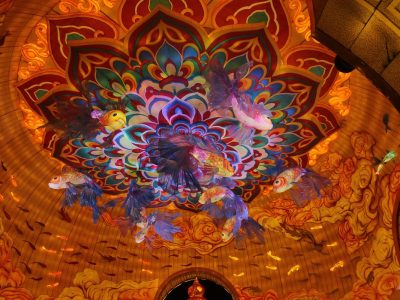
Indoor Ceiling Lantern Installation — Lotus Medallion with Suspended Koi
Most indoor spaces have one large surface nobody uses: the ceiling. This…
Cultural Lanterns
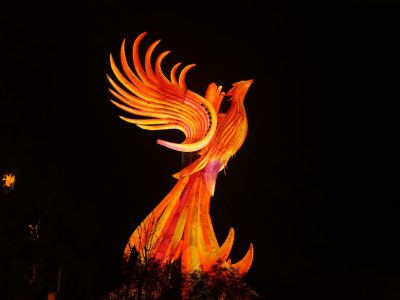
Fire Phoenix Lantern — Giant Illuminated Phoenix Sculpture
A phoenix is the one silhouette visitors recognise before they can name…
Cultural Lanterns
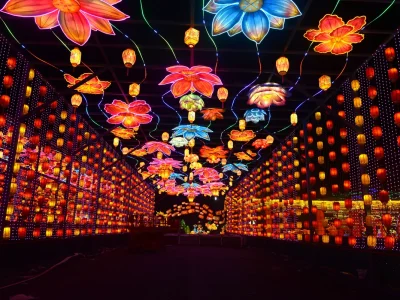
Red Lantern Wall Corridor — Dense Lattice Lantern Walls and Lotus Ceiling
A red lantern wall corridor is built from volume, not from decoration.…
Cultural Lanterns
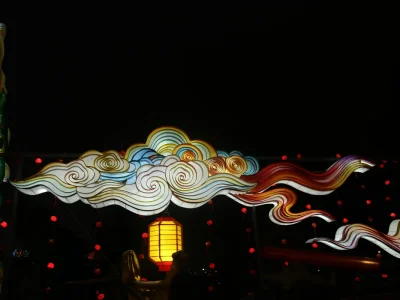
Cloud Motif Lantern Archway — Auspicious Cloud Span with Ruyi Crest
The cloud motif is the oldest visual device in Chinese decorative art…
Cultural Lanterns
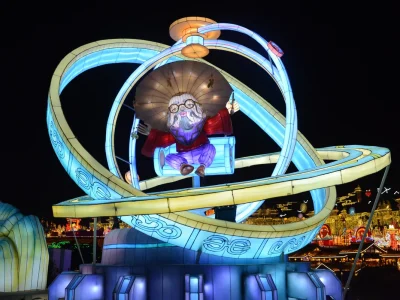
Time-Space Portal Lantern Installation for Modern Festival Zones
Most lantern installations describe something that already exists. This one describes something…
Cultural Lanterns
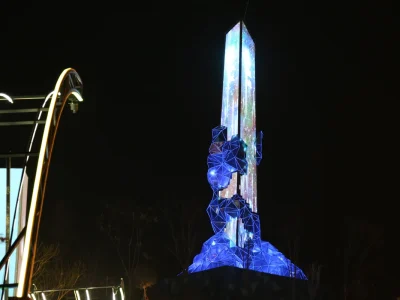
A Modern Light Tower for Plazas and Waterfronts
This light art installation pairs a tall, internally lit monolith column with…
Cultural Lanterns
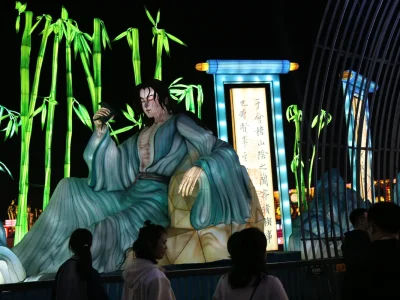
A Literati Scene Drawn from the Orchid Pavilion Gathering
This poet lantern scene brings one of Chinese literature's most famous gatherings…
Cultural Lanterns
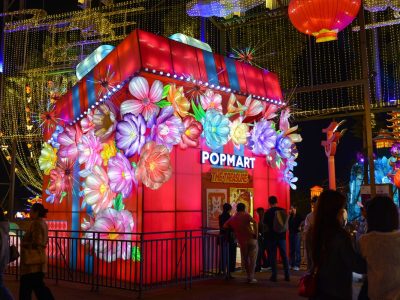
Giant Gift Box Lantern Kiosk — Illuminated Retail Pavilion
At any festival, the most expensive thing on site is not the…
Cultural Lanterns
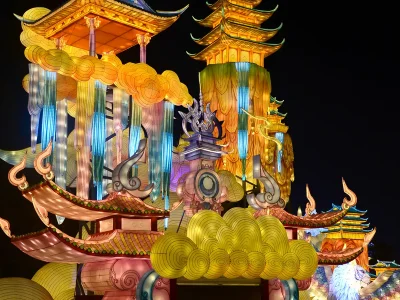
Traditional Chinese Architecture Lantern Scene — Pavilion & Auspicious Bird Display
A traditional Chinese architecture lantern scene with stacked pavilion rooftops, cloud motifs…
Animal Lanterns
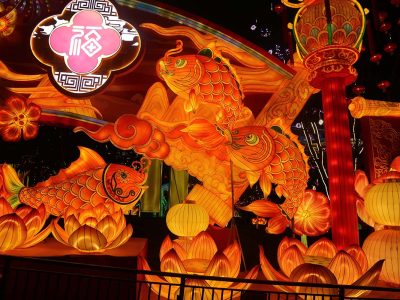
Nian Nian You Yu Koi Fish Abundance Lantern
The visual pun that has delighted Chinese families for over a thousand…
Cultural Lanterns
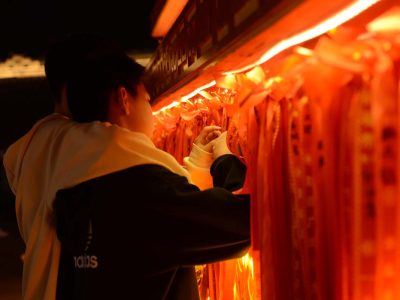
Lantern Riddle Activity Display
Bring one of the oldest Chinese lantern festival traditions to your event…

Cultural Lanterns
Lantern Corridor Walkthrough — Custom Immersive Festival Light Tunnel
The Lantern Corridor is a walk-through immersive festival experience — overhead canopies…
The collection covers five subject families: dragons, palace and architectural pieces, mythological figures, the twelve zodiac animals, and festival classics such as lotus and blessing motifs. Tell us the period, the region and the source you want respected, and the concept comes back against those points. Request a cultural lantern catalogue, or see the silk and traditional lanterns range for smaller-scale classics.
Buying Guide
Commissioning a Heritage Lantern Display
A heritage display is judged by people who know the reference. That is a different standard from a festival trail, where the audience is seeing the work for the first time — and it changes what has to be settled before anything is built: which period, which region, which source, and who signs off on the accuracy.
What "Heritage" Changes in the Brief
In a festival brief, the theme is a mood. In a heritage brief, the theme is a claim, and it can be wrong. A dragon in the Ming manner carries different proportions, claws and scale patterns from one drawn in the Qing manner; a courtyard scene implies a floor plan that visitors who grew up with that architecture will read instantly.
So the first deliverable is not a sketch — it is a decision: one period, one region, one source. Everything downstream follows. Mixed references are the single most common reason a cultural display reads as "Chinese-themed" rather than as Chinese.
The second decision is who signs off. Museums and cultural centres usually have a curator or a subject specialist; if that person exists, bring them into the concept review rather than the final inspection. It is far cheaper to correct a reference at sketch stage than after the silk is painted.
Four Subject Families
| Family | Reading | Where it belongs |
|---|---|---|
| Dragons | Authority, water, the seasonal cycle | Thresholds and long sightlines — a dragon read in fragments loses its meaning. |
| Phoenix and mythic beasts | Renewal, ceremony, good fortune | A single focal piece rather than a sequence; these are meant to be looked at, not walked past. |
| Architecture and gateways | Place, hierarchy, welcome | Entrances and corridors. Proportional accuracy matters more here than surface detail. |
| Scenes and figures | Literature, opera, daily life | Galleries and indoor settings, where visitors stand and read rather than pass through. |
Museum and Gallery Settings
Indoor heritage displays are specified against a different set of constraints than outdoor festival pieces. Ambient light never falls to true night, so an internally lit piece competes with the room instead of owning it. Ceiling height, suspension points and floor loading decide the format before the subject does. Fire regulation applies to the covering, not just the wiring, and a curator will ask for the documentation.
Practical notes that save rework: agree the base or plinth early (many pieces are designed to be seen from a fixed height), decide whether visitors can walk through or only around, and plan the label position so it does not sit in the brightest part of the piece.
Heritage and Contemporary Live Together Here
This collection is not exclusively historical. Alongside dragons, cloud-motif archways and courtyard scenes, it holds pieces built for modern programmes — light towers, portals, suspended ceiling installations. They sit in the same category because they share a method: a structural frame, a translucent skin, and light designed as part of the form.
The distinction matters when writing a brief. A heritage piece is specified by reference; a contemporary piece is specified by effect — how it should read from the entrance, how it photographs, how it behaves against the surrounding architecture. Sending the wrong kind of brief for the kind of piece you want is the most common cause of a concept that comes back wrong.
Working from a Reference
The quality of the outcome tracks the quality of the reference. Useful: photographs of an existing object from more than one angle, a museum catalogue entry, a dated architectural drawing. Less useful: a search-engine image with no source, or a verbal description of a style.
Where accuracy carries real weight — a civic commission, a museum, a piece representing a specific region — say so at the start. It changes how the concept is reviewed, and it is the difference between a display that a specialist accepts and one that gets queried after installation. See how this works in practice across our delivered projects and the wider Chinese lantern festival range.
Heritage Lantern FAQs
Can you work to a curator's specification?
Yes. Send the reference set and the points the curator wants respected, and the concept comes back against those points rather than against a general style.
How accurate can a painted motif be?
As accurate as the reference allows. Line work, colour order and the placement of secondary motifs can all be followed; what cannot be invented is a detail that is not visible in the source.
Do indoor pieces need different electrical arrangements?
Yes — indoor installations are powered and certified differently from outdoor ones, and the covering is specified against indoor fire requirements. Tell us the setting before the concept stage.
Can a heritage piece be scaled down for a gallery?
Often, but scaling is not proportional: at smaller sizes the frame ribs have to be spaced differently or the silhouette sags. It is a re-engineering job, not a photocopy reduction.
Do you build pieces outside the Chinese tradition?
We build to the reference supplied. The frame-and-skin method is not culture-specific; the vocabulary, proportions and colour logic are whatever the brief and the source material specify.
Need Design Inspiration?
Browse Our Creative Design Concepts
Visualize your cultural lanterns project with our AI-assisted concept gallery — see real design directions for festival, holiday, and seasonal events before production.