Silk & Traditional Lanterns Collections
Silk & Traditional Lanterns — Classic Chinese Festival Lighting
Traditional silk lanterns are built the old way: a bent-wire frame, a stretched hand-finished surface, and hand painting once the silk is dry. This collection covers the classic vocabulary — phoenix and qilin figures, plum blossom branches, blessing lanterns, pagoda structures and festival archways — for temple fairs, Chinese New Year programmes, cultural centres, museum galleries and city heritage routes. Motifs, sizes and colour schemes are built to your brief, with UL or CE marked components for the destination market.
Related guides: Themed Lantern Displays for Events and Venues · Chinese Lantern Manufacturer · Chinese Lantern Festival Displays · Lantern Festival Supplier · Zoo Light Trails
Deep reads: Why Zigong Lanterns Use Densified Polyester Satin — The Material Science Behind Light Transmission and Durability · Article — Horizontal vs Vertical Wire Techniques in Lantern Frame Construction — How Directional Wiring Solves Aesthetic Challenges · Chinese Lantern Festival Sourcing & Budget Guide 2026
All Silk & Traditional Lanterns
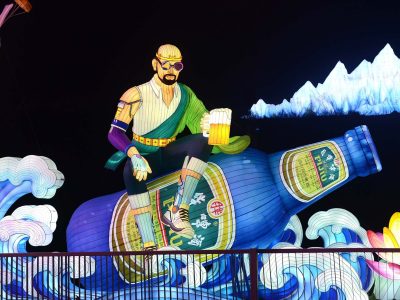
Outdoor & Landscape Lighting
Beer Bottle Character Lantern
Beer Bottle Character Lantern — Giant Illuminated Brand Mascot Product Overview Make…
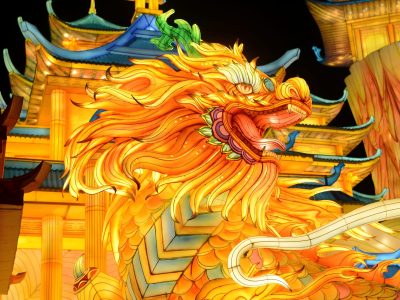
Animal Lanterns
Chinese Dragon Lantern Display — Giant Golden Dragon Installation
C:u005cUsersu005cAdministratoru005cWorkBuddyu005c2026−06−10−08−19−46u005cC:u005cUsersu005cAdministratoru005cWorkBuddyu005c2026-06-10-08-19-46u005c As…
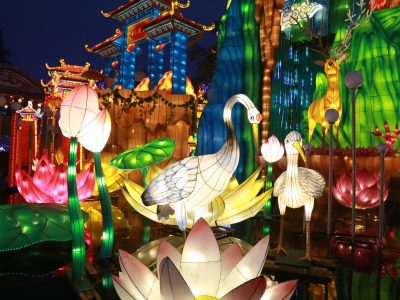
Animal Lanterns
Crane Lotus Pagoda Lantern
Majestic multi-tiered Crane Lotus Pagoda Lantern from 3-12m tall. Hand-painted silk lotus…
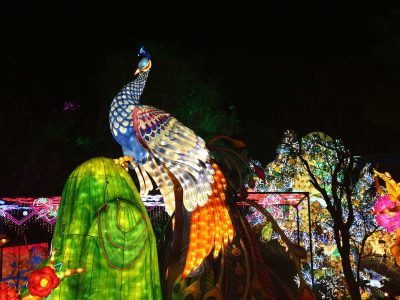
Festival Lanterns
Peacock Feather Rock Lantern
Elegant Peacock Feather Rock Lantern with 18-24 iridescent feathers on stone base.…
Silk & Traditional Lanterns
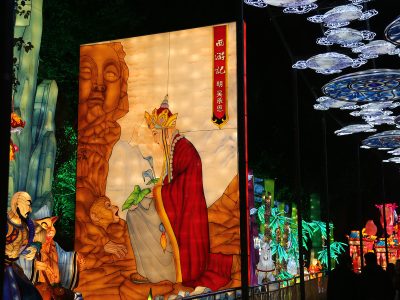
Journey to the West Relief Panel Lantern
Cultural Lanterns A relief panel tells a story along a wall —…
- ← Previous
- 1
- 2
Browse the collection below, or request a custom design proposal with your motif, size and venue. For the wider range, see all lantern collections.
Buying Guide
How Traditional Silk Lanterns Are Made and Specified
Traditional lanterns carry a visual language that audiences recognise before they read a single label: a phoenix, a pagoda roof, a plum branch, a Fu character. Getting that language right is a craft problem, not a styling problem — and it is decided in three stages that buyers rarely see. This guide explains what each stage changes, and what to settle before a motif is approved.
Three Stages: Frame, Silk, Hand
The frame decides the silhouette. Traditional lanterns are built on bent wire and bamboo-style splines rather than welded plate. The ribs have to run where the form bends, which is why a pagoda roofline and a plum branch cannot share the same frame even when they are the same height.
The silk decides the light. Silk is stretched wet and shrinks tight as it dries, which is what gives a traditional lantern its smooth, slightly translucent skin. That translucency is the whole point: the light should pass through the material, not sit behind it. Cheaper coverings block more light and need stronger internal sources, which flattens the colour.
The hand decides whether it is believable. Painting happens after the silk is dry. On a phoenix, the order of brushwork matters more than the palette: feathers are laid in layers from tail to shoulder, and the eye is painted last because everything else is judged against it. This is the stage that separates a lantern that reads as Chinese from one that reads as a lampshade.
Four Forms Buyers Ask For
| Form | Typical use | What decides the size |
|---|---|---|
| Single figure phoenix, qilin, opera warrior | A focal point at an entrance or the end of a sightline | The distance it must read from, and the height of whatever stands behind it. |
| Pavilion or tower multi-tier pagoda, lantern pavilion | A landmark, or a walk-through interior | Headroom inside if visitors enter, and the roof load if it stands in wind. |
| Corridor lantern tunnel, walkthrough colonnade | Linking two zones, or slowing people down | Route width and two-way flow. A corridor that is too narrow becomes a queue. |
| Gateway archway, paifang, themed entrance | The threshold of the whole event | Sightline from the ticket point, plus clearance for service vehicles underneath. |
The Subjects That Carry Meaning
Traditional lantern subjects are not interchangeable decoration. Each one carries a specific reading, and audiences who grew up with them notice immediately when the pairing is wrong:
- Phoenix and qilin — auspicious, ceremonial, usually placed at thresholds or as the centrepiece rather than along a route.
- Plum blossom, lotus, peony — seasonal readings: winter resilience, purity, prosperity. Wrong season reads as a mistake.
- Fu characters, gourds, blessing motifs — domestic and celebratory, best at human scale where visitors can stand beside them.
- Regional references — Dunhuang apsaras, Sanxingdui masks, opera headdresses. These are strong precisely because they are specific, and they only work if the reference is accurate.
The practical rule is one period, one region, one story per zone. Mixing a Tang dynasty motif with a Qing archway in the same sightline looks like a catalogue rather than a scene, and it is the single most common brief mistake we see.
Indoors, Outdoors, and the Difference That Matters
The same lantern is specified differently for a museum gallery and a temple fair. Outdoors, the covering has to survive rain, sun and wind load, and the frame has to be anchored rather than merely stood up. Indoors, the constraints shift to ceiling height, fire regulation and the fact that ambient light never drops to night level — which changes both the internal lighting and the colour depth painted on the silk.
Tell us which one you are at the brief stage. A piece specified for a gallery and then placed outdoors will fail at the seams first, and the repair costs more than the original specification difference.
Between Seasons: Storage and Re-dressing
Silk is the part that ages. Stored damp it spots; stored compressed it creases along the frame ribs and the creases show the moment it is lit. The handling that keeps a traditional lantern usable for years is unglamorous: dry storage, crates that hold the shape rather than squash it, and a written dismantling order so the same piece comes apart the same way every time. Ask for that documentation with the delivery — it is the difference between a collection that returns next season and one that is replaced.
Silk & Traditional Lantern FAQs
Can you reproduce a specific historical reference?
Yes, given a reference image or a museum source. Accuracy depends on the reference quality, so send photographs of the object rather than a description of it.
Is the silk painted by hand?
The figure work is hand-painted after the silk is stretched and dry. Simple geometric pieces can be produced faster, but anything with feathers, scales or faces is brushwork.
Can a traditional lantern be built at large scale?
Yes, and the frame changes when it is: ribs get closer together, the base becomes a structural element, and the piece is trial-assembled before shipping. The silhouette is kept; the engineering behind it is not the same as a table-top lantern.
How do you handle colour matching across a set?
Sets are painted together rather than separately, from one mixed batch. If a set is extended in a later season, send a photograph of the existing pieces in daylight so the new ones are matched against the actual object.
Do you build non-Chinese traditional forms?
We build to the reference you supply — Japanese chochin forms, lantern arches in other regional styles, and neutral geometric pieces are all possible. The craft method is the same; the vocabulary is whatever the brief specifies.
Need Design Inspiration?
Browse Our Creative Design Concepts
Visualize your silk & traditional lanterns project with our AI-assisted concept gallery — see real design directions for festival, holiday, and seasonal events before production.