Magic Forest Interactive Lantern — Owl & Wizard Theme

Magic Forest Interactive Lantern — Owl & Wizard Theme
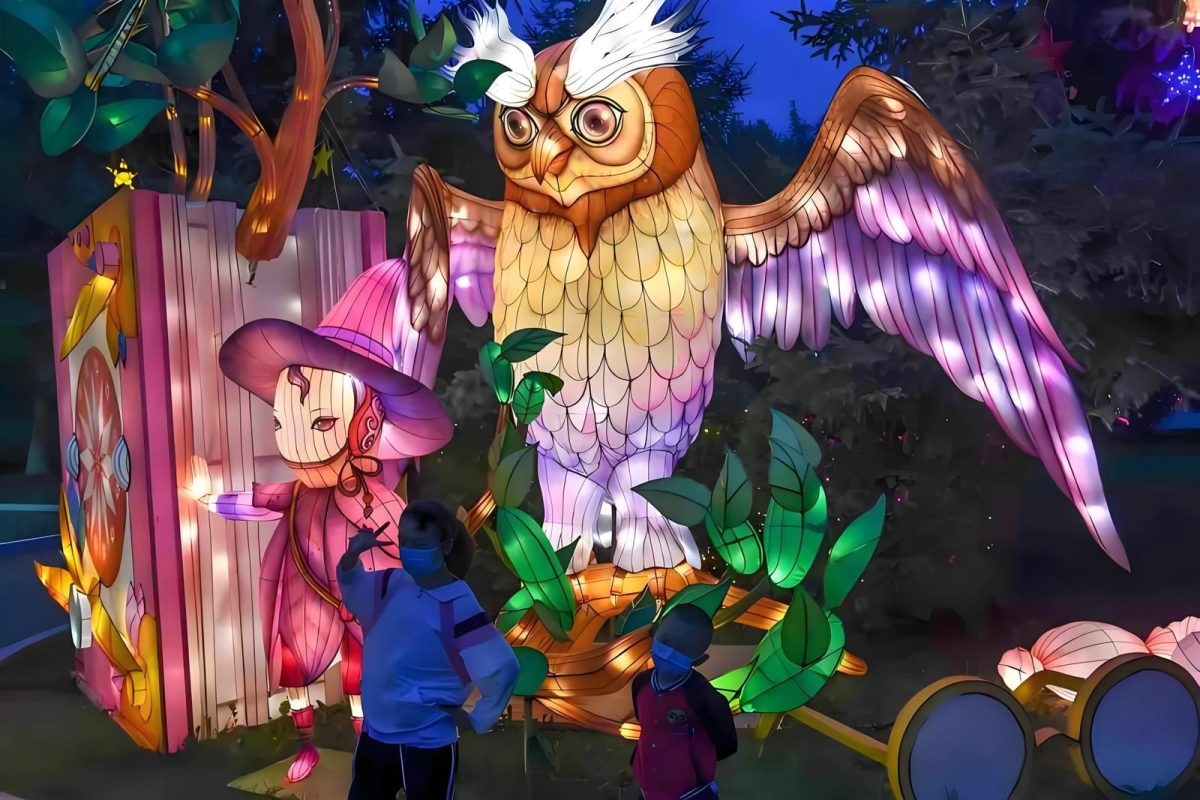
A wizard stands under a twisted tree with his staff lit, an owl watches from the branch above, and an open spell book hangs in the air between them. This magic forest lantern is built as a walk-through scene rather than a…
A wizard stands under a twisted tree with his staff lit, an owl watches from the branch above, and an open spell book hangs in the air between them. This magic forest lantern is built as a walk-through scene rather than a lit sculpture, and the whole point of it is that it answers back: sensors pick up a visitor’s approach and the scene changes — the staff shifts colour, the book brightens, a short sound cue plays. Nothing about the figures moves on its own until someone walks up to them.
That single design decision changes how the piece is planned. A static lantern is judged on how it looks; an interactive one is judged on how it behaves when a queue of families arrives at once, and on whether it still behaves the same way in daylight, in rain and at the end of a long evening. The notes below are the operational ones — the things that decide whether the installation is a highlight or a bottleneck.
Interactive, Not Just Lit — What the Response Actually Does
The motion sensing is passive infrared: a sensor watches a zone in front of the scene and fires when something warm moves through it. There is no button to press and no floor mat to find, which matters with children because the effect happens before they have to be told how to trigger it.
- Trigger zones, not one sensor. The scene is divided into two or three zones — approach, mid-point and the wizard’s plinth — so the effect escalates as a visitor walks in rather than firing everything at once. Zones are laid out on the site plan, not chosen on the day.
- Reset delay. After a trigger the scene holds for a set time, then resets so the next group gets the full sequence too. Without a reset delay, a busy evening means most visitors see the tail end of someone else’s effect.
- Sensor height set for shorter visitors. Mounting height is set so a child triggers the scene, not only an adult. This is set during design against your path width.
- Daylight behaviour. A passive infrared sensor works day and night, but a lighting effect is invisible in daylight. A daytime mode — sound only, or dimmed light with the sound cue — is worth setting if the scene operates through the afternoon.
Throughput and Dwell Time — the Numbers Operators Ask For
Interactive pieces fail for one reason more often than any other: the effect is so good that visitors stand in front of it. Two numbers settle the design, and both are worth deciding before the layout is drawn.
- Dwell time. How long the full sequence runs, including the pause before it resets. A 40–60 second sequence is long enough to feel like an event and short enough to keep the queue moving.
- Group size. A family or a school group arrives together, so the plan should assume groups rather than individuals. Width of the viewing area decides how many can stand in the trigger zone at once.
Put those together and you get throughput. A 45-second cycle with an average group of six gives roughly 480 visitors an hour. If your opening night expects more than that on one path, either widen the viewing bay or place a second interactive piece further along so the crowd splits instead of stacking. This is the calculation we go through with event operators at design stage, because moving a trigger zone two metres across a plan is free and discovering the bottleneck on opening night is not.
The Scene — Owl, Wizard, Spell Books
Three elements carry the story, and each one has a job at night.
- The wizard is the light anchor — a crystal-topped staff that shifts colour, set on the deepest part of the scene so the colour change reads from the far end of the path.
- The owl is the focal point at eye level. A slow head-turn is available as an option; left out, the owl still reads because it is framed inside the tree canopy rather than placed on top of it.
- The spell book and floating orbs give the scene its middle layer — suspended elements between the figures, so the composition has depth instead of reading as a flat backdrop.
Oversized mushrooms and carved tree forms fill the base. The palette is deliberately cool — blue-green through violet — with warm accents reserved for the staff and the book, so the two interactive elements stand out from the surrounding scene. Where the piece sits inside a longer trail of warm-toned lanterns, that contrast alone makes it findable.
Related Displays and Resources
- Fairy Forest Lantern Arch — the entrance piece for the same forest story, placed before the scene
- Lantern Festival Photo Spot — for the second stopping point on a trail, so groups split rather than stack
- Game Themed Lantern Scene — another interactive build with a different interaction language
- Cartoon Fox Lantern Sphere — a smaller forest creature piece for the same trail
- Chinese Lantern Festival — how centrepieces, approaches and walk-through pieces are sequenced across a site
- Request a Quote — send your route plan and path widths, and we will return a layout with trigger zones marked

You May Also Like
Related Products
Questions
Frequently Asked Questions
Interested in This Product?
Get a custom quote within 24 hours. Our team is ready to help.