Eiffel Tower Lantern Installation
Eiffel Tower Lantern Installation
Giant & Large-Scale Lanterns A landmark replica is an engineering problem before it is a design one — the shape is fixed, so the frame has to work around a silhouette that cannot be adjusted. Giant & Large-Scale Lanterns·Built to…
Giant & Large-Scale Lanterns
A landmark replica is an engineering problem before it is a design one — the shape is fixed, so the frame has to work around a silhouette that cannot be adjusted.
Why landmark replicas are harder than they look
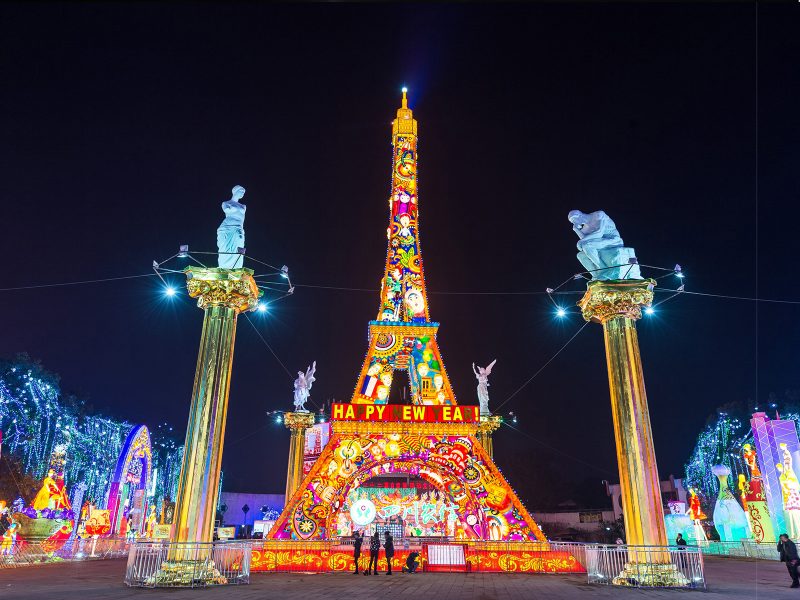
With an original design, the frame shapes the silhouette. With a landmark, the silhouette dictates the frame: the tower's profile, its four legs and its tiers are all recognisable, and any deviation reads as a mistake. That removes the designer's usual freedom and puts the weight on engineering.
The lattice is the specific challenge. A solid-sided tower reads as a decorated cone; the open lattice is what makes it the tower, and an open lattice means the frame is carrying the structural role that the surface would normally share.
Open structure and wind
An open lattice actually helps in wind — it lets air through rather than presenting a solid face — but it concentrates load at the node points. The tower is built in stacked sections with the load running down the four legs, and the sections are joined at the tier levels where the real structure also changes geometry.
Height is the practical limit. A replica tall enough to be a landmark is a structure that needs its own base and its own wind calculation, not a piece that can be dropped onto a lawn.
Lighting a lattice
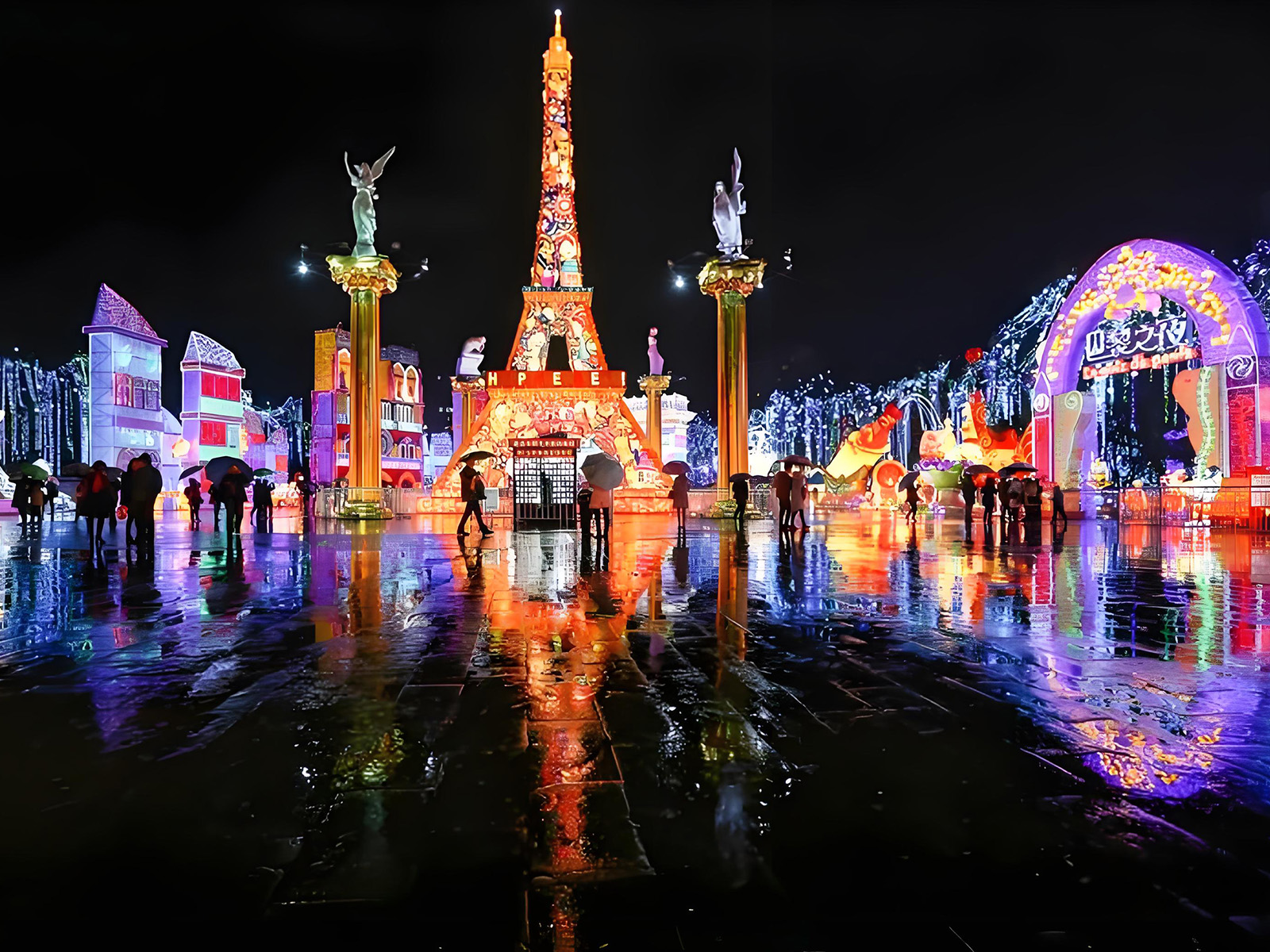
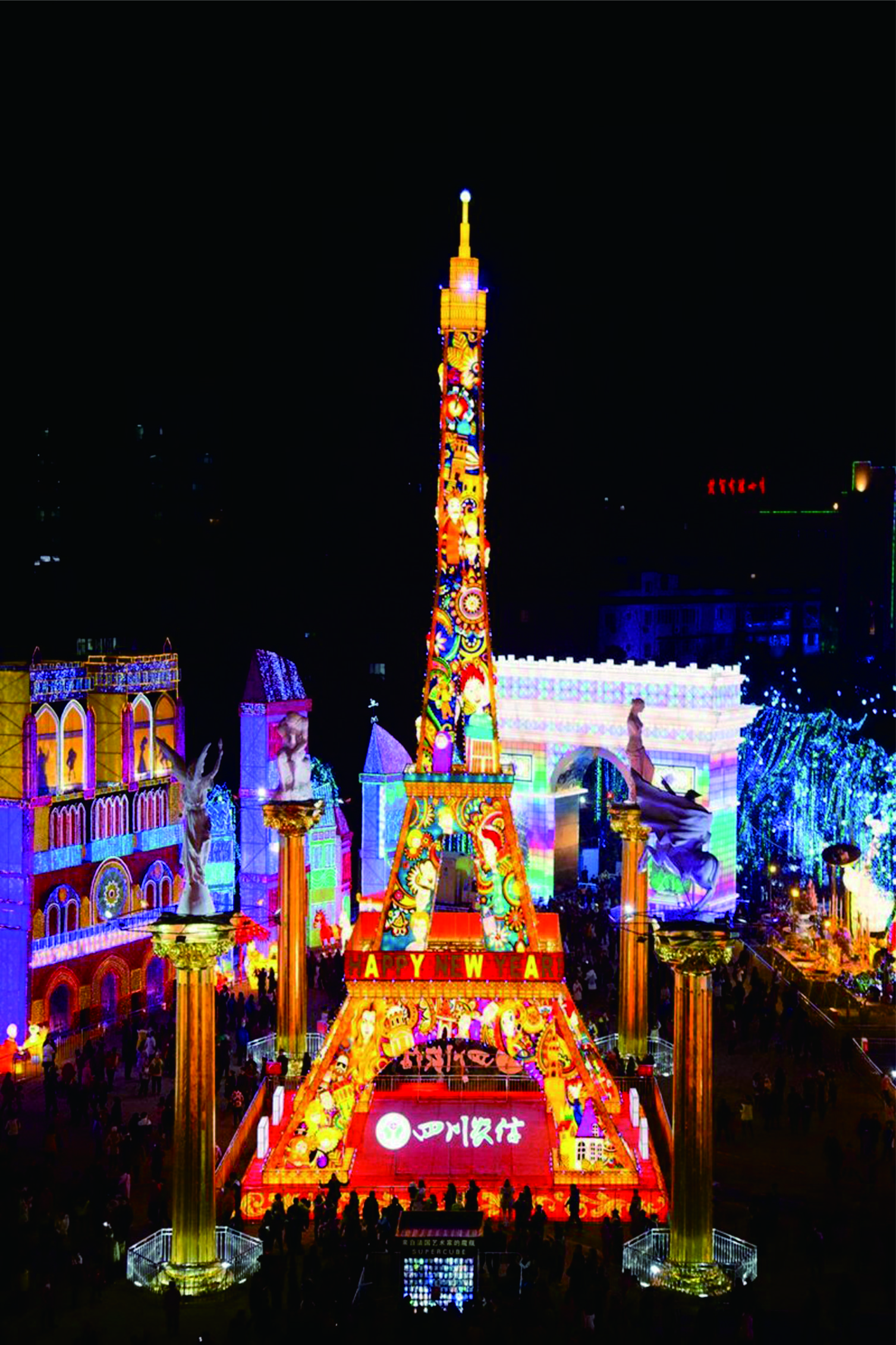
Lighting follows the structure rather than the surface: the legs and the tier edges are outlined so the profile reads from a distance, and the interior of each tier is lit more softly so the lattice has depth. Lighting the faces flatly destroys the open structure effect.
The signature effect for a tower at night is an interior glow with a bright outline, and the balance between the two is what makes the piece read from across a site.
Context and placement
Landmark replicas are usually commissioned for a specific programme — a city twinning, a French-themed festival, an international zone — and they carry a strong association that the venue is borrowing. Placement usually follows that: an international section, a plaza centre, or a waterfront position where the reflection doubles the height.
Where a venue wants the landmark without the association, a stylised or abstracted version is usually the better brief, and it frees the design at the same height.
Specification
| Item | Detail |
|---|---|
| Type | Landmark replica lantern — Eiffel Tower form |
| Configuration | Stacked open-lattice sections with four legs |
| Structure | Load down four legs; sections joined at tier levels |
| Surface | Open lattice rather than solid panels |
| Lighting | Outlined edges with softer interior tier glow |
| Wind | Open structure reduces face load; node points engineered |
| Scale | Built to order — landmark height requires dedicated base and calculation |
| Installation | Sectioned for container loading; assembled in stack order |
Related
Giant lanterns
Large-scale structures and wind-load engineering.
Architectural lanterns
Building forms and landmark replicas.
Request a quote
Send the height you need and the site conditions.
Commissioning a landmark replica?
Send the intended height and the ground conditions. We will reply with the base and the section plan.
You May Also Like
Related Products

Questions
Frequently Asked Questions
Interested in This Product?
Get a custom quote within 24 hours. Our team is ready to help.