Reindeer Lanterns
Reindeer Lanterns
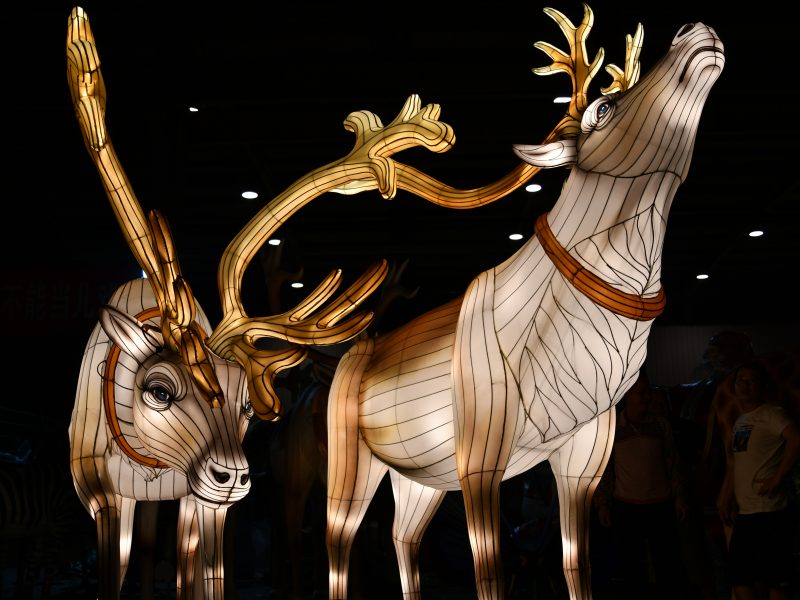
A pair of reindeer solves a problem that a single figure cannot: it creates a relationship. One animal standing alone is an object; two animals arranged in relation to each other become a scene, and visitors read the scene before…
A pair of reindeer solves a problem that a single figure cannot: it creates a relationship. One animal standing alone is an object; two animals arranged in relation to each other become a scene, and visitors read the scene before they read the animals. This build is a matched pair with illuminated golden antlers, cream-to-caramel coats and warm accent lighting at the collar, designed so the two figures can be placed facing each other, running in tandem as a team, or standing side by side — three genuinely different compositions from one order.
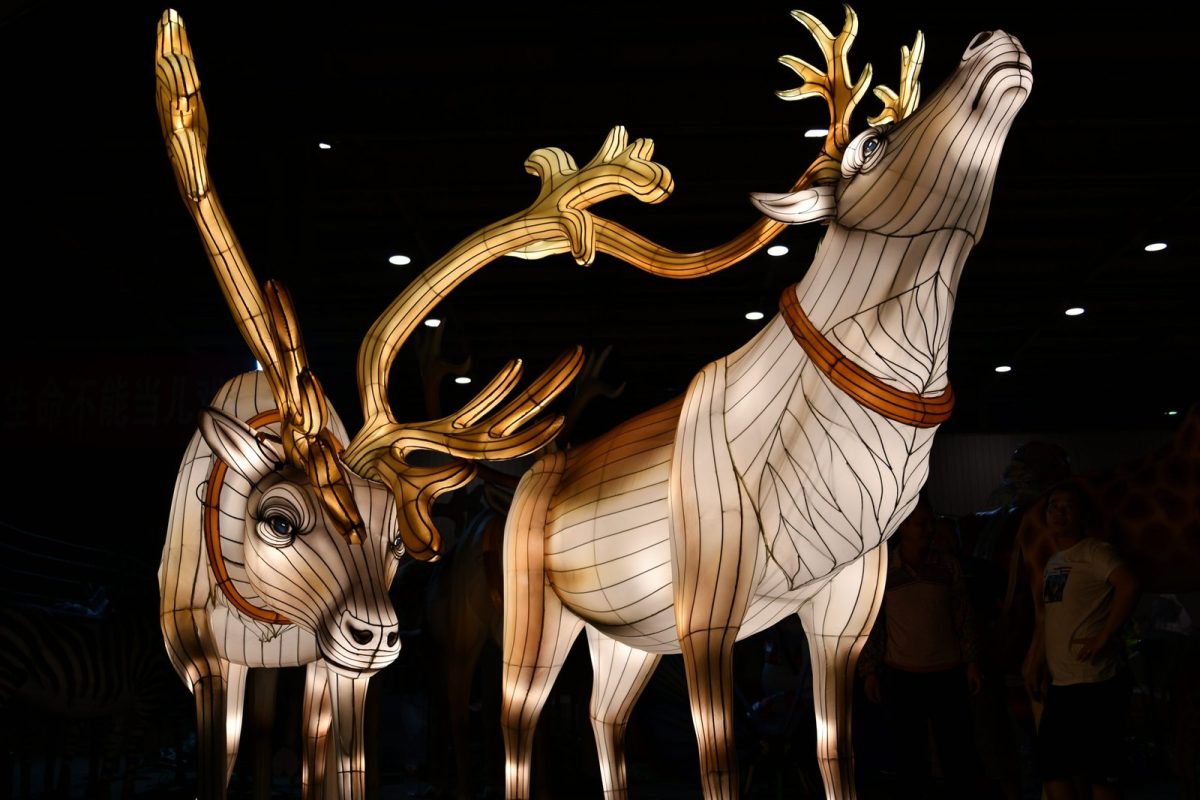
Each reindeer is built on a weatherproof internal frame with hand-painted high-density fabric over a shaped understructure and lit internally with low-voltage LED protected to an outdoor-rated standard. The antlers are built as separate structural units rather than part of the head frame, which matters for both transport and repair — a cracked antler tip is a five-minute site swap instead of a workshop return.
Why a Pair Outperforms a Single Figure
Buyers frequently start by looking at a single reindeer and then discover the pair does several jobs the single figure cannot.
- Composition. Two figures create a focal point between them — visitors naturally walk into the gap, which is where photographs happen. A single figure is photographed from the side and forgotten.
- Narrative. A pair implies movement, a team or a herd. Visitors read a story rather than a decoration, which is what makes a display feel designed.
- Flexibility across sites. Two figures can be split for two locations and recombined for the main event — useful for venues running more than one entrance.
- Framing. Positioned either side of a gate or arch, a matched pair frames the route and signals the start of a trail.
The pair also scales well: at a single location they read as a feature, and across a walking route they can be staged as a sequence, with additional figures added in a later season.
The Illuminated Antlers Are the Whole Point
The glowing golden antlers are what make this design recognisable at a glance, and they are also the most technically demanding element in the build.
- Thin structures, spread loads. Antlers are slender and heavily branched, so the frame inside them is engineered with light internal bracing to resist wind without adding visible bulk.
- Separate units for replacement. Each antler connects to the head through a fixed joint that can be released on site. Damage from a knock or an over-enthusiastic visitor is repaired without touching the head.
- Even lighting along every branch. The light runs are distributed so that the tips are not dimmer than the base — the most common failure in illuminated antler work, and the thing that makes a piece look unfinished.
- Warm gold, kept restrained. The antler light reads as gold rather than yellow, which is a question of the LED temperature combined with the painted surface behind it, not just the lamp colour.
Where a venue wants the pair to read from a distance, the antlers are also the element that gives the composition its height — a reindeer body sits low, but a full antler spread can lift the visual mass by nearly a metre.
Three Ways to Place the Pair
The same two figures can be arranged in three configurations. Choosing the right one for the site is worth more than any amount of extra decoration.
| Arrangement | What it communicates | Best position |
|---|---|---|
| Facing each other | Greeting, a paused moment, a natural archway between them | Gateways, entrances, photo points |
| Running in tandem | A team in motion — reads as a sleigh crew | Long approaches, trail sections, sleigh pairings |
| Standing side by side | A calm herd pair, symmetrical and formal | Framing a stage, an entrance or a tree either side |
Two practical notes. First, the tandem arrangement should not be placed too close to a wall — the composition needs space in front of it for the implied movement to read. Second, when the pair frames an entrance, keep the gap between them wide enough for a wheelchair or a double pushchair, because that gap will be used as a route whether or not it was intended as one.
Coat Colour, the Collar and the Night Reading
The cream-to-caramel gradient and the subtle striping are doing more than decoration — they are what keeps a pale animal legible against a dark background.
- Gradient rather than one flat tone. A body that shifts from cream at the chest to a deeper caramel along the back gives the figure volume under a single light source.
- Shadow striping adds fur reading. Light striping in the coat suggests texture without hard lines, and it survives being viewed from several metres away.
- The lit collar is a deliberate step. Warm accent lighting at the collar separates the head from the body in silhouette, which is the difference between a recognisable reindeer and a pale shape at night.
- Keep the face neutral. Colour on a face reads as a mask. The expression belongs to the moulding and the paint, not to the light.
Restraint matters here as everywhere: two light temperatures — warm white on the body and warm gold on the antlers — is the practical ceiling before the piece starts to look busy.
Pairing With a Sleigh or a Santa Group
Reindeer are almost never used alone in a Christmas programme, and the pair is designed to integrate rather than compete.
- With a sleigh. Place the pair forward of the sleigh and slightly to one side, leaving a visible shaft line so the connection reads. See the Santa sleigh light sculpture for the matching piece.
- With a Santa figure group. The tandem arrangement works best here, with the pair running toward the Santa figure so the eye travels along the route. See the park Santa and reindeer route layout for how this reads across a walking path.
- As a standalone entrance pair. Without a sleigh, the facing arrangement at a gateway works on its own, particularly where the two figures are the first thing visitors see.
- Across a family scene. For a full character grouping including deer, see the reindeer family display.
Where a site runs a whole trail rather than one installation, reindeer pairs are often the repeating element that ties sections together — the same figures repositioned along the route, which is a cheaper way to build continuity than commissioning new pieces. Larger programmes are covered under Christmas light festival and Christmas lighting show layouts.
Sizes, Configurations and Custom Options
Most customisation happens around the pair rather than to the animals themselves.
- Scale. Figures are built for the viewing distance — smaller pairs for covered walkways and interiors, larger pairs for open approaches and plazas.
- Pose variants. Poses are set per project, so a venue can order two different attitudes rather than a mirrored copy of the same animal.
- Additional herd members. A third or fourth figure can be added in a later season and arranged to extend the composition rather than repeat it.
- Base options. Ballasted bases for hard surfaces that cannot be drilled, or fixed bases for permanent outdoor positions.
- Interior use. The outdoor-rated build also suits covered atriums and shopping centres, where the base arrangement is the only change required.
These pieces sit inside the wider festival lantern range. For venues planning a full winter programme, the winter lantern festival pages cover route planning and zoning.
Frequently Asked Questions
Related Products and Designs
Matching pieces for a Christmas programme: the Santa sleigh, the standing reindeer light sculpture, the reindeer archway and the walk-through light archway.
Design concepts that use reindeer in a wider composition: the park Santa and reindeer route, the reindeer family display and the full Christmas design set.
Send your site plan, viewing distances and whether the pair will be split across locations through the contact form, and we will return a layout with the arrangement already resolved.
You May Also Like
Related Products

Questions
Frequently Asked Questions
Interested in This Product?
Get a custom quote within 24 hours. Our team is ready to help.