Traditional Chinese Architecture Lantern Scene — Pavilion & Auspicious Bird Display
Traditional Chinese Architecture Lantern Scene — Pavilion & Auspicious Bird Display
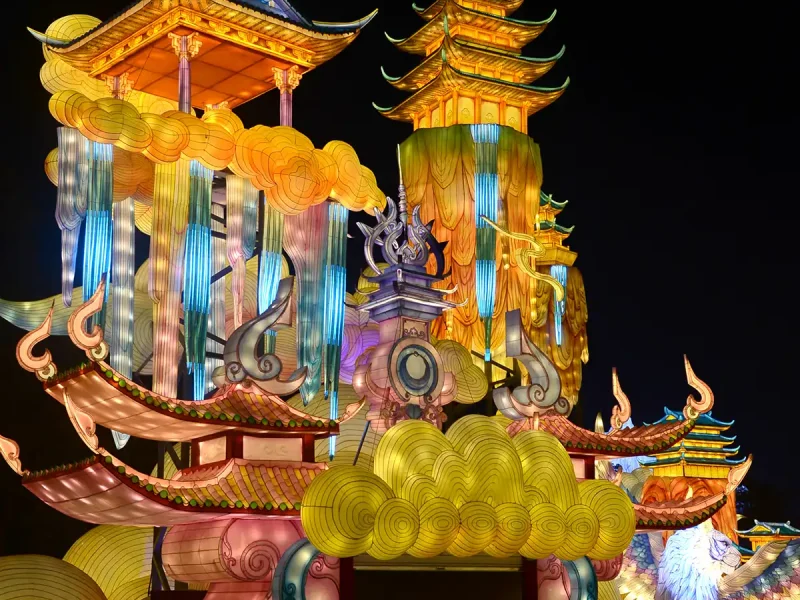
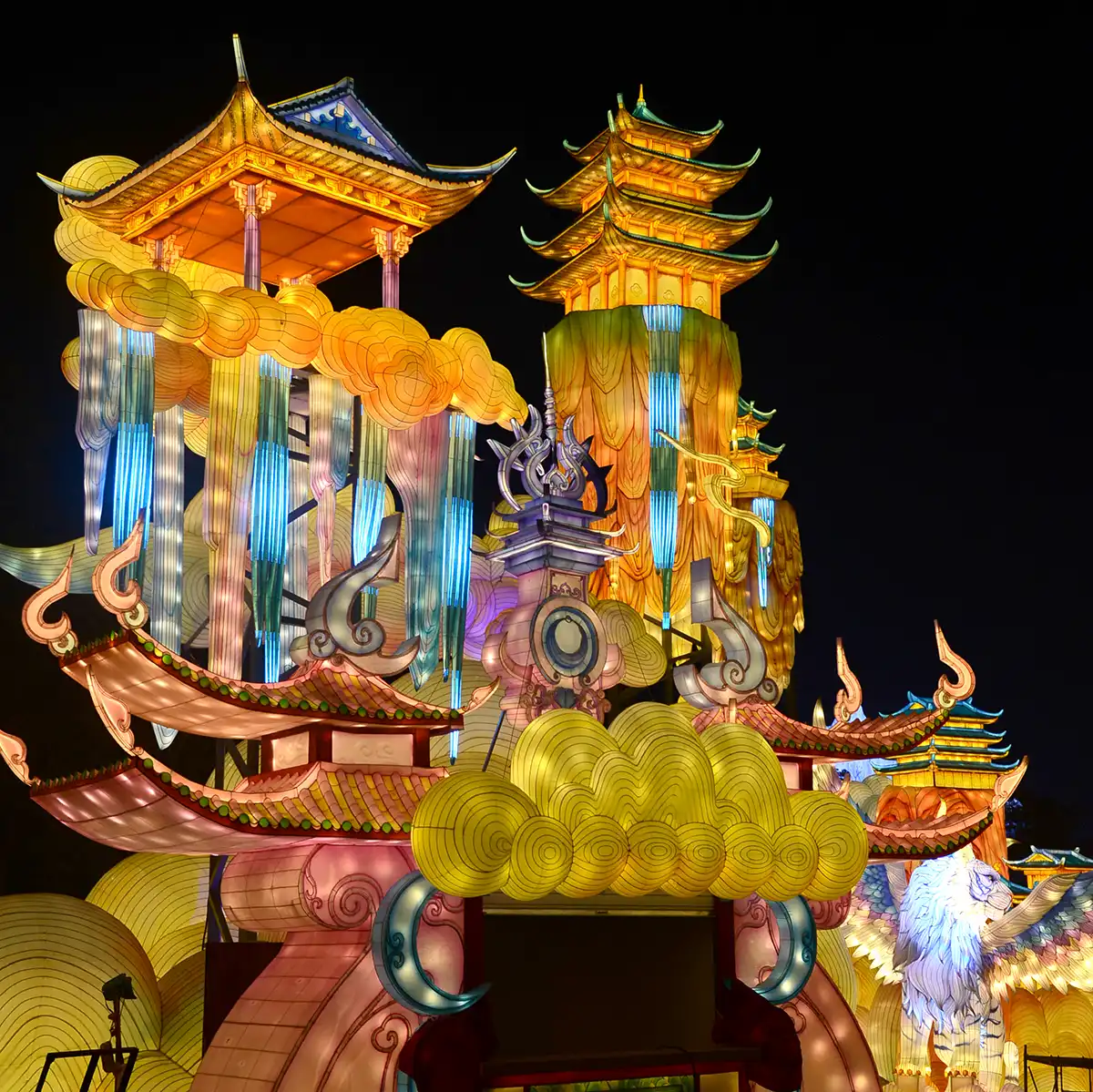
Multi-storey pavilions rise one behind the other, their upturned eaves marked out in warm light against the night sky. Cloud motifs drift between the roof lines, and above them an auspicious bird with a crimson crest and a long iridescent…
Multi-storey pavilions rise one behind the other, their upturned eaves marked out in warm light against the night sky. Cloud motifs drift between the roof lines, and above them an auspicious bird with a crimson crest and a long iridescent tail sits among the ridge tiles. This Chinese architecture lantern scene is built as a single composition rather than a row of separate buildings — the roofs overlap in depth, so the scene reads as a skyline rather than a facade.
Architecture is one of the few lantern subjects that works from a distance and up close. From across a plaza you see the silhouette: stacked eaves, a stepped roofline, the bird standing clear of the highest ridge. Walk closer and the detail takes over — bracket sets under the eaves, cloud scrollwork between the storeys, the painted panels along each level. That double reading is why this scene carries a large site on its own without needing supporting pieces around it.
What the Scene Recreates
Four elements do most of the work, and each one has to hold up on its own at night:
- Stacked pavilion roofs. Each level steps back from the one below, so the eaves create a series of horizontal light lines. Get the spacing right and the building looks tall; crowd them and it flattens into a single band.
- Upturned eaves and corner ridges. The lift at each corner is what makes the silhouette unmistakably Chinese rather than generically Asian. It reads best when the corner is the brightest point of the roofline.
- Cloud motifs between storeys. These fill the gaps and give the eye something to follow between roof levels. They also soften the transition where the scene meets dark sky.
- The auspicious bird. Placed on the highest ridge, it caps the composition. It is the piece visitors point at, and the reason most photographs of this scene are taken from below and to one side.
Colour direction is usually warm — amber and gold through the building, with the bird carrying the stronger reds and blues so it separates from the roofs behind it. A cooler treatment is possible where the surrounding site is already heavy in warm light.
Where This Scene Works Best
- Chinese cultural festivals and temple fairs — the architecture needs no explanation for the audience, and the bird gives the scene a focal point beyond the buildings.
- City plazas and pedestrian streets — it fills a large footprint and is legible across an open square, which most single-figure displays are not.
- Botanical gardens and park routes — placed at a path junction, the stacked roofs also act as a wayfinding landmark through the rest of the site.
- Museum and cultural centre forecourts — the architectural detail survives closer inspection, which suits venues where visitors arrive on foot and linger.
- Mall atriums and Lunar New Year programmes — the scene scales down for indoor use while keeping the same roof stacking and bird placement.
Sizing and Composition
The scene is set per order. Height, the number of pavilion levels, the span of the base and the size of the bird are all fixed during design rather than chosen from a list, because the useful version depends on how far away visitors will be standing.
Three things decide whether the scene reads well on site:
- Viewing distance against height. The roof lines only separate into distinct levels if the scene is tall enough for the distance it is viewed from. Tell us the far edge of the plaza or the width of the walkway, and the height follows from it.
- Base span. A wide base with many levels reads as a palace; a narrow base with three or four levels reads as a pavilion. Both are valid — they simply suit different sites.
- Bird position. The bird should break the roofline rather than sit behind it. On sites with a strong side view, shift it toward the side visitors approach from.
Related Displays and Resources
- Intangible Cultural Heritage Chinese Dragon — the usual approach-piece pairing for an architecture scene
- Golden Qilin on Lotus Pond — for pond-side settings where the scene sits near water
- Phoenix Festival Centrepiece — another symbolic centrepiece for the same audience
- Chinese Lantern Festival — how centrepieces, approaches and walk-through pieces are sequenced across a site
- Creative Designs — browse layout concepts before committing to a build
- Request a Quote — send your floor plan and we will return a layout proposal
You May Also Like
Related Products
Cultural Lanterns
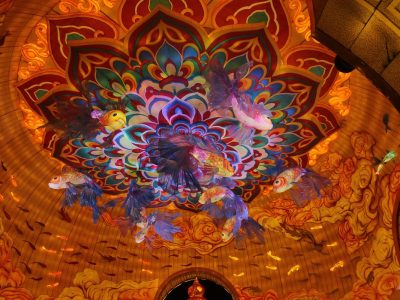
Indoor Ceiling Lantern Installation — Lotus Medallion with Suspended Koi
View Details →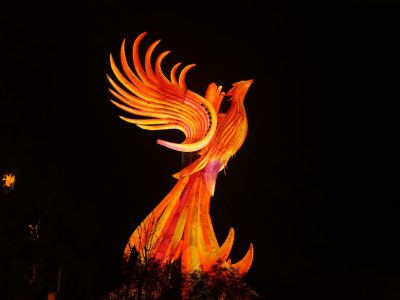
Cultural Lanterns
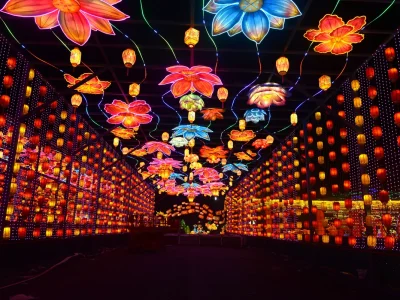
Red Lantern Wall Corridor — Dense Lattice Lantern Walls and Lotus Ceiling
View Details →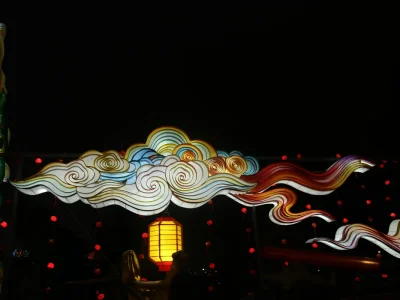
Cultural Lanterns
Cloud Motif Lantern Archway — Auspicious Cloud Span with Ruyi Crest
View Details →Questions
Frequently Asked Questions
Interested in This Product?
Get a custom quote within 24 hours. Our team is ready to help.